

The Washington Record,
Twenty Years on the Ground
Direct line: (239) 571-1840 · GregoryGilbertson@proton.me
Attorney and law-firm inquiries only
King County · Snohomish County · W.D. Washington · E.D. Washington
Washington is where this record was built. Professor Gilbertson held a private investigator license in Washington State for two decades, taught criminal justice in Washington classrooms for a career, and worked the cases that still anchor the practice file. Matters have run through the state's superior courts and its federal districts. Across the practice, retentions come from plaintiff's counsel, from the criminal defense bar, and from counsel defending officers and agencies.
Three experts. Over 110 years.
Professor Gregory Gilbertson (Ret.), FBI Special Agent Christopher Holland (Ret.), and Sheriff Robert Snaza consult with attorneys nationwide regarding police practices and procedures, use of force, false arrest, police misconduct, criminal, and self-defense casework.
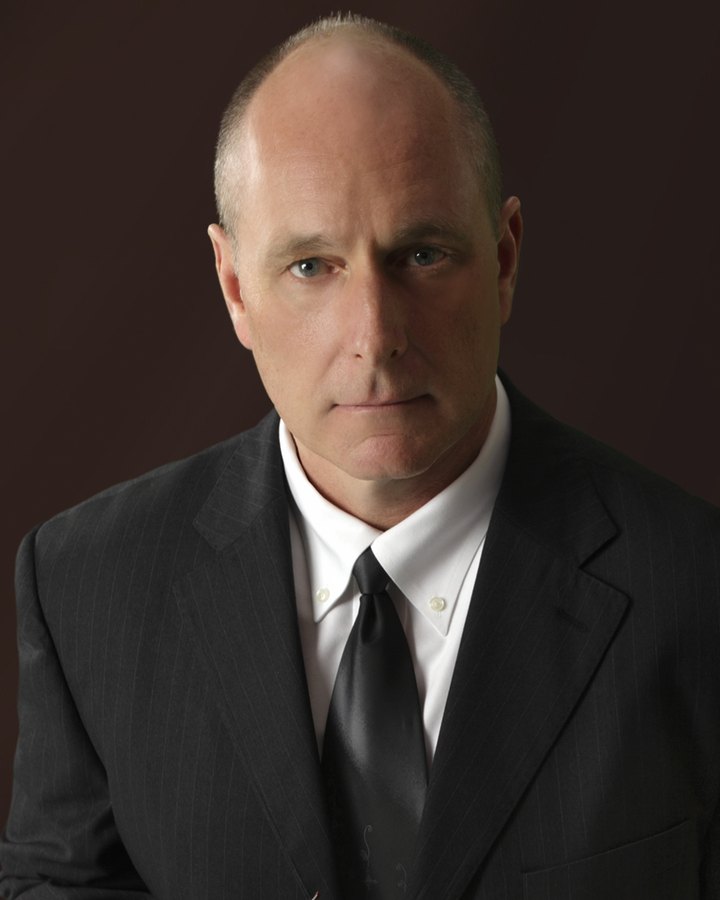 CEO & Owner
Thirty-eight years in four uniforms: street cop, soldier, professor, investigator. More than 220 matters in 42 states and D.C. since 2014.
Full biography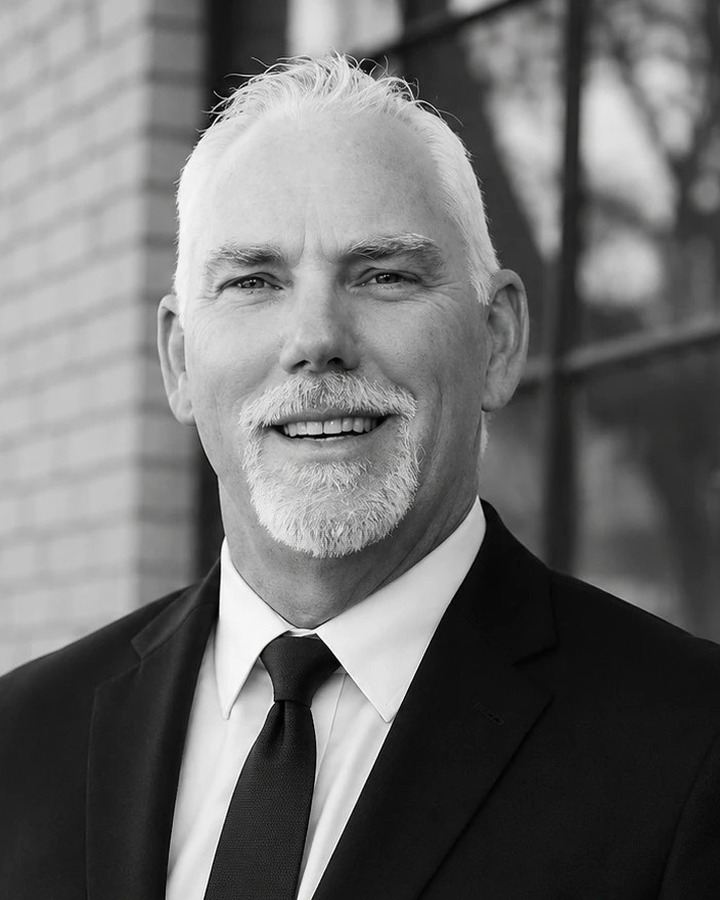 Consultant
More than thirty-five years in public safety: Sheriff of Lewis County, Washington, since his election in 2015, and six years as a commissioner of the state board that sets peace-officer training standards.
Full profile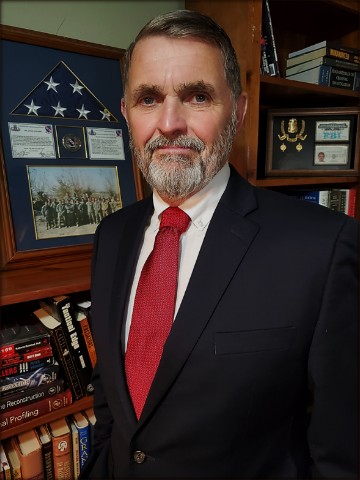 Consultant
Forty years of investigative casework, from patrolman in St. Louis County to the FBI in Chicago, and on to task forces in Afghanistan and Liberia. His work on the Idaho student murders is examined in Broken Plea, the New York Times bestseller by Christopher Whitcomb.
Full profileThe Hon. Richard A. Jones United States District Judge“Mr. Gilbertson’s qualifications demonstrate extensive experience in policing. His expansive work as a police officer in Georgia, with assignments as a SWAT team officer, juvenile court investigator, school resource officer, stakeout squad officer, senior patrolman, and patrolman; then a career as a tenured college professor and university lecturer teaching criminal justice courses to degree-seeking students at colleges and universities, and as a licensed private investigator conducting felony pretrial investigations for attorneys in Washington State in dozens of criminal cases, makes him unique in the field of police expert witnesses. The Court finds that, based on his experience, Mr. Gilbertson’s testimony can be expected to have a reliable basis in knowledge and experience of police practices.”
Why the Washington file runs deepest.
Washington is not a state this practice visits for a trial date. It is where the work began.
From 2002 to 2022 Professor Gilbertson held a private investigator license in Washington State, and twelve of those years went to criminal defense casework: interviewing civilian and police witnesses, reading case files against the reports written about them, gathering evidence, and testing witness statements for what they could and could not support. Two of those years were served as a Guardian ad Litem. That is two decades of fieldwork inside Washington files, and it started more than a decade before the expert practice did.
The classroom ran alongside the casework: a quarter century teaching criminal justice in Washington, first at Saint Martin's University and then across a long tenure at Centralia College, with concurrent senior-lecturer years alongside. The subject was the standard officers are trained to meet, taught to degree-seeking students. It is also where the habit of explaining police procedure in plain language was built, and it is the same register a jury hears.
The casework followed the same ground. Matters have come out of King, Pierce, Snohomish and Clark counties, out of the superior courts of Washington, and out of the state's federal districts, on both sides of the docket: excessive force and wrongful death claims for plaintiffs, false arrest and search questions, police misconduct, and state-court criminal defense including homicide and self-defense trials. The King County part of that file has a page of its own, Seattle and King County casework. So does the Pierce County part, on the Tacoma and Pierce County page; the Guardian ad Litem years were served for the Pierce County Superior Court in Tacoma. Hunter v. City of Federal Way and Taylor v. City of Seattle were both Western District of Washington matters, and in Hunter the engagement ran from a written report through trial testimony, which the jury credited. The citations as filed, and the published amounts, sit with the rest of the state's published matters in the selection below and on the selected results and case history page.
What that history gives retaining counsel is specific rather than sentimental. What a Washington case file looks like from the inside, and what a Washington courtroom expects of an expert, were learned across two decades of working those files and teaching this subject in this state, not read up on after retention. The measure applied to a Washington matter is still a national one: model policies, peace officer standards and training expectations, and accepted practice in academies and field training programs, read against what the involved agency's own policy and training actually required of the officer. The bench has addressed that background on the record, in the court's ruling in Alvarez v. King County.
The published Washington selection.
Monet Carter-Mixon, Estate of Manuel Ellis and Marcia Carter v. City of Tacoma, Christopher Burbank, Mathew Collins, Masyih Ford, Timothy Rankine, Pierce County, et al., Case No 3:2021-cv-05692, Excessive Force.
The Estate of Joshua Flores v. City of Centralia et al., No. 3:2021-cv-05458, Excessive Force & Civil Rights Violations.
Pellum v. King County, No. 2:20CV01033 (W.D. Wash.) (filed July 2, 2020) Excessive Force; 42 U.S.C. § 1983.
Joyce v. Pierce County, No. 3:2019-cv-06119, W.D. WA., filed Nov. 22, 2019, 42. U.S.C. 1983 Excessive Use of Force.
Maria Guitierrez vs. City of Arlington, WA et al., No. 2019-00021784, False Arrest, Excessive Force & Civil Rights Violations.
Poplawski v. Pedersen, No. 2:18CV01704, W.D. Wash. 2019, False Arrest.
Lankford v. City of Pullman, No. 2:16-CV-00377-SMJ, 2018 WL 1125644 (E.D. Wash. Mar. 1, 2018, False Arrest).
State of Washington v. Faire, No. 18-1-01062-9 (Snohomish Cty. Super. Ct., filed Apr. 9, 2018) (Theft, Second Degree – Exceeds $750). Case Dismissed.
Taylor v. City of Seattle, No. C18-262 TSZ, 2018 WL 5024029, W.D. Wash. Oct. 17, 2018, 42 U.S.C. § 1983 Excessive Use of Force.
Hunter v. City of Fed. Way, No. C16-1445RSL, 2017 WL 6406019, W.D. Wash. Dec. 15, 2017, 42 U.S.C. § 1983 Excessive Use of Force - Trial Testimony.
Hagopian v. Seattle et al, No. 2:15CV01055 (W.D. Wash. June 6, 2016) (42 U.S.C. § 1983, Fourth and Fourteenth Amendments, Assault).
Pickens v. City of Orting, No. 3:15CV05529, W.D. Wash. Nov. 10, 2016, Wrongful Termination, 42 U.S.C. § 1983.
State of Washington v. Poplawski, No. 16-1-07774-5 (King Cty. Super. Ct., filed Nov. 16, 2016) (False Arrest). Acquittal.
State of Washington v. Rodney Wheeler¸ No. 16-1-05587-3, King Cty. Super. Ct., filed Oct. 5, 2016, Murder, Second Degree - Acquittal at Trial.
State of Washington v. Alonzo Briant Price-Holt, 15-1-04606-0 (King Cty. Super. Ct., filed Nov. 24, 2015).
State of Washington v. Anthony Salanoa Ili, No. 15-1-05244-2 (King Cty. Super. Ct., filed Aug. 13, 2015) (Assault – 3rd Degree, Self-defense) Acquittal at Trial.
Donald Jones as Personal Representative of the Estate of Dante Jones, Plaintiff, v. Franklin County, a municipality, Cody Quantrell, an agent of Franklin County, and Jim Raymond, an agent of Franklin County, WA, NO. 4:22-cv-5138.
Estate of Jesse S. Sarey v. City of Auburn, WA and Officer Jeffrey Nelson, Case No. 19-06470, Excessive Force and Civil Rights Violations.
James Faire and Angela Faire v. Okanogan County et al., No. 2:20-CV-00337, Complaint for Damages and Civil Rights Violations.
Joseph Allen v. City of Auburn and Officer Jeffery Nelson, Case No. 18-11040, Excessive Force.
Nikita Tarver, Plaintiff, v. city of Seattle and Several Unknown Officers, Defendants, Case No. 2:22-cv-00736-BJR.
Olivia Selto as Personal Representative of the Estate of Kevin Peterson Jr. v. County of Clark, Sheriff Chuck Atkins, Sheriff’s Detective Robert Anderson, Sheriff’s Deputy Jonathan Feller, John and Jane Does 1-10, No. 3:22-cv-5384, Wrongful Death.
Robert Hanks and Stephanie Hanks vs. Clark County and Clark County Sheriff’s Office Deputy Lanny Kipp, Deputy Shaun Kays, Deputy Sean Boyles, Deputy Shane Celemenhagen, Deputy Donald Sullivan, and Deputy Samir Vejo, No. 3:22-cv-5359.
The Estate of David Novak v. City of Spokane, Cause No. 21-2-00037-32, Excessive Force & Civil Rights Violations.
The Estate of William Abbe, deceased vs. City of Vancouver et al. No. 3:21-cv-5790, Excessive Force & Civil Rights Violations.
Young Choi v. City of Lakewood, David Butts, and Brian Luttrull, Cause No. 3:21-cv-5119, Excessive Force & Civil Rights Violations.
Spokane reads one way, Olympia and Thurston County another.
Four of the 93 Washington matters in the practice file name Spokane in the citation, and the agencies those citations name are the City of Spokane and Spokane County. Five of the 93 Washington matters in the practice file name Olympia and Thurston County in the citation, and the agencies those citations name are the City of Olympia and the Thurston County Sheriff.
A matter is counted here only when its own citation names the place or an agency of it; nothing is inferred from a court, a docket or a judge. The published results, where there are any, are on the panel above and on the case history page.
Small as these parts of the file are, they read differently. In Spokane the claims run across use of force, wrongful death, police misconduct and police practices, with self-defense alongside them. Most of those matters are in the state courts, Spokane Cty. Super. Ct. among them, and a single matter is in federal court, cited as E.D. Wash.
The Olympia and Thurston County matters tilt the other way, with more of them in federal court than in the state courts. The federal matters are cited as W.D. Wash., and the state courts include Thurston Cty. Super. Ct. The civil claims there are use of force and police misconduct, and on the criminal side the file holds homicide defense and self-defense. In both metros a handful of matters is too few to characterize any agency or court.
What differs between the metros is the forum they are in and the mix of claims, not the reading, which is the one the page describes. How a use-of-force claim from either metro is analyzed is the subject of the use of force practice page.
Testimony in Washington courts, state and federal.
Testimony has been admitted in the state courts of Washington and in the United States District Court for the Western District of Washington. Matters have also arisen in the Eastern District of Washington. Admissibility in any particular matter remains retaining counsel's responsibility. Clark County matters, across the river from Portland, are read together with the Oregon side of that metro on the Portland and Vancouver page.
The Washington work runs along two tracks. On the civil side it is Section 1983 litigation: excessive force claims, and false arrest and search questions, each measured against agency policy and against national standards and practices, with the use of force also weighed under Graham v. Connor on what was known at the time, without hindsight. On the criminal side it is state-court defense work on reports, procedure, search and seizure, and self-defense, through consulting review, written reports, deposition, and trial testimony.
Either track can call for something short of a full testifying retention: a preliminary evaluation of case merit, a consulting-only engagement, a rebuttal report answering an opposing expert's disclosed opinions, review of an opposing expert's work, or, in federal court, Rule 702 and Daubert preparation ahead of disclosure. How early in a matter that decision is best made is taken up in the guide to when counsel should retain a police practices expert.
Retentions come from both sides. Plaintiff's counsel in civil rights matters, the criminal defense bar, and counsel defending officers and agencies get the same standards, the same complete record, and the same analysis; an expert who has appeared for one side alone can be impeached on that fact by itself. Where the evidence shows an officer acted within accepted police practices, the report says so.
Legal conclusions remain counsel's, and the opinions address police practices. Where scientific, medical, technical or human factors evidence is involved, qualified experts in those disciplines are deferred to on the record. Counsel weighing whether a nationwide practice properly reaches a given state will find that question taken up in the guide to the jurisdictions a nationwide expert covers.
What the Washington casework involves.
Washington casework has run across the same practice areas as the rest of the file: use of force, false arrest and search, police misconduct, self-defense on the criminal side, and deficient investigations. The pages below set out how each area is analyzed, including the narrower questions inside it: officer-involved shootings and chokeholds, the timing of probable cause, falsified or embellished reports, failures to intervene and to render aid, and investigations that left witnesses, evidence or the timeline unexamined. Where a Washington matter turns on a vehicle pursuit or an emergency-driving crash, the decisions are read by a police pursuit expert witness against the involved agency's own pursuit and driving policies.
Retaining from a Washington firm.
A Washington firm retains a Naples-based expert the same way counsel anywhere else does. Every engagement opens with a conflict check, and a conflict is reported immediately rather than discovered late.
A first inquiry carries the case type and posture, the jurisdiction and case number, the deadlines that govern, what the record holds so far, and the parties to run the check against. Nothing privileged travels with a first inquiry, and privileged material is not exchanged by email at any stage. The guide to what a first inquiry should include sets the same list out in more detail.
After retention the record moves on physical media: a computer flash drive or an external hard drive, by mail or by courier. Online sharing services are not used, and there is no upload portal.
What counsel's staff assembles is the relevant record rather than the whole box: investigation and internal affairs reports, witness statements and deposition transcripts, agency policies and procedures, involved-officer training and disciplinary records, and the body-worn, dash and surveillance video. That file is then reviewed in full before anything is drafted, and the engagement produces one written report. Reports require sixty days of advance notice, and retaining counsel approves a bullet-point outline before writing begins.
Distance is a scheduling question rather than a substantive one. Depositions are taken by Zoom or a similar platform. Out-of-town trial testimony runs on the published flight-to-flight clock, timed from before the departure flight to after the return flight lands, so a trial date in Seattle or Spokane is budgeted on the same published terms as any other.
The fee schedule, the travel terms and the retention path are set out on the For Counsel page, and trial travel is covered further in the guide to trial testimony and travel nationwide. The complete published selection, with citations reproduced as filed, is on the selected results page, and the full table of cases goes to retaining counsel on request.
Counsel ask about Washington.
Can Professor Gilbertson testify in Washington state court?
Does being based in Florida matter for a Washington case?
Does he take officer and agency defense matters in Washington?
What should a first inquiry from Washington counsel include?
Where can counsel see the Washington results?
Which Washington courts has the casework run through?
Discuss a Washington matter.
Attorney and law-firm inquiries only. Conflicts are checked before anything substantive, and you will hear about a conflict immediately.
Inquiry sent.
You will hear back directly. If the matter is urgent, call (239) 571-1840.
Conflicts are checked before any substantive discussion. Please do not send privileged material with a first inquiry; after retention the record is exchanged on physical media. Gregory consults for attorneys and their staff only, and does not provide legal advice or attorney referrals to individuals.