

GILBERTSON Investigations Inc. (239) 571-1840
Gilbertson Investigations Inc. · Nationwide Practice

Police Expert Witnesses

$42M
Plaintiff settlements & judgmentsSecured by retaining counsel in matters since 2014 · See the case file

Direct line: (239) 571-1840  ·  GregoryGilbertson@proton.me

Attorney and law-firm inquiries only

https://policeexpertwitnesses.com/

Police Practices & Procedures | Police Use of Force | False Arrest
Police Misconduct | Criminal & Self-Defense Casework

Three experts with over 110 years of law enforcement and criminal justice experience.

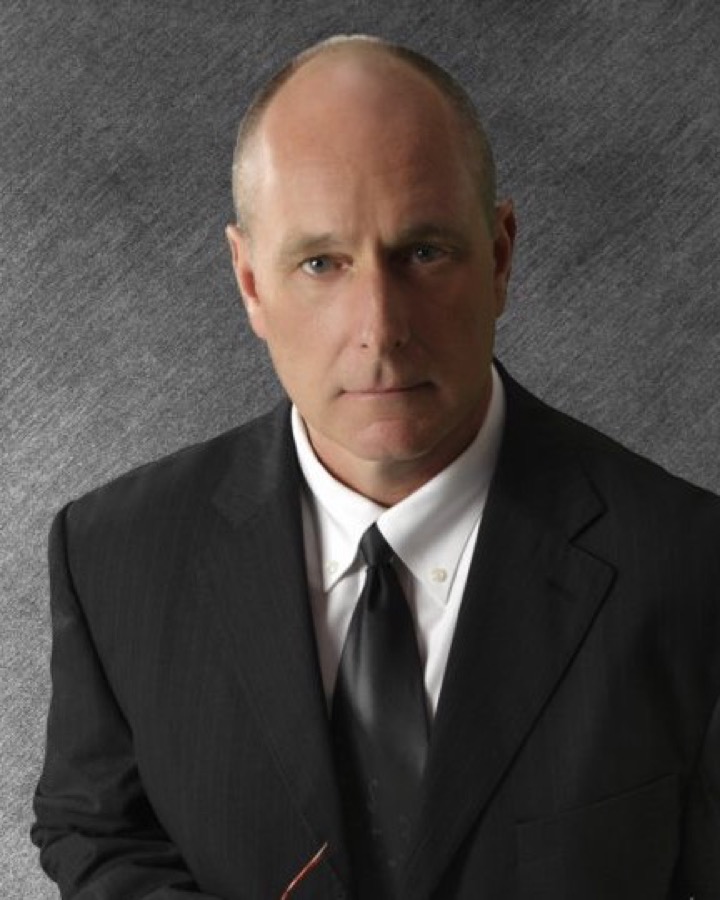
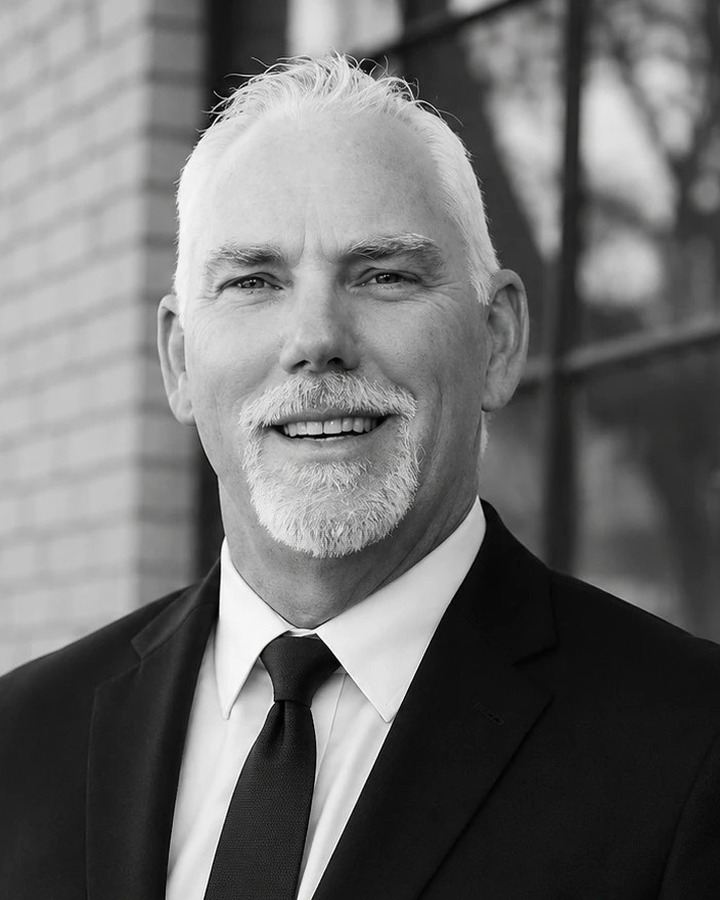
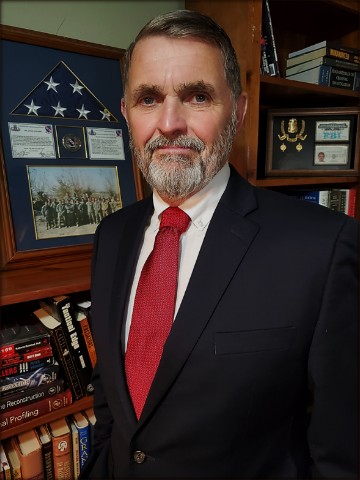
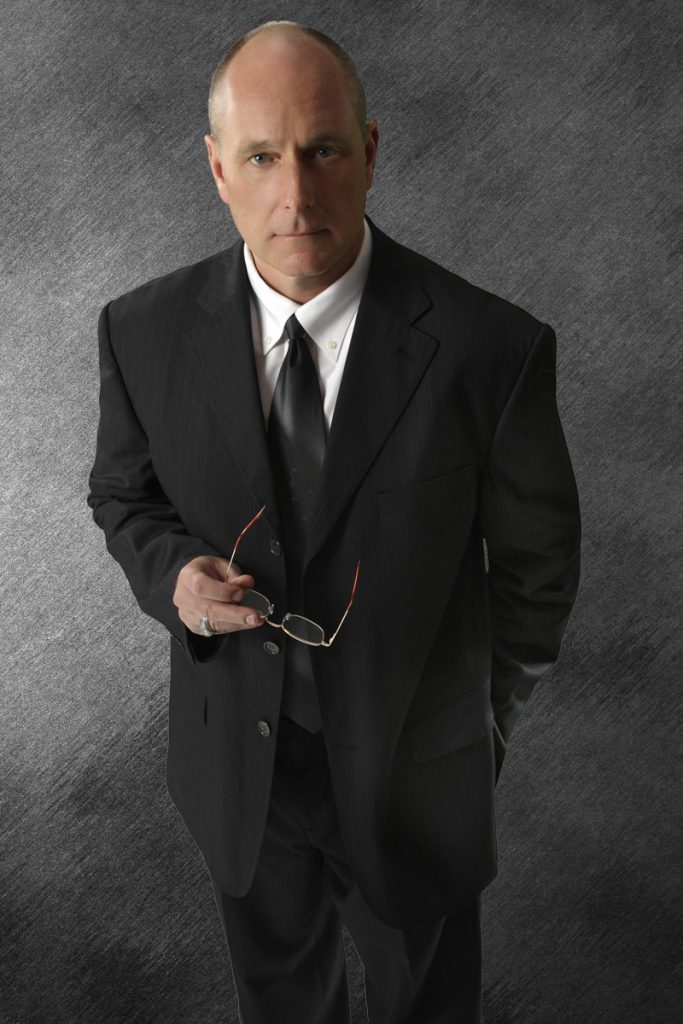
Professor Gregory Gilbertson (Ret.), FBI Special Agent Christopher Holland (Ret.), and Sheriff Robert Snaza consult with attorneys nationwide regarding police practices and procedures, use of force, false arrest, police misconduct, criminal, and self-defense casework.

Gilbertson Investigations lion emblem
Reports · Deposition · Trial testimonyEst. practice 2014
220+
Cases consulted
42
States, plus D.C.
38
Years in the field
Testimony
admitted in
U.S. District CourtsSuperior Courts of WashingtonCircuit Courts of OregonCourts of KansasCourts of ConnecticutCourts of FloridaCourts of IllinoisRetained in 42 states and D.C.
Introduction

Three experts. Over 110 years.

From the patrol car, to the classroom as a tenured criminal justice professor and university lecturer, to the street as a licensed private investigator and Guardian ad Litem, and in Iraq and Afghanistan as an international police trainer and advisor, Professor Gregory Gilbertson brings his unique career and life experience to every case. This experience is distilled into his case analysis, written reports, and unimpeachable trial testimony that holds up under both direct and cross-examination. Greg speaks to jurors in the same way he spoke to his students for 25 years: in plain spoken language that anyone can easily understand. Just ask Chicago attorney Nenye Uche, Seattle attorney James Bible, Florida attorney John Middleton, or Oregon attorney Jason Steen.

FBI Special Agent Christopher Holland (Ret.) brings over 40 years of federal, local, and international training and experience to each and every case. Sheriff Robert Snaza brings 35 years of law enforcement and executive experience to each and every case. The combined careers of these three experts total over 110 years of domestic and international police training, education, and “boots on the ground” experience.

The team, in full

From the Bench
U.S. District Court Western District of Washington

Never excluded. Professor Gilbertson’s testimony has not been excluded at trial in any state or federal court.

Ruling on a motion to exclude his testimony in Alvarez v. King County, No. C16-0721RAJ, 2017 WL 3189025 (W.D. Wash. July 27, 2017), Judge Richard A. Jones entered the following opinion.

“Mr. Gilbertson’s qualifications demonstrate extensive experience in policing. His expansive work as a police officer in Georgia, with assignments as a SWAT team officer, juvenile court investigator, school resource officer, stakeout squad officer, senior patrolman, and patrolman; then a career as a tenured college professor and university lecturer teaching criminal justice courses to degree-seeking students at colleges and universities, and as a licensed private investigator conducting felony pretrial investigations for attorneys in Washington State in dozens of criminal cases, makes him unique in the field of police expert witnesses. The Court finds that, based on his experience, Mr. Gilbertson’s testimony can be expected to have a reliable basis in knowledge and experience of police practices.”

The Hon. Richard A. Jones United States District Judge

The role of an expert, stated plainly.

Gregory Gilbertson is not an attorney and offers no legal advice or attorney referrals to individuals. He provides expert analysis, reports, and testimony to retaining counsel. No guarantee is made regarding the outcome of any case, and retaining counsel is responsible for the admissibility of reports and testimony. Where scientific, medical, technical, or human factors evidence is involved, he defers to qualified experts in those disciplines and says so on the record.

Retained by Both Sides

Working both sides of the aisle.

A police expert witness that has only ever worked one side of the aisle can be impeached by opposing counsel with that fact alone. Professor Gilbertson is retained by plaintiff’s counsel and by the defense alike, including officers and agencies accused of deadly excessive force, misconduct, and former officers facing criminal and civil rights charges arising from the performance of their duties.

Professor Gilbertson’s analysis and opinions do not change with the party who retains him. The same national standards, the same complete record, the same analysis and opinions will apply. Where the evidence shows an officer acted within accepted police practices, the report says so, and that conclusion carries weight precisely because it comes from an expert who has also testified against officers when the record required it.

Greg began his career in uniform as a Distinguished Military Graduate of the United States Army Officer Candidate School. After leaving the Army, he continued his career in uniform as an Atlanta and LaGrange, Georgia police officer. These perspectives go into every case, in every opinion, on both sides of the aisle.

Expert Casework

Comprehensive standard of analysis.

From an initial case evaluation, to a complete record review, through depositions which culminate in a final written report, every case is measured and evaluated against national police standards, practices, and procedures, controlling agency policy, state and federal statute law, case law, and the totality of the facts and circumstances in each incident.

GI / UOF

Use of Force

Objective reasonableness is the standard in every case. This analysis is weighed and considered under Graham v. Connor regarding severity of the crime, threat assessment, resistance, flight, and on the totality of the circumstances in each incident. Police shootings and deadly force, chokeholds, neck restraints, use of force on restrained or fleeing people, Tasers, chemical agents, impact weapons, canine deployments, SWAT and high-risk arrest warrants, and use of force in mental-health encounters all carry unique challenges. De-escalation, crisis intervention, duty to intervene, and duty to render aid are also reviewed and considered against agency policy and officer training.

Read the full page
GI / ARR

False Arrest & Search and Seizure

Reasonable suspicion and probable cause; what officers knew and when they knew it; investigative stops, frisks and detentions; unlawful or prolonged detention; warrantless searches of persons, vehicles, or homes; and mistaken identity are all factors that require careful analysis in each case.

Read the full page
GI / MIS

Police Misconduct

False, embellished, or falsified reports, to include fabricated, planted, suppressed or mishandled evidence, must also be considered and objectively examined. So must vehicle and foot pursuits and reckless emergency-vehicle operation, failures to intervene, failures to render aid, bias-based policing, and misconduct that infects a criminal prosecution. Failure-to-train, failure-to-supervise and failure-to-discipline analysis also impacts Monell pattern-and-practice claims.

Read the full page Failure to train & Monell
GI / DEF

Self-Defense

Civilian and officer self-defense, deadly and non-deadly force, and defense of another are all issues that require an objectively reasonable analysis. Reasonable belief of imminent harm, necessity and proportionality, based upon the totality of the circumstances, must also be weighed and considered. Murder, manslaughter, assault, battery and weapons cases, and stand-your-ground cases are also in play regarding immunity hearings and home defense or Castle Doctrine cases.

Read the full page
GI / INV

Deficient Investigations

Missed witnesses, ignored or mishandled evidence, unsecured crime scenes, statement inconsistencies, report omissions and contradictions, body-camera footage, CAD-timeline reconciliation, chain of custody, tunnel vision and alternative suspects often never considered. Homicide, shooting, and serious-felony reviews through wrongful-conviction and post-conviction casework are also necessary.

Read the full page
GI / CRM

Criminal-Defense Support

Police practices analysis for the defense includes procedure and report review, search and seizure, false arrest, use of force and self-defense. Homicide, assault, resisting-arrest, robbery and weapons cases are also analyzed through criminal trial testimony. Public-defender and court-appointed casework is also welcome.

Read the full page
GI / TRN

Police Liability Training

For law enforcement agencies, civil liability, detention, false arrest, search and seizure, use-of-force standards, threat assessment, proportionality, de-escalation, pursuit policy, misconduct, and the duty to intervene are issues that are always examined and considered in our analysis and opinions. Policy and curriculum development built from thirty-eight years of education, experience, casework, and classroom instruction inform this analysis.

Full training page
Also within scope
Consulting-only engagements Rebuttal reports Review of opposing experts Suppression-hearing testimony Rule 702 and Daubert preparation Mediation and settlement consultation
Methodology

How an opinion gets earned.

The same discipline on every case, whether it settles quietly or goes the distance at trial.

Start Here

Build the case file.

Tell it what you are holding and it assembles the engagement: what gets reviewed first, the retention structure, and the timeline realities. Thirty seconds, counsel.

The matter involves
Where the case stands
In the record so far (pick any)
USE OF FORCEGI-2026 · DRAFT

An outline of engagement, not a case evaluation. No expert relationship is formed by using this tool, and no opinion is offered on the merits of any matter.

From the Record

Selected matters.

A sample of the casework, as published by retaining counsel and Gilbertson Investigations.

Civil rights

Estate of Alfontish Cockerham v. City of Chicago

Circuit Court of Cook County, Illinois · Nenye E. Uche, Esq.

Officer-involved shooting captured on video. Retained by plaintiff's counsel as the police practices and use of force expert in one of Chicago's most publicized police shooting cases of its year.

Open the case file
Wrongful death

The Che Taylor Matter · City of Seattle

Retained December 2019 · James Bible, Attorney at Law

Analyzed the 2016 shooting and issued a detailed report identifying substandard police practices. Retaining counsel credits the analysis in securing a $1.5 million settlement for the Taylor family.

Open the case file
Jury verdict

Josiah Hunter v. City of Federal Way

U.S. District Court, W.D. Wash. · Retained July 2018 · James Bible, Attorney at Law

Excessive force by choke-hold. Report and trial testimony as use of force expert; the jury agreed with the testimony and awarded $640,000 in damages.

Open the case file
Federal civil rights

Alvarez v. King County

No. C16-0721RAJ, 2017 WL 3189025 (W.D. Wash.)

Police practices analysis in federal civil rights litigation in the United States District Court for the Western District of Washington.

Open the case file
Criminal defense

State v. Clark

No. 20CR37909, Multnomah County Circuit Court, Oregon

Self-defense and police practices testimony for the defense. The jury returned not guilty verdicts on all counts.

Open the case file

220+ matters across 42 states and D.C.

These five are a sample. Selected results with recorded outcomes are published; the full case list and testimony record go to retaining counsel on request.

See selected results

Case outcomes depend on their facts. No result is promised or implied for any other matter.

On the Record
“Professor Gilbertson's insights and analysis helped me secure a 1.5 million dollar settlement with the City of Seattle for the Taylor family.”
James Bible Attorney at Law · Bellevue, WA
“Professor Gilbertson will help you win your case. While he catches the complex nuances of a case, he can also distill a case into plain and compelling terms. His reports are unimpeachable and his presentation in depositions is unflappable.”
Mark Lindquist Attorney at Law · Tacoma, WA · former Pierce County Prosecutor
“His comprehensive knowledge and incisive analyses set a high standard for expert testimony in police practices. His credentials are impeccable. I wholeheartedly recommend Professor Gilbertson.”
Angus Lee Attorney at Law · Vancouver, WA · former Grant County Prosecutor
“Professor Gilbertson's unassailable testimony resulted in not guilty verdicts on all counts. His conclusions were based in law, fact, and common sense.”
Jason Steen Attorney at Law · Portland, OR · State v. Clark
“His work ethic is extraordinary, and his credentials are unassailable. I highly recommend him to other attorneys.”
Darryl Parker Attorney at Law · Seattle, WA
“The judge mentioned the credibility of his report in hearings. Highly effective in securing a dismissal with prejudice for our client.”
Dr. Stephen Pidgeon, Ph.D. Attorney at Law · Everett, WA
“He engaged with the jury and his testimony was solid. I recommend Professor Gilbertson in any case involving police misconduct.”
Patrick Trudell Attorney at Law · Kirkland, WA
“He explained use of force and self-defense in a manner the jury easily understood. His testimony was an integral factor in achieving a not guilty verdict.”
Michael A. Blanchard Attorney at Law · New London, CT

Six attorneys on the record, by name and by city.

The Witness

Thirty-eight years, four uniforms.

Street cop, soldier, professor, investigator. The credibility a jury can feel comes from a career they can verify.

Professor Gregory Gilbertson (Ret.)
Education & Commission

B.A., History · University of Washington

M.S., Justice Administration · Columbus State University

Distinguished Military Graduate · U.S. Army Officer Candidate School, Fort Benning

Eight years · Georgia

The patrol car

Police officer with the Atlanta Police Department, Zone 3 Precinct, and the LaGrange Police Department: SWAT team member, senior patrolman, school resource officer, juvenile court investigator, and stakeout squad officer.

25 years · Retired 2022

The classroom

Twenty-five years in the classroom: two and a half at Saint Martin’s University, then twenty-two and a half as a tenured professor of criminal justice at Centralia College, seventeen of them served concurrently as a senior lecturer at Saint Martin’s and Brandman University. Teaching the same standards officers are trained to meet.

2002–2022 · 20 years

The casework

Twenty (20) years as a licensed private investigator in Washington State, twelve (12) of them specialized in criminal defense casework: interviewing civilian and police witnesses, reviewing case files, gathering evidence, and critiquing witness statements. Two years as a Guardian ad Litem.

2005 · Iraq

Baghdad and Basrah

Curriculum development specialist for the Baghdad Police College. Upon completion of developing the curriculum for a bachelor’s degree in democratic policing, Professor Gilbertson was reassigned as deputy director of the United Kingdom’s Basrah police academy during a time of active war.

2008–09 · Afghanistan

NATO liaison

Policy developer for the Ministry of Interior and Afghan National Police, while serving concurrently as mentor and NATO liaison to the commander of the Afghan National Police Academy with 2,500 cadets and 500 faculty and staff on a 65-acre walled compound.

2014 to present

The witness stand

Expert consulting practice spanning more than 220 civil rights and criminal cases across 42 states and the District of Columbia. Testimony admitted in the state courts of Washington, Oregon, Kansas, Connecticut, Florida and Illinois, and in the U.S. District Courts for the Western District of Washington, the District of Arizona, and the Western District of Louisiana.

Professor Gilbertson served twenty-five months in two active war zones as an international police trainer and advisor. The only full-time, tenured criminal justice professor from the United States to do so.

The full record →
The Retention

What a police expert witness is retained to do.

A police expert witness is retained to give the trier of fact specialized knowledge about how police work is supposed to be done. Three measures carry the police practices part of that analysis: national police standards and practices, drawn from the model policies, accreditation standards and the academy, state POST and in-service training curricula that inform what generally accepted police practices are; the agency's own policy in the version in force on the date of the incident; and the officer's own training record. All three are applied on the totality of the facts and circumstances, without hindsight, as Graham requires in use-of-force questions. That role is treated at length at what the discipline covers. Counsel retaining a police practices expert witness for the first time will find the short version at what a police practices expert does.

Counsel chooses the form of the retention. A preliminary case-merit evaluation measures the record available before filing against generally accepted police practices. A retention may be consulting only or testifying, a decision with discovery consequences worked through at consulting and testifying experts. After that, each form answers a different moment: a written report accompanies the testifying expert's disclosure; a supplemental report brings the expert's own disclosure current when material discovery arrives after that report is served; a rebuttal answers an opposing expert's disclosed opinions; and what a Rule 702 or Daubert challenge tests is set out at Daubert and Rule 702.

Legal conclusions remain counsel's. The analysis states whether conduct was consistent with generally accepted police practices, with controlling agency policy, and with the training the officer actually received. Whether that conduct was lawful is for the court and the jury, argued by counsel.

Questions

Before the record moves.

Cost, notice, conflicts, the exclusion record, and what a first inquiry should hold.

Which side of a case does he work?
Both: plaintiff's counsel in civil rights matters, the criminal defense bar, and counsel defending officers and agencies. The method does not shift with the caption: the same standards and the same record discipline apply whichever side signs the engagement letter, and every engagement begins with a conflict check. Why a one-sided retention history invites an impeachment cross is set out at retained by both sides.
Does he consult for individuals?
No. Professor Gilbertson is not an attorney, gives no legal advice and makes no attorney referrals. He is retained by counsel and their staff only, including public defenders and court-appointed counsel. Before any retainer the conversation is limited to fit, timing and process, and no opinion is offered on the merits of any matter before retention.
What does the retention cost?
One flat, non-refundable fee of $9,000. It covers discovery review and the written expert report; the report is included, not billed as a second charge. Depositions, rebuttal reports, trial and travel are priced separately, and For Counsel publishes the full schedule.
How much notice does an expert report require?
Sixty days. Reports required in less than sixty days carry a 25% upcharge on the flat fee. The sixty days run from receipt of the discovery file on physical media, not from the date of retention, so the schedule is counted backward from the disclosure deadline as explained at report timelines and the sixty-day rule.
Has his testimony been excluded?
His testimony has not been excluded at trial in any state or federal court. That states what courts have already ruled; it promises nothing about the next motion, and admissibility remains retaining counsel's responsibility. The phrase is unpacked at what never excluded means, and the court's ruling in Alvarez v. King County is published higher on this page.
What should a first inquiry include?
Case type and posture, jurisdiction and case number, the key deadlines, what the record holds so far, and the parties involved so the conflict check can run. Nothing privileged travels with a first inquiry. The record itself travels later, on physical media. The checklist is at what to send with a first inquiry, and what happens next is at what happens in a conflict check.
Fees & Engagement

Published fees. No surprises at invoice.

The numbers attorneys actually budget against, stated up front.

Expert retention
$9,000 flat fee

Non-refundable $9,000 flat fee covering discovery review and the written expert report.

Rebuttal reports
From $5,000

Focused response to an opposing expert's disclosed opinions, on the same record discipline as a primary report.

Trial & travel
$2,400 / day

Out-of-town trial testimony: $100 per hour for each 24-hour period absent from home, clocked three hours before departure to three hours after return. Fees and expenses are prepaid seven days before travel.

Depositions
$3,500 flat

By Zoom: a flat fee per expert covering preparation and five hours of examination, then $500 per hour beyond. Paid in full seven days in advance.

Full engagement terms, retention path and counsel FAQ →

The role of an expert, stated plainly. Gregory Gilbertson is not an attorney and offers no legal advice or attorney referrals to individuals. He provides expert analysis, reports, and testimony to retaining counsel. No guarantee is made regarding the outcome of any civil or criminal case, and retaining counsel is responsible for the admissibility of reports and testimony. Where scientific, medical, technical, or human factors evidence is involved, he defers to qualified experts in those disciplines and says so on the record.
Retain

Put the record in front of an expert.

Attorney inquiries answered directly. If a case presents a conflict, you will hear it immediately.

Counsel inquiry

For retaining counsel and their staff.

Inquiry sent.

You will hear back directly. If the matter is urgent, call (239) 571-1840.

(239) 571-1840Direct line, Naples, Florida GregoryGilbertson@proton.meDirect email for case inquiries.
Nationwide practiceRetained in 42 states and D.C. · Based in Naples, FL

Conflicts are checked before any substantive discussion. Please do not send privileged material with a first inquiry. Gregory consults for attorneys and their staff only; he does not provide legal advice or attorney referrals to individuals.