

Evidence That Was Made,
Hidden or Lost
Direct line: (239) 571-1840 · GregoryGilbertson@proton.me
Attorney and law-firm inquiries only
Evidence handling has rules precisely because cases die without them. Claims of fabrication, planting, suppression, concealment and loss each turn on a different part of the record, and the analysis reads that record against standardized evidence-handling procedure.
Three experts. Over 110 years.
Professor Gregory Gilbertson (Ret.), FBI Special Agent Christopher Holland (Ret.), and Sheriff Robert Snaza consult with attorneys nationwide regarding police practices and procedures, use of force, false arrest, police misconduct, criminal, and self-defense casework.
 CEO & Owner
Thirty-eight years in four uniforms: street cop, soldier, professor, investigator. More than 220 matters in 42 states and D.C. since 2014.
Full biography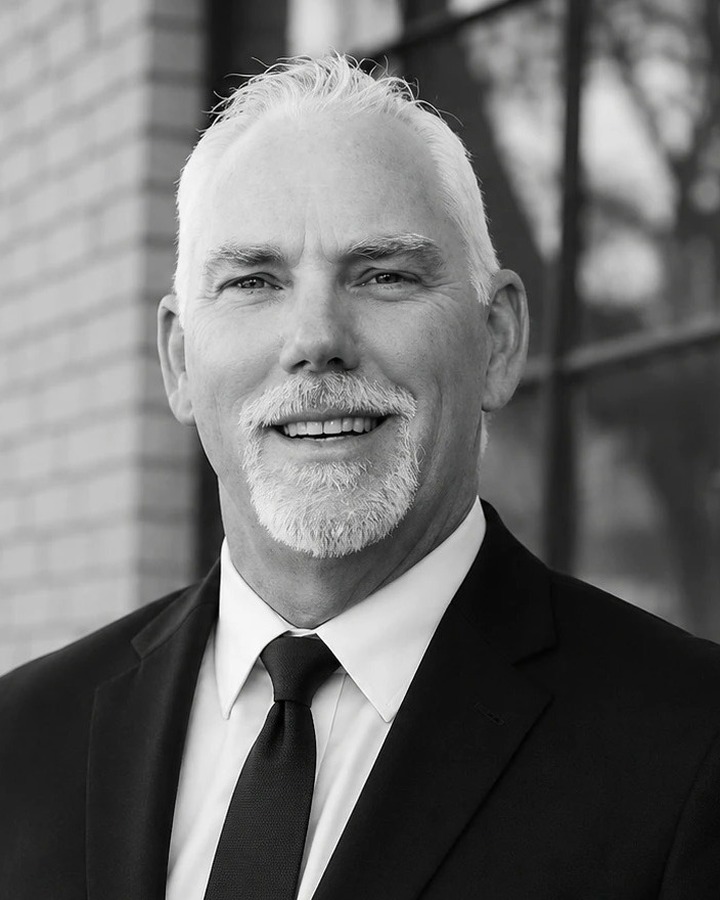 Consultant
More than thirty-five years in public safety: Sheriff of Lewis County, Washington, since his election in 2015, and six years as a commissioner of the state board that sets peace-officer training standards.
Full profile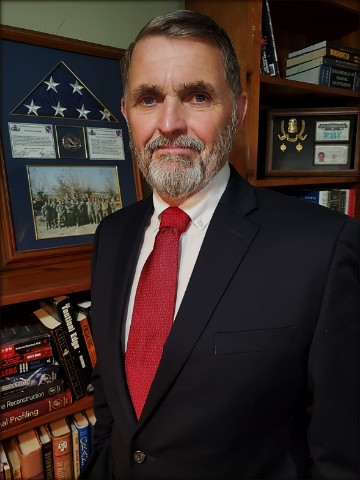 Consultant
Forty years of investigative casework, from patrolman in St. Louis County to the FBI in Chicago, and on to task forces in Afghanistan and Liberia. His work on the Idaho student murders is examined in Broken Plea, the New York Times bestseller by Christopher Whitcomb.
Full profileThe Hon. Richard A. Jones United States District Judge“Mr. Gilbertson’s qualifications demonstrate extensive experience in policing. His expansive work as a police officer in Georgia, with assignments as a SWAT team officer, juvenile court investigator, school resource officer, stakeout squad officer, senior patrolman, and patrolman; then a career as a tenured college professor and university lecturer teaching criminal justice courses to degree-seeking students at colleges and universities, and as a licensed private investigator conducting felony pretrial investigations for attorneys in Washington State in dozens of criminal cases, makes him unique in the field of police expert witnesses. The Court finds that, based on his experience, Mr. Gilbertson’s testimony can be expected to have a reliable basis in knowledge and experience of police practices.”
What this covers.
Within this engagement
- Fabricated and planted evidence
- Suppressed or concealed evidence
- Lost and mishandled evidence
- Chain-of-custody practices
- Failure to preserve exculpatory evidence
Property and evidence logs, chain-of-custody records, crime-scene documentation, lab submissions, and the agency's evidence policies, traced against standardized evidence-handling procedure.
Engagement terms and the published fee schedule: For Retaining Counsel →
Where an item first appears, set against the account of its find.
The analysis documents a pattern in the records, not an accusation, and it characterizes no one. Intent, honesty and whether a right was violated are questions for the finder of fact and for counsel, whatever the pattern shows.
In a claim of fabrication of evidence, the records question for an item said to be found is provenance: where and when the item first enters the record. Scene photographs and sketches, body-worn and dash video, the dispatch record, the first report and the evidence log each either register the item or do not, and each carries its own time. The account of the find, meaning who is said to have recovered the item, where and when, is set against those first records one source at a time.
Divergence takes three forms: time, place and description. A dispatch entry may report the item before the officer named as finding it had arrived; video covering the place the account names may show no item there; the first log entry may carry a description the account of the find does not match. Each divergence is entered with its sources and times, and where the first records and the account agree, that agreement is entered with the same sourcing, one standard for a practice retained by both sides.
Times from different systems are first aligned, as in the record chronology, so a divergence in time is the difference between what aligned sources record. Provenance ends where custody begins. Packaging, logging and each transfer after collection belong to chain of custody, and what scene practice asks of photographs, measurements and logs is set out in crime scene documentation standards.
Whether testing ties an item to a person or a place is a laboratory question, deferred to qualified experts. This page treats fabrication of evidence as a question about an item; where the issue is the narrative that describes the item, the work belongs with falsified reports.
Each item the record references, checked against the production.
A claim of suppressed evidence is read in two steps. The first is existence, shown by the agency's own references: a report or supplement that mentions the item, a recording the dispatch record notes, an evidence number assigned to it, a request sent to a laboratory. Each reference fixes a date by which the item existed, and a source for that fact.
The second is production. For each referenced item the analysis sets the reference beside what arrived: the source showing the item existed, the date of that source, and whether the item itself, a copy of it or a record of its disposition was produced. An evidence number with no matching property entry, or a laboratory request with no return and no result, is entered as exactly that.
Absence from production is a fact about the production, not a finding about why. An item that existed and did not arrive may fall outside the request, may have been logged under another number, may have been disposed of on schedule, or may have been withheld, and the comparison alone does not say which. Where the property record shows what became of it, the reading turns to loss. Reading a production at the level of whole documents is the method of internal affairs review, while the comparison here runs on evidence items.
Any duty to disclose an item is a matter of law that the comparison does not reach, and the Library's treatment of it is Brady and Giglio in police files. Legal conclusions remain counsel's; the expert addresses police practices. The analysis describes each item by what it is and what the record shows about it, never by what it would have proved.
Loss is measured against what policy required the agency to keep.
An item that can no longer be found is read through the property and evidence record: the intake entry, the storage location, each movement the record shows, and the last entry before the item leaves it. Where the item was destroyed, the analysis reads any destruction authorization for who signed it, on what date and under which provision of policy. Any inventory or audit of the property room covering the period is read as the agency's own count of what it held.
The measure is the retention schedule that governed the item's category on the date it left the record: what that schedule required the agency to keep, for how long, and what it required before disposal. Recordings follow rules of their own under body-worn camera policy, and a recording that aged off is read on the same facts: its category, its period and its date.
Loss is never assumed to be deliberate. A disposal that followed the schedule is recorded as following it; a disposal outside it, or an item whose record stops with no entry explaining why, is measured against what the agency's own policy required. A departure found there is a practices finding on the handling of the item, and such a finding is distinguished from a constitutional question in the guide to generally accepted police practices.
Whether a hold appears in the property record or the camera system, when it was entered and by whom, is reported as the record shows it. Whether and when any obligation to preserve arose is a legal question for counsel, as is what follows from a loss. Questions about the integrity of a recording or a digital file, including editing and enhancement, are deferred to qualified experts in digital forensics and forensic video. Where a file is reopened long after trial, wrongful-conviction review draws on this reading of the property record.
Working references for this practice area.
Guides for retaining counsel, written from the same record this analysis reads.
Before the record is sent.
Is this analysis useful before discovery closes?
What does retention cost?
What if nothing but the officer's report records where an item was found?
How does the analysis treat evidence destroyed under the agency's retention schedule?
Does this apply to digital evidence and recordings?
Send the evidence record.
Attorney and law-firm inquiries only. Conflicts are checked before anything substantive, and you will hear about a conflict immediately.
Inquiry sent.
You will hear back directly. If the matter is urgent, call (239) 571-1840.
Conflicts are checked before any substantive discussion. Please do not send privileged material with a first inquiry; after retention the record is exchanged on physical media. Gregory consults for attorneys and their staff only, and does not provide legal advice or attorney referrals to individuals.