

Police Pursuits &
Emergency Vehicle Operation
Direct line: (239) 571-1840 · GregoryGilbertson@proton.me
Attorney and law-firm inquiries only
Pursuit policy exists because momentum makes bad decisions expensive. The analysis follows the pursuit from dispatch to termination: the justification to initiate, the supervision en route, and the policy that governed both.
Three experts. Over 110 years.
Professor Gregory Gilbertson (Ret.), FBI Special Agent Christopher Holland (Ret.), and Sheriff Robert Snaza consult with attorneys nationwide regarding police practices and procedures, use of force, false arrest, police misconduct, criminal, and self-defense casework.
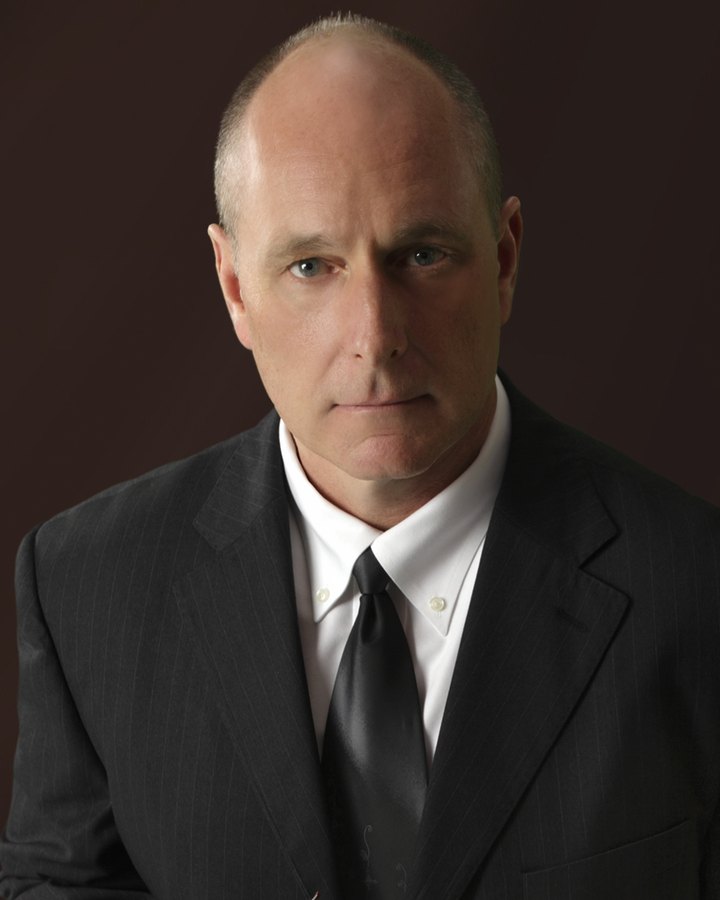 CEO & Owner
Thirty-eight years in four uniforms: street cop, soldier, professor, investigator. More than 220 matters in 42 states and D.C. since 2014.
Full biography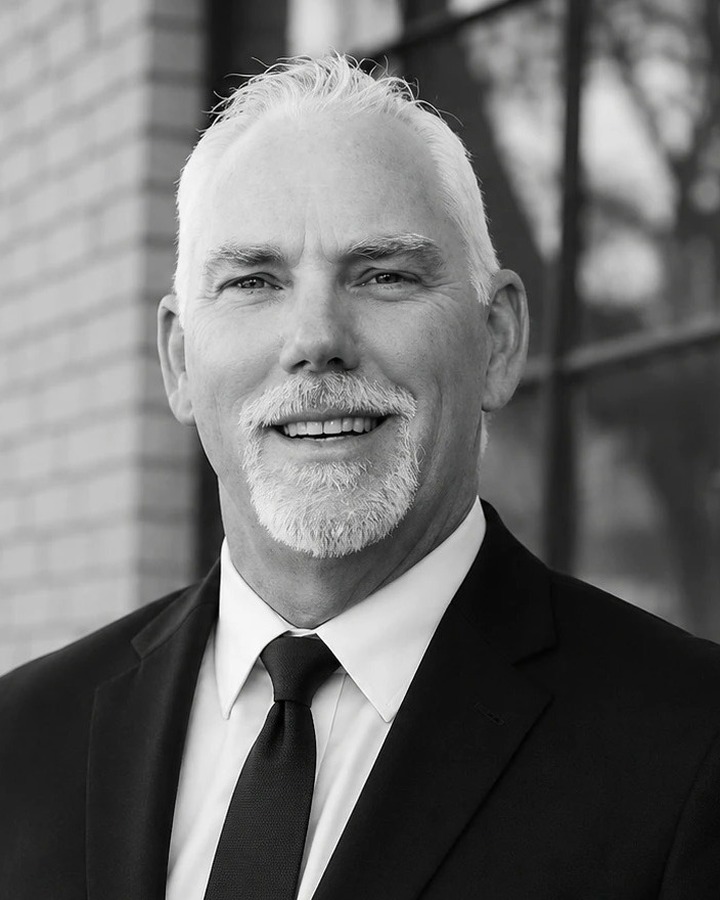 Consultant
More than thirty-five years in public safety: Sheriff of Lewis County, Washington, since his election in 2015, and six years as a commissioner of the state board that sets peace-officer training standards.
Full profile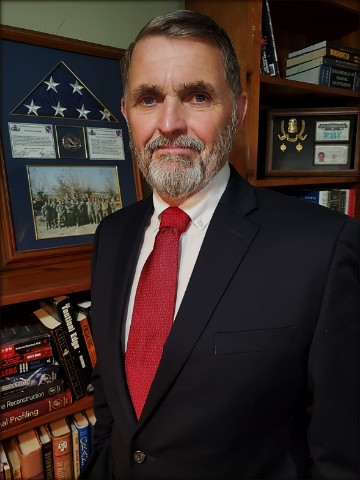 Consultant
Forty years of investigative casework, from patrolman in St. Louis County to the FBI in Chicago, and on to task forces in Afghanistan and Liberia. His work on the Idaho student murders is examined in Broken Plea, the New York Times bestseller by Christopher Whitcomb.
Full profileThe Hon. Richard A. Jones United States District Judge“Mr. Gilbertson’s qualifications demonstrate extensive experience in policing. His expansive work as a police officer in Georgia, with assignments as a SWAT team officer, juvenile court investigator, school resource officer, stakeout squad officer, senior patrolman, and patrolman; then a career as a tenured college professor and university lecturer teaching criminal justice courses to degree-seeking students at colleges and universities, and as a licensed private investigator conducting felony pretrial investigations for attorneys in Washington State in dozens of criminal cases, makes him unique in the field of police expert witnesses. The Court finds that, based on his experience, Mr. Gilbertson’s testimony can be expected to have a reliable basis in knowledge and experience of police practices.”
What this covers.
Within this engagement
- High-speed police pursuits
- Reckless emergency-vehicle operation
- Police-pursuit policy analysis
- Supervisory control of pursuits
- Pursuit termination decisions
CAD and radio traffic, in-car and body-worn video, pursuit reports, and the agency's pursuit policy, sequenced into a timeline and measured against national pursuit standards.
Engagement terms and the published fee schedule: For Retaining Counsel →
Each claimant's case turns on a different decision in the pursuit.
A pursuit that ends in a crash can produce claims from people who share nothing but the event, and the questions a police pursuit expert witness is asked to answer follow from whose claim it is. The decisions themselves, and how policy structures them, are covered in pursuit policy standards.
An uninvolved motorist, passenger or pedestrian hurt in a pursuit crash had no part in starting it. The question that claimant's case raises is why the pursuit was still going when it reached the place of the crash. The record that carries it spans the whole pursuit up to the collision: the pursuing units' transmissions, what each unit's camera shows of the traffic and the road, and what any supervisor monitoring the pursuit had been told. Where a police car rather than the fleeing car struck the claimant, that officer's own driving is in dispute as well, measured against the agency's emergency driving rules and the officer's training on them.
The occupants of the pursued car stand in different places. The driver who fled puts two decisions in play: the reason the pursuit began and, where it ended in contact, the means used to end it. The initiating officer's first transmission fixes the reason given at the time, and the written report shows whether it changed. For a passenger who had no say in the flight, the question is closer to the uninvolved motorist's: what the officers knew about who was in the car, and whether their policy made that knowledge part of the decision to continue or to use a tactic.
Counsel defending the officer or the agency read the same record for the opposite showing, and the two defenses can part ways. An officer can point to authorization: the policy permitted the pursuit, training taught the technique, a supervisor approved what was done. An agency can point to the same policy and training, and to the supervision the radio records, and argue that any departure was the officer's alone. Professor Gilbertson is retained by both sides. Where a pursuit ended in a death, the claim is read the way every death case is read here, with the conduct and the cause of death kept apart, as set out under police wrongful death cases.
Initiate, continue, supervise, terminate, report: where each is recorded.
A police pursuit expert witness reads a pursuit as a run of decisions and looks for each one in its own place in the record.
Initiation is recorded in the first transmission and in the event the dispatcher opened for it. Continuation is recorded in each later update on speed, location and traffic, and in each unit's decision to join, which a policy may limit by number or by assignment. Supervision is recorded in the supervisor's acknowledgment, questions and orders on the radio. Termination is recorded in the order, its time and what each unit's own recording shows it did next. Reporting is recorded in the pursuit report, the officers' narratives and the supervisor's review, and in whether the event was logged as a pursuit at all.
That last entry can decide which rules applied, because the agency's own definition of a pursuit is what brings its pursuit policy into play. An event logged as an attempted stop or a failure to yield, but meeting the policy's definition, leaves the reporting and review the policy required in question, and the report says so. An event logged and reported as the policy defines it is recorded as meeting the policy at that entry, and the report says that as well.
When a police vehicle is used to end the pursuit.
Some pursuits end because an officer used a vehicle to end them: a pursuit intervention technique, a deliberate ramming, a roadblock across the route, or several units boxing the car in. Whether the contact was a seizure, and whether it was a use of force, are questions for counsel, and the force framework itself is treated in the use of force practice.
The practices questions come in four parts, and the record answers each one separately. The first is authorization: whether the agency's written policy in force that day permitted the tactic, and on what conditions. The second is training, whether this officer was taught the technique and kept current on it, which is a question about what training records reveal. The third is approval: where the policy required a supervisor's permission, whether the radio shows it requested and given before the contact, or whether it appears only in a report written afterward.
The fourth is the one no single frame of video can answer: what the whole pursuit leading up to the contact shows. A tactic used to end a pursuit that policy already required to be called off stands on a different record from the same tactic used to end a pursuit that was authorized, supervised and still within policy when the contact came. The analysis therefore reads the pursuit from its first transmission to the contact, never only the seconds around the contact.
Since legal conclusions remain counsel's, all four answers are given as practices findings. A tactic used outside policy, by an officer never trained on it, without an approval the policy required, departs from policy and practice, but that is not a finding that any right was violated and it does not settle liability; the guide to generally accepted police practices explains why.
Two tracks: a seizure, or an injury without one.
Where a claim arising from a pursuit is constitutional rather than one under state law, the cases sort it onto two tracks, and which track applies is a legal question for counsel.
The first track is a seizure. Brower v. County of Inyo, 489 U.S. 593 (1989), explains that a Fourth Amendment seizure occurs only when the government ends a person's freedom of movement through means intentionally applied: a chase that relies on lights and pursuit alone and ends when the fleeing driver loses control is not one, while a police car that pulls alongside and sideswipes the fleeing car, producing the crash, would be. A seizure is then measured for reasonableness. Scott v. Harris, 550 U.S. 372 (2007), held that a deputy who rammed a fleeing car to end a chase that threatened the lives of innocent bystanders did not violate the Fourth Amendment, and Plumhoff v. Rickard, 572 U.S. 765 (2014), held that officers who shot the driver of a fleeing vehicle to end a dangerous chase did not violate it either.
The second track is a person hurt in a pursuit who was never seized. In County of Sacramento v. Lewis, 523 U.S. 833 (1998), a deputy's car skidded into the passenger of a pursued motorcycle after it tipped over. The Court found no seizure and held that, in a high-speed chase aimed at apprehending a suspected offender, only a purpose to cause harm unrelated to the legitimate aim of making the arrest meets the conscience-shocking standard that a due process violation requires.
The constitutional question and the practices question stay separate. Scott called it irrelevant to its analysis whether the deputy had permission for what he actually did, and Plumhoff rejected as irreconcilable with Scott a lower court's reasoning that a chase's danger could not justify deadly force because the officers' decision to continue the chase had caused it. Approval and continuation remain practices questions, answered from the record. The officer's purpose, on the second track, is not one.
The crash on the way to a call, with no one fleeing.
Not every police vehicle crash involves a pursuit. An officer running lights and siren to a call, entering an intersection against the signal, or hurrying to back up another unit is operating under the agency's emergency-response rules rather than its pursuit policy, and a crash on the way to a call raises its own questions. With no one fleeing, the case turns on the call itself and on the driving it was used to justify.
Three practices questions frame it. The first is the agency's emergency-response policy: which calls it allowed an officer to answer with lights and siren, and what it required of a unit entering an intersection against the signal. The second is the officer's emergency vehicle operations training, whether those rules were taught and how recently. The third is the urgency of the call as the dispatch record shows it: the priority assigned, whether the unit was sent or sent itself, and whether the call had been downgraded, cancelled or answered by another unit before the crash, each read with the limits that attach to CAD reports.
The answers sit in different places. The policy and the training file answer the first two; the dispatch log and the radio answer the third, and the in-car recording, where the camera ran, can show the signal, the intersection and whether the siren was sounding as the unit entered it. Aligned into the record chronology, those sources show what the officer had been told about the call when the unit entered the intersection, and the driving is measured against that, not against what the call turned out to be. However serious the crash, a response to a call that carried the priority the policy required, driven the way the training taught, is reported as within policy; a low-priority call run as an emergency, or an intersection entered against the signal without the care the policy required, is reported as outside it.
What the opinion takes from crash and medical experts.
Some questions in a pursuit or response crash sit outside police practices altogether. How fast each vehicle was actually traveling, what the crash dynamics show, what an event data recorder download contains and what medical questions the injuries raise are deferred to qualified experts in those fields. Human factors questions, such as whether another driver could have heard the siren or seen the lights in time, go to qualified experts as well. Their findings enter the practices analysis as part of the record, beside the radio, the dispatch log and the policy, and the analysis uses them without generating them.
That division keeps the opinion of a police pursuit expert witness inside its discipline. A speed another expert establishes at a given point is read against what the radio shows the officers and the supervisor knew at that point, and against what policy and training required in those conditions; the speed itself stays that expert's finding, cited to its source. Counsel still sorting out which of these questions a matter raises can have that conversation first, within the limits described at talking to an expert before retention.
What the agency wrote once the pursuit was over.
After a pursuit the record grows: the officers' pursuit reports, the supervisor's review, any review by command or a board and, where the pursuit ended in a crash, the crash investigation, which another agency may have conducted. Each has its own author and purpose, and they are read separately and in the order they were written, so that a later summary is not read as the record it summarizes.
The crash investigation is read for the times, positions and conditions it records, while its findings on speed and cause stay with the qualified experts named above. The administrative review is read for who conducted it and what that person did during the pursuit: a supervisor who monitored the pursuit on the radio and then reviewed it afterward was reviewing decisions that included the supervisor's own, and the report records that as a fact about the review. The officer's earlier pursuits, and what the agency did after each, belong with supervision and discipline rather than with the decisions in this one.
Working references for this practice area.
Guides for retaining counsel, written from the same record this analysis reads.
Before the record is sent.
What typically decides a pursuit case?
What does retention cost?
What if the pursuit had been called off before the crash?
Can the analysis address a supervisor's or a dispatcher's decisions, not only the driver's?
Does off-duty status or an unmarked car change the analysis?
Does the analysis say what the officer intended during the pursuit?
Does what officers learned after the chase bear on the decision to start it?
Send the pursuit record.
Attorney and law-firm inquiries only. Conflicts are checked before anything substantive, and you will hear about a conflict immediately.
Inquiry sent.
You will hear back directly. If the matter is urgent, call (239) 571-1840.
Conflicts are checked before any substantive discussion. Please do not send privileged material with a first inquiry; after retention the record is exchanged on physical media. Gregory consults for attorneys and their staff only, and does not provide legal advice or attorney referrals to individuals.