

Deficient Police Investigations,
From the First Call to the Closed File
Direct line: (239) 571-1840 · GregoryGilbertson@proton.me
Attorney and law-firm inquiries only
Witnesses · Evidence · Crime scenes · Convictions
Some cases are lost before they are filed, in investigations that missed witnesses, mishandled evidence, and never questioned their first theory. This practice lays out what a standardized investigation required, and documents where the real one fell short.
Three experts. Over 110 years.
Professor Gregory Gilbertson (Ret.), FBI Special Agent Christopher Holland (Ret.), and Sheriff Robert Snaza consult with attorneys nationwide regarding police practices and procedures, use of force, false arrest, police misconduct, criminal, and self-defense casework.
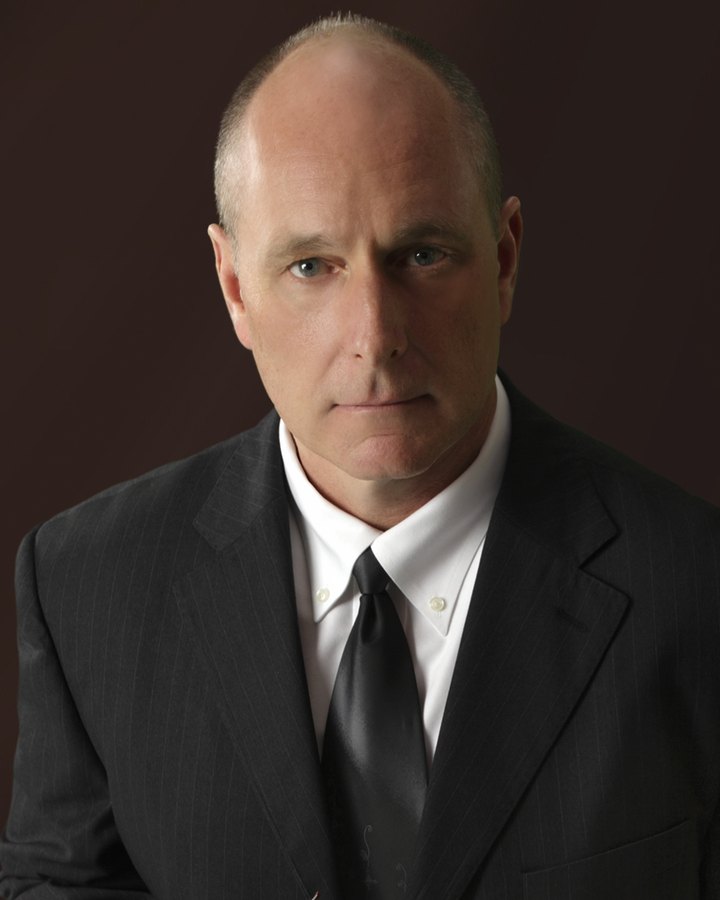 CEO & Owner
Thirty-eight years in four uniforms: street cop, soldier, professor, investigator. More than 220 matters in 42 states and D.C. since 2014.
Full biography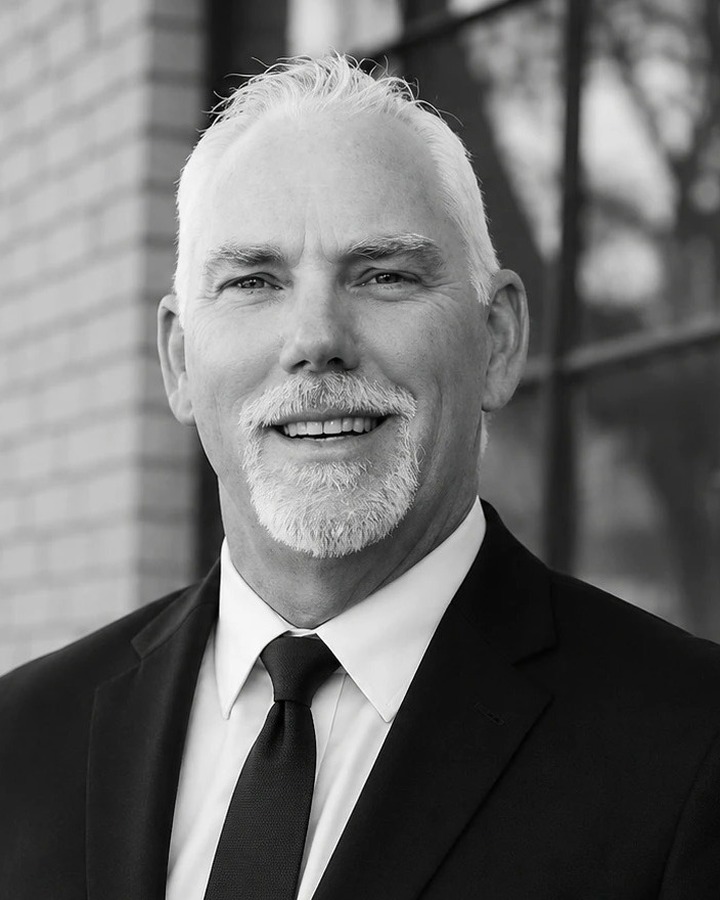 Consultant
More than thirty-five years in public safety: Sheriff of Lewis County, Washington, since his election in 2015, and six years as a commissioner of the state board that sets peace-officer training standards.
Full profile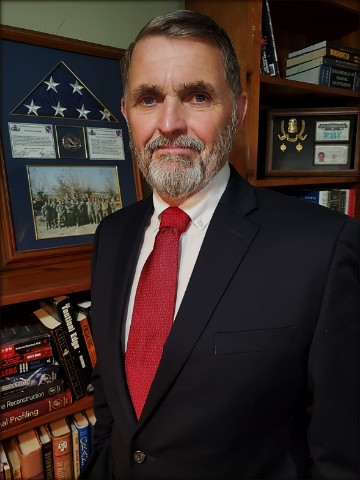 Consultant
Forty years of investigative casework, from patrolman in St. Louis County to the FBI in Chicago, and on to task forces in Afghanistan and Liberia. His work on the Idaho student murders is examined in Broken Plea, the New York Times bestseller by Christopher Whitcomb.
Full profileThe Hon. Richard A. Jones United States District Judge“Mr. Gilbertson’s qualifications demonstrate extensive experience in policing. His expansive work as a police officer in Georgia, with assignments as a SWAT team officer, juvenile court investigator, school resource officer, stakeout squad officer, senior patrolman, and patrolman; then a career as a tenured college professor and university lecturer teaching criminal justice courses to degree-seeking students at colleges and universities, and as a licensed private investigator conducting felony pretrial investigations for attorneys in Washington State in dozens of criminal cases, makes him unique in the field of police expert witnesses. The Court finds that, based on his experience, Mr. Gilbertson’s testimony can be expected to have a reliable basis in knowledge and experience of police practices.”
The facts counsel cite.
- Professor Gregory Gilbertson (Ret.): thirty-eight years across policing, the Army, the classroom, and investigative casework. Independent consultants are retained case-by-case where the record calls for a second discipline.
- Retained in more than 220 civil rights and criminal cases across 42 states and the District of Columbia; expert practice since 2014.
- Retained by plaintiff’s counsel and by the defense alike, in civil and criminal matters.
- Fees are published: a $9,000 flat fee covering discovery review and the written expert report; the full schedule is on For Retaining Counsel.
- Attorney and law-firm inquiries only; conflicts are checked before any substantive discussion. (239) 571-1840.
What the analysis covers.
Individual engagements are scoped with counsel. Go deeper: Missed Witnesses & Evidence · Video & Timeline Reconciliation · Wrongful-Conviction Review.
Witnesses and evidence
- Missed or unlocated witnesses
- Inadequate witness canvassing
- Ignored or mishandled evidence
- Chain-of-custody practices
- Failure to preserve exculpatory evidence
Scenes and records
- Crime-scene security, preservation and documentation
- Officer and civilian interview procedures
- Statement inconsistencies, report omissions and contradictions
- Body-camera, surveillance and report reconciliation
- CAD and dispatch-timeline reconciliation
Case reviews
- Investigative bias and tunnel vision
- Failure to consider alternative suspects
- Homicide-investigation review
- Shooting-investigation review
- Serious-felony investigation review
- Internal use-of-force investigation review
- Wrongful-conviction and post-conviction case review
Reviews serve both civil matters and criminal defense, through post-conviction.
Same discipline, every case.
Conflict check and a written scope with retaining counsel before substantive discussion.
A non-refundable $9,000 flat fee covering discovery review and the written expert report.
The complete record against national standards, set out in the written report.
Deposition, hearings and trial, nationwide from RSW.
Full fee schedule and counsel FAQ: For Retaining Counsel →
An investigation fails in the order it was worked.
A homicide, shooting or serious-felony investigation is worked in stages: the response and the scene, the canvass and the witnesses, the identification of a suspect, the interviews, the collection and submission of evidence, and the case file with the supervisory review that closes it. The stages overlap in time, but the dependency runs forward: each stage works from what the earlier ones preserved. An identification draws on the descriptions the canvass and the first witness contacts produced, the interviews can reach only the witnesses someone found, and a closure review can approve only what the file contains.
That dependency is why a deficient investigation is read in sequence rather than as a list of separate errors. A list counts departures; a sequence shows which of them reached the work that followed. An unsecured scene, a canvass that never happened or a first theory adopted before the evidence was in is a departure at one stage, and it can limit every later stage that depended on the one where it happened.
As a police investigation expert witness, Professor Gilbertson follows the file in the order the work was done and asks, at each stage, what the later stages needed from it and whether they had it. Each departure is measured against the agency's own policy and generally accepted police practices, on the totality of the facts and circumstances as the investigators knew them then, without hindsight. The Library holds the standards for individual stages, beginning with crime scene documentation standards for the scene. What the analysis adds is the path a departure takes out of its own stage and into the stages that relied on it.
What a gap at one stage takes from the stages after it.
Some later steps are made impossible by an earlier gap. A scene released before it was photographed cannot afterward be photographed as it was found, and an item left behind at a released scene cannot later be collected from where it lay. Other later steps go ahead without the record they depend on, and the file records them as done. The report keeps the two findings apart, because a step that never happened and a step that happened without its foundation raise different questions for counsel.
A canvass that never happened limits the record a later identification can be checked against. Where an identification procedure follows, the Library's guide to photo lineups frames how it is read, and the reliability of any identification is deferred to qualified experts. The analysis reports something narrower: whether the file holds any description, gathered independently and before the procedure, that the identification can be compared with.
Where the only record of an interview is an officer's summary, the file holds nothing in the witness's own words to compare a later statement with. An item never logged where it was found has no first entry, so its chain of custody can be followed from intake forward and not back to the scene. In both cases the later step is in the file, and the report states what it was built without.
Failures in the canvass and in finding witnesses are a subject of their own, treated under missed witnesses and evidence. Here they matter for what they took from the stages that came after them.
Gaps that carried forward, and gaps a later step recovered.
An early gap need not reach every later step, and the analysis does not assume that it does. A later canvass, for example, can find the witness the first one missed. Where the file shows a later step supplying what the gap left out of the record, the gap is reported as recovered, with the recovering step named. The gap itself is still reported beside the recovery, since it remains a departure at its own stage, and the weight of anything recovered late is for the finder of fact.
A scene with no access log may still have a complete collection record for every item; the collection is then reported as done anyway, a status that speaks only to that record, and the missing log stays a gap of its own. For each gap, the report names the stage where it opened and the later steps it touched, and gives each step a status: made impossible, done without the record it depended on, done anyway, or recovered.
Every status turns on order, so each entry is placed on the record chronology: when the gap opened, when the later step happened, and which source dates each. A recovery has to come after the gap it answers, and a step reported as done anyway has to appear in the record rather than be assumed.
When the early gap is a theory adopted too soon, how that shows in the file is set out under tunnel vision, and the analysis follows the theory's reach into each stage after it. The questions a claim of self-defense adds to an investigation are taken up in that practice area.
The same limits hold before trial, in civil matters and after a conviction.
Before a criminal trial, the review gives defense counsel a stage-by-stage account of the investigation, with each gap located and its reach stated. In civil matters, the review reports each gap as a practices finding, kept apart from any question of a constitutional violation or of liability. After a conviction, the original file is read the same way, as part of wrongful-conviction review. In each of those settings, legal conclusions remain counsel's.
The review measures investigative practice: it does not say who committed the offense, and a deficient investigation does not answer that question. Nor does it say what a lead never worked would have produced, which would be speculation, or that any gap changed the result, which is for the finder of fact. What had to be disclosed is a legal question, and the guide to Brady and Giglio in police files marks where the expert's part ends.
Laboratory and medical questions are deferred to qualified experts in those disciplines, and a matter that needs crime scene analysis is referred to FBI Special Agent Christopher Holland (Ret.), a consultant retained case by case. Those limits leave a police investigation expert witness the investigation itself: how it was worked, and how far each gap reached into the work that followed. Where the investigation began with a report that a teacher, coach or other school employee sexually abused a student, Professor Gilbertson's experience investigating those allegations is set out under school sexual abuse cases. In a homicide prosecution, the case-management records the defense reads are set out under homicide defense.
Related casework.
Case accounts as published by retaining counsel. Outcomes depend on their facts; no result is promised for any other matter.
Working references for this practice area.
Guides for retaining counsel, written from the same record this analysis reads.
The judge mentioned the credibility of his report in hearings. Highly effective in securing a dismissal with prejudice for our client.Dr. Stephen Pidgeon, Ph.D., Attorney at Law · Everett, WA
Asked before the record is sent.
What does a deficient-investigation review produce?
Does the practice take wrongful-conviction matters?
What does retention cost?
Can the review say whether a missed lead would have changed the result?
Does one early gap undermine the whole investigation?
Can the review be limited to one stage, such as the identification?
Send the investigation file.
Attorney and law-firm inquiries only. Conflicts are checked before anything substantive, and you will hear about a conflict immediately.
Inquiry sent.
You will hear back directly. If the matter is urgent, call (239) 571-1840.
Conflicts are checked before any substantive discussion. Please do not send privileged material with a first inquiry; after retention the record is exchanged on physical media. Gregory consults for attorneys and their staff only, and does not provide legal advice or attorney referrals to individuals.