

Excessive Force,
Read Against the Standard
Direct line: (239) 571-1840 · GregoryGilbertson@proton.me
Attorney and law-firm inquiries only
Shootings · Restraints · Less-lethal force · De-escalation
Objective-reasonableness analysis under Graham v. Connor: the severity of the crime, the immediacy of the threat, active resistance and attempted flight, weighed on the totality of the circumstances. Every opinion is built from the record and measured against national police standards, agency policy, and the officer's own training.
Three experts. Over 110 years.
Professor Gregory Gilbertson (Ret.), FBI Special Agent Christopher Holland (Ret.), and Sheriff Robert Snaza consult with attorneys nationwide regarding police practices and procedures, use of force, false arrest, police misconduct, criminal, and self-defense casework.
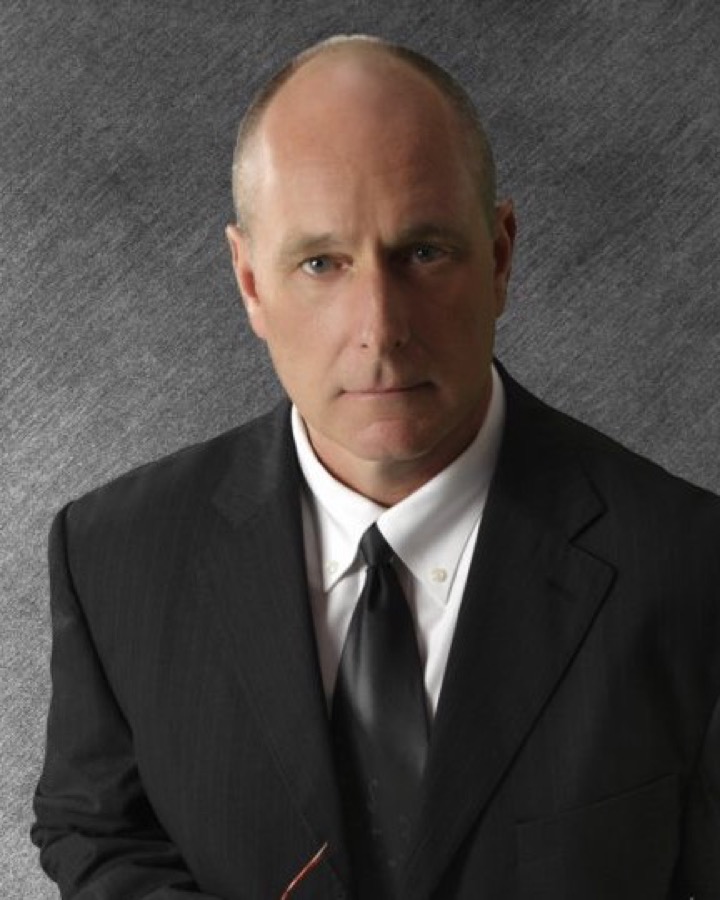 CEO & Owner
Thirty-eight years in four uniforms: street cop, soldier, professor, investigator. More than 220 matters in 42 states and D.C. since 2014, with testimony that has not been excluded at trial in any state or federal court.
Full biography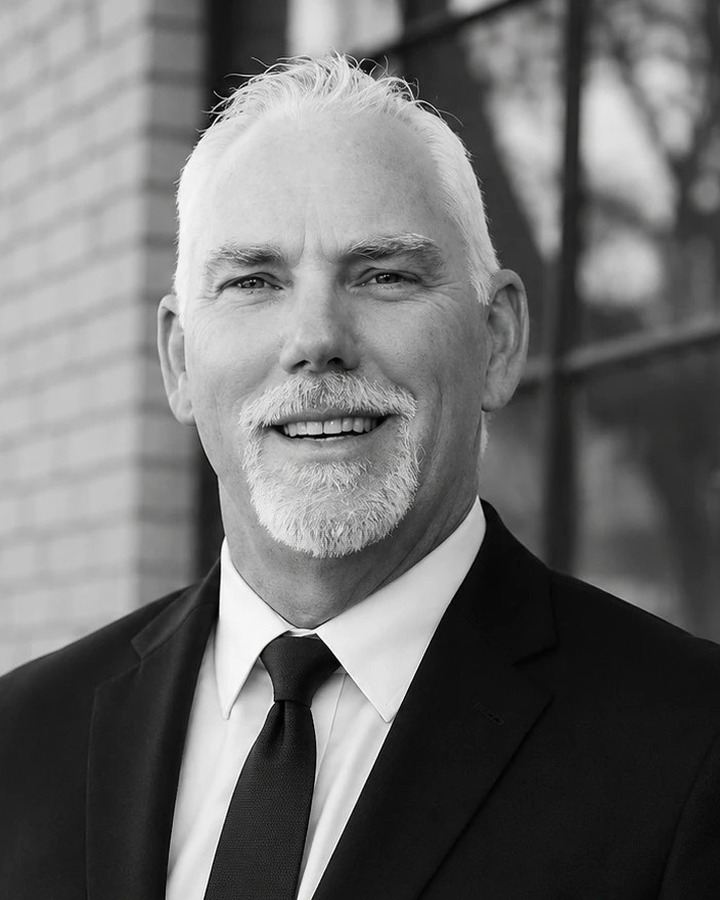 Consultant
More than thirty-five years in public safety: twelve years and three terms as the elected Sheriff of Lewis County, Washington, and six years a commissioner of the state board that sets peace-officer training standards.
Full profile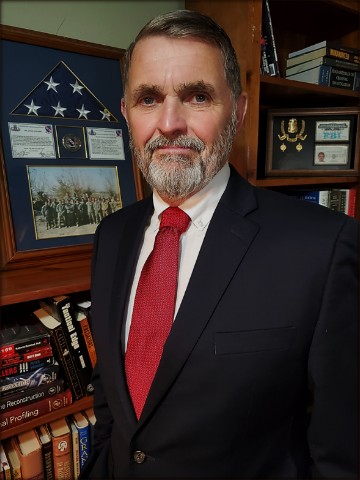 Consultant
Forty years of investigative casework, from patrolman in St. Louis County to the FBI in Chicago, and on to task forces in Afghanistan and Liberia. His work on the Idaho student murders is examined in Broken Plea, the New York Times bestseller by Christopher Whitcomb.
Full profileNever excluded. Professor Gilbertson’s testimony has not been excluded at trial in any state or federal court.
The Hon. Richard A. Jones United States District Judge“Mr. Gilbertson’s qualifications demonstrate extensive experience in policing. His expansive work as a police officer in Georgia, with assignments as a SWAT team officer, juvenile court investigator, school resource officer, stakeout squad officer, senior patrolman, and patrolman; then a career as a tenured college professor and university lecturer teaching criminal justice courses to degree-seeking students at colleges and universities, and as a licensed private investigator conducting felony pretrial investigations for attorneys in Washington State in dozens of criminal cases, makes him unique in the field of police expert witnesses. The Court finds that, based on his experience, Mr. Gilbertson’s testimony can be expected to have a reliable basis in knowledge and experience of police practices.”
The facts counsel cite.
- Professor Gregory Gilbertson (Ret.): thirty-eight years across policing, the Army, the classroom, and investigative casework. Independent consultants are retained case-by-case where the record calls for a second discipline.
- Retained in more than 220 civil rights and criminal cases across 42 states and the District of Columbia; expert practice since 2014.
- Professor Gilbertson’s testimony has not been excluded at trial in any state or federal court.
- Retained by plaintiff’s counsel and by the defense alike, in civil and criminal matters.
- Fees are published: a $9,000 flat fee covering discovery review and the written expert report; the full schedule is on For Retaining Counsel.
- Attorney and law-firm inquiries only; conflicts are checked before any substantive discussion. (239) 571-1840.
What the analysis covers.
Individual engagements are scoped with counsel. Go deeper: Officer-Involved Shootings · Chokeholds & Restraints · Tasers, Canine & Less-Lethal · SWAT & High-Risk Operations · Mental-Health & Crisis Encounters.
Force events
- Officer-involved shootings and deadly force
- Wrongful-death cases involving police force
- Chokeholds, carotid and neck restraints
- Prone and positional restraints
- Hands-on physical force
- Force against restrained or handcuffed people
- Force against fleeing suspects
- Force involving moving vehicles, including shooting at or from vehicles
Weapons and tactics
- Taser and electronic-control-device force
- Pepper spray and chemical agents
- Baton and impact weapons
- Less-lethal projectiles
- Police-canine force
- SWAT and tactical operations
- High-risk warrant operations
Standards and duties
- Proportionality, necessity and available alternatives
- De-escalation and crisis-intervention practices
- Force in mental-health and behavioral-health encounters
- Duty to intervene
- Duty to render or request medical aid
- Use-of-force reporting and administrative review
- Agency use-of-force policy and training analysis
Retained as a police use of force expert witness for plaintiffs, and as an excessive force expert witness in the defense of officers accused of excessive force.
Same discipline, every case.
Conflict check and a written scope with retaining counsel before substantive discussion.
A non-refundable $9,000 flat fee covering discovery review and the written expert report.
The complete record against national standards; most reports finish within the retainer.
Deposition, hearings and trial, nationwide from RSW.
Full fee schedule and counsel FAQ: For Retaining Counsel →
What objective reasonableness sets, and what it does not settle.
Graham v. Connor, 490 U.S. 386 (1989) supplies the frame for every force question, and its practical effect is a limit on the review itself: the analysis is anchored to what the officer knew at the moment force was used, and never to what the record revealed afterward. The factors are unpacked at Graham v. Connor explained. Deadly force adds Tennessee v. Garner, 471 U.S. 1 (1985), set out at the deadly-force standard. Force involving a moving vehicle adds Scott v. Harris, 550 U.S. 372 (2007). Each is weighed on the totality of the facts and circumstances rather than on any single frame of video, a point developed at totality of the circumstances.
The standard sets the frame. It does not supply the three yardsticks a force analysis is actually decided on. The first is the agency's own written use-of-force policy and the general orders in force on the date of the incident, not the version published later. The second is the training the officer actually received, in the academy, in field training and in in-service, which is a question of records rather than of what a policy assumed. The third is generally accepted police practices, drawn from national model policies, POST commission expectations and academy and in-service curricula, which is what fills the space a written policy leaves open. Those layers are separated at policy, practice and training, and the third is defined at generally accepted police practices.
Applying those yardsticks to a record is what a police practices expert witness is retained to do. The opinion addresses police practices: what the officer did, what policy and training required, and where the two diverge. Whether the conduct violated the Fourth Amendment, and whether any violation was clearly established, are legal conclusions, and they remain counsel's.
What a force case is decided on, and what a missing piece costs.
A force record is usually incomplete in ways that stay invisible until the deposition. An agency use-of-force policy produced without the involved officer's training file shows what the agency wrote, not what that officer was taught about the option used, and the two are often different. Video produced without the CAD record leaves the sequence unanchored: there is footage, but no fixed time for the dispatch, the arrival, the first request for backup or the call for aid. A use-of-force report read without its supplements shows one version of a sequence rather than how the account developed as officers were interviewed. An internal affairs file produced without the involved officer's disciplinary and complaint history shows how this incident was reviewed, not whether the same conduct had been reviewed before. Each gap is a question opposing counsel asks first. Fixing the sequence before the depositions is treated at the record chronology, and how a later account is documented at what a supplemental report is.
The FAQ on this page lists the materials the analysis rests on. What a list does not fix is the order in which they are read, and three items decide whether the rest can be read at all: the general orders in force on the date of the incident rather than the manual as it reads now, the use-of-force report with every supplement rather than the original alone, and the involved officer's own training records rather than what the agency's policy assumed he was taught. The thirteen items counsel sends are published on For Counsel, and why the review does not start on a partial production at why the complete record matters.
Autopsy reports and forensic reports appear on that published list as items counsel sends, and they are read as part of the record. They are not the subject of the opinion. Medical, scientific and technical questions are deferred to qualified experts in those disciplines, and the deferral is stated on the record rather than worked around.
Where the fact patterns divide.
Force questions do not divide by injury. They divide by the option used and by the type of encounter, because the governing policy, the training that applies and the accepted-practice yardstick are different for each one, and so is the record that proves them.
Deadly force turns on the shooting decision and the threat as it presented. Restraint cases turn on neck and prone restraint practices and on force applied to a person already controlled. Electronic-control devices, canine deployment and other less-lethal options each carry their own authorization, warning and reporting practices. Planned tactical and high-risk warrant operations are judged largely on the planning that preceded the entry. An encounter that dispatch identified as a behavioral-health crisis is measured against crisis-intervention practices from before the first officer arrived. How agencies structure the choice among options is treated at force options and decision models, and the obligations that attach before force is used are at what de-escalation standards require.
Officer-Involved Shootings. The deciding paper is the agency's deadly-force policy and the involved officer's training history, read against the use-of-force report and the administrative review of the shooting.
Chokeholds and Restraints. Here it is the restraint policy and the training behind it, read with the supplemental reports and the record of what was done once the person showed distress.
Tasers, Canine and Less-Lethal. Device-specific policy governs, and the deployment record proves it: device logs where they were produced, canine deployment records, and the warnings and aid the policy required.
SWAT and High-Risk Operations. The file that decides it is the operational plan, the briefing materials, and the threat assessment or risk matrix that justified a tactical response.
Mental-Health and Crisis Encounters. The CAD narrative and the radio traffic are read against each responding officer's crisis-intervention training record, and clinical questions belong to qualified mental-health experts.
The arguments the analysis has to meet.
An opinion that only holds while the other side stays quiet is not worth serving. Four arguments recur in force litigation, and the analysis has to meet all of them on the record.
The first is corroboration: whether the threat the officer described is one the video actually shows, or one the video merely fails to rule out. The second is contemporaneous documentation: whether resistance appears in the use-of-force report, its supplements and the radio traffic made at the time, or only in accounts assembled after the incident became a claim. The third is authorization: whether the option used was permitted by the policy and the training in force that day, because a tactic can be poor practice and still be authorized, and it can be authorized on paper and still be something the officer was never trained to do. The fourth is hindsight, and it is the defense's strongest argument because it is usually a correct one. A theory that depends on the weapon that turned out not to be there, or on what an investigation established days later, is answering a question the officer was never asked, and it is the first thing a competent cross-examination attacks.
Those arguments are met the same way in every posture. An expert who has only ever reached one side's conclusion can be impeached on that fact before any opinion is examined. The record here runs the other way: officers and agencies retain him, and where the record shows the officer did what training and policy required, that is what the report says, in the same vocabulary an adverse report would use. That symmetry is what an excessive force expert witness has to defend on cross-examination, and the posture is set out at retained by both sides, with the unfavorable read at what happens when the opinion does not help. Whether an officer is entitled to qualified immunity is counsel's argument to make, and the report addresses only whether the conduct matched policy, training and accepted police practices.
Admissibility, and who is responsible for it.
Retaining counsel is responsible for the admissibility of any report and any testimony, and no expert takes that burden off counsel. What an expert can do is leave the record on challenges where counsel can read it instead of asserting it. Counsel can read the court's ruling in Alvarez v. King County on the homepage, in the words of the order rather than a characterization of them. What Rule 702 asks of a police practices witness is set out at Daubert and Rule 702.
The qualified fact, carrying its qualifier: Professor Gilbertson's testimony has not been excluded at trial in any state or federal court. What that does and does not mean is explained at what never excluded means. Testimony has been admitted in the state courts of Washington, Oregon, Kansas, Connecticut, Florida and Illinois, and in the U.S. District Courts for the Western District of Washington, the District of Arizona and the Western District of Louisiana.
Rule 702 also has a negative answer, and it is the one that keeps an opinion inside its discipline: where scientific, medical, technical or human factors evidence is involved, qualified experts in those disciplines are deferred to, on the record.
Related casework.
Josiah Hunter v. City of Federal Way
U.S. District Court, W.D. Wash.
Trial testimony on excessive force; the jury agreed and awarded $640,000.
Open the case files Wrongful deathThe Che Taylor Matter · City of Seattle
Retained December 2019
Report identified substandard practices; counsel credits a $1.5 million settlement.
Open the case files Jury verdictEstate of Alfontish Cockerham v. City of Chicago
Circuit Court of Cook County, Illinois
Police practices and use of force expert in a videotaped officer-involved shooting; $1.18 million jury judgment per retaining counsel.
Open the case filesCase accounts as published by retaining counsel. Outcomes depend on their facts; no result is promised for any other matter.
Working references for this practice area.
Guides for retaining counsel, written from the same record this analysis reads.
His insights, analysis, reports, and trial testimony are always persuasive.James Bible, Attorney at Law · Seattle, WA
Asked before the record is sent.
What standard governs a use-of-force opinion?
Which materials does the analysis rest on?
What does retention cost?
When should counsel retain a use-of-force expert?
Can he be retained to defend an officer accused of excessive force?
What happens if the record does not support the claim?
Send a use-of-force record.
Attorney and law-firm inquiries only. Conflicts are checked before anything substantive, and you will hear about a conflict immediately.
Inquiry sent.
You will hear back directly. If the matter is urgent, call (239) 571-1840.
Conflicts are checked before any substantive discussion. Please do not send privileged material with a first inquiry; after retention the record is exchanged on physical media. Gregory consults for attorneys and their staff only, and does not provide legal advice or attorney referrals to individuals.