

False Arrest Expert Witness,
Read From the Arrest Record
Direct line: (239) 571-1840 · GregoryGilbertson@proton.me
Attorney and law-firm inquiries only
Stops · Detention · Arrests · Searches · Warrants
A false arrest expert witness reads the arrest for timing: what the officers actually knew at each moment, and what reasonable suspicion or probable-cause practices required of them before the stop, the cuffs, or the entry. The record answers that question; the analysis shows it.
Three experts. Over 110 years.
Professor Gregory Gilbertson (Ret.), FBI Special Agent Christopher Holland (Ret.), and Sheriff Robert Snaza consult with attorneys nationwide regarding police practices and procedures, use of force, false arrest, police misconduct, criminal, and self-defense casework.
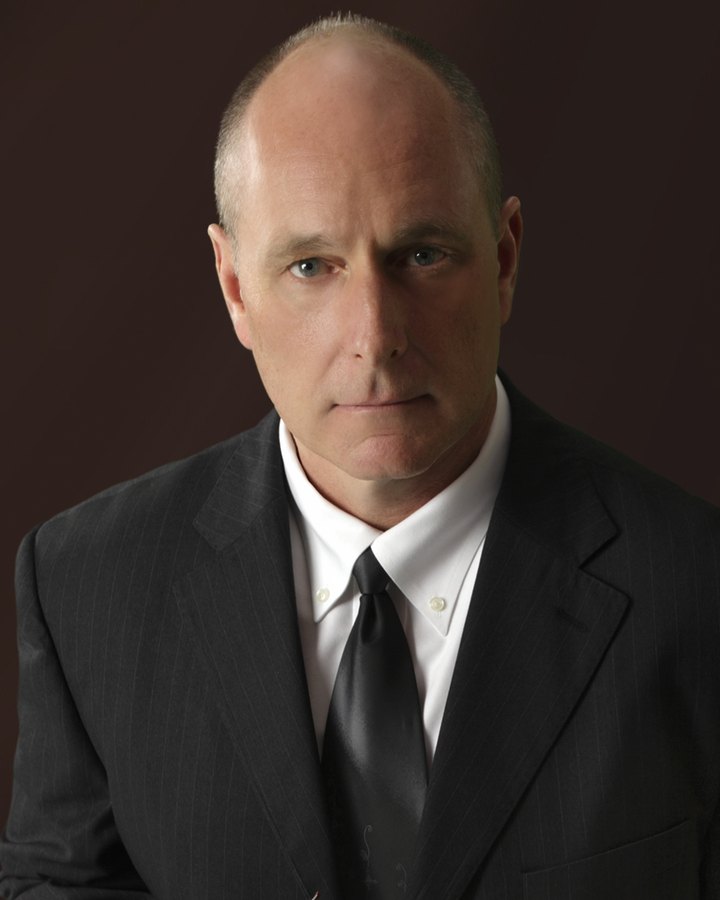 CEO & Owner
Thirty-eight years in four uniforms: street cop, soldier, professor, investigator. More than 220 matters in 42 states and D.C. since 2014.
Full biography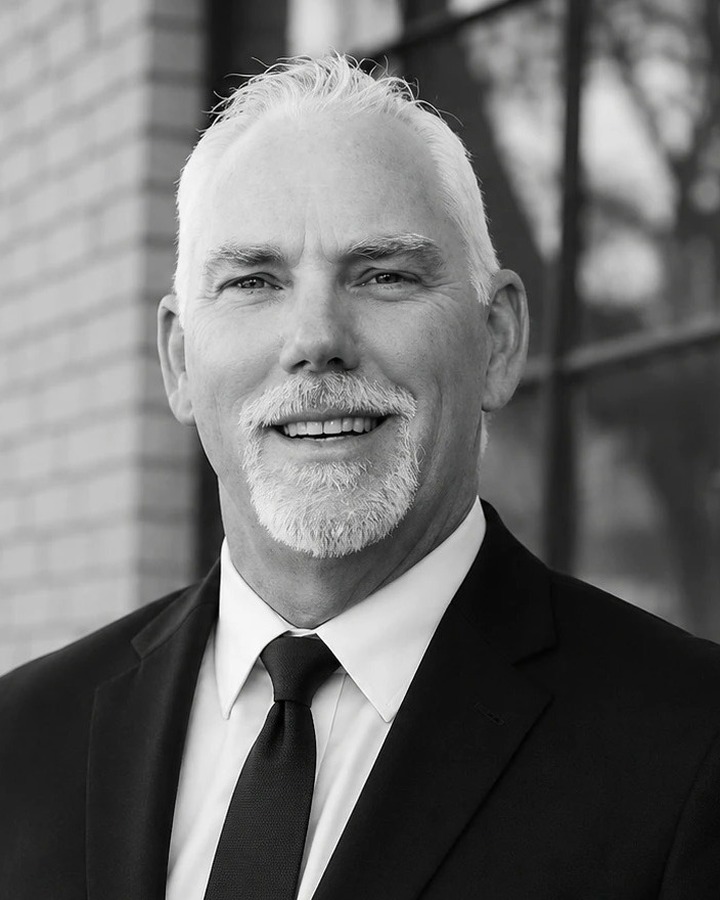 Consultant
More than thirty-five years in public safety: Sheriff of Lewis County, Washington, since his election in 2015, and six years as a commissioner of the state board that sets peace-officer training standards.
Full profile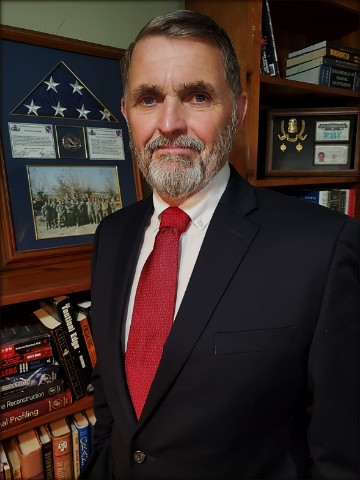 Consultant
Forty years of investigative casework, from patrolman in St. Louis County to the FBI in Chicago, and on to task forces in Afghanistan and Liberia. His work on the Idaho student murders is examined in Broken Plea, the New York Times bestseller by Christopher Whitcomb.
Full profileThe Hon. Richard A. Jones United States District Judge“Mr. Gilbertson’s qualifications demonstrate extensive experience in policing. His expansive work as a police officer in Georgia, with assignments as a SWAT team officer, juvenile court investigator, school resource officer, stakeout squad officer, senior patrolman, and patrolman; then a career as a tenured college professor and university lecturer teaching criminal justice courses to degree-seeking students at colleges and universities, and as a licensed private investigator conducting felony pretrial investigations for attorneys in Washington State in dozens of criminal cases, makes him unique in the field of police expert witnesses. The Court finds that, based on his experience, Mr. Gilbertson’s testimony can be expected to have a reliable basis in knowledge and experience of police practices.”
The facts counsel cite.
- Professor Gregory Gilbertson (Ret.): thirty-eight years across policing, the Army, the classroom, and investigative casework. Independent consultants are retained case-by-case where the record calls for a second discipline.
- Retained in more than 220 civil rights and criminal cases across 42 states and the District of Columbia; expert practice since 2014.
- Retained by plaintiff’s counsel and by the defense alike, in civil and criminal matters.
- Fees are published: a $9,000 flat fee covering discovery review and the written expert report; the full schedule is on For Retaining Counsel.
- Attorney and law-firm inquiries only; conflicts are checked before any substantive discussion. (239) 571-1840.
What the analysis covers.
Individual engagements are scoped with counsel. Go deeper: Stops, Frisks & Detention · Probable-Cause Timing · Warrants & No-Knock Entries.
Stops and detention
- Investigative stops and stop-and-frisk procedures
- Reasonable-suspicion analysis
- Unlawful and prolonged detention
- False imprisonment
Arrest practices
- Probable-cause-related police practices
- Arrest procedures and warrantless arrests
- Mistaken-identity and wrong-address arrests
Searches and seizures
- Searches of people, vehicles and homes
- Searches of real and personal property
- Seizure of weapons, contraband and property
- Warrant preparation and execution
- Knock-and-announce procedures and no-knock entries
Retained in plaintiff false-arrest cases and in the defense of officers accused of false arrest.
Same discipline, every case.
Conflict check and a written scope with retaining counsel before substantive discussion.
A non-refundable $9,000 flat fee covering discovery review and the written expert report.
The complete record against national standards, set out in the written report.
Deposition, hearings and trial, nationwide from RSW.
Full fee schedule and counsel FAQ: For Retaining Counsel →
What was relayed, and what was confirmed before custody.
An arrest is made in the field on what the officers knew, and the officer who makes it is not always the officer who learned the facts behind it. The basis can arrive as a dispatch broadcast, another officer's request to stop and hold someone, a records or warrant return, or a warrant held by another agency. Reading that kind of arrest, a false arrest expert witness follows the knowledge itself: who first learned each fact, in what words it was passed on, by what channel, and what reached the arresting officer before the person was taken into custody.
Each channel leaves a different record, and the questions change with the channel. For a broadcast, they are what the broadcast said and what the arresting officer matched to it. For a request from another officer, they are what the requesting officer knew, how much of it was passed on, and whether the arresting officer asked for more. For a records or warrant return, they are whether the record was current, whether it belonged to the person being held, and whether the agency holding it was asked to confirm it.
The analysis sets what was sent beside what was received and acted on, because detail can fall away or be added between the officer who held a fact and the officer who used it. The dispatch side of that trace is read as the Library guide to CAD reports describes. Confirmation is measured against the agency's policy and the officer's training in force on the date, and against generally accepted police practices: which confirming steps were required before custody, which were available at the scene, and which the record shows were taken.
A required confirmation that appears nowhere in the record is reported as unrecorded; one the record shows was skipped is a departure. Both are findings about police practice, stated as such; neither says the arrest was unlawful or that anyone is liable for it. The trace ends in an attribution for every fact in the arrest's basis: the officer who first held it, the channel it traveled, and whether the record shows it reaching the officer who acted on it.
One arrest, written afterward for several readers.
Once the person is in custody, the knowledge behind the arrest is written up more than once, each time for a reader who will test it. The arrest report is written for a supervisor. The probable cause statement or affidavit is written for a magistrate or judge. The booking record is written for the jail.
The documents do not always share an author. The affiant can be an officer who never saw the arrest and wrote from another officer's report, and the booking record can be completed by someone who took no part in it. Beside all of them sit two records made at the time rather than written up afterward: the dispatch record, logged while the call was moving, and the video, recorded while the arrest was happening.
The analysis reads each document against the others and against those two records, fact by fact, asking the same questions of each: what source it gives, what time it gives, and which officer it credits. A disagreement among them is a documentation finding, stated at that level: which document departs, on which fact, and what the agency's report-writing policy and the officer's training required of that document. An affidavit that presents as the affiant's own observation a fact the arrest report credits to another officer is one such disagreement; a booking record whose identifiers do not match the person the report describes is another.
Whether any document was falsified is a different question from whether the documents disagree, and it has its own practice area: falsified reports. A basis that appears in no document is reported as a gap in the documentation and nothing more: it is not a finding about what the officers knew, and it is not a finding about probable cause. The document comparison does not decide the threshold question; what each threshold asks of the officers is explained in reasonable suspicion versus probable cause.
The forum changes the deliverable, not the method.
The same arrest can be examined in a civil case and in a criminal one, and the analysis arrives in a different form in each. In a civil claim under 42 U.S.C. § 1983, the work of a false arrest expert witness can take the form of a written report stating the trace and the document comparison as opinions with their basis, a deposition in which opposing counsel tests them, and, where the other side has disclosed an expert who reads the arrest differently, a rebuttal report. The vocabulary of each, from disclosure to rebuttal, is defined in the lexicon of expert litigation terms.
In a criminal case the defense may need the analysis at a suppression hearing, well before any trial, where it is delivered as testimony; that engagement runs through suppression support. The format, the calendar and the audience change between the two proceedings. The method does not: the same trace of who knew what and how it reached the arresting officer, the same reading of each document against the others and against the dispatch record and the video, and the same measures, taken from the policy and training in force on the date of the arrest.
Nor does the method move with the retaining side: counsel defending officers accused of false arrest retain it unchanged, and the Library sets out why that consistency matters at trial for an expert retained by both sides. The report and the testimony address police practices, and legal conclusions remain counsel's. An arrest that grew out of a stop is traced back to the first contact under stops, frisks and detention, and probable-cause timing takes up a dispute over when the basis arrived, rather than how it traveled.
What the practice file holds on arrests and searches.
Counted from the practice's table of cases, the matters labeled false arrest or search and seizure number 28. The entries record 14 states, with 17 in the federal courts and 11 in the state courts, and each is counted once, whatever other labels it carries, so the figures that follow are parts of that total rather than additions to it. The false arrest label covers an arrest or a detention, the search-and-seizure label a search or a seizure of property, and an entry can carry both.
Of those 28 matters, 12 also carry a use of force label, and the force question in a matter like those is taken up under use of force. Criminal captions make up 3 of the 28 matters, those in which the arrest question reached the analysis through the defense; the defense side of this work is described under suppression support.
Every figure here counts retentions, not results, and each is drawn from the full table rather than from the published matters in the case history.
The basis on paper for each search, set against the order on video.
Custody does not close the record. For each search that followed the arrest, whether of the person, a vehicle or a home, a false arrest expert witness reads the paper the agency made about it: the basis entered for the search, and whatever inventory form, property receipt, evidence log entry or record of consent it produced. Where cameras were recording, the video fixes the order in which those searches happened. Search terms such as a search incident to arrest are defined by the lexicon of stops, arrests and searches, and a home searched on a warrant is read as set out in warrants and no-knock entries.
The first comparison sets the basis each record states for a search beside the sequence the timestamps and the video show. An inventory is fixed in that sequence by whatever times the inventory form, the dispatch record and the video give for it, and a consent by when the request was made, when it was answered and when the search began. Where two records give one search different bases, both are reported, each with its source.
The second comparison runs against the agency's own procedure, as it stood when the search was made. Where the inventory or consent policy names steps, forms or a responsible officer, the analysis looks for each of them in the inventory form, the property receipt, the evidence log and any consent record.
A gap is stated as the record shows it: a consent form timed after the video shows the search under way, an inventory the report describes with no inventory form in the record, a step the policy required that no record reflects. A false arrest expert witness reports where the paper and the sequence diverge and goes no further: the report infers nothing about why, and it characterizes no officer's reason for a search. A departure from the agency's procedure is a finding about practice, not a constitutional finding, and it does not establish liability; legal conclusions remain counsel's, and the expert addresses police practices.
The threshold for the arrest itself is a separate question, taken up in reasonable suspicion versus probable cause. So is a dispute over where an item first appears in the record, which is taken up under fabricated or suppressed evidence.
Related casework.
Case accounts as published by retaining counsel. Outcomes depend on their facts; no result is promised for any other matter.
Working references for this practice area.
Guides for retaining counsel, written from the same record this analysis reads.
Professor Gilbertson has twice served as my expert in search and seizure and false arrest cases. His analysis and opinions are always spot on.Darryl Parker, Attorney at Law · Seattle, WA
Asked before the record is sent.
What does a false-arrest opinion examine?
Does the practice cover search-and-seizure questions?
What does retention cost?
What if there is no video of the arrest?
Does the analysis cover a detention that ended without an arrest?
Can one engagement cover the arrest and the force used during it?
Does the analysis address a search of a vehicle after the driver was arrested?
What does a false arrest expert witness look at when the charges were later dropped?
How is a search the officers describe as consensual analyzed?
Send an arrest or search record.
Attorney and law-firm inquiries only. Conflicts are checked before anything substantive, and you will hear about a conflict immediately.
Inquiry sent.
You will hear back directly. If the matter is urgent, call (239) 571-1840.
Conflicts are checked before any substantive discussion. Please do not send privileged material with a first inquiry; after retention the record is exchanged on physical media. Gregory consults for attorneys and their staff only, and does not provide legal advice or attorney referrals to individuals.