

When Procedure Was
Abandoned
Direct line: (239) 571-1840 · GregoryGilbertson@proton.me
Attorney and law-firm inquiries only
Reports · Evidence · Pursuits · Accountability
Misconduct analysis documents the departures: from standardized police procedures, from the agency's own written policy, and from the duties every officer carries. It is built line by line from the record, so counsel can show not only what happened, but what was supposed to happen.
Three experts. Over 110 years.
Professor Gregory Gilbertson (Ret.), FBI Special Agent Christopher Holland (Ret.), and Sheriff Robert Snaza consult with attorneys nationwide regarding police practices and procedures, use of force, false arrest, police misconduct, criminal, and self-defense casework.
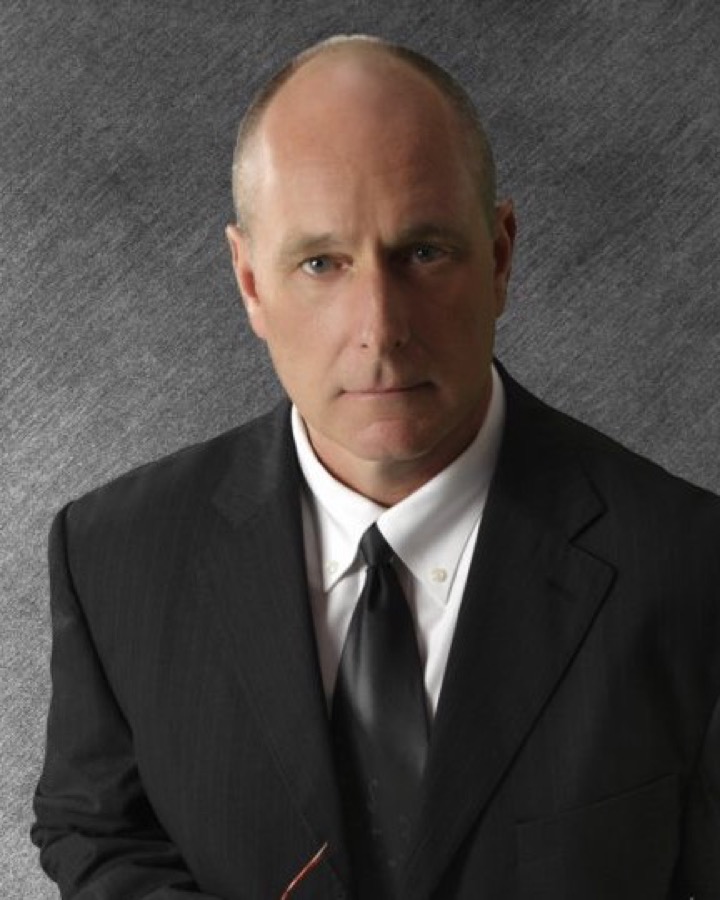 CEO & Owner
Thirty-eight years in four uniforms: street cop, soldier, professor, investigator. More than 220 matters in 42 states and D.C. since 2014, with testimony that has not been excluded at trial in any state or federal court.
Full biography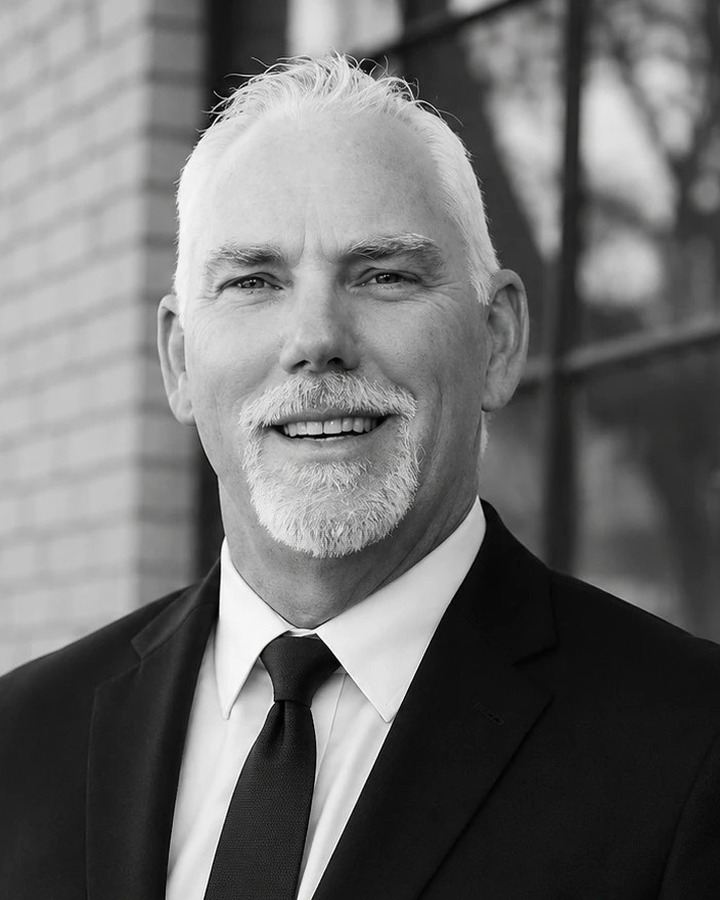 Consultant
More than thirty-five years in public safety: twelve years and three terms as the elected Sheriff of Lewis County, Washington, and six years a commissioner of the state board that sets peace-officer training standards.
Full profile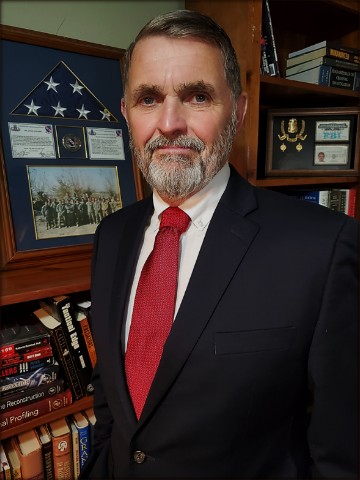 Consultant
Forty years of investigative casework, from patrolman in St. Louis County to the FBI in Chicago, and on to task forces in Afghanistan and Liberia. His work on the Idaho student murders is examined in Broken Plea, the New York Times bestseller by Christopher Whitcomb.
Full profileNever excluded. Professor Gilbertson’s testimony has not been excluded at trial in any state or federal court.
The Hon. Richard A. Jones United States District Judge“Mr. Gilbertson’s qualifications demonstrate extensive experience in policing. His expansive work as a police officer in Georgia, with assignments as a SWAT team officer, juvenile court investigator, school resource officer, stakeout squad officer, senior patrolman, and patrolman; then a career as a tenured college professor and university lecturer teaching criminal justice courses to degree-seeking students at colleges and universities, and as a licensed private investigator conducting felony pretrial investigations for attorneys in Washington State in dozens of criminal cases, makes him unique in the field of police expert witnesses. The Court finds that, based on his experience, Mr. Gilbertson’s testimony can be expected to have a reliable basis in knowledge and experience of police practices.”
The facts counsel cite.
- Professor Gregory Gilbertson (Ret.): thirty-eight years across policing, the Army, the classroom, and investigative casework. Independent consultants are retained case-by-case where the record calls for a second discipline.
- Retained in more than 220 civil rights and criminal cases across 42 states and the District of Columbia; expert practice since 2014.
- Professor Gilbertson’s testimony has not been excluded at trial in any state or federal court.
- Retained by plaintiff’s counsel and by the defense alike, in civil and criminal matters.
- Fees are published: a $9,000 flat fee covering discovery review and the written expert report; the full schedule is on For Retaining Counsel.
- Attorney and law-firm inquiries only; conflicts are checked before any substantive discussion. (239) 571-1840.
What the analysis covers.
Individual engagements are scoped with counsel. Go deeper: Falsified Reports · Fabricated or Suppressed Evidence · Pursuits & Vehicle Operation · Internal Affairs Review · Policies & Procedures · Failure to Intervene & Render Aid.
Reports and evidence
- False or misleading officer statements
- Embellished, inaccurate or falsified police reports
- Fabricated or planted evidence
- Suppressed, concealed, lost or mishandled evidence
Conduct on the street
- Abuse of police authority
- Unlawful searches and seizures
- Reckless emergency-vehicle operation and high-speed pursuits
- Interference with recording or observing police
- Bias-based or discriminatory policing
- Sexual misconduct under color of authority
- Off-duty misconduct under color of law
Accountability failures
- Failure to intervene and failure to report misconduct
- Failure to render medical aid
- Police misconduct affecting a criminal prosecution
- Internal-affairs investigation review
- Police-pursuit policy analysis
Where the pattern runs deeper than one officer, see the failure-to-train and supervision practice.
Same discipline, every case.
Conflict check and a written scope with retaining counsel before substantive discussion.
A non-refundable $9,000 flat fee covering discovery review and the written expert report.
The complete record against national standards; most reports finish within the retainer.
Deposition, hearings and trial, nationwide from RSW.
Full fee schedule and counsel FAQ: For Retaining Counsel →
What a misconduct opinion is measured against.
A force question has a governing case. A misconduct question does not. No single standard decides whether a report was written the way the profession requires, whether evidence was handled the way accepted practice requires, or whether a pursuit should have been terminated, which is why the yardstick here is assembled rather than cited.
The record supplies three measures, and none of them is a case. First, the agency's own directives on report writing, evidence handling, pursuit and complaint intake, and the general orders above them, in the version dated to the incident rather than the current manual. Second, the training actually delivered to the involved officer: report writing is graded in field training and carries its own agency policy, so the officer's training file usually settles whether the standard at issue reached him. Third, generally accepted police practices, defined at generally accepted police practices, which carry the weight wherever the manual is thin and separate a departure from local habit. How an agency's written policy, its delivered training and the practice it tolerated measure against one another is a separate question, worked at policy, practice and training.
What a documented departure is worth depends on the posture. In federal civil litigation the vehicle is most often 42 U.S.C. § 1983, explained at what a Section 1983 claim is. Where a reporting or evidence issue reaches a criminal prosecution, the frame is the disclosure obligation built on Brady v. Maryland, 373 U.S. 83 (1963) and Giglio v. United States, 405 U.S. 150 (1972), and how those files are assembled and fought over is covered at Brady and Giglio in police files.
A police misconduct expert witness addresses the practice: what policy required, what training taught, what the record shows was done. Whether that conduct violated a right is a legal conclusion, and legal conclusions remain counsel's, a boundary addressed directly at legal conclusions and the expert.
Where a misconduct case is actually found.
Misconduct is rarely found in one document. It is found in the relationship between documents the agency created for its own purposes, before anyone contemplated litigation. Six sets carry most of the weight.
The original report, read against every supplement. An officer's supplement is a separately authored, separately dated document, and the sequence is evidence in itself: what each supplement added, who wrote it, when a supervisor approved it, and what happened in the interval before it was written. A narrative that acquires threat facts only after video was disclosed, a complaint was filed or an internal inquiry opened is a documented sequence, stated as a sequence and nothing further. That pattern and the four others that recur are set out at how police reports fail. The same term names a different document in expert practice, the expert's own disclosure brought current when the record grows after service, treated at what a supplemental report is.
The dispatch record. Computer-aided dispatch entries and recorded radio traffic carry machine times: call creation, dispatch, unit arrival, status updates and clearance. Reports carry remembered times. Laying the two side by side tests a stated interval directly, and it is done before any report is judged.
The internal affairs file. How the agency investigated itself is a practices question of its own: when the complaint was assigned, what was collected while it still existed, which witnesses with knowledge were never interviewed, and whether the findings and the disposition track that evidence or the officer's account. Each element is measured against the published baseline at internal affairs review standards.
Compelled statements. Administrative statements an officer was ordered to give, where refusing would itself be a disciplinable offense, are segregated rather than folded into the analysis, and no opinion is offered on how they may be used. Why the two tracks are kept apart is explained at what a Garrity statement is.
Prior complaints and discipline. The complaint history, its dispositions, and any early warning or early intervention entries show whether the agency saw the conduct coming and what it did.
Evidence and property records. Property receipts, evidence logs, lab submissions and scene documentation are checkable link by link, the subject of chain of custody and crime scene documentation standards.
A record that accepted practice requires and the file does not contain is itself a finding, and identifying those absences while the record is still open is what lets counsel pursue them.
Where the fact patterns divide.
The five fact patterns below are not labels for the same work. They differ in what the question actually is: the accuracy of the written account, the handling or the existence of physical evidence, the decision to begin or continue a pursuit, the duty of an officer who was standing there, or whether written policy governed the conduct at all. Each question is answered from a different part of the file and measured against a different body of standards.
Pursuit matters carry their own body of policy, described at pursuit policy standards, and intervention questions turn on opportunity and ability rather than on the force itself, described at the duty to intervene.
A report reconciled item by item against the video, the dispatch record and the sworn statements shows where the paper and the record part ways, which is the work at falsified reports.
Fabrication, planting, suppression, concealment and loss each leave a trace in the evidence logs and custody documentation they had to pass through, traced at fabricated or suppressed evidence.
A pursuit is sequenced from dispatch to termination on the justification to initiate, the supervision en route, and the policy that governed both, at pursuits and vehicle operation.
Two duties run alongside every use of force, both trained and both written into policy, and both are timed against the video and the radio traffic at failure to intervene and render aid.
The agency's policy manual and general orders are laid next to the record of the incident, directive by directive, at policies and procedures.
The arguments the analysis has to meet.
Four answers wait for a misconduct opinion before it is ever disclosed. The analysis is built to take each of them from the documents rather than around them.
Memory. Where two accounts of one event differ, the answer will be that officers are recalling a fast and stressful event rather than falsifying it. That argument is met with documents: what was written, when, what the machine records show, and whether the difference is one of emphasis or one of a fact that either occurred or did not. Where memory, perception or stress is in issue as a discipline, qualified experts in that field are deferred to on the record, and no opinion on those subjects is offered here.
Convention. Not every omission is concealment. Some agencies push detail into supplements or into forms that sit outside the narrative, and the training file, the policy and the agency's other reports show whether an absence reflects local practice or a gap in the account.
Corroboration. An account supported by an independent source, a civilian witness, an unrelated camera, a record generated by another agency, is stronger than the officer's own paper, and the analysis says so when that is what the file shows.
Silence in the policy. Where the manual said nothing about the conduct at issue, that is a finding rather than a departure, and it belongs in the report as one.
Retentions come from counsel defending officers and agencies as well as from plaintiff's counsel and the criminal defense bar. A police misconduct expert witness is retained in both postures on identical standards, and the standards are what decide the report: where the record does not show a departure, the report is written to that conclusion. The retention history is at retained by both sides, and what a negative opinion looks like at what happens when the opinion does not help. A defense engagement can also be scoped to an opposing expert's disclosed opinions rather than to a full incident analysis, described separately at rebuttal reports and opposing expert review.
Who is responsible for admissibility.
The report stops where the discipline stops: what policy required, what training delivered, and what the record shows was done. Liability is the court's question, and the report is written so that the difference is visible on its face.
Admissibility is retaining counsel's responsibility, and it is worked before disclosure rather than after a motion is filed. What makes that possible is a method stated plainly enough to be examined: the complete record, national standards and the agency's own policy, with every opinion sourced to a document in the file. How it is tested is set out at Daubert and Rule 702.
The record on that question is public: the court's ruling in Alvarez v. King County resolved a motion to exclude Professor Gilbertson's testimony in the United States District Court for the Western District of Washington. His testimony has been admitted in the state courts of Washington, Oregon, Kansas, Connecticut, Florida and Illinois, and in the U.S. District Courts for the Western District of Washington, the District of Arizona and the Western District of Louisiana, and it has not been excluded at trial in any state or federal court. What that record does and does not establish is addressed at what never excluded means.
When the pattern is the case.
Some files point past the officer. Where the departure the record documents was produced by how the agency hired, trained, supervised and disciplined, the question is the organization's rather than one officer's, and it is answered at failure to train and Monell, which takes written policy against actual practice and pattern, practice or custom review as its own subject.
The mechanics live in the Library rather than here. The claim itself is set out at what a Monell claim is, the records that have to be requested to support one at the Monell record checklist, and the flag that existed before the incident, and what supervision did with it, at early warning systems and supervision.
The signals in a misconduct file are specific: prior complaints on the same conduct, a threshold crossed with no documented intervention, or an internal affairs disposition that did not follow its own findings.
Related casework.
Alvarez v. King County
No. C16-0721RAJ (W.D. Wash.)
Police practices analysis in federal civil rights litigation.
Open the case files Police misconductJane Doe v. City of Sacramento
Sacramento Cty. Super. Ct. · March 17, 2017
Police misconduct, assault and battery claims; $1,350,000 settlement, as recorded in the published case list.
Open the case filesCase accounts as published by retaining counsel. Outcomes depend on their facts; no result is promised for any other matter.
Working references for this practice area.
Guides for retaining counsel, written from the same record this analysis reads.
He engaged with the jury and his testimony was solid. I recommend Professor Gilbertson in any case involving police misconduct.Patrick Trudell, Attorney at Law · Kirkland, WA
Asked before the record is sent.
What counts as police misconduct in an expert analysis?
Can the analysis support municipal-liability theories?
What does retention cost?
Which records does a misconduct analysis start with?
Is he retained by defense counsel in misconduct matters?
How much notice does a report require?
Send a misconduct record.
Attorney and law-firm inquiries only. Conflicts are checked before anything substantive, and you will hear about a conflict immediately.
Inquiry sent.
You will hear back directly. If the matter is urgent, call (239) 571-1840.
Conflicts are checked before any substantive discussion. Please do not send privileged material with a first inquiry; after retention the record is exchanged on physical media. Gregory consults for attorneys and their staff only, and does not provide legal advice or attorney referrals to individuals.