

Criminal Defense Expert Witness,
Police Practices for the Defense Bar
Direct line: (239) 571-1840 · GregoryGilbertson@proton.me
Attorney and law-firm inquiries only
Procedure · Reports · Evidence · Trial testimony
For the defense bar, the police file is the case. A criminal defense expert witness in police practices reads it against accepted practice: procedure and report analysis, search-and-seizure and false-arrest practices, use-of-force and self-defense analysis, and the gaps the investigative file itself shows.
Three experts. Over 110 years.
Professor Gregory Gilbertson (Ret.), FBI Special Agent Christopher Holland (Ret.), and Sheriff Robert Snaza consult with attorneys nationwide regarding police practices and procedures, use of force, false arrest, police misconduct, criminal, and self-defense casework.
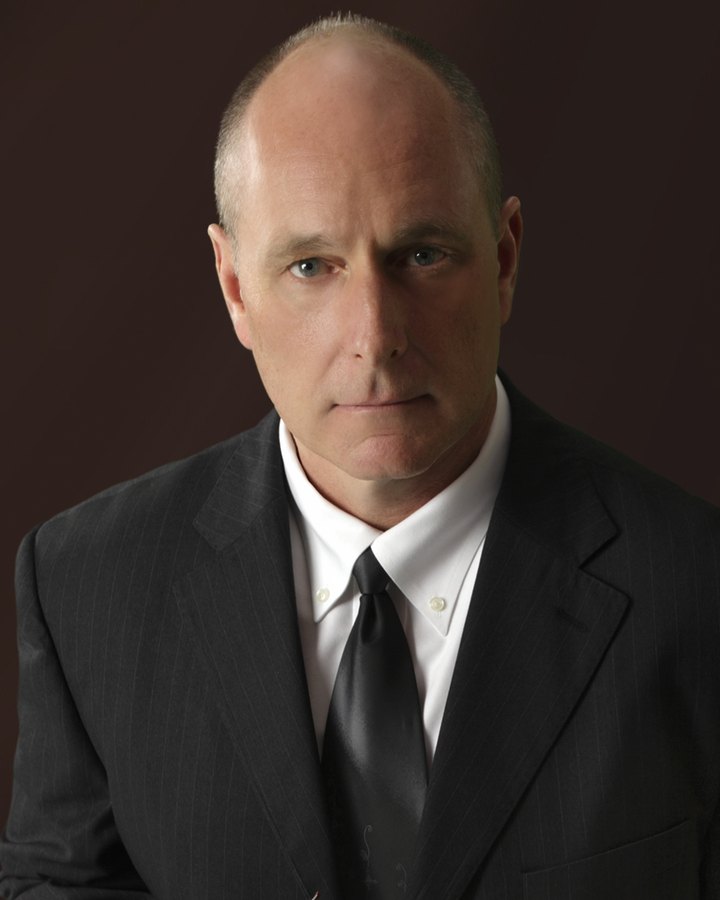 CEO & Owner
Thirty-eight years in four uniforms: street cop, soldier, professor, investigator. More than 220 matters in 42 states and D.C. since 2014.
Full biography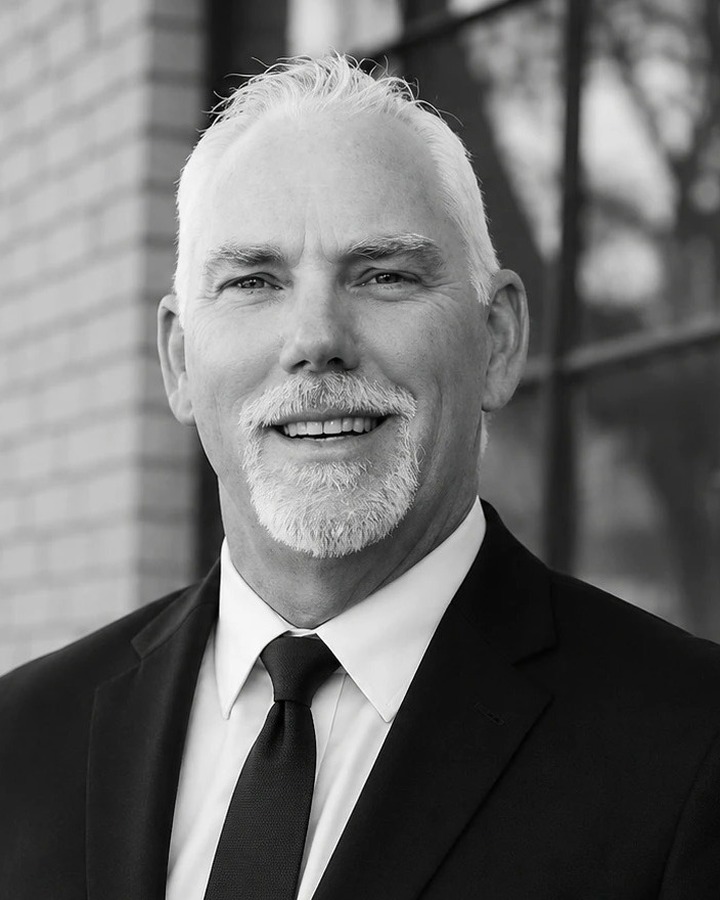 Consultant
More than thirty-five years in public safety: Sheriff of Lewis County, Washington, since his election in 2015, and six years as a commissioner of the state board that sets peace-officer training standards.
Full profile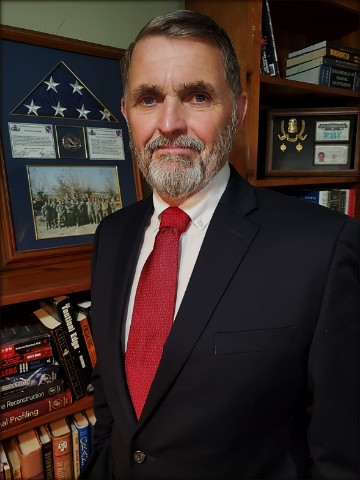 Consultant
Forty years of investigative casework, from patrolman in St. Louis County to the FBI in Chicago, and on to task forces in Afghanistan and Liberia. His work on the Idaho student murders is examined in Broken Plea, the New York Times bestseller by Christopher Whitcomb.
Full profileThe Hon. Richard A. Jones United States District Judge“Mr. Gilbertson’s qualifications demonstrate extensive experience in policing. His expansive work as a police officer in Georgia, with assignments as a SWAT team officer, juvenile court investigator, school resource officer, stakeout squad officer, senior patrolman, and patrolman; then a career as a tenured college professor and university lecturer teaching criminal justice courses to degree-seeking students at colleges and universities, and as a licensed private investigator conducting felony pretrial investigations for attorneys in Washington State in dozens of criminal cases, makes him unique in the field of police expert witnesses. The Court finds that, based on his experience, Mr. Gilbertson’s testimony can be expected to have a reliable basis in knowledge and experience of police practices.”
The facts counsel cite.
- Professor Gregory Gilbertson (Ret.): thirty-eight years across policing, the Army, the classroom, and investigative casework. Independent consultants are retained case-by-case where the record calls for a second discipline.
- Retained in more than 220 civil rights and criminal cases across 42 states and the District of Columbia; expert practice since 2014.
- Retained by plaintiff’s counsel and by the defense alike, in civil and criminal matters.
- Fees are published: a $9,000 flat fee covering discovery review and the written expert report; the full schedule is on For Retaining Counsel.
- Attorney and law-firm inquiries only; conflicts are checked before any substantive discussion. (239) 571-1840.
What the analysis covers.
Individual engagements are scoped with counsel. Go deeper: Report & Procedure Review · Suppression Support · Court-Appointed Matters.
What gets reviewed
- Police-procedure review
- Police-report analysis
- Deficient-investigation analysis
- Police-misconduct analysis
- Evidence-preservation and fabricated-evidence issues
- Search-and-seizure practices
- False-arrest practices
- Use-of-force and self-defense analysis
Case types
- Homicide cases
- Assault cases
- Resisting-arrest cases
- Robbery cases
- Weapons cases
- Serious-felony cases
- Wrongful-conviction cases
In court
- Criminal-trial expert testimony
- Suppression and evidentiary hearings
- Public-defender and court-appointed matters welcome
Gregory is not an attorney and offers no legal advice; the analysis serves retained counsel.
Same discipline, every case.
Conflict check and a written scope with retaining counsel before substantive discussion.
A non-refundable $9,000 flat fee covering discovery review and the written expert report.
The complete record against national standards, set out in the written report.
Deposition, hearings and trial, nationwide from RSW.
Full fee schedule and counsel FAQ: For Retaining Counsel →
Charges built on the officers' account put the arrest and force in question.
The charge decides which part of the police file is in question, because each charge rests on different police work. Where the officers' reports are the account of what the defendant did, the arrest and the force are in question; where the evidence came from a stop or a search, the stop and the search are; where the charge rests on an investigation or an identification, the investigation or the identification procedure is. A police practices expert retained by criminal defense counsel starts from the charge and reads first the part of the file that charge rests on, then the rest of the record around it. When the accused is a juvenile, that record also holds the custody, notification and questioning records particular to a young suspect, read as set out under juvenile defense.
Resisting arrest, obstruction and assault on an officer are charges of the first kind. In each of them, the account the charge rests on is written in the same reports that record the arrest and any force. The file that carries that account is specific: the arrest report, any use-of-force report with its supplements, the supervisor's review of any force, the dispatch record made while the call was live, and any video the encounter produced.
For the arrest, the file is read for what the officers knew before custody and how they recorded it, the questions treated under false arrest and search; the force is measured on the whole encounter as the officers knew it at the time, without hindsight, the way any use of force question is measured. A departure from policy, from training or from accepted practice is reported as a practices finding; whether it bears on the charge is a legal question, and legal conclusions remain counsel's. Where the reports, the dispatch record and the video describe the same sequence differently, the analysis locates each divergence and the record behind each version, and what a divergence means is left to the finder of fact and counsel.
Possession and weapons charges rest on the stop, the search and what was found.
Where a possession or weapons charge rests on an item the officers recovered, the police work that produced the item is in question: the stop, the search, and the documentation of what was found. The file for the stop holds the reason the officer first recorded for it, the dispatch entries and radio traffic that fix when each step came, and any video. The file for the search holds the basis the report gives for it, whether consent, a frisk, a warrant or an inventory, and whatever the agency's policy required the officer to record about that basis.
The thresholds for a stop and for an arrest are set out in reasonable suspicion versus probable cause. The analysis reads what the officers recorded against their training and the agency's policy, and whether the dispatch record and the video support the sequence the report gives. Where an arrest came before the search, the arrest belongs to the question too, read as it is for the charges above.
How the item was documented is a separate practices question, answered from the report's description of the recovery, any photographs taken before the item was moved, and the property and evidence record. When the defense questions an item's origin, the reading of when and where it first appears in the record belongs to the practice on fabricated or suppressed evidence.
Homicide charges rest on the investigation; identifications, on the procedure.
Homicide and serious-felony charges rest on an investigation: what the investigators collected, whom they interviewed, and how they reached the conclusion the charge now carries. That path is the police work in question, and the file for it holds the scene documentation and photographs, the canvass notes, the recording or summary of each interview, the supplements that open and close each lead, and the evidence submissions. The path is measured against the agency's investigative policies and generally accepted police practices, as in any review of deficient investigations, and where self-defense is claimed, the investigation is also read under self-defense. Autopsy and laboratory reports belong in the file the analysis reads, and every medical and scientific question in them is deferred to qualified experts.
An identification case rests on the procedure that produced the identification. The practices question is how that procedure was run: which procedure the officers chose, who administered it, what the witness was told before viewing, and what the file preserved of what the witness said at the viewing. That record is read against the policy the agency had in force at the time and the practices described in photo lineups, while the reliability of the identification itself is deferred to qualified experts.
One case can carry charges from more than one of these families, such as a weapons count beside an assault on an officer arising from the same encounter. Each charge's practice question is then answered separately, from the part of the file that charge rests on, so one report can find the search consistent with accepted practice and the arrest not, or the reverse. The records particular to running a homicide case, from the lead record to the charging decision, are taken up under homicide defense.
Where the analysis enters a criminal case.
The reading of the file a charge rests on can reach counsel at more than one stage. A consulting review can come first, before counsel decides whether a police practices expert will testify at all, and that posture is explained in consulting and testifying experts. Where the charge rests on a stop, a search or an arrest, that reading can be given as testimony at a suppression hearing, the engagement described under suppression support; whether any evidence is suppressed is for the court to decide.
At trial, the testimony addresses the police practices the charge put in question, in the vocabulary of policy, training and accepted practice, and stays within what the record shows. Where the file shows that the stop, the search, the arrest, the investigation or the identification procedure met accepted practice, the report states that finding in the same terms it would use for a departure; what counsel does with it is taken up in what happens when the opinion does not help.
Prosecutions in the table of cases, by court and by label.
The table of cases lists each retention under the caption of its matter, and 46 matters in it are captioned as prosecutions: 45 in state courts across 12 states, and 1 in federal court. The figures count retentions, not results.
Every matter in the table carries a practice label, and a prosecution can carry several, so the label counts overlap rather than add up. Among the prosecutions, 23 carry the homicide defense label, 19 the self-defense label and 3 the false arrest label, and a prosecution that carries none of them counts only in the total. Each of those labels points to the page that carries that work in a criminal case: a homicide prosecution to homicide defense, a claim of justification to self-defense, and an arrest or a search challenged before trial to suppression support.
The matters with published results are in the case history, and they are a part of this table, not the whole of it; retaining counsel can ask for the complete table and read every prosecution in it by caption.
What the defense team asks this expert, and what it asks others.
A defense team in a prosecution can draw on several experts, each answering a different question. A criminal defense expert witness in police practices is retained for one of them, the police practices question: what accepted practice required of the officers at each step, judged on what they knew at the time and without hindsight, and what the file shows they did.
Some of the other questions belong to other expert disciplines. The reliability of an eyewitness identification, the science of a false confession, the cause of a death, the path of a bullet, what a phone holds and what a blood result means are each deferred to qualified experts in the discipline that answers it. Crime scene analysis is a discipline of its own as well, and where a case calls for it, the practice's consultant in that work is FBI Special Agent Christopher Holland (Ret.).
Several of those questions also have a police half, and the analysis reads that half. Whether any casings were photographed and logged where they lay, when a phone was seized and which examination of it was requested, and who collected a blood sample and how it was kept are answered from police records, and each is measured against the agency's policy and generally accepted police practices. The science those records feed, whether a firearms comparison, a phone extraction or a laboratory value, is deferred to qualified experts in those disciplines.
A third kind of question belongs to no expert at all. Whether a stop or an arrest was lawful, whether a statement or an identification is admitted, and what the elements of a charge are belong to counsel and the court. Why an expert stays out of them is explained in legal conclusions and the expert. Legal conclusions remain counsel's; the expert addresses police practices.
Where the file raises a question that belongs to another discipline, the report names it where it arises and does not fill it with a police practices opinion. That keeps the work of a criminal defense expert witness in police practices on the police file and leaves the other questions to the experts who answer them.
Related casework.
Case accounts as published by retaining counsel. Outcomes depend on their facts; no result is promised for any other matter.
Working references for this practice area.
Guides for retaining counsel, written from the same record this analysis reads.
I needed an expert witness with integrity who could convey the same to a jury of twelve people.Nenye E. Uche, Esq. · Uche P.C., Chicago
Asked before the record is sent.
Does he take court-appointed and public-defender matters?
What can the defense expect in the report?
What does retention cost?
When officers from more than one agency took part, whose policy measures each officer?
Does the analysis address how the defendant's statement was taken?
Are evidentiary hearings besides a suppression hearing part of the practice?
Does he sit for depositions in criminal cases?
Can the same criminal defense expert witness be retained in the civil case that follows?
Does he take criminal cases in federal court as well as in state court?
Send a criminal-defense record.
Attorney and law-firm inquiries only. Conflicts are checked before anything substantive, and you will hear about a conflict immediately.
Inquiry sent.
You will hear back directly. If the matter is urgent, call (239) 571-1840.
Conflicts are checked before any substantive discussion. Please do not send privileged material with a first inquiry; after retention the record is exchanged on physical media. Gregory consults for attorneys and their staff only, and does not provide legal advice or attorney referrals to individuals.