

When to bring in the expert,
stage by stage.
Direct line: (239) 571-1840 · GregoryGilbertson@proton.me
Attorney and law-firm inquiries only
The short answer is earlier than most retentions happen. This page walks the lifecycle of a police case, from pre-suit merit evaluation to post-conviction review, and states plainly what an expert can still do at each stage, and what has quietly become harder.
Three experts. Over 110 years.
Professor Gregory Gilbertson (Ret.), FBI Special Agent Christopher Holland (Ret.), and Sheriff Robert Snaza consult with attorneys nationwide regarding police practices and procedures, use of force, false arrest, police misconduct, criminal, and self-defense casework.
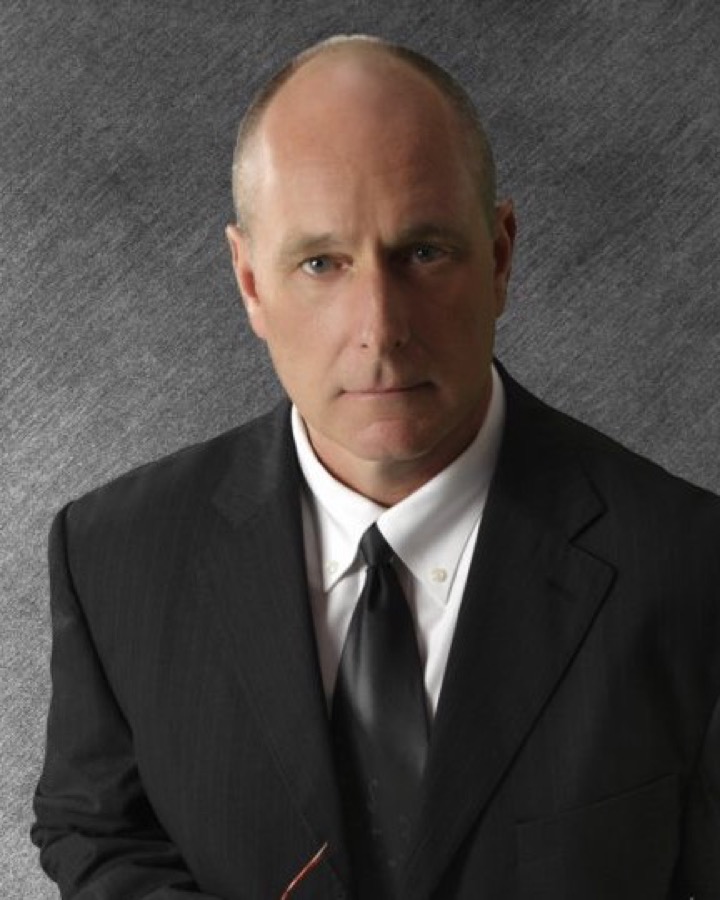 CEO & Owner
Thirty-eight years in four uniforms: street cop, soldier, professor, investigator. More than 220 matters in 42 states and D.C. since 2014, with testimony that has not been excluded at trial in any state or federal court.
Full biography Consultant
More than thirty-five years in public safety: twelve years and three terms as the elected Sheriff of Lewis County, Washington, and six years a commissioner of the state board that sets peace-officer training standards.
Full profile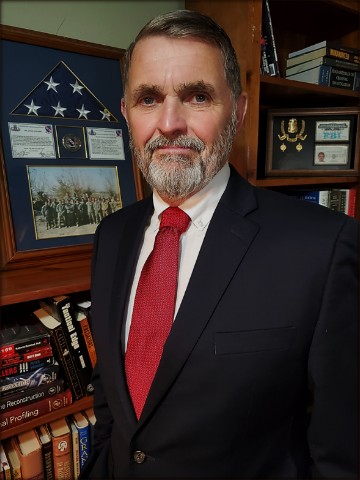 Consultant
Forty years of investigative casework, from patrolman in St. Louis County to the FBI in Chicago, and on to task forces in Afghanistan and Liberia. His work on the Idaho student murders is examined in Broken Plea, the New York Times bestseller by Christopher Whitcomb.
Full profileNever excluded. Professor Gilbertson’s testimony has not been excluded at trial in any state or federal court.
The Hon. Richard A. Jones United States District Judge“Mr. Gilbertson’s qualifications demonstrate extensive experience in policing. His expansive work as a police officer in Georgia, with assignments as a SWAT team officer, juvenile court investigator, school resource officer, stakeout squad officer, senior patrolman, and patrolman; then a career as a tenured college professor and university lecturer teaching criminal justice courses to degree-seeking students at colleges and universities, and as a licensed private investigator conducting felony pretrial investigations for attorneys in Washington State in dozens of criminal cases, makes him unique in the field of police expert witnesses. The Court finds that, based on his experience, Mr. Gilbertson’s testimony can be expected to have a reliable basis in knowledge and experience of police practices.”
The deadline that matters is not the trial date.
Attorneys usually start thinking about an expert when the disclosure deadline shows up on a case-management order. The stage that actually decides what an expert can do for a case comes earlier: the close of discovery. An expert report is built from the record, and the record is only as complete as the requests counsel served while discovery was open. Retain after that window closes and the report works with whatever exists; retain before it closes and the report helps decide what will exist.
Early review changes what counsel asks for. A police practices expert reading the file in the first months of a case identifies what should exist and does not: the agency policy in force on the date of the incident, the involved officers’ training and disciplinary files, the video that has not been produced, the dispatch records that anchor the timeline. While discovery is open, those gaps become document requests. After it closes, they become arguments about what the absent records might have shown.
That is the core argument for early retention, and it is a records argument, not a sales argument. Nothing about the analysis improves with urgency. Opinions rest on the complete record, measured against national standards and generally accepted police practices on the totality of the facts and circumstances, and the completeness of that record is decided while discovery is open, whether or not an expert has been retained to help shape it.
The expert practice dates to 2014 and spans more than 220 civil rights and criminal cases across 42 states and the District of Columbia. The early files are consistently the complete files, because the expert’s review still had time to shape what counsel requested.
Pre-suit: the merit evaluation.
The earliest engagement form is a preliminary case-merit evaluation. Before counsel commits filing resources, the available record, often no more than incident reports, video already in hand, and witness statements, is measured against national standards and generally accepted police practices. Counsel gets a candid read: where the practices questions are, what a complete review would require, and whether the record as it stands supports the theory of the case.
Nothing is foreclosed at this stage, which is what makes it valuable. If the evaluation supports going forward, the same expert carries the matter through report, deposition and trial, already familiar with the file. If it does not, counsel has spent the minimum learning that, and a candid no before filing costs far less than a strained theory at disclosure. The mechanics of that early read are covered in case-merit evaluation before filing.
Defense counsel use the same window from the other chair. An early practices read on an excessive force or false arrest claim tells counsel defending officers and agencies which allegations the record actually supports, and where the conduct fell within generally accepted police practices, before positions harden and briefing schedules take over the calendar.
Pleading through discovery: the widest window.
Once suit is filed and discovery opens, early retention converts the expert’s reading into a map of what to request. Opinions ultimately rest on the complete record: video, reports, statements, depositions, training files and agency policy. Most of that record sits in the agency’s hands until counsel asks for it by name, and an expert who has already read the initial file knows the names.
What early review surfaces while requests can still issue.
- Agency policies and procedures in force on the date of the incident, not the current revision
- Involved-officer training and disciplinary records, requested while the discovery door is open
- Body-worn, dash and surveillance camera video, with the logs that show what was preserved
- Dispatch and CAD records that fix the timeline the written reports are measured against
- Police and internal affairs investigation reports, and any independent agency investigation of the incident
For testifying retentions in federal court, the written report requirements of Fed. R. Civ. P. 26(a)(2)(B) shape the work from the start: the opinions, the basis for them, and the materials considered in forming them. A report written while discovery remains open can note what was requested and what was never produced, which is a very different posture than discovering the gap for the first time at the expert’s deposition.
Disclosure, motions, trial: what each stage costs.
Expert disclosure due. Here the sixty-day rule becomes arithmetic. Expert reports require sixty days of advance notice, and work begins once discovery has been received on physical media. Reports required in less than sixty days incur a 25% upcharge. Counting backward from a disclosure date, counsel should be retaining at least two months out, plus the time counsel’s staff needs to assemble and ship the record. The full planning mechanics live in report timelines and the sixty-day rule.
Dispositive motions. With briefing underway, the work narrows to what supports counsel’s papers: the disclosed report, a rebuttal report answering an opposing expert’s disclosed opinions, and preparation for any challenge to the testimony under Fed. R. Evid. 702. How the report is used in motion practice belongs to counsel, and admissibility of reports and testimony is retaining counsel’s responsibility throughout.
Trial set. Deposition, review of opposing experts, and trial testimony nationwide all remain available, and a case that reaches this stage without a practices expert can still retain one on an expedited calendar. What is gone is leverage. The expert now works with the file counsel built, not the file the expert would have helped build, and the sixty-day rule prices the compression.
Post-conviction or appeal. Deficient-investigation and wrongful-conviction review happens here, and the constraint is structural: the record is closed. The review measures what the original investigation did against what generally accepted police practices required, and states it plainly, but it cannot reopen discovery or generate the records nobody requested at the time.
Two numbers that set the retention calendar.
Two published facts do most of the scheduling work in any retention decision. First, expert reports require sixty days of advance notice, and the sixty days start when discovery has been received on physical media, not when the engagement letter is signed. Second, reports required in less than sixty days incur a 25% upcharge. Everything else about timing is case-specific; these two are fixed.
The practical consequence is that the retention decision is really a records-logistics decision. Counsel who retains early ships the record early, starts the clock early, and keeps slack between the report and the disclosure deadline for supplemental production, follow-up questions, and the ordinary friction of litigation. Counsel who retains late pays the upcharge and spends the saved months on compression instead of analysis.
The retainer itself does not change with timing: a non-refundable $9,000 flat fee covering discovery review and the written expert report. Timing changes what that review has to work with, and how much calendar risk counsel carries while it runs.
Where the case stands, in intake terms.
The retention inquiry asks for posture in six terms. They map onto everything above, and the honest guidance for each fits on a line.
- Pre-suit or investigation: every option open; a merit evaluation costs the least and preserves the most
- Discovery: the best working window; early review still shapes what counsel requests from the agency
- Expert disclosure due: workable, with the sixty-day rule and the 25% expedite upcharge now controlling the calendar
- Dispositive motions: rebuttal reports and testimony support remain; the record is what it is
- Trial set: deposition and trial testimony nationwide, on a compressed and expedited schedule
- Post-conviction or appeal: deficient-investigation review on a closed record
Whatever the posture, the first step is identical: a short, unprivileged first inquiry so a conflict check can run before anything substantive is discussed. What that inquiry should carry, and what it should leave out, is covered in the first inquiry: what to send. Legal conclusions remain counsel’s at every stage; the expert addresses police practices, and the earlier the record reaches him, the more there is to address.
When the question becomes a retention.
This page is reference. When a live matter needs the analysis, these are the doors.
Asked alongside this one.
Is it too late to hire a police expert witness after the disclosure deadline?
How long before a report deadline should counsel retain the expert?
Can a police practices expert help before a lawsuit is filed?
What does retention cost?
Bring the matter behind the question.
Attorney inquiries are answered directly. If a case presents a conflict, you will hear it immediately.
Inquiry sent.
You will hear back directly. If the matter is urgent, call (239) 571-1840.
Conflicts are checked before any substantive discussion. Please do not send privileged material with a first inquiry; after retention the record is exchanged on physical media. Gregory consults for attorneys and their staff only, and does not provide legal advice or attorney referrals to individuals.