

A supervisor’s use-of-force review,
and what its absence shows.
Direct line: (239) 571-1840 · GregoryGilbertson@proton.me
Attorney and law-firm inquiries only
After force is used, the first-line supervisor is the agency’s first reviewer of it. What that sergeant or other first-line supervisor did in the hours that followed, and what was written down about it, is often the clearest evidence in the file of how the agency actually supervises.
Three experts. Over 110 years.
Professor Gregory Gilbertson (Ret.), FBI Special Agent Christopher Holland (Ret.), and Sheriff Robert Snaza consult with attorneys nationwide regarding police practices and procedures, use of force, false arrest, police misconduct, criminal, and self-defense casework.
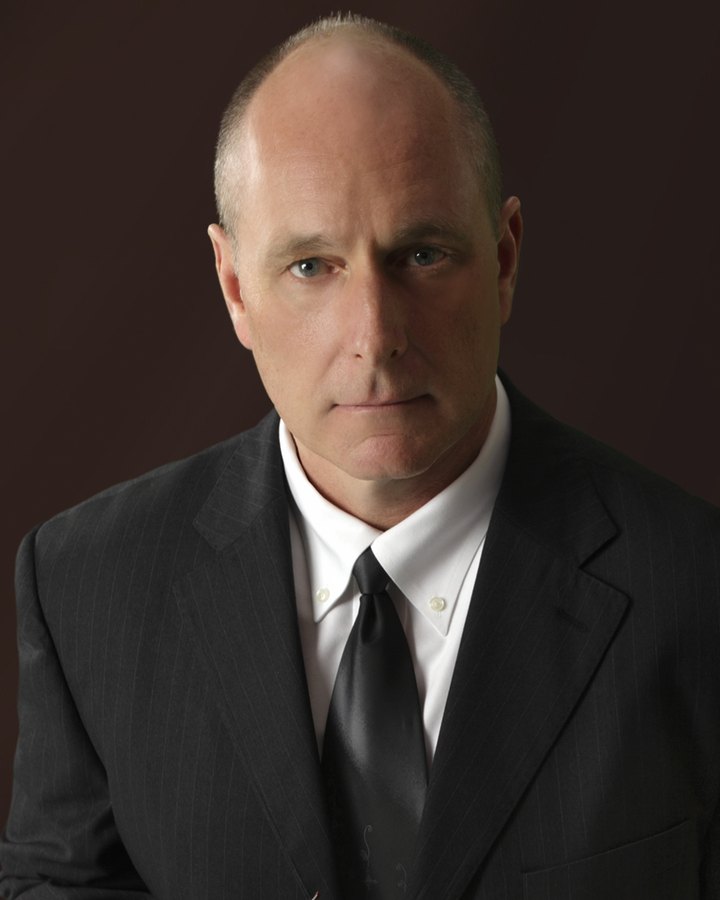 CEO & Owner
Thirty-eight years in four uniforms: street cop, soldier, professor, investigator. More than 220 matters in 42 states and D.C. since 2014.
Full biography Consultant
More than thirty-five years in public safety: Sheriff of Lewis County, Washington, since his election in 2015, and six years as a commissioner of the state board that sets peace-officer training standards.
Full profile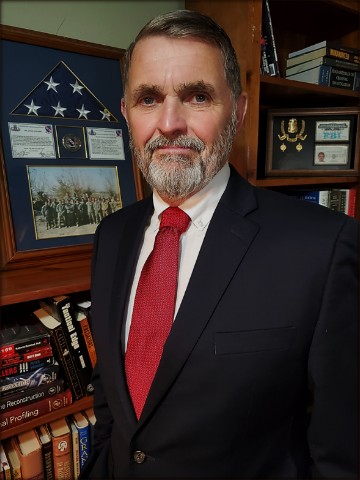 Consultant
Forty years of investigative casework, from patrolman in St. Louis County to the FBI in Chicago, and on to task forces in Afghanistan and Liberia. His work on the Idaho student murders is examined in Broken Plea, the New York Times bestseller by Christopher Whitcomb.
Full profileThe Hon. Richard A. Jones United States District Judge“Mr. Gilbertson’s qualifications demonstrate extensive experience in policing. His expansive work as a police officer in Georgia, with assignments as a SWAT team officer, juvenile court investigator, school resource officer, stakeout squad officer, senior patrolman, and patrolman; then a career as a tenured college professor and university lecturer teaching criminal justice courses to degree-seeking students at colleges and universities, and as a licensed private investigator conducting felony pretrial investigations for attorneys in Washington State in dozens of criminal cases, makes him unique in the field of police expert witnesses. The Court finds that, based on his experience, Mr. Gilbertson’s testimony can be expected to have a reliable basis in knowledge and experience of police practices.”
What the first-line supervisor is expected to do.
Most agencies require a supervisor to respond whenever force above a defined threshold is used, and that response is a sequence of tasks rather than a signature. The supervisor goes to the scene, confirms that medical aid was requested and rendered, and takes control of the immediate aftermath while the scene is intact and the people who saw it are still present.
The tasks a supervisory response is built from.
- Respond to the scene and confirm that aid was requested and rendered
- Identify the involved officers and the officers who witnessed the force, and separate them where the policy requires it
- Locate civilian witnesses while they are still on scene, and record how to reach them
- Take or arrange the statements the policy requires, including from the subject where possible
- Document injuries, and document their absence, in the manner the policy sets
- Review the available video, and note what it shows and what it does not cover
- Complete the supervisory review and route it up the chain within the stated time
Order matters as much as the list. A supervisor who reviews video before taking statements is doing something different from one who reviews it afterward, and agencies differ on which they require. The analysis reads the agency’s own policy on that point rather than assuming a practice, and then reads what the record shows was actually done on the day.
Not the same as a force review board.
A supervisory review and an administrative review board are different instruments, produced by different people at different times, and the first is usually the only one written before anyone knew there would be a claim. The supervisory review is immediate, individual and written by the officer’s own first-line supervisor, close to the event. It captures the first assessment made while the facts were fresh and before anyone had assembled a position.
The board comes later and belongs to the organization rather than to the shift; that mechanism is treated in what a use-of-force review board is. The supervisory review is the document written with the least distance from the event, which is what makes it the more useful of the two in a deposition of the officer or of the supervisor who signed it.
Internal affairs is a third track again, complaint-driven and disciplinary in purpose; what a sound administrative investigation contains is set out in internal affairs review standards. One incident can generate all three files or only one, and which of them exist is itself a fact about the agency.
What a completed review shows, and a missing one.
A completed supervisory review shows a supervisor engaging with the event: the force described in specific terms rather than in policy vocabulary, the resistance the officer reported set against what the video shows, the witnesses named, and a stated conclusion with the reasoning behind it. A review like that is affirmative evidence of supervision, and the analysis reports it as such when the record supports it.
The other outcomes are equally legible. A review completed late, after a complaint arrived, is a different fact than one completed on the shift. A review consisting of a single line adopting the officer’s narrative shows a supervisor who signed rather than reviewed. And where policy required a review and nothing was produced, the empty space in the file is what the analysis reports, with the date the review was due.
A supervisory review that restates the officer’s report in the officer’s words has documented nothing. The question is what the supervisor did that the officer could not have done alone.
The records that carry this are requested by name: the completed supervisory review or proof of its absence, the use-of-force report and each supplement filed to it, the policy setting the threshold for a supervisory response and the deadline for the review, and the involved supervisor’s own training on it. Those items are the working file for supervision and discipline analysis, and they are among the first records to go missing.
A single review describes one incident. The same supervisor’s reviews across a year describe how the shift is supervised. Where those reviews adopt the officer’s narrative incident after incident, or where a shift’s reviews are the same paragraph with the dates changed, the question stops being about one supervisor. That run belongs alongside complaint histories and flag data in early warning systems and supervision. What it establishes under Monell v. Department of Social Services, 436 U.S. 658 (1978) is counsel’s question; the analysis measures supervisory practice against agency policy and national standards and stops there. The supervisory review is worth asking for early for a plainer reason: it is often the only assessment in the file that was written before anyone had a case to defend.
When the question becomes a retention.
This page is reference. When a live matter needs the analysis, these are the doors.
Asked alongside this one.
What is a supervisor’s use-of-force review?
How is it different from a use-of-force review board?
What if the agency’s policy did not require a supervisory review for this level of force?
Bring the matter behind the question.
Attorney inquiries are answered directly. If a case presents a conflict, you will hear it immediately.
Inquiry sent.
You will hear back directly. If the matter is urgent, call (239) 571-1840.
Conflicts are checked before any substantive discussion. Please do not send privileged material with a first inquiry; after retention the record is exchanged on physical media. Gregory consults for attorneys and their staff only, and does not provide legal advice or attorney referrals to individuals.