

Law Enforcement Expert Witness, Defined
Direct line: (239) 571-1840 · GregoryGilbertson@proton.me
Attorney and law-firm inquiries only
Law enforcement expert, police practices expert, police procedures expert, use of force expert. The labels overlap, and the retention that fits a matter depends on the fact pattern rather than the heading. This page defines the discipline and routes counsel to the analysis the case actually needs.
Three experts. Over 110 years.
Professor Gregory Gilbertson (Ret.), FBI Special Agent Christopher Holland (Ret.), and Sheriff Robert Snaza consult with attorneys nationwide regarding police practices and procedures, use of force, false arrest, police misconduct, criminal, and self-defense casework.
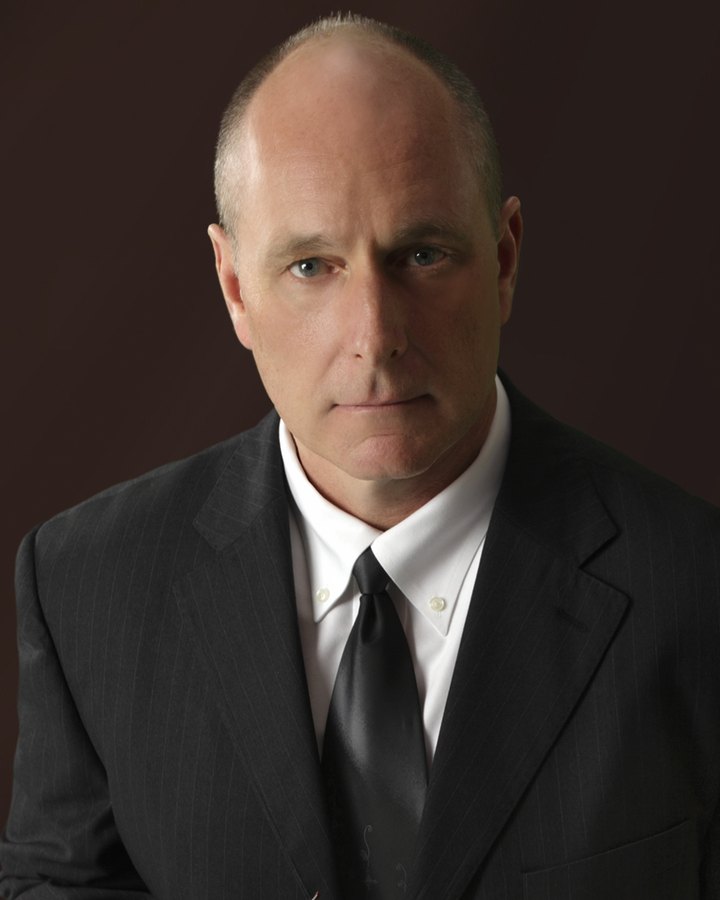 CEO & Owner
Thirty-eight years in four uniforms: street cop, soldier, professor, investigator. More than 220 matters in 42 states and D.C. since 2014.
Full biography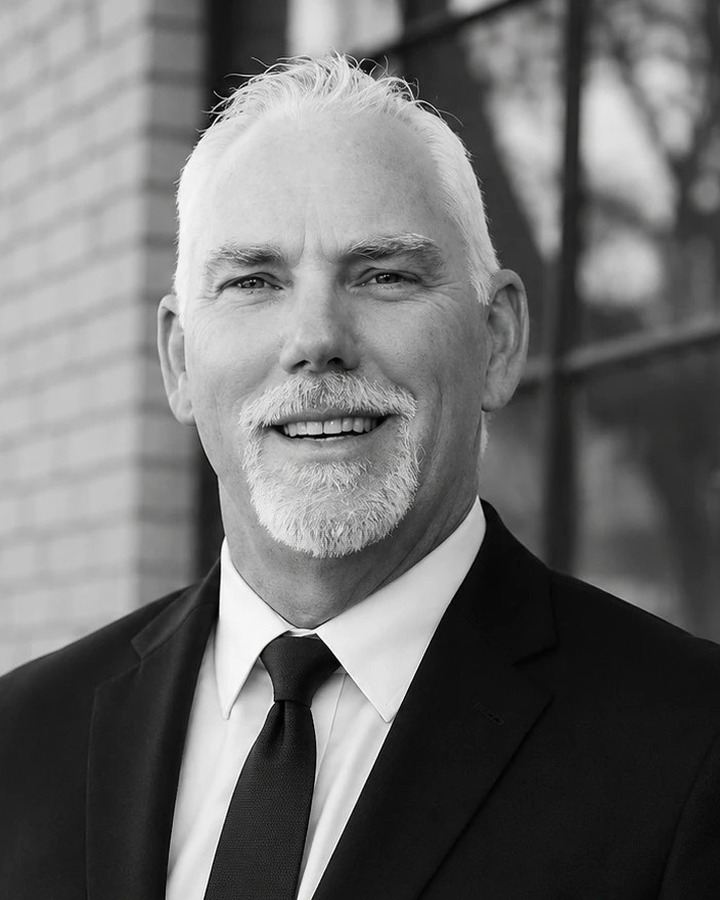 Consultant
More than thirty-five years in public safety: Sheriff of Lewis County, Washington, since his election in 2015, and six years as a commissioner of the state board that sets peace-officer training standards.
Full profile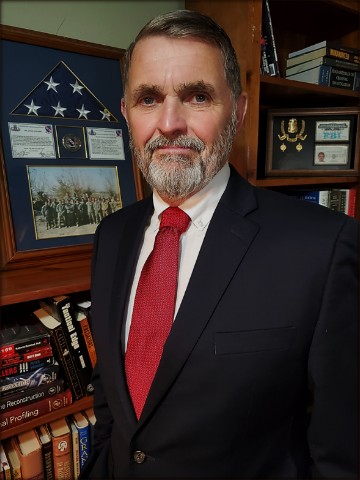 Consultant
Forty years of investigative casework, from patrolman in St. Louis County to the FBI in Chicago, and on to task forces in Afghanistan and Liberia. His work on the Idaho student murders is examined in Broken Plea, the New York Times bestseller by Christopher Whitcomb.
Full profileThe Hon. Richard A. Jones United States District Judge“Mr. Gilbertson’s qualifications demonstrate extensive experience in policing. His expansive work as a police officer in Georgia, with assignments as a SWAT team officer, juvenile court investigator, school resource officer, stakeout squad officer, senior patrolman, and patrolman; then a career as a tenured college professor and university lecturer teaching criminal justice courses to degree-seeking students at colleges and universities, and as a licensed private investigator conducting felony pretrial investigations for attorneys in Washington State in dozens of criminal cases, makes him unique in the field of police expert witnesses. The Court finds that, based on his experience, Mr. Gilbertson’s testimony can be expected to have a reliable basis in knowledge and experience of police practices.”
A law enforcement expert measures conduct against standards.
A law enforcement expert witness gives the trier of fact specialized knowledge about how police work is supposed to be done. The raw material is the record counsel assembles, and the yardstick sits outside it. What that record has to contain is set out at why the complete record matters. Conduct documented in the record is measured against state and federal statutes, case law, reputable academic research, and national police standards and practices, on the totality of the facts and circumstances.
Those standards are external and checkable, not one expert's preferences. Where they come from, source by source, is defined at generally accepted police practices. Use-of-force questions are governed by Graham v. Connor, 490 U.S. 386 (1989), and the analysis holds to it: objective reasonableness judged on what was known at the time, never in hindsight.
The analysis does not change with the party who retains it. Retention comes from plaintiff's counsel, from the criminal defense bar, and from counsel defending officers and agencies alike, and why that history matters to counsel is set out at retained by both sides. Every engagement begins with a conflict check. Professor Gilbertson's expert practice dates to 2014 and spans more than 220 civil rights and criminal cases across 42 states and the District of Columbia.
The labels overlap, and the work behind them is the same.
Four labels do most of the work in this field, and they describe overlapping parts of a single discipline. What follows is how each is used here.
Law enforcement expert is the broadest of the four. It covers anything about how officers are selected, trained, supervised and expected to act: force, stops and arrests, searches, investigations, reporting, discipline and command practice.
Police practices expert is the term this practice uses, and its emphasis is narrower. It describes an opinion that measures documented conduct against generally accepted police practices, the agency's own written policy and the officers' own training, and that states whether the conduct was consistent with them, practice by practice. What that work produces, engagement by engagement, is set out at what a police practices expert does.
Police procedures expert usually describes the same work with the paper in the foreground: policy manuals and general orders, the training built on them, and where the record shows practice departed from the directive. That casework is at policies and procedures, and the frame behind it, written policy against training against actual practice, at policy, practice and training.
Use of force expert is the narrowest. It names an opinion confined to a force event and the three Graham factors that organize it. Who retains a use of force expert witness, and how the force record is read from the policy manual to the review board, has a page of its own. The practice area is at use of force, and the standard itself at Graham v. Connor explained. Three more labels name the claim rather than the discipline: a police misconduct expert witness for departures from procedure and from the duties every officer carries, a self-defense expert witness for a civilian's or an officer's defensive use of force, and a criminal defense expert witness for the police file behind a charge.
The labels overlap because the underlying questions do. A wrong-address, no-knock entry is a search question, a force question and often a supervision question at once. The heading on a CV also does not decide admissibility. Under Fed. R. Evid. 702 and Daubert v. Merrell Dow Pharmaceuticals, Inc., 509 U.S. 579 (1993), a court examines qualifications, method and fit for the opinions actually disclosed in that matter. Counsel is better served matching an expert's casework to the fact pattern than matching a label, and how those challenges run is covered at Daubert and Rule 702.
The fact pattern decides which analysis a matter needs.
These are the eight practice areas this site publishes, and the fact pattern that sends a matter to each. Seven are retentions by counsel. The eighth, agency training, is delivered to agencies and runs separately from the expert practice. Many cases implicate more than one, and scope is set with counsel at the outset.
An officer used force, and someone was injured or killed. The analysis is the Graham objective-reasonableness inquiry, built from the video and the paper. The force types this practice publishes, from shootings and restraints through less-lethal, canine and tactical operations, are listed at use of force.
The dispute is the stop, the arrest or the entry. False-arrest questions turn on timing: what each officer actually knew at each decision point, and what reasonable-suspicion or probable-cause practices required before the stop, the handcuffs or the door. The same pillar carries searches and seizures of people, vehicles, homes and property, and warrant and no-knock entry practices. It is at false arrest and search.
The report does not match the record. Where the departure is from procedure itself, the question is misconduct: falsified reports, fabricated or suppressed evidence, pursuits and vehicle operation, and failures to intervene or render aid. Read step by step against the agency's own written directives, a departure of that kind is what a police procedures expert witness documents. Those questions belong to police misconduct.
The problem is larger than one officer. When the record shows an agency that trained, supervised, disciplined, hired or retained its way into the incident, the analysis moves to the organization, through to pattern, practice or custom support for a Monell claim. That work is at failure to train and Monell.
The investigation itself is the defect. Missed witnesses, mishandled evidence, scene documentation, and the reconciliation of video, CAD and reports, through wrongful-conviction and post-conviction review. That review is at deficient investigations.
A person used force in self-defense and now has to justify it. Civilian and officer matters, criminal and civil, deadly and non-deadly force, and stand-your-ground and immunity hearings, measured against the same use-of-force standards officers are trained on. That practice is at self-defense.
The client is charged, and the police file is the case. Procedure and report review, suppression support, and court-appointed matters on the same record discipline and published fee schedule as privately retained work. That support is at criminal-defense support.
The agency wants the training, not the litigation. Police-liability instruction for officers, supervisors and command staff, plus policy and curriculum development, scoped agency by agency. That program is at agency training.
The expert opines on police practices, and stops there.
The discipline's credibility comes from its limits. Legal conclusions remain counsel's, and the expert addresses police practices. The operative finding is consistency, stated practice by practice: the conduct shown in the record was consistent, or was not consistent, with generally accepted police practices in the circumstances the officers faced. Where that line sits, and why holding it is what keeps an opinion admissible, is treated at legal conclusions and the expert.
The second limit is the edge of the discipline. Where scientific, medical, technical or human factors evidence bears on a matter, qualified experts in those disciplines are deferred to, and the report says so on the record. An opinion that reaches past its own discipline invites impeachment from the report itself.
The third limit is plain. No guarantee is made regarding the outcome of any civil or criminal case, and retaining counsel is responsible for the admissibility of reports and testimony.
Retention opens with a conflict check and one flat fee.
Inquiries are accepted from attorneys, law firms and their staff only. Professor Gilbertson is not an attorney, and provides no legal advice and no attorney referrals to individuals. Every engagement opens with a conflict check and a written scope before any substantive discussion, and if a matter presents a conflict, counsel hears it immediately. Retention is a non-refundable $9,000 flat fee covering discovery review and the written expert report. The published fee schedule, the retention path and the counsel FAQ are at For Counsel.
Counsel vets this kind of expert on the record, not the label.
Vetting a law enforcement expert is a records exercise, and the checklist is already published. The complete CV and full case list rather than a highlight reel, the exclusion and admission history, retention by both plaintiff and defense, and fees in writing before the record moves are the questions set out in the counsel FAQ at For Counsel.
Why a both-sides retention history carries weight in front of a jury is at retained by both sides. Selected matters, each with its published citation, are at the case history. The full list of vetting questions, each paired with the document that answers it, is at vetting a police practices expert.
Asked before the record is sent.
What is a law enforcement expert witness?
What is the difference between a police practices expert and a use of force expert?
How does counsel decide which kind of expert a police case needs?
Can a law enforcement expert testify that an officer's conduct was unconstitutional?
Does Professor Gilbertson accept both plaintiff and defense retentions?
What does retaining this expert practice cost?
Not sure which analysis the matter needs?
Attorney inquiries are answered directly. If a case presents a conflict, you will hear it immediately.
Inquiry sent.
You will hear back directly. If the matter is urgent, call (239) 571-1840.
Conflicts are checked before any substantive discussion. Please do not send privileged material with a first inquiry; after retention the record is exchanged on physical media. Gregory consults for attorneys and their staff only, and does not provide legal advice or attorney referrals to individuals.