

The Internal Affairs File,
Read as a Record
Direct line: (239) 571-1840 · GregoryGilbertson@proton.me
Attorney and law-firm inquiries only
An internal affairs file is evidence about the investigation as well as about the incident. The review sorts the production into the documents an administrative investigation is supposed to generate, reads the dates before the findings, and states plainly which documents are present, which are referenced but not produced, and which are not referenced anywhere.
Three experts. Over 110 years.
Professor Gregory Gilbertson (Ret.), FBI Special Agent Christopher Holland (Ret.), and Sheriff Robert Snaza consult with attorneys nationwide regarding police practices and procedures, use of force, false arrest, police misconduct, criminal, and self-defense casework.
 CEO & Owner
Thirty-eight years in four uniforms: street cop, soldier, professor, investigator. More than 220 matters in 42 states and D.C. since 2014.
Full biography Consultant
More than thirty-five years in public safety: Sheriff of Lewis County, Washington, since his election in 2015, and six years as a commissioner of the state board that sets peace-officer training standards.
Full profile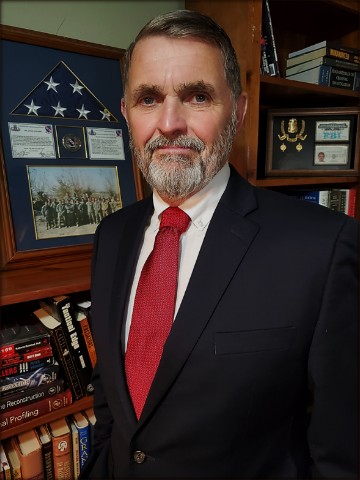 Consultant
Forty years of investigative casework, from patrolman in St. Louis County to the FBI in Chicago, and on to task forces in Afghanistan and Liberia. His work on the Idaho student murders is examined in Broken Plea, the New York Times bestseller by Christopher Whitcomb.
Full profileThe Hon. Richard A. Jones United States District Judge“Mr. Gilbertson’s qualifications demonstrate extensive experience in policing. His expansive work as a police officer in Georgia, with assignments as a SWAT team officer, juvenile court investigator, school resource officer, stakeout squad officer, senior patrolman, and patrolman; then a career as a tenured college professor and university lecturer teaching criminal justice courses to degree-seeking students at colleges and universities, and as a licensed private investigator conducting felony pretrial investigations for attorneys in Washington State in dozens of criminal cases, makes him unique in the field of police expert witnesses. The Court finds that, based on his experience, Mr. Gilbertson’s testimony can be expected to have a reliable basis in knowledge and experience of police practices.”
What this covers.
Within this engagement
- Internal affairs and administrative investigation review
- Investigative chronology and interview sequencing
- Garrity-compelled statements, identified and segregated
- Findings, dispositions and the discipline that followed
- Prior complaints and disciplinary history
- Early warning and early intervention system entries
- Production gaps and what the file references but does not contain
The intake, assignment and findings records, investigator summaries against the interview recordings they summarize, advisement forms and written orders, discipline documentation and personnel entries, measured against the standards for administrative investigations.
Engagement terms and the published fee schedule: For Retaining Counsel →
An internal affairs file is a set of documents, and each one has a job.
What an internal affairs expert witness reads first is the production itself, sorted into the documents an administrative investigation is supposed to generate. The intake record, showing how the complaint entered the agency and when. The assignment record, showing who took the case and when. The investigator's summary of investigation. The interviews, as recordings and as transcripts, civilian and officer alike. The advisement forms and written orders that sit in front of compelled officer interviews, and any notation of a parallel criminal referral. The evidence the investigation collected: video pulls and the requests that preserved them, photographs, scene material, records. The findings memorandum, resolving each allegation into a disposition. The discipline documentation, with the stated grounds for the action and any later modification. And the personnel-file entry that survives after the case closes.
Sorting it that way makes the absences visible. A production without the intake record, without the assignment dates, or without the recordings behind the transcripts raises a question the review has to answer: whether those documents were withheld from production or never created at all. The review states which documents are present, which are referenced but not produced, and which should exist and are not referenced anywhere, in terms counsel can put into a discovery letter. The wider record that has to arrive alongside an internal affairs production is itemized at the discovery file counsel assembles.
Read the dates before the findings.
The standards a professional administrative investigation is measured against, and the four disposition terms it resolves into, are set out at internal affairs review standards. In a live matter the work starts one step earlier, with the file's own chronology, because a deficient investigation is visible in the dates and the sequence before it is visible in the conclusion. Where in the sequence was the involved officer interviewed, relative to the civilian witnesses and to any criminal referral. What moved first, and what waited.
The written products are read the same way. An interview built around the officer's own narrative rather than around the recorded material shows what the investigation tested. A summary that paraphrases where the recording is specific shows what the file smoothed. So does a findings memorandum that resolves several allegations in one paragraph, or that reaches a disposition without citing the evidence assembled. None of this requires an opinion about anyone's motive. The analysis documents what the file did and did not do, measured against the standards.
The compelled statements are segregated, and counsel should know which ones they are.
Why the provenance of a statement changes what an internal affairs file means is covered at what a Garrity statement is. On a live file the consequence is procedural. Compelled statements are identified and segregated in the analysis, their handling is measured against the agency's own advisement practice, and the analysis stops there. Counsel receives that identification as part of the map of the file rather than as a conclusion about it. Whether compelled material may be used in any proceeding is a legal question that stays with retaining counsel, and no opinion on it appears in the report. Which statements an officer gave, compelled or voluntary, and in what order, is among the deposition topics set out under deposing police officers.
An exonerated finding is where the analysis starts, not where it stops.
An internal affairs finding answers a narrower question than the one counsel is litigating. It measures the conduct alleged against the agency's own policy, as that agency read its policy on that date, on the evidence that investigation actually assembled. It is not the measure a practices analysis applies. An exonerated disposition and a documented departure from generally accepted police practices can therefore sit in the same record, and where the exoneration rests on a collection that never happened, the finding and the gap are both facts in the report. The reverse holds too: a sustained finding on a paperwork violation and the question of the force used are not the same question.
Where agency policy provides for it, force also goes to a separate administrative review that produces its own paper and answers its own question, described at force review boards. The yardstick a practices analysis applies instead of the agency's disposition is described at generally accepted police practices. The read runs in both directions, and the report states which one this record supports. Legal conclusions remain counsel's; the expert addresses police practices.
What the agency held about this officer before the incident.
Prior complaints and their dispositions, the discipline that followed each, and any early warning or early intervention entries on the officer are read together, because each is a record the agency generated about this officer before the incident and a record of what it did next. The entries are documents in their own right: what the system counted, whether a threshold was crossed, what intervention was chosen, and whether anyone verified that it happened. How those systems are built, and what their paper looks like, is set out at early warning systems and supervision.
Where the officer is a witness in a criminal prosecution, the same records carry a second consequence. Sustained findings that an officer was untruthful, and the discipline imposed on those grounds, are the records the disclosure doctrines of Brady v. Maryland, 373 U.S. 83 (1963) and Giglio v. United States, 405 U.S. 150 (1972) bring into the frame. The analysis maps what the produced files hold, what they reference and do not include, and which further records the file itself points toward. Whether any particular item is material in the constitutional sense in a given prosecution is a legal determination for counsel, and the line is drawn at Brady and Giglio in police files. Where the run of files, not the one file, is the case, the analysis moves to the organization, and that practice is set out at failure to train and Monell. Prior complaints alleging sexual misconduct are read with the rest of the officer's history, and the wider record such a claim draws on is set out under sexual misconduct under color of authority.
What a first inquiry needs.
The engagement begins the way every other one does. Inquiries are taken from counsel and their staff, and a conflict check runs on the parties and counsel before anything substantive is discussed. What a first inquiry needs, and what must not travel with it, is listed at what to send with a first inquiry; the check itself is described at what happens in a conflict check. After retention the record travels on physical media by mail or courier. Retentions come from plaintiff's counsel, from the criminal defense bar, and from counsel defending officers and agencies, and the standards do not change with the party.
Working references for this practice area.
Guides for retaining counsel, written from the same record this analysis reads.
“Professor Gilbertson has twice served as my expert in search and seizure and false arrest cases. His analysis and opinions are always spot on.”Darryl Parker, Attorney at Law · Seattle, WA
Before the record is sent.
Does an internal affairs finding decide the practices question?
What does retention cost?
What does the review say when the internal affairs file was never produced?
How are Garrity-compelled statements handled in the review?
Is the internal affairs review separate from the analysis of the underlying incident?
Send the internal affairs file.
Attorney and law-firm inquiries only. Conflicts are checked before anything substantive, and you will hear about a conflict immediately.
Inquiry sent.
You will hear back directly. If the matter is urgent, call (239) 571-1840.
Conflicts are checked before any substantive discussion. Please do not send privileged material with a first inquiry; after retention the record is exchanged on physical media. Gregory consults for attorneys and their staff only, and does not provide legal advice or attorney referrals to individuals.