

The Rule 26 disclosure,
requirement by requirement.
Direct line: (239) 571-1840 · GregoryGilbertson@proton.me
Attorney and law-firm inquiries only
Fed. R. Civ. P. 26(a)(2)(B) states exactly what a retained testifying expert’s report must contain. This page walks the requirements one by one and shows how each maps to the working mechanics of a police practices engagement.
Three experts. Over 110 years.
Professor Gregory Gilbertson (Ret.), FBI Special Agent Christopher Holland (Ret.), and Sheriff Robert Snaza consult with attorneys nationwide regarding police practices and procedures, use of force, false arrest, police misconduct, criminal, and self-defense casework.
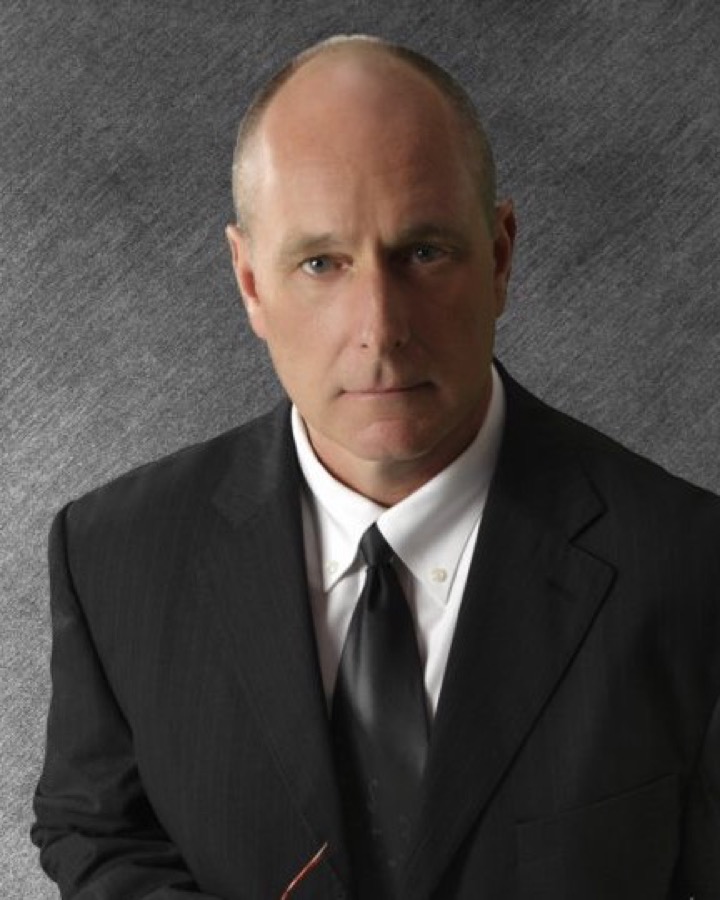 CEO & Owner
Thirty-eight years in four uniforms: street cop, soldier, professor, investigator. More than 220 matters in 42 states and D.C. since 2014, with testimony that has not been excluded at trial in any state or federal court.
Full biography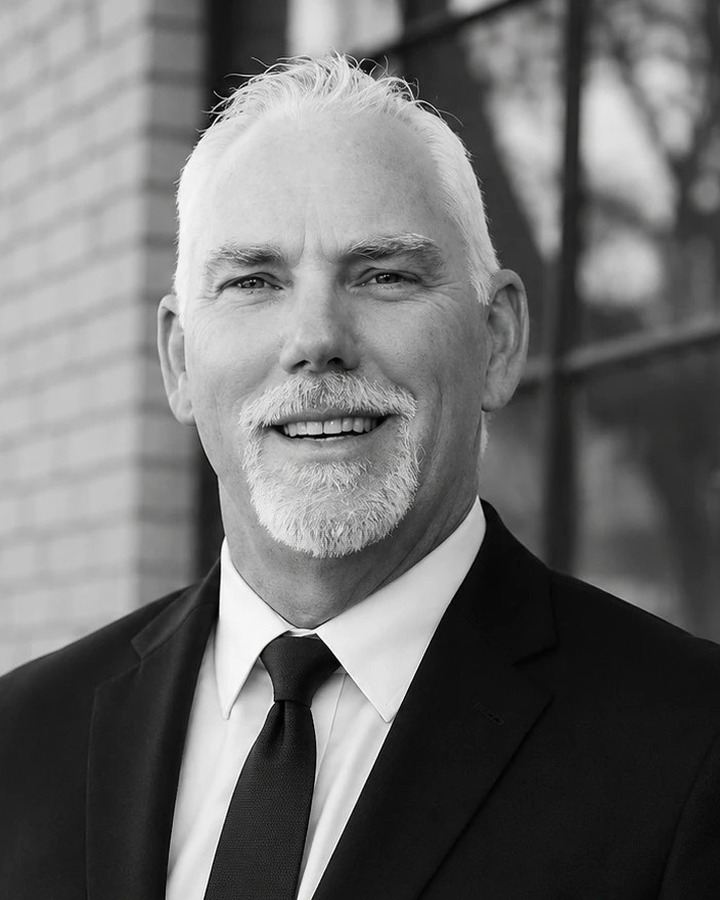 Consultant
More than thirty-five years in public safety: twelve years and three terms as the elected Sheriff of Lewis County, Washington, and six years a commissioner of the state board that sets peace-officer training standards.
Full profile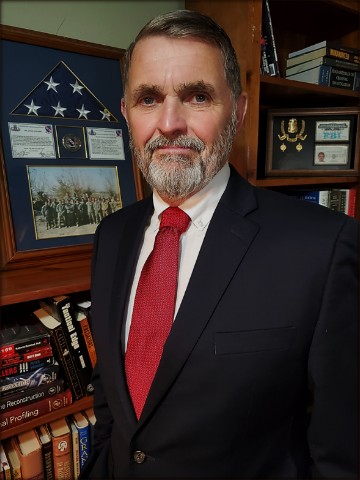 Consultant
Forty years of investigative casework, from patrolman in St. Louis County to the FBI in Chicago, and on to task forces in Afghanistan and Liberia. His work on the Idaho student murders is examined in Broken Plea, the New York Times bestseller by Christopher Whitcomb.
Full profileNever excluded. Professor Gilbertson’s testimony has not been excluded at trial in any state or federal court.
The Hon. Richard A. Jones United States District Judge“Mr. Gilbertson’s qualifications demonstrate extensive experience in policing. His expansive work as a police officer in Georgia, with assignments as a SWAT team officer, juvenile court investigator, school resource officer, stakeout squad officer, senior patrolman, and patrolman; then a career as a tenured college professor and university lecturer teaching criminal justice courses to degree-seeking students at colleges and universities, and as a licensed private investigator conducting felony pretrial investigations for attorneys in Washington State in dozens of criminal cases, makes him unique in the field of police expert witnesses. The Court finds that, based on his experience, Mr. Gilbertson’s testimony can be expected to have a reliable basis in knowledge and experience of police practices.”
What Rule 26(a)(2)(B) requires.
In federal civil litigation, Fed. R. Civ. P. 26(a)(2)(B) requires that the disclosure of a retained testifying expert be accompanied by a written report, prepared and signed by the witness. The rule then lists what the report must contain, and the list is short, specific and unforgiving of omissions.
- A complete statement of all opinions the witness will express, with the basis and reasons for them
- The facts or data considered by the witness in forming the opinions
- Any exhibits that will be used to summarize or support the opinions
- The witness’s qualifications
- A list of the witness’s publications from the previous ten years
- A list of other cases in which, in the previous four years, the witness testified as an expert at trial or by deposition
- A statement of the compensation to be paid for the study and testimony
The rule has a purpose litigators feel more than they cite: it forces the expert’s entire position onto paper before trial strategy hardens. Opposing counsel gets the opinions, the support and the price in one package, and surprise testimony becomes a fight about exclusion instead of a trial tactic. For retaining counsel, the same completeness is protection; a disclosure with nothing held back leaves nothing to be accused of holding back.
Prepared and signed by the witness means what it says: the opinions, the analysis and the words are the expert’s own, and the signature line reflects who actually did the work.
The rule is federal. Most states run analogous disclosure schemes for retained experts, some tracking the federal text closely, others differing in timing, format and scope. This page stays with the federal rule; retaining counsel confirms the local rules and deadlines that govern the specific court, state or federal, before the calendar is built.
Opinions, basis and the facts considered.
The first requirement, a complete statement of all opinions with the basis and reasons for them, is the report itself. In this practice the report is architected so the requirement is satisfied structurally: numbered opinions stated to a reasonable degree of professional certainty, each followed by its basis in the record and the standards applied. Anatomy of a police practices expert report walks that structure section by section.
Basis and reasons is also the standard the report is built to meet sentence by sentence. Every opinion traces to record items and named standards, which means the disclosure requirement and the quality bar are the same thing: a report that satisfies the rule structurally leaves nothing to backfill at deposition, where the first question about any opinion is what it rests on.
The facts or data considered requirement is broader than what the expert ultimately relied on: considered means considered. The materials reviewed section of the report does this work, listing everything that arrived and was examined. This is where a complete record earns its keep twice. An item the expert never received cannot appear on the list, and opposing counsel reads the list precisely to find what is missing. The cure is upstream: send the discovery file counsel assembles complete, on physical media, the first time.
Exhibits round out the substance: the video stills, timeline demonstratives and policy excerpts that will summarize or support the opinions. When the report already sources every opinion to specific record items, identifying exhibits is housekeeping rather than a scramble. In police practices matters the exhibits are usually the record speaking for itself: the frame of video under discussion, the policy language on the page, the timeline the chronology already built.
The disclosure also has to stay current. When new discovery arrives after the report is served, a supplemental report updates the analysis on the new record, and the updated materials flow into the disclosure the same way the originals did. The expert supplies the corrected substance; counsel manages the procedural vehicle and its timing under the rules of the forum.
Qualifications, prior testimony and compensation.
Qualifications and publications are the CV, supplied at retention and kept current. For a police practices expert the qualifications disclosure is not decoration; it is the foundation opposing counsel will probe at deposition and the court will weigh under Fed. R. Evid. 702, so the disclosed version and the deposition answers have to match exactly.
In this practice the qualifications section carries 38 years of criminal justice experience in four uniforms, from police service in Georgia with SWAT training through tenured criminal justice instruction and international police training and advising in Iraq and Afghanistan. Disclosing it fully is not vanity; Fed. R. Evid. 702 gatekeeping starts with who the witness is, and a court should never learn something about the expert for the first time from an opposing brief.
The prior testimony list is disclosed as the rule requires, and the history behind it is a matter of record: an expert practice since 2014, more than 220 civil rights and criminal cases across 42 states and the District of Columbia, and testimony that has not been excluded at trial in any state or federal court. A long, disclosed testimony history cuts both ways by design: opposing counsel is free to mine it, and retaining counsel is free to rely on it.
Compensation is the disclosure that makes some experts uncomfortable and leaves this practice indifferent, because the schedule is published. The statement restates public figures: a $9,000 flat fee covering discovery review and the written report, a $3,500 flat deposition fee per expert, and published trial and travel rates. There is nothing to shade and nothing for opposing counsel to discover; the numbers were never private.
Assembled, the backing sections tell the court who the witness is, where the opinions have been tested before, and what the testimony costs, all before a single substantive page is read. Clean backing sections buy the substantive sections a fair hearing.
Rule 26(b)(4): testifying and consulting experts.
Fed. R. Civ. P. 26(b)(4) draws the other line counsel plans around. A testifying expert faces deposition and full report disclosure. Facts known and opinions held by an expert retained only for consultation are ordinarily shielded from discovery, subject to narrow exceptions. The designation, and any later change to it, is a strategic call that belongs to counsel and shapes what the other side ever sees.
Both postures are within scope here. Engagements begin as consulting-only or testifying retention, and a preliminary case-merit evaluation can precede either, so counsel can hear the strength of the record before deciding what to disclose. The practical trade-offs, what each posture protects, what it costs, and how the choice tends to play out, are walked through in consulting vs testifying experts.
One practical note on sequencing: the consulting posture is where quiet work happens. A preliminary case-merit evaluation, run before any disclosure obligation attaches, tells counsel whether the record supports the theory at all. If the answer is unhelpful, counsel has learned it privately and early. If the answer supports the claim, the same record discipline that produced the evaluation is already pointed at a disclosable report; what changes is what the other side is entitled to see.
The expert supplies, counsel discloses.
The division of labor is clean. The expert supplies the materials the rule requires: the signed report with opinions and basis, the facts-considered list, exhibits, the CV, the prior testimony list, and the published fee schedule. Retaining counsel owns the disclosure itself: its assembly, its service, its deadlines, and every legal judgment about scope and strategy. Legal conclusions remain counsel’s; the expert addresses police practices.
Deadlines drive retention timing more than any other factor. Expert reports require sixty days of advance notice, and work begins once discovery has been received on physical media, so the realistic planning exercise is counting backward from the disclosure deadline: retention date, drive date, report date. Reports required in less than sixty days incur a 25% upcharge, which is a schedule warning as much as a fee term.
Disclosure is also not the finish line. After the report is served comes the reliability stage, where Daubert v. Merrell Dow Pharmaceuticals, Inc., 509 U.S. 579 (1993) and Fed. R. Evid. 702 supply the framework. A disclosure built from a complete record and a sourced report is the groundwork for that fight; Daubert and Rule 702 for police practices testimony picks up where this page leaves off.
Count backward from the disclosure deadline: sixty days of notice, plus the time counsel needs to assemble the discovery file and put it on physical media.
When the question becomes a retention.
This page is reference. When a live matter needs the analysis, these are the doors.
Asked alongside this one.
What must a Rule 26 expert report contain?
Does Rule 26 apply to expert disclosures in state court?
What compensation must be disclosed for a testifying expert?
What does retention cost?
Bring the matter behind the question.
Attorney inquiries are answered directly. If a case presents a conflict, you will hear it immediately.
Inquiry sent.
You will hear back directly. If the matter is urgent, call (239) 571-1840.
Conflicts are checked before any substantive discussion. Please do not send privileged material with a first inquiry; after retention the record is exchanged on physical media. Gregory consults for attorneys and their staff only, and does not provide legal advice or attorney referrals to individuals.