

Defense retentions.
Same expert, same standards.
Direct line: (239) 571-1840 · GregoryGilbertson@proton.me
Attorney and law-firm inquiries only
Counsel defending officers and agencies retain the same police practices discipline that plaintiff’s counsel retains, and this practice takes those engagements. The method does not change with the party who pays for it. This page sets out what defense retentions involve, what a defense report can and cannot do, and why the posture is the value.
Three experts. Over 110 years.
Professor Gregory Gilbertson (Ret.), FBI Special Agent Christopher Holland (Ret.), and Sheriff Robert Snaza consult with attorneys nationwide regarding police practices and procedures, use of force, false arrest, police misconduct, criminal, and self-defense casework.
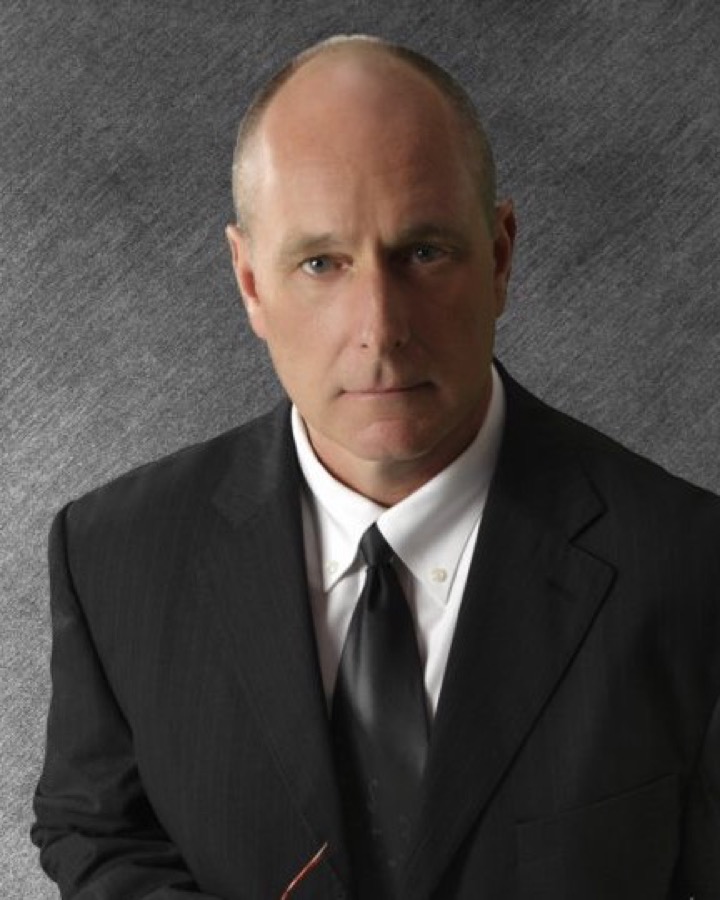 CEO & Owner
Thirty-eight years in four uniforms: street cop, soldier, professor, investigator. More than 220 matters in 42 states and D.C. since 2014, with testimony that has not been excluded at trial in any state or federal court.
Full biography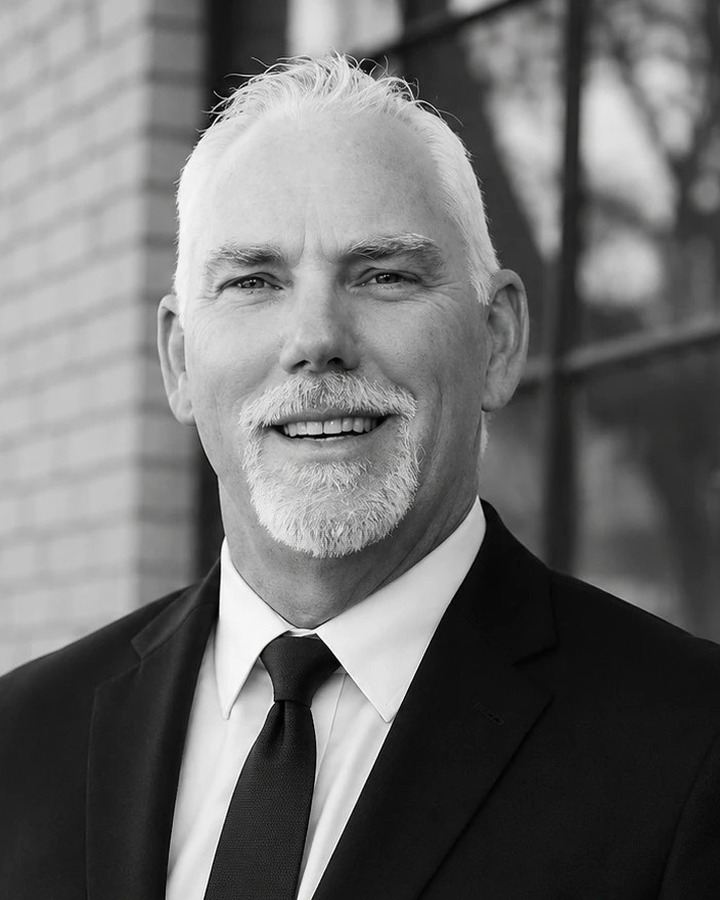 Consultant
More than thirty-five years in public safety: twelve years and three terms as the elected Sheriff of Lewis County, Washington, and six years a commissioner of the state board that sets peace-officer training standards.
Full profile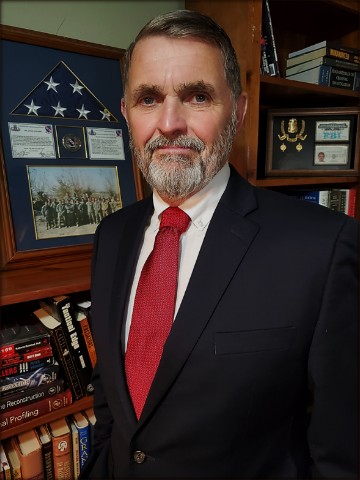 Consultant
Forty years of investigative casework, from patrolman in St. Louis County to the FBI in Chicago, and on to task forces in Afghanistan and Liberia. His work on the Idaho student murders is examined in Broken Plea, the New York Times bestseller by Christopher Whitcomb.
Full profileNever excluded. Professor Gilbertson’s testimony has not been excluded at trial in any state or federal court.
The Hon. Richard A. Jones United States District Judge“Mr. Gilbertson’s qualifications demonstrate extensive experience in policing. His expansive work as a police officer in Georgia, with assignments as a SWAT team officer, juvenile court investigator, school resource officer, stakeout squad officer, senior patrolman, and patrolman; then a career as a tenured college professor and university lecturer teaching criminal justice courses to degree-seeking students at colleges and universities, and as a licensed private investigator conducting felony pretrial investigations for attorneys in Washington State in dozens of criminal cases, makes him unique in the field of police expert witnesses. The Court finds that, based on his experience, Mr. Gilbertson’s testimony can be expected to have a reliable basis in knowledge and experience of police practices.”
Yes, and the method does not change.
The question usually comes from defense counsel who has read a curriculum vitae listing civil rights retentions and wants to know whether the witness is available to the other side of the caption. The answer is yes. Retentions come from plaintiff’s counsel in civil rights matters, from the criminal defense bar, and from counsel defending officers and agencies accused of excessive force and misconduct.
Sameness here is specific, not a slogan. The record is measured against national police standards and practices, controlling agency policy, state and federal statutes and case law, on the totality of the facts and circumstances. Use-of-force questions run through Graham v. Connor, 490 U.S. 386 (1989), which asks what the officer knew at the moment force was used and rules hindsight out of the assessment.
That anchor is frequently the defense’s strongest ground. An incident that looks indefensible in a still frame or a summary often reads differently once the sequence, the information available to the officer, the training the officer received and the policy in force are laid out in order. Graham requires exactly that view of the moment, and a plaintiff’s narrative built on the outcome rather than on what was known has to answer it.
Where the record shows an officer acted within accepted police practices, the report says so and documents why. Where it does not, the report says that instead, and defense counsel finds out before disclosure rather than during a deposition.
Every engagement, defense or plaintiff, begins with a conflict check against parties, counsel and prior matters, run before anything substantive is discussed. If the matter presents a conflict, counsel hears it immediately.
What defense retentions actually involve.
- Officer defense in excessive force and false arrest suits, including shooting, restraint, less-lethal and high-risk warrant matters.
- Agency defense against failure-to-train, failure-to-supervise and failure-to-discipline theories, and the pattern and practice claims built on them.
- Criminal defense of current and former officers facing charges arising from the performance of their duties.
- Consulting-only engagements, where the analysis informs strategy without a disclosure.
- Review of the opposing expert’s report, sourcing and method, and rebuttal reports where the disclosure warrants one.
- Deposition and pretrial examination, suppression hearing testimony, and preparation on Rule 702 questions.
- Mediation and settlement consultation, where a candid read of the record is worth more than a favorable one.
Agency-side work usually turns on documents rather than on the seconds of an encounter: the policy in force, the academy and field training curriculum, in-service records, supervisory review of prior incidents, and how the agency actually handled complaints and discipline. That analysis measures the agency against national standards, model policies and accreditation practice, and it is as capable of showing a training program that met them as one that did not.
Admissibility questions get handled the same way for either side. Fed. R. Evid. 702, framed by Daubert v. Merrell Dow Pharmaceuticals, Inc., 509 U.S. 579 (1993), governs whether opinions come in, and Daubert preparation is within scope. Retaining counsel remains responsible for the admissibility of reports and testimony, and no outcome is promised in any civil or criminal matter.
Two boundaries matter to defense teams in particular. The analysis addresses police practices, not law: whether a right was clearly established is a question for counsel and the court, as qualified immunity and the expert explains. And a consulting-only engagement is the right posture when counsel wants an honest read first, which is the subject of what happens if the opinion does not help.
Why the same-standards posture is the value.
A police expert who has only ever worked one side of the aisle can be impeached with that fact alone, and plaintiff’s counsel will do it in the first ten minutes. The retention history becomes the cross-examination: how many times retained, by whom, and whether the witness has ever reached a conclusion the retaining party did not want.
A defense report from an expert who has also testified against officers when the record required it does not have that exposure. The opinions arrive as analysis rather than as advocacy purchased for the occasion, and a finding that an officer acted within accepted practices carries weight precisely because the same standards have produced the opposite finding in other matters. Working both sides of the aisle sets out that posture in full.
The practical consequence is that a defense retention here is not a search for a favorable conclusion. It is a search for the conclusion the record supports, which is the only kind that survives a competent cross-examination. Counsel who needs a predetermined answer is better served elsewhere, and hearing that early is cheaper than hearing it at trial.
Everything else runs on the published terms. The conflict check comes first, the scope is confirmed in writing, the record travels on physical media, and depositions and trial testimony follow the same schedule regardless of which side retains. Scientific, medical and technical questions are deferred to qualified experts in those disciplines, on the record. Legal conclusions remain counsel’s, and criminal defense support covers the officer-defendant posture in more detail.
When the question becomes a retention.
This page is reference. When a live matter needs the analysis, these are the doors.
Asked alongside this one.
Will an expert who works plaintiff cases really take an officer defense retention?
Can a police practices expert opine that an officer is entitled to qualified immunity?
Does the same expert working both sides create a conflict in an officer defense case?
Bring the matter behind the question.
Attorney inquiries are answered directly. If a case presents a conflict, you will hear it immediately.
Inquiry sent.
You will hear back directly. If the matter is urgent, call (239) 571-1840.
Conflicts are checked before any substantive discussion. Please do not send privileged material with a first inquiry; after retention the record is exchanged on physical media. Gregory consults for attorneys and their staff only, and does not provide legal advice or attorney referrals to individuals.