

Crime Scene Documentation,
Held to the Standard
Direct line: (239) 571-1840 · GregoryGilbertson@proton.me
Attorney and law-firm inquiries only
Accepted practice asks one thing of a crime scene file: that a stranger, years later, can rebuild the scene from the documentation alone. Security, logging, photography, measurement, collection and the canvass either make that possible or they do not, and litigation finds out which.
Three experts. Over 110 years.
Professor Gregory Gilbertson (Ret.), FBI Special Agent Christopher Holland (Ret.), and Sheriff Robert Snaza consult with attorneys nationwide regarding police practices and procedures, use of force, false arrest, police misconduct, criminal, and self-defense casework.
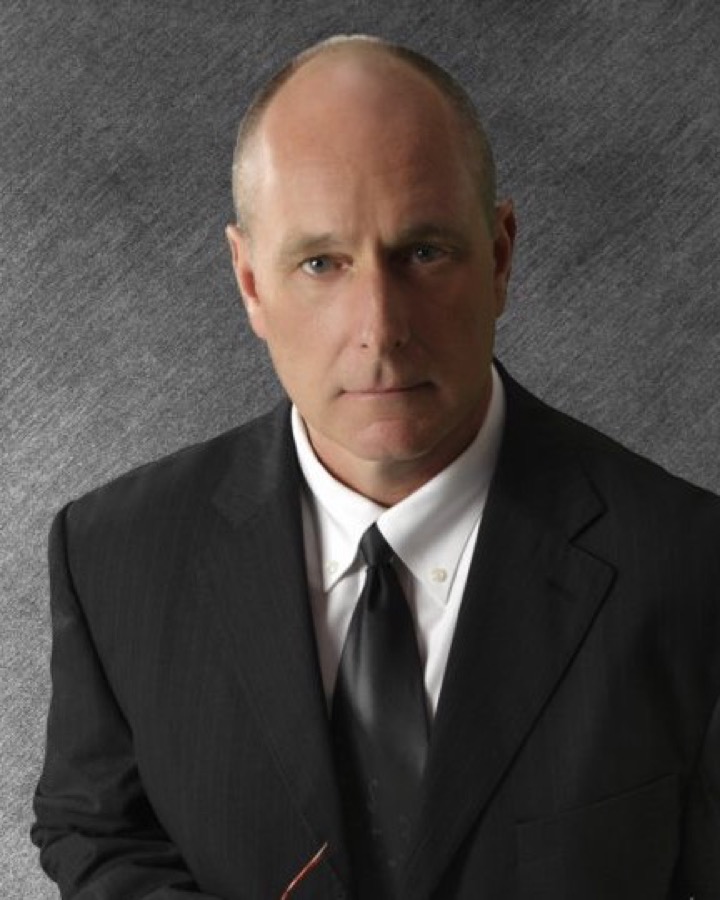 CEO & Owner
Thirty-eight years in four uniforms: street cop, soldier, professor, investigator. More than 220 matters in 42 states and D.C. since 2014, with testimony that has not been excluded at trial in any state or federal court.
Full biography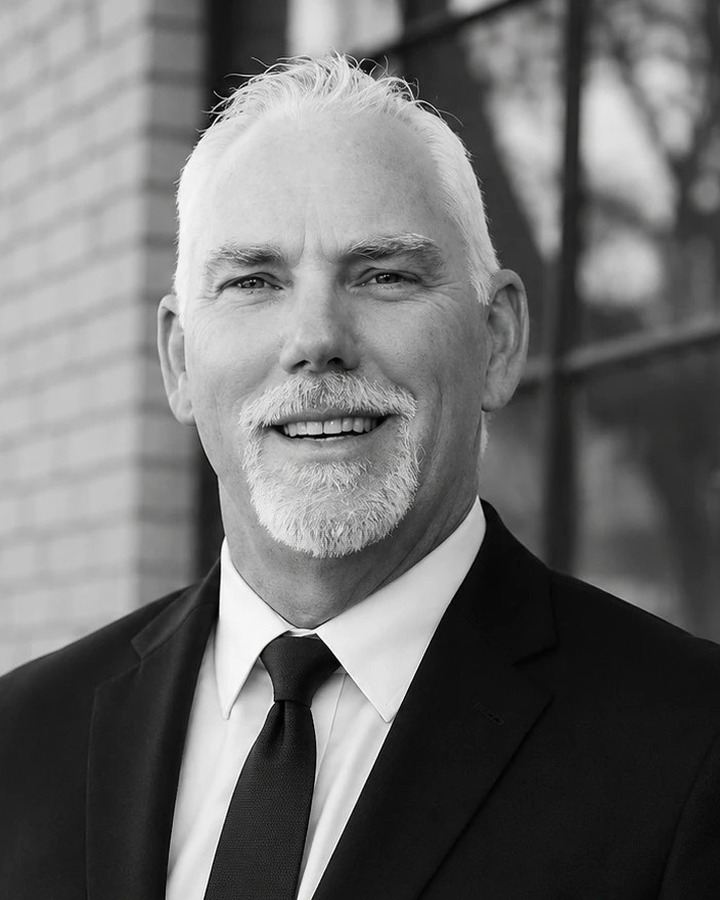 Consultant
More than thirty-five years in public safety: twelve years and three terms as the elected Sheriff of Lewis County, Washington, and six years a commissioner of the state board that sets peace-officer training standards.
Full profile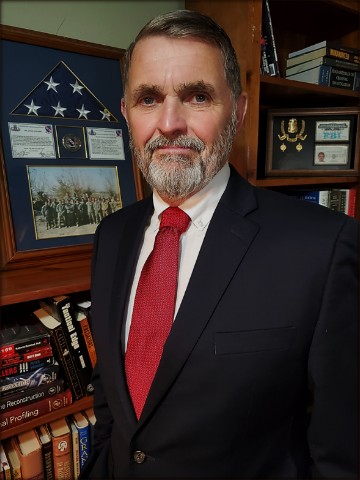 Consultant
Forty years of investigative casework, from patrolman in St. Louis County to the FBI in Chicago, and on to task forces in Afghanistan and Liberia. His work on the Idaho student murders is examined in Broken Plea, the New York Times bestseller by Christopher Whitcomb.
Full profileNever excluded. Professor Gilbertson’s testimony has not been excluded at trial in any state or federal court.
The Hon. Richard A. Jones United States District Judge“Mr. Gilbertson’s qualifications demonstrate extensive experience in policing. His expansive work as a police officer in Georgia, with assignments as a SWAT team officer, juvenile court investigator, school resource officer, stakeout squad officer, senior patrolman, and patrolman; then a career as a tenured college professor and university lecturer teaching criminal justice courses to degree-seeking students at colleges and universities, and as a licensed private investigator conducting felony pretrial investigations for attorneys in Washington State in dozens of criminal cases, makes him unique in the field of police expert witnesses. The Court finds that, based on his experience, Mr. Gilbertson’s testimony can be expected to have a reliable basis in knowledge and experience of police practices.”
What accepted practice requires at a scene.
The first duties are protective. Officers arriving at a scene establish a perimeter, control who crosses it, and start a log that records every entry and every exit with times. The log exists because every entry is a potential alteration of the scene, and because the file must later show not only what was found but who had the opportunity to touch it before it was recorded.
Documentation comes before disturbance. The scene is photographed and measured as found: overall views that fix the geography, mid-range views that relate items to each other, close views that record each item where it lies. Nothing is moved until its position is recorded. Measurements tie the photographs to fixed points so that distances and sight lines can be verified later by someone who never stood there.
Collection follows identification. Each item is marked, photographed in place and logged, then packaged and documented into an unbroken chain of custody that runs from the ground to the evidence room. In parallel, the surrounding area is canvassed for witnesses, and the canvass is recorded even where it produces nothing, because a documented negative canvass is evidence of diligence and an undocumented one is indistinguishable from no canvass at all.
None of this is ceremony. The photographs and measurements are the only version of the scene that survives its release. The log is the only proof of who was inside the tape. The custody record is the only thing that connects the item in the courtroom to the item on the ground. Accepted practice treats documentation as the product of the scene work, not a clerical afterthought, and agency policies and training curricula teach it in exactly those terms.
- Scene security established, with an access log recording every entry and exit
- Photography and measurement of the scene as found, before anything is moved
- Each item of evidence identified, marked, photographed in place and logged
- Collection documented into an unbroken chain of custody from scene to storage
- A recorded canvass of the surrounding area for witnesses, including negative results
- A file complete enough that a stranger can rebuild the scene from the documentation alone
How documentation failures surface in litigation.
Documentation failures rarely announce themselves on the night of the incident. They surface in discovery, when the file is finally read as a whole: an item visible in a scene photograph that appears in no evidence log; a log with a gap of hours between the first officer’s arrival and the first recorded entry; people standing inside the tape in the background of photographs whom no report names.
Witness gaps follow the same pattern. The canvass area has addresses that were never knocked, or knocked with no record of who answered. Occupants surface months later with accounts nobody took in the first week, and the question becomes whether the investigation missed them or never looked. A recorded canvass answers that question; an unrecorded one leaves the agency to answer it in deposition.
Custody gaps are the most mechanical and often the most consequential. The chain must show who had each item, when, and for what purpose, from collection to analysis to the courtroom. Where the log cannot account for an interval, the item’s story has a hole in it, and the hole belongs to whichever party needs the item to be what the log says it is. The Library guide to what chain of custody is covers the doctrine and the paperwork in detail.
Access gaps round out the set. Video from arriving units sometimes shows command staff, unassigned officers or civilians moving through the scene who appear nowhere in the log. Every unrecorded entry is a question the file cannot answer: what was moved, what was added, what was stepped on. The analysis does not speculate about what happened in the gap; it documents that the gap exists and that the standard required it not to.
The recurring theme: a gap in the file is not neutral. Years later, the documentation is the only witness that has not moved away, changed its account or died.
Investigative practice, not laboratory science.
The practices question at a scene is disciplined and narrow: what was secured, photographed, measured, collected, logged and pursued, weighed against what accepted practice required for that kind of scene. National standards, agency policy and academy training define the requirement; the file shows what was actually done; the analysis measures the distance between them.
What the analysis does not do is laboratory work. Testing and comparison questions belong to qualified forensic disciplines, and the opinions defer to those disciplines on the record. Scene reconstruction likewise sits outside the police practices lane: it is the discipline of FBI Special Agent Christopher Holland (Ret.), an independent consultant retained case-by-case for matters where that discipline is what the case needs.
The division of labor serves counsel. A practices opinion that stays in its lane survives scrutiny, and a report that says on its face which questions belong to other disciplines gives opposing counsel less to work with, not more. Where a scene question is really a laboratory question, the report says so and stops.
Documentation failures also travel with a known investigative failure: tunnel vision. A scene worked toward a suspect already chosen gets documented selectively, with the photographs, collection decisions and canvass all orbiting the chosen theory. The Library guide to what tunnel vision is covers that pattern; at the scene, its fingerprint is a file that documents the expected and ignores the rest.
The file decides the review, years later.
Deficient-investigation and wrongful-conviction review is conducted on paper. By the time such a case is litigated, the scene has been released, repainted or repaved, the witnesses have scattered, and the physical items are whatever the evidence room still holds. The review can only test what the documentation preserved, which is why the documentation record is where those cases are won or lost.
In practice, the scene file is read into the master timeline: when the scene was secured, when each photograph was taken, when each item was collected and by whom, when the scene was released. The method is described in building the record chronology. Laid against the rest of the record, the timeline shows what the investigation could have known, when it could have known it, and what it chose to pursue.
What the review looks for is the distance between what the scene offered and what the file preserved. Evidence visible but never collected, leads logged but never assigned, alternative explanations the documented record supported but nobody pursued: each is measured against the standard of the day and the agency’s own policy, not against hindsight. The service side of that work is described under wrongful-conviction and deficient-investigation review.
The analysis runs in both directions here as everywhere. A scene file that meets the standard, with a complete log, disciplined photography and a documented canvass, is powerful evidence that the investigation was sound, and the report states that when the record shows it.
Reading a scene file like an expert.
The published discovery list already includes crime scene photographs; the file around them is where the documentation case lives. When assembling discovery for a scene-documentation question, the materials that matter most:
- The scene log, with every entry and exit and the times of each
- All scene photographs, with their capture times and sequence
- Evidence logs and property records from collection through storage
- Canvass notes, including addresses with no answer and negative contacts
- First-officer and detective reports and supplements, in every version
- The agency’s scene-processing policy and the training records behind it
Professor Gilbertson has consulted in more than 220 civil rights and criminal cases across 42 states and the District of Columbia, retained by plaintiff’s counsel, the criminal defense bar, and counsel defending officers and agencies. On a scene question the opinion addresses investigative practice: what the standard required, what the file shows, and where they diverge. Legal conclusions remain counsel’s, and laboratory questions are deferred to qualified experts, on the record.
When the question becomes a retention.
This page is reference. When a live matter needs the analysis, these are the doors.
Asked alongside this one.
What does accepted practice require a crime scene file to contain?
How do crime scene documentation failures show up in litigation?
Does the police practices expert perform laboratory analysis or scene reconstruction?
Bring the matter behind the question.
Attorney inquiries are answered directly. If a case presents a conflict, you will hear it immediately.
Inquiry sent.
You will hear back directly. If the matter is urgent, call (239) 571-1840.
Conflicts are checked before any substantive discussion. Please do not send privileged material with a first inquiry; after retention the record is exchanged on physical media. Gregory consults for attorneys and their staff only, and does not provide legal advice or attorney referrals to individuals.