

The Incident, in Order.
Every Moment, Sourced.
Direct line: (239) 571-1840 · GregoryGilbertson@proton.me
Attorney and law-firm inquiries only
A police incident is decided in seconds and litigated for years. The record chronology merges every time-stamped source, CAD entries, radio traffic, video, reports and statements, into one ordered account of what was known at each moment, with every line attributed to the source that carries it.
Three experts. Over 110 years.
Professor Gregory Gilbertson (Ret.), FBI Special Agent Christopher Holland (Ret.), and Sheriff Robert Snaza consult with attorneys nationwide regarding police practices and procedures, use of force, false arrest, police misconduct, criminal, and self-defense casework.
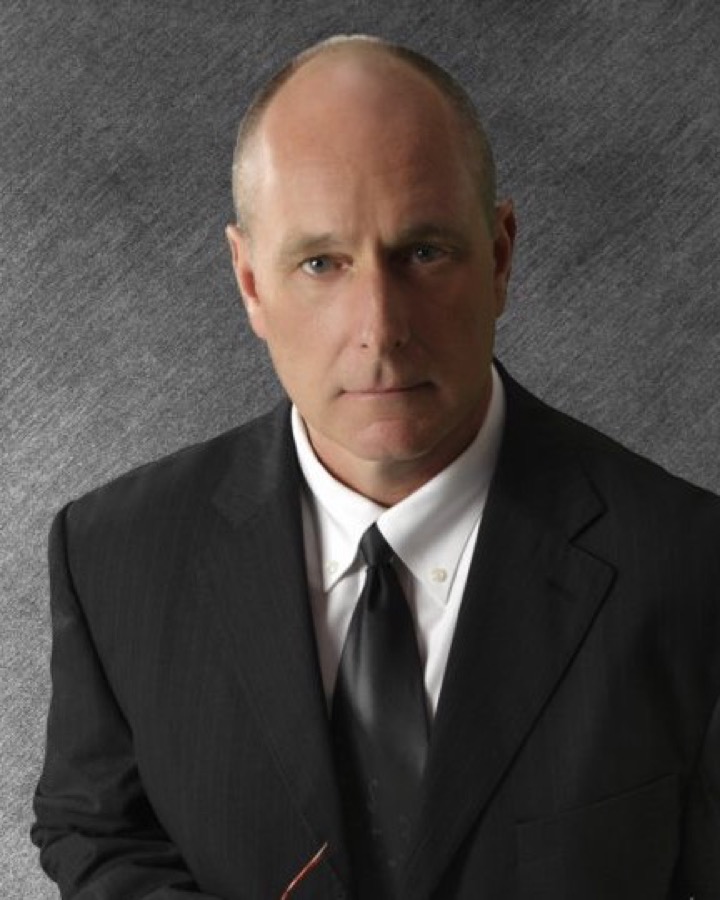 CEO & Owner
Thirty-eight years in four uniforms: street cop, soldier, professor, investigator. More than 220 matters in 42 states and D.C. since 2014, with testimony that has not been excluded at trial in any state or federal court.
Full biography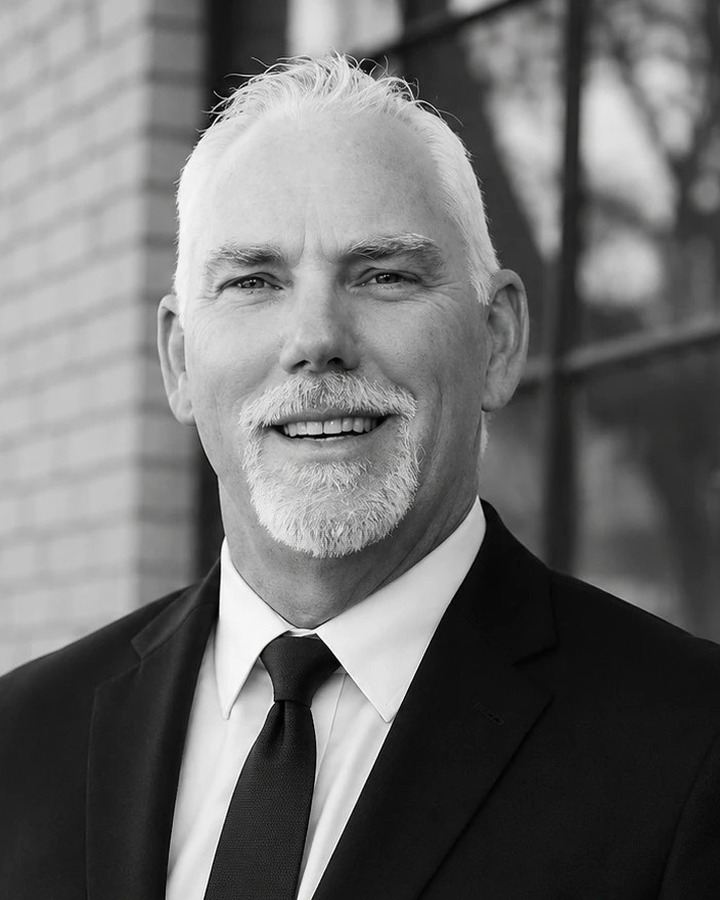 Consultant
More than thirty-five years in public safety: twelve years and three terms as the elected Sheriff of Lewis County, Washington, and six years a commissioner of the state board that sets peace-officer training standards.
Full profile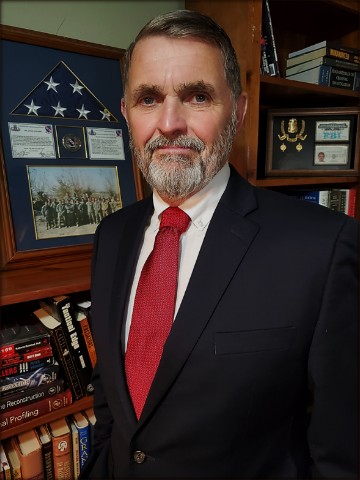 Consultant
Forty years of investigative casework, from patrolman in St. Louis County to the FBI in Chicago, and on to task forces in Afghanistan and Liberia. His work on the Idaho student murders is examined in Broken Plea, the New York Times bestseller by Christopher Whitcomb.
Full profileNever excluded. Professor Gilbertson’s testimony has not been excluded at trial in any state or federal court.
The Hon. Richard A. Jones United States District Judge“Mr. Gilbertson’s qualifications demonstrate extensive experience in policing. His expansive work as a police officer in Georgia, with assignments as a SWAT team officer, juvenile court investigator, school resource officer, stakeout squad officer, senior patrolman, and patrolman; then a career as a tenured college professor and university lecturer teaching criminal justice courses to degree-seeking students at colleges and universities, and as a licensed private investigator conducting felony pretrial investigations for attorneys in Washington State in dozens of criminal cases, makes him unique in the field of police expert witnesses. The Court finds that, based on his experience, Mr. Gilbertson’s testimony can be expected to have a reliable basis in knowledge and experience of police practices.”
One timeline, built from every time-stamped source.
The record of a police incident arrives in fragments, each with its own clock and its own point of view. CAD entries mark when the call was created, dispatched, updated and cleared. Radio traffic captures what was broadcast and when. Body-worn and dash cameras record what one lens saw from one position, beginning at activation. Surveillance systems watched from somewhere else entirely. Reports and statements describe the event from memory, after it ended. None of these sources is the incident; each is a partial witness to it.
The chronology is the discipline of merging those fragments into a single ordered account. The build follows one attribution rule: no entry without a source. Every line states what happened, when it happened on the aligned clock, and which item in the record says so. Where two sources speak to the same moment, both are cited. Where no source covers an interval, the gap is stated as a gap rather than papered over with inference. The finished document can be checked line by line against the discovery file, which is what makes it usable in a courtroom.
- CAD entries: call creation, dispatch, unit arrival, status updates and clearance times
- Radio traffic and 911 audio, matched against the dispatch record
- Body-worn and dash camera video, including activation points and any pre-event buffer
- Surveillance and bystander video, from fixed and moving positions
- Police reports, use-of-force paperwork and supplemental narratives
- Witness statements and deposition transcripts, placed against the recorded timeline
Sources without native time stamps are placed, not guessed. A witness statement describing the moment the second unit arrived attaches to the CAD arrival entry for that unit. A report narrative describing a command attaches to the audible command on the body-worn recording. Where a statement cannot be tied to any anchored event, it is entered where its own content puts it and marked as unanchored, so no reader mistakes narrative placement for a measured time.
On the page, the chronology reads as a table of moments: the aligned time, the event, and the source or sources for it, entry after entry from the first keystroke in the CAD system to the end of the last relevant recording. Counsel quote it, depose against it and build demonstratives from it precisely because nothing in it floats free of the record.
What was known, and when it was known.
Graham v. Connor, 490 U.S. 386 (1989) requires that force be judged from the perspective of a reasonable officer on the scene, on the totality of the facts and circumstances known at the time, without the benefit of hindsight. That single principle makes sequence decisive. Information that arrived after a decision cannot justify the decision, and a fact the officer could not yet have known cannot be part of the reasonableness picture, however large it looms once the full record is assembled.
The chronology is how that principle becomes checkable instead of rhetorical. It shows what had been broadcast before the officer arrived, what the camera shows was visible when it activated, what commands were given and how much time separated them, and what the record establishes about the seconds surrounding the force decision. Laid out this way, the timeline answers the only version of the question that matters in a force case: not what is known now, but what was known then. The same discipline underpins the broader totality of the circumstances analysis that force opinions rest on.
The timeline cuts in whichever direction the record points. Sometimes it shows a threat developing earlier than the written narrative conveys, and supports the officer. Sometimes it shows the decisive fact arriving only after force was already underway. The chronology is built the same way in either case, from the same sources, under the same attribution rule, which is why it holds up regardless of which side sent the retention letter.
Chronology work is not limited to force cases. Probable-cause timing, pursuit decisions, warrant executions and failure-to-intervene questions all turn on what was known when, and all are built on the same sourced timeline.
Where written accounts and recorded time part ways.
Reports are written after the event, from memory, under stress, and sometimes after reviewing video or consulting others. Recorded sources are indifferent to all of that. When the written account and the time-stamped record disagree, the chronology documents the divergence precisely: the report’s assertion is entered alongside the recorded material covering the same moment, each attributed, neither adjusted to rescue the other.
What the chronology does not do is explain the divergence. Whether a gap between the report and the video reflects perception, memory, drafting habit or something worse is a question of motive and credibility. Characterization belongs to counsel and the trier of fact; the expert’s contribution is a precise record of where the accounts separate, what each source says, and how far apart they are. The patterns that recur in written narratives are their own subject, covered in how police reports fail.
Divergence work is also where the chronology earns its place in deposition preparation. An officer examined against a sourced timeline is answering about specific, cited moments rather than trading recollections with the examiner. Counsel can decide in advance which divergences matter, which are noise, and in what order to walk through them. The document supplies the moments; the examination strategy stays with counsel.
A documented divergence is not an accusation. The chronology records that two sources differ and preserves both; what the difference means is argued by counsel, not assumed by the expert.
Drift, offsets and anchor events.
The clocks behind a police record are not synchronized. CAD servers, body-worn cameras, in-car systems and surveillance recorders each keep their own time, and consumer-grade equipment drifts. A chronology that treats every displayed time as literal will misorder events by seconds or minutes, and in a force case that can mean misordering everything that matters: the broadcast and the arrival, the command and the movement, the shot and the fall.
The practices-level answer is offset work. Time sources are aligned against anchor events that appear in more than one stream: a radio transmission that is both logged by dispatch and audible on a body-worn recording, a visible event captured by two cameras from different positions, a CAD entry paired with the broadcast that generated it. The offsets derived from those anchors are stated inside the chronology itself, next to the entries they govern, so opposing counsel can test the alignment rather than take it on faith. An alignment method that cannot be examined is not a method.
The boundary is stated just as plainly. Deriving an offset from anchor events in the record is practices work. Enhancing a recording, authenticating a file or examining its internals is not: where video enhancement or authentication is needed, qualified forensic video experts are deferred to, on the record, and the chronology carries their findings rather than substituting for them.
What counsel receives, and how it gets used.
The chronology arrives inside the written report, as the factual spine the opinions stand on. Each opinion that depends on sequence points back to chronology entries, and each entry points back to the record. That structure is deliberate. It is the first thing a careful cross-examination will test, and it is built to be tested: the answer to where does that come from is a citation, not a recollection.
Counsel use the document well beyond the report. It structures depositions of officers and witnesses, anchors the evaluation of settlement posture against what the record actually supports, and carries briefing where sequence is the argument. How any of it is deployed, and whether any of it is admitted, remains counsel’s call: the expert addresses police practices, and legal conclusions stay with counsel.
The chronology is only as strong as the record behind it, which is why the discovery file counsel assembles matters before the analysis begins. Video without the CAD export, or reports without the radio traffic, leaves anchor events unverifiable and gaps unexplained. Expert reports require sixty days of advance notice, and the timeline work sits early in that window because the rest of the review is built on top of it.
One request worth making early: native files with their original metadata, not screen captures or converted copies. Copies made for convenience often strip the time information the offset work depends on.
When the question becomes a retention.
This page is reference. When a live matter needs the analysis, these are the doors.
Asked alongside this one.
What is a record chronology in a police case?
Why does the timeline matter in a use-of-force case?
How are conflicting clocks in video and CAD records handled?
Bring the matter behind the question.
Attorney inquiries are answered directly. If a case presents a conflict, you will hear it immediately.
Inquiry sent.
You will hear back directly. If the matter is urgent, call (239) 571-1840.
Conflicts are checked before any substantive discussion. Please do not send privileged material with a first inquiry; after retention the record is exchanged on physical media. Gregory consults for attorneys and their staff only, and does not provide legal advice or attorney referrals to individuals.