
After the shot,
the investigation the record has to show.
Direct line: (239) 571-1840 · GregoryGilbertson@proton.me
Attorney and law-firm inquiries only
A police shooting sets off more than one investigation, and they do not produce the same file. This guide walks the protocol in the order it happens, from scene security to the administrative interview, and explains what a complete investigative file looks like when it reaches retaining counsel.
Three experts. Over 110 years.
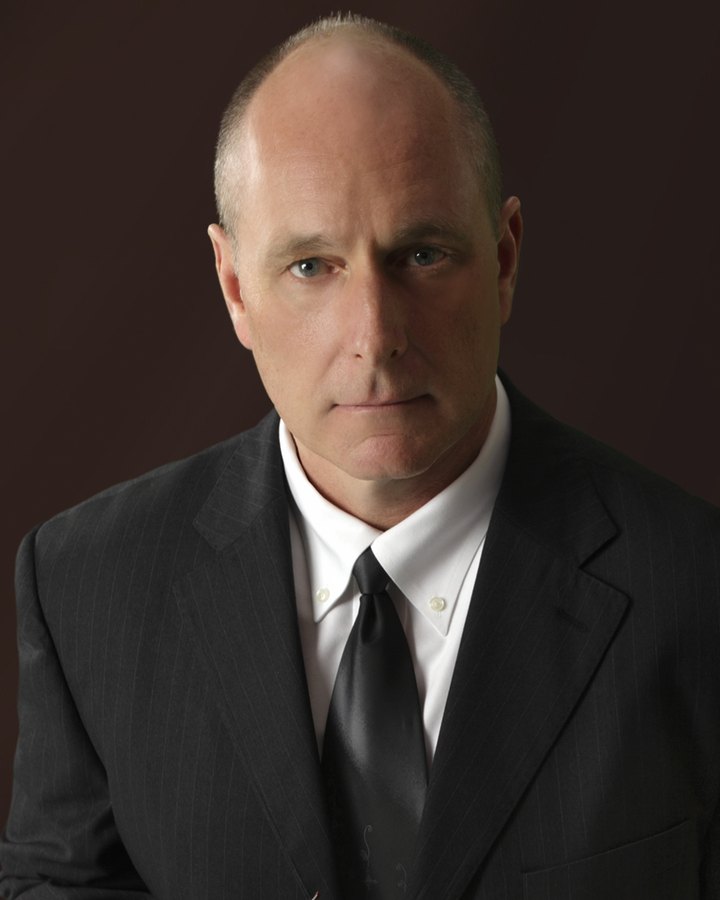
Professor Gregory Gilbertson (Ret.), FBI Special Agent Christopher Holland (Ret.), and Sheriff Robert Snaza consult with attorneys nationwide regarding police practices and procedures, use of force, false arrest, police misconduct, criminal, and self-defense casework.
 CEO & Owner
Thirty-eight years in four uniforms: street cop, soldier, professor, investigator. More than 220 matters in 42 states and D.C. since 2014.
Full biography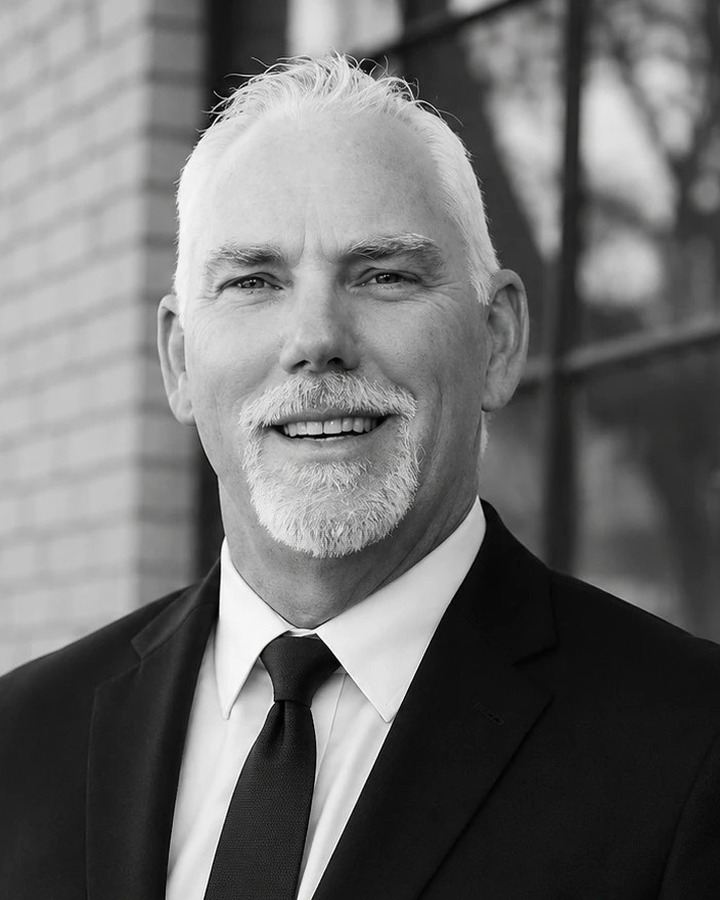 Consultant
More than thirty-five years in public safety: Sheriff of Lewis County, Washington, since his election in 2015, and six years as a commissioner of the state board that sets peace-officer training standards.
Full profile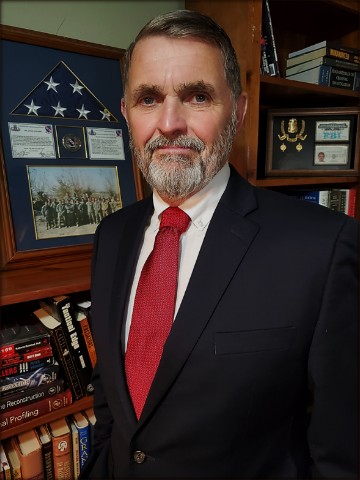 Consultant
Forty years of investigative casework, from patrolman in St. Louis County to the FBI in Chicago, and on to task forces in Afghanistan and Liberia. His work on the Idaho student murders is examined in Broken Plea, the New York Times bestseller by Christopher Whitcomb.
Full profileThe Hon. Richard A. Jones United States District Judge“Mr. Gilbertson’s qualifications demonstrate extensive experience in policing. His expansive work as a police officer in Georgia, with assignments as a SWAT team officer, juvenile court investigator, school resource officer, stakeout squad officer, senior patrolman, and patrolman; then a career as a tenured college professor and university lecturer teaching criminal justice courses to degree-seeking students at colleges and universities, and as a licensed private investigator conducting felony pretrial investigations for attorneys in Washington State in dozens of criminal cases, makes him unique in the field of police expert witnesses. The Court finds that, based on his experience, Mr. Gilbertson’s testimony can be expected to have a reliable basis in knowledge and experience of police practices.”
One shooting, two investigations and a lawsuit.
An officer-involved shooting (OIS) generates parallel inquiries that run on different clocks, answer to different authorities, and produce different documents. The criminal investigation asks whether a crime was committed, by anyone present, and is built toward a charging decision. The administrative investigation asks whether agency policy and training were followed. The civil exposure sits behind both and inherits whatever the first two preserved.
The distinction is not academic for counsel reading the discovery. The criminal file is shaped by what a prosecutor needed in order to charge or decline. The administrative file is shaped by questions the criminal file never asks: the tactics before the shot, positioning, warnings, the decision to approach, and supervision on scene.
The two tracks are kept apart because the administrative interview can be compelled and the criminal one cannot, under Garrity v. New Jersey, 385 U.S. 493 (1967).
- The criminal track: whether a crime occurred, worked toward a charging decision
- The administrative track: whether policy and training were followed, worked toward a disposition
- The civil exposure: assembled later, from whatever the first two collected and preserved
- The custodians: each track holds material the others may never have received
Independence, and who is allowed to hold the file.
Three arrangements are common. An outside agency takes the criminal investigation, a standing multi-agency team takes it, or the involved agency investigates itself through a specialized unit. The reason independence matters is structural rather than accusatory. An agency investigating its own OIS is asking its investigators to interview colleagues, and the arrangement is visible to a jury whether or not it changed a single conclusion.
Independence is treated as a generally accepted practice, and it is either documented or it is not. The questions a practices review asks are narrow and answerable: who held authority over the investigation, who actually conducted the interviews and processed the scene, what role the involved agency kept, and whether the arrangement matched the agency’s own written protocol and any agreement with the assisting agency. The reference points are national and named. State Peace Officer Standards and Training (POST) commissions carry requirements of their own, the International Association of Chiefs of Police (IACP) publishes model policy, the Police Executive Research Forum (PERF) publishes guidance, and accreditation by the Commission on Accreditation for Law Enforcement Agencies (CALEA) carries expectations of its own for the agencies that hold it.
The record answers those questions on its own. Written agreements between agencies, activation logs and the assisting agency’s own reports show who did what. The involved agency’s role after any handoff is visible in whether its personnel sat in on the interviews, held the evidence, or drafted the summary that everything downstream was built from.
Independence on the administrative side is a separate question with a different answer. That investigation is usually internal, because it turns on the agency’s own policy, and the safeguard there is not outside investigators but documented separation from the criminal file, a documented wall between the two files.
The protocol, in the order it happens.
The steps below are the skeleton of a professionally run shooting investigation. Agencies order them differently and name them differently, and the review does not grade one agency against another agency’s protocol. It grades the agency against its own written protocol and against national standards, and it reads what the documents show was done at each step.
- Scene security and medical aid: the scene held, and aid rendered and requested on the record
- Separation and sequestration: involved officers separated, monitored, and kept from conferring
- The public safety statement: taken on scene, with the file showing who took it and when
- Evidence collection: the scene processed and documented, weapons secured, rounds accounted for
- Canvass: residents, businesses and bystanders identified and interviewed while they are findable
- Video collection: agency recordings preserved, plus surveillance and bystander video before it is lost
- The walkthrough: where the agency uses one, and whether the file records it and fixes its time
- Interviews: the criminal interview and the administrative interview, taken separately, in whichever order the agency’s own protocol fixes
Two of those steps carry most of the disputes. Sequestration is a documentary question, and the file either records it or it does not; the separation, interval, footage-review and attendance questions belong to officer statements after a use of force. The public safety statement is the other, and at protocol level the only questions are who took it, when, and whether the file says so; what it is and is not is set out in the same brief. At protocol level the question is only whether the investigation can prove its own sequence from its own documents; what that proof looks like, account by account, is the subject of the same brief.
Round counts, weapon condition and scene measurements are recorded at the scene, or they are recorded from memory later. The file shows which of the two happened.
What a complete file contains, and how gaps read.
A complete file lets a reader who was not there follow the event from dispatch to disposition without asking anyone a question. It holds the dispatch audio and the computer-aided dispatch (CAD) export, the radio traffic, all recovered video in native format with its timestamps, the scene documentation and photographs, the evidence log, every witness account with the time it was taken, the involved officers’ accounts from each track, the agency’s deadly-force policy in force on that date, the involved officers’ training records, and the administrative review with its findings.
Gaps are findings, not annoyances. Video that existed and was not preserved before it was overwritten, a canvass with no documentation of who was contacted, witnesses named in one report and never interviewed, radio traffic never pulled: each absence is measured against what the profession expects an investigation to collect before it is lost. The analysis states what was not done and what the record offers as an explanation, and stops there.
Two questions in that file are answered elsewhere. The administrative review is read against the standards for an agency investigating itself, set out in internal affairs review standards. Where the order of events is disputed, the answer comes from a sourced timeline rather than from the narratives, and how that timeline is built and attributed is the subject of building the record chronology.
What the analysis measures, and what it leaves to others.
The practices opinion addresses the investigation and the documented conduct, measured against national standards and against the policy and training this agency had in force. Where deadly force was used against a person in flight, the frame is Tennessee v. Garner, 471 U.S. 1 (1985), covered in the guide to the Garner deadly force standard. The force question generally runs through Graham v. Connor, 490 U.S. 386 (1989), on what the officer knew as the decision was made, without hindsight.
Medical and scientific questions arising from a shooting are deferred to qualified experts in those disciplines, on the record. Questions of ballistics, wound path and medical causation belong to specialists who can be qualified in them, and a police practices report that wanders into that territory has handed opposing counsel the easiest cross-examination available.
The last boundary is the ordinary one. What the investigation did, whether it met professional standards, and where its documentation fell short are practices findings, and they are stated with a citation to the record for each. Whether a shooting was constitutionally reasonable, whether anyone is liable, and what an investigative failure means for any claim or defense are legal conclusions. They belong to counsel and to the court, and the report does not reach for them.
The method does not change with the caption. Professor Gilbertson is retained by plaintiff’s counsel, by the criminal defense bar, and by counsel who defend officers and agencies, and a file showing prompt independent investigation, disciplined sequestration, complete collection and findings that follow the evidence is an affirmative finding the report states as plainly as it states the opposite.
When the question becomes a retention.
This page is reference. When a live matter needs the analysis, these are the doors.
Asked alongside this one.
Why do the criminal and administrative files after a police shooting differ?
Who investigates an officer-involved shooting?
How does counsel tell whether a shooting file is complete?
Bring the matter behind the question.
Attorney inquiries are answered directly. If a case presents a conflict, you will hear it immediately.
Inquiry sent.
You will hear back directly. If the matter is urgent, call (239) 571-1840.
Conflicts are checked before any substantive discussion. Please do not send privileged material with a first inquiry; after retention the record is exchanged on physical media. Gregory consults for attorneys and their staff only, and does not provide legal advice or attorney referrals to individuals.