

Tennessee v. Garner
and the Deadly Force Standard
Direct line: (239) 571-1840 · GregoryGilbertson@proton.me
Attorney and law-firm inquiries only
Tennessee v. Garner, 471 U.S. 1 (1985) held that deadly force to prevent an escape is a seizure under the Fourth Amendment, and defined when it can be justified. This guide explains the rule, its relationship to objective reasonableness, and the record a Garner analysis demands.
Three experts. Over 110 years.
Professor Gregory Gilbertson (Ret.), FBI Special Agent Christopher Holland (Ret.), and Sheriff Robert Snaza consult with attorneys nationwide regarding police practices and procedures, use of force, false arrest, police misconduct, criminal, and self-defense casework.
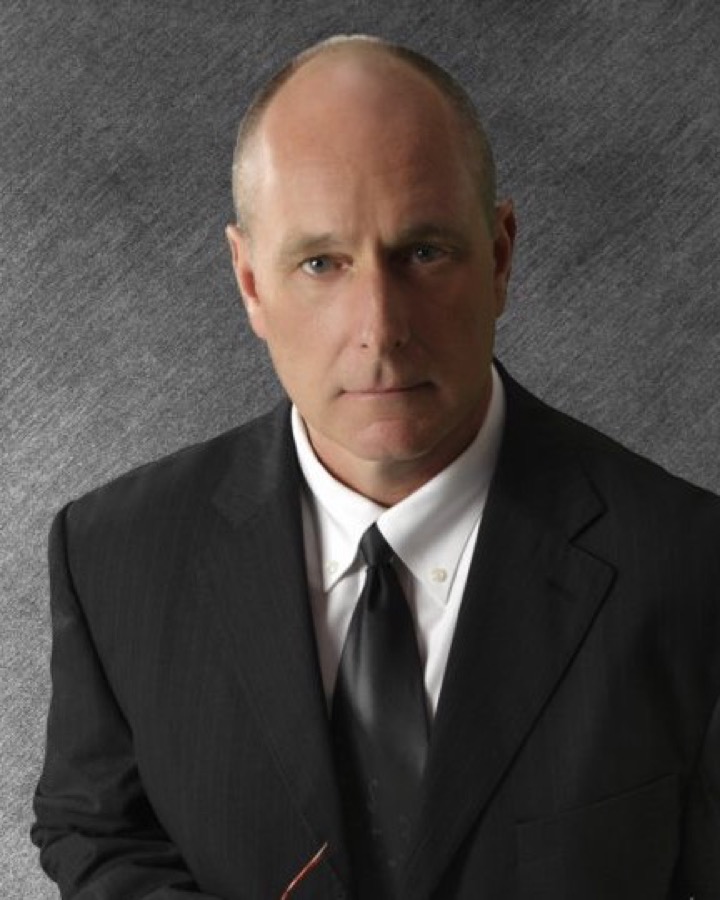 CEO & Owner
Thirty-eight years in four uniforms: street cop, soldier, professor, investigator. More than 220 matters in 42 states and D.C. since 2014, with testimony that has not been excluded at trial in any state or federal court.
Full biography Consultant
More than thirty-five years in public safety: twelve years and three terms as the elected Sheriff of Lewis County, Washington, and six years a commissioner of the state board that sets peace-officer training standards.
Full profile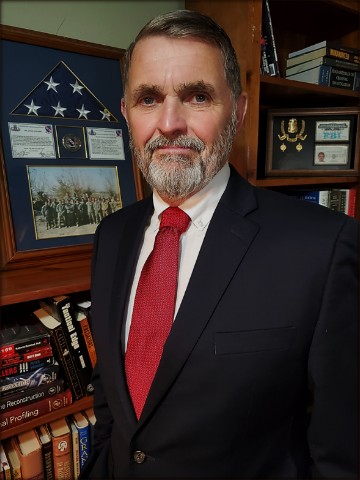 Consultant
Forty years of investigative casework, from patrolman in St. Louis County to the FBI in Chicago, and on to task forces in Afghanistan and Liberia. His work on the Idaho student murders is examined in Broken Plea, the New York Times bestseller by Christopher Whitcomb.
Full profileNever excluded. Professor Gilbertson’s testimony has not been excluded at trial in any state or federal court.
The Hon. Richard A. Jones United States District Judge“Mr. Gilbertson’s qualifications demonstrate extensive experience in policing. His expansive work as a police officer in Georgia, with assignments as a SWAT team officer, juvenile court investigator, school resource officer, stakeout squad officer, senior patrolman, and patrolman; then a career as a tenured college professor and university lecturer teaching criminal justice courses to degree-seeking students at colleges and universities, and as a licensed private investigator conducting felony pretrial investigations for attorneys in Washington State in dozens of criminal cases, makes him unique in the field of police expert witnesses. The Court finds that, based on his experience, Mr. Gilbertson’s testimony can be expected to have a reliable basis in knowledge and experience of police practices.”
What Garner actually holds.
Garner treats the use of deadly force to prevent an escape as exactly what it is: a seizure of the person, governed by the Fourth Amendment’s reasonableness requirement. That framing matters. Apprehension by deadly force is not a tactical preference to be reviewed deferentially after the fact. It is a constitutional event, and it must be reasonable on the facts known when it happened. The same questions govern shooting at or from moving vehicles, one of the areas where agency policy is typically tighter than the constitutional floor.
The rule that follows has three moving parts:
- Deadly force used solely to prevent the escape of an unarmed, non-dangerous fleeing suspect is constitutionally unreasonable
- Deadly force may be justified where the officer has probable cause to believe the suspect poses a significant threat of death or serious physical injury to the officer or others
- Where feasible, a warning is given before deadly force is used
Each part is a fact question before it is a law question. What the officer knew about a weapon, what specific conduct supplied probable cause to believe the person was dangerous, and whether the seconds available made a warning feasible are questions the record either answers or fails to answer. The analysis begins there, not with the outcome. A Garner analysis that starts from the fact that a person was shot while fleeing has skipped the only questions that matter.
How Garner and Graham work together.
Four years after Garner, Graham v. Connor, 490 U.S. 386 (1989) established objective reasonableness as the standard for every use of force in a seizure, judged from the perspective of a reasonable officer on the scene, without hindsight, and with allowance for split-second judgments. The two cases are not competing tests, and neither displaced the other. Garner frames the specific question of deadly force against flight; Graham supplies the lens through which every force decision, including that one, is evaluated.
In a fleeing-subject shooting the two standards work as one analysis. The Graham factors, severity of the crime, immediate threat, and active resistance or flight, are all present by definition, and the Garner conditions give the immediate-threat factor its content: the question becomes whether the record shows probable cause to believe the person posed a significant threat of death or serious physical injury. A factor-by-factor walkthrough of the broader standard is in the companion guide, Graham v. Connor explained for litigators.
In practice the analysis asks two questions in order. First, does the record show probable cause, at the moment deadly force was used, to believe the person posed a significant threat of death or serious physical injury. Second, judged on the whole event, was the response within accepted practices: was a warning given where feasible, what alternatives were available, and what did policy and training prescribe as the threat picture developed.
What the record must show in a Garner analysis.
The controlling question is what the officer actually knew at the moment deadly force was used, not what the completed investigation later established about the person or the underlying offense. Knowledge has sources, and every source leaves a document. The 911 caller’s words, the dispatcher’s broadcast, and what the officer personally observed often differ, and the differences matter: the officer is judged on what actually reached him or her, not on what the caller meant to convey.
- The 911 call and dispatch broadcast: what the responding officer was told about weapons, violence, and the underlying offense
- Radio traffic and the CAD narrative: how the picture changed between dispatch and the final seconds
- Video from body-worn, dash, and surveillance cameras, synchronized and read in sequence, not as isolated frames
- Audio of any warning given, and the time and distance available to give one
- The agency’s deadly-force and fleeing-subject policies in force on the date of the incident
- The involved officer’s training records on deadly force, flight, and threat assessment
Gaps matter as much as contents. If nothing in the record shows the officer knew facts supporting probable cause of a significant threat, the analysis says so. If the record shows exactly those facts, the analysis says that instead. The method does not change between a plaintiff’s case and an officer’s defense, and it is the same method that runs through this library: the whole record, in sequence, on the totality of the facts and circumstances.
If the investigation did not preserve the radio traffic or the raw video with timestamps, that absence is itself a finding, and it belongs in the report.
Policy standards above the constitutional floor.
Garner states a constitutional floor, and national policy standards typically sit above it. Model policies and guidance from national bodies, IACP model policies and PERF guidance among them, and the deadly-force instruction delivered in academies and in-service training generally impose tighter conditions than the Constitution requires: narrower justifications for shooting at or from vehicles, explicit warning expectations, and restrictions that turn on the availability of alternatives.
The analysis therefore runs on two ledgers. One measures the documented conduct against the constitutional frame. The other measures it against the agency’s own policy and the profession’s accepted practices. A use of deadly force can clear the first ledger and still fail the second, and a report that blurs the two invites impeachment. What fills the professional ledger is covered in generally accepted police practices.
The distinction shows up concretely in warnings. In a given record, the constitutional question may be whether a warning was feasible in the seconds available. The policy question is what the agency’s manual and the officer’s training required, which is often broader. A report that answers only one of those questions leaves counsel guessing about the other, so the report answers both, separately and by name.
Where the flight is by vehicle, pursuit standards add a further layer of policy and training questions; see pursuit policy standards.
How a Garner opinion is tested.
Opposing counsel test a Garner opinion in predictable ways, and a disciplined opinion anticipates each of them. The first probe is hindsight: pressing the expert to rely on facts established only after the shot. The second is the freeze frame: an image of the final instant offered to erase the sequence that produced it. The third is blending: treating the constitutional floor and agency policy as one standard, so that any practices finding can be recast as a legal opinion the expert should not be giving.
The defense against all three is the same: sourcing. Every fact in the opinion carries a citation to the record and a place in time. Every standard carries a name, whether the constitutional frame, a national model policy, or the agency’s own manual. And every conclusion is stated as a practices finding, not a verdict. An opinion built that way does not have to be argued at deposition; it only has to be read.
Preparation matters on the retaining side as well. Counsel who know what the opinion says, what it does not say, and where each fact lives in the record can defend the disclosure cleanly and use the deposition to lock the sequence in place rather than spend it explaining terms.
The practices lens, stated plainly.
A police practices expert does not declare a use of deadly force constitutional or unconstitutional, and does not tell the jury which side should win. The opinion addresses practices: what the officer knew and when, what generally accepted police practices and the agency’s own policy and training prescribed for that situation, and whether the documented conduct followed or departed from them. Legal conclusions remain counsel’s, and the ultimate reasonableness question belongs to the trier of fact.
Professor Gilbertson has been retained in deadly force matters since 2014, by plaintiff’s counsel and by counsel defending officers and agencies, in an expert practice spanning more than 220 civil rights and criminal cases across 42 states and the District of Columbia. The record is read the same way whichever side sends it, and every engagement begins with a conflict check and the complete record on physical media.
When the question becomes a retention.
This page is reference. When a live matter needs the analysis, these are the doors.
Asked alongside this one.
When does Tennessee v. Garner permit deadly force against a fleeing suspect?
Does Graham replace Garner?
Why does agency policy matter if Garner sets the constitutional standard?
Bring the matter behind the question.
Attorney inquiries are answered directly. If a case presents a conflict, you will hear it immediately.
Inquiry sent.
You will hear back directly. If the matter is urgent, call (239) 571-1840.
Conflicts are checked before any substantive discussion. Please do not send privileged material with a first inquiry; after retention the record is exchanged on physical media. Gregory consults for attorneys and their staff only, and does not provide legal advice or attorney referrals to individuals.