

Officer Statements After Force,
in the Order They Were Taken
Direct line: (239) 571-1840 · GregoryGilbertson@proton.me
Attorney and law-firm inquiries only
After a significant use of force an involved officer may give several accounts, each taken under different rules and each at a different remove from the event. This guide sets out the kinds of statement, the timing practices that shape them, and how they are compared to one another and to the record.
Three experts. Over 110 years.
Professor Gregory Gilbertson (Ret.), FBI Special Agent Christopher Holland (Ret.), and Sheriff Robert Snaza consult with attorneys nationwide regarding police practices and procedures, use of force, false arrest, police misconduct, criminal, and self-defense casework.
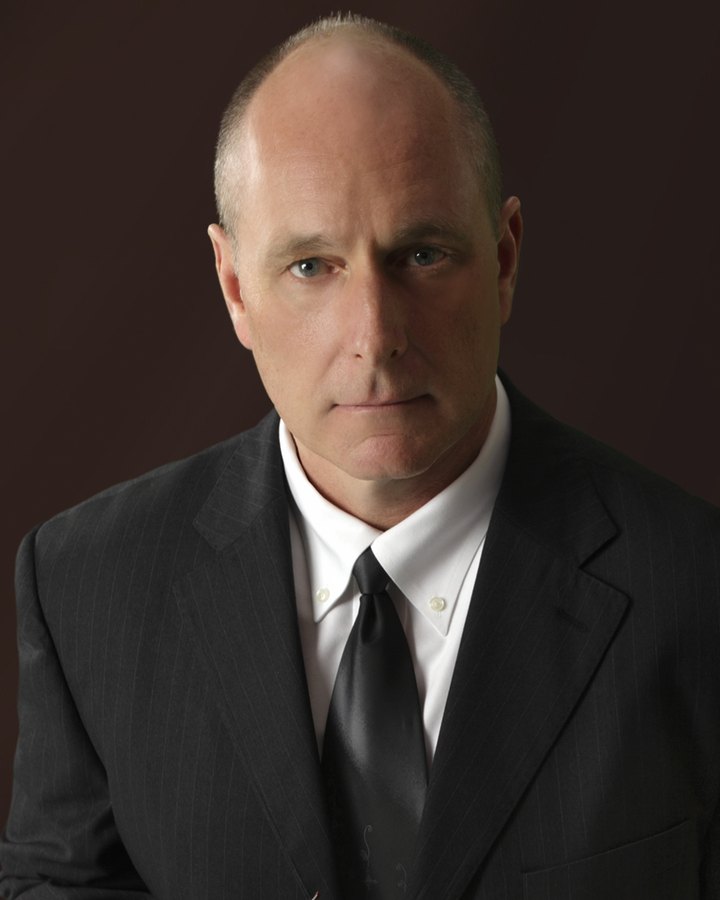 CEO & Owner
Thirty-eight years in four uniforms: street cop, soldier, professor, investigator. More than 220 matters in 42 states and D.C. since 2014.
Full biography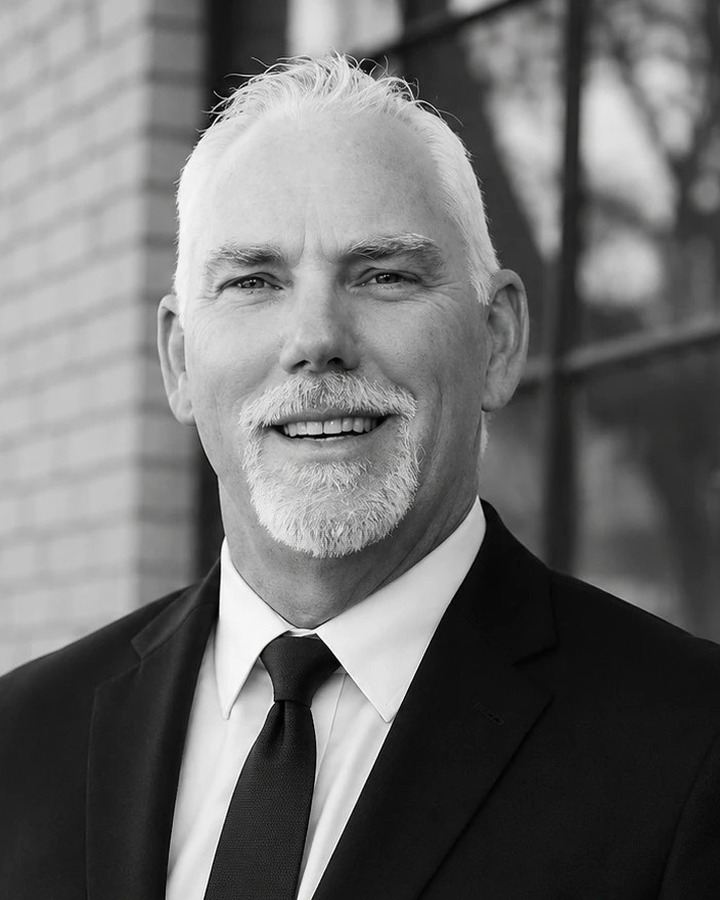 Consultant
More than thirty-five years in public safety: Sheriff of Lewis County, Washington, since his election in 2015, and six years as a commissioner of the state board that sets peace-officer training standards.
Full profile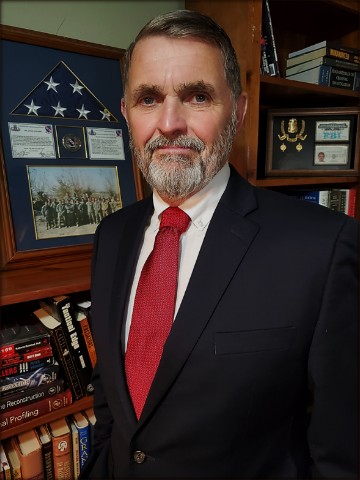 Consultant
Forty years of investigative casework, from patrolman in St. Louis County to the FBI in Chicago, and on to task forces in Afghanistan and Liberia. His work on the Idaho student murders is examined in Broken Plea, the New York Times bestseller by Christopher Whitcomb.
Full profileThe Hon. Richard A. Jones United States District Judge“Mr. Gilbertson’s qualifications demonstrate extensive experience in policing. His expansive work as a police officer in Georgia, with assignments as a SWAT team officer, juvenile court investigator, school resource officer, stakeout squad officer, senior patrolman, and patrolman; then a career as a tenured college professor and university lecturer teaching criminal justice courses to degree-seeking students at colleges and universities, and as a licensed private investigator conducting felony pretrial investigations for attorneys in Washington State in dozens of criminal cases, makes him unique in the field of police expert witnesses. The Court finds that, based on his experience, Mr. Gilbertson’s testimony can be expected to have a reliable basis in knowledge and experience of police practices.”
The statements an involved officer gives.
There is no single officer statement. A significant force incident typically generates several, taken by different people for different purposes, and reading them as one continuous account misreads the file.
- Public safety statement: a brief on-scene account taken to address immediate needs, such as outstanding subjects, injured persons and the location of evidence. It is deliberately narrow and is not meant to be a full account.
- Walkthrough: a guided account at the scene, in which the involved officer shows investigators where events occurred, often recorded, and often before any formal interview.
- Written report: the officer’s own documented narrative on the agency’s forms, governed by the agency’s reporting policy.
- Recorded interview: a question-and-answer session conducted by criminal or administrative investigators and preserved on audio or video.
- Compelled administrative interview: an account the agency orders the officer to give as an employee, taken on the administrative track and handled separately from any criminal inquiry.
- Voluntary criminal interview: a statement given to criminal investigators without compulsion, which the officer, like any other person, may decline to give.
Not every agency produces all six, and the labels vary. What matters analytically is that each type is produced under a different rule and at a different distance from the event, so each carries a different evidentiary character. A public safety statement taken in the first minutes and a formal interview taken days later are not two versions of one document.
Who took each account matters as much as when it was taken. An on-scene supervisor, a criminal investigator from a separate unit or agency, and an administrative investigator are asking different questions for different purposes, and each produces a document with a different scope. A well-kept file says, for every account, which of them took it.
The order varies as well, and the variation is itself a fact worth establishing early. The file has to fix that order itself: the time of each account, what the officer had been shown or told before giving it, and who attended.
Timing, separation and who is present.
Agencies write timing practices into policy, and the policy is the first thing the analysis reads. Four questions recur. Each is answered first from the agency’s own rule, then checked against what the file shows happened.
- Separation: whether involved and witness officers were kept apart before their accounts, and whether anyone documented that they were
- Interval: how much time passed between the incident and the formal statement, and what the policy set as the expected interval
- Review: whether the officer viewed body-worn camera or other footage before the account, and whether the file records that viewing
- Presence: who conducted the interview, who else attended, in what capacity, and whether a representative was present
None of those questions has one correct answer that applies to every agency. Practices differ on the interval before a formal statement and on whether footage is viewed first, and national model policies and the work of bodies such as the International Association of Chiefs of Police (IACP) and the Police Executive Research Forum (PERF) describe the considerations rather than settle them. The analysis measures the agency against its own written rule, and against generally accepted practice where the rule is silent.
Representation is a related record fact. Agency policy addresses who may attend an interview with an involved officer and in what role, so the file should name everyone in the room. The analysis reads attendance as documented rather than as assumed, and where the record does not say who was present, it states that the record does not say.
Separation is routinely written into policy and routinely undocumented in the file. A rule requiring involved officers to be kept apart until their accounts are taken produces a checkable fact: either the file shows who was separated, by whom and for how long, or it does not, and the absence is stated as an absence.
Compelled statements and voluntary ones.
Two tracks produce officer accounts after a serious force incident, and the documents they leave behind can be hard to tell apart on sight. Under Garrity v. New Jersey, 385 U.S. 493 (1967), an account the agency ordered an officer to give as an employee sits apart from any criminal inquiry, and what that separation looks like inside a file is the subject of the brief on what a Garrity statement is.
For this page the point is narrower. The file should say, for each account, whether the officer was ordered to give it or chose to, and which advisement form preceded it, because that answers which questioner took it, at what remove from the incident, and why a later account exists at all. The standards the administrative investigation itself is measured against are set out in the brief on internal affairs review standards.
How statements are compared, and what that shows.
Statements are compared on two axes, against each other and against the physical and recorded record, and the comparison is made assertion by assertion rather than by overall impression. A named assertion with a named counter-source can be put to a witness; a general sense of unease cannot.
- The same officer across accounts: what the earliest account contained, and what appeared only later
- Officer against officer: whether accounts converge on details neither could have observed from where each stood
- Account against the recordings: the claim-by-claim method set out in how police reports fail, applied to each account separately
- Account against the machine record: stated intervals against the times the dispatch record logged
- Account against the scene and the paperwork: positions, distances, injuries documented and evidence booked
What an inconsistency establishes is narrower than counsel sometimes hopes. It establishes that two sources differ, at an identified point and by an identified amount. It does not establish which source is accurate, and it does not establish a state of mind. Both accounts stay in the record as written.
The analysis is anchored where the force standard anchors it. Under Graham v. Connor, 490 U.S. 386 (1989), force is judged on what the officer knew at the time, without hindsight, so a statement is read for what the officer says was known and when, then tested against what the record shows was knowable then. A fact that entered an account only after the officer learned it from another source is a sequencing fact, and it is documented as one.
Consistency cuts both ways. Where the accounts hold together and track the recordings and the times, the analysis says so in the same plain terms it would use for the opposite finding.
What the record should show about the sequence.
A file that documents its own process is straightforward to read. A file that does not creates questions no witness can answer years afterward. For each account taken, the record should show the following.
- The date and time the account was given, against the date and time of the incident
- Who took it, who else was present, and in what capacity each attended
- Whether it was recorded, and where the recording and any transcript are held
- What advisement preceded it, with the signed form or the recorded acknowledgment of it
- Whether footage was viewed beforehand, by whom, with the access record supporting the answer
- How the account was used: what the investigator relied on, and what the findings cite
Where those markers are missing, the sequence has to be built from the surrounding record instead, and the brief on building the record chronology sets out how a source is placed and attributed when its own time stamps are absent. The agency’s separate after-action grading of the force, and the file that grading produces, is treated in the brief on the use-of-force review board.
Counsel can prevent most of that problem at the request stage. A demand that names the document types, the recordings, the advisement forms and the attendance records tends to produce the sequence intact. Name the public safety statement and the walkthrough separately; neither is usually filed under statement, and a request that omits them produces the interview alone.
A file that cannot show its own sequence is a practices finding about the investigation rather than a conclusion about the officer. The analysis states what accepted practice expected the file to contain, what it contains, and what cannot be determined from it. What follows from that is argument: the expert addresses police practices, and legal conclusions remain counsel’s.
When the question becomes a retention.
This page is reference. When a live matter needs the analysis, these are the doors.
Asked alongside this one.
In what order does an involved officer give statements after a use of force?
How long after a use of force is an officer interviewed?
Does an inconsistency between an officer’s statements prove fabrication?
Bring the matter behind the question.
Attorney inquiries are answered directly. If a case presents a conflict, you will hear it immediately.
Inquiry sent.
You will hear back directly. If the matter is urgent, call (239) 571-1840.
Conflicts are checked before any substantive discussion. Please do not send privileged material with a first inquiry; after retention the record is exchanged on physical media. Gregory consults for attorneys and their staff only, and does not provide legal advice or attorney referrals to individuals.