

The fee schedule,
explained line by line.
Direct line: (239) 571-1840 · GregoryGilbertson@proton.me
Attorney and law-firm inquiries only
Most expert practices quote fees case by case. This one publishes the schedule and holds to it. Here is every line, what it actually covers, and why a published price serves the attorney paying it.
Three experts. Over 110 years.
Professor Gregory Gilbertson (Ret.), FBI Special Agent Christopher Holland (Ret.), and Sheriff Robert Snaza consult with attorneys nationwide regarding police practices and procedures, use of force, false arrest, police misconduct, criminal, and self-defense casework.
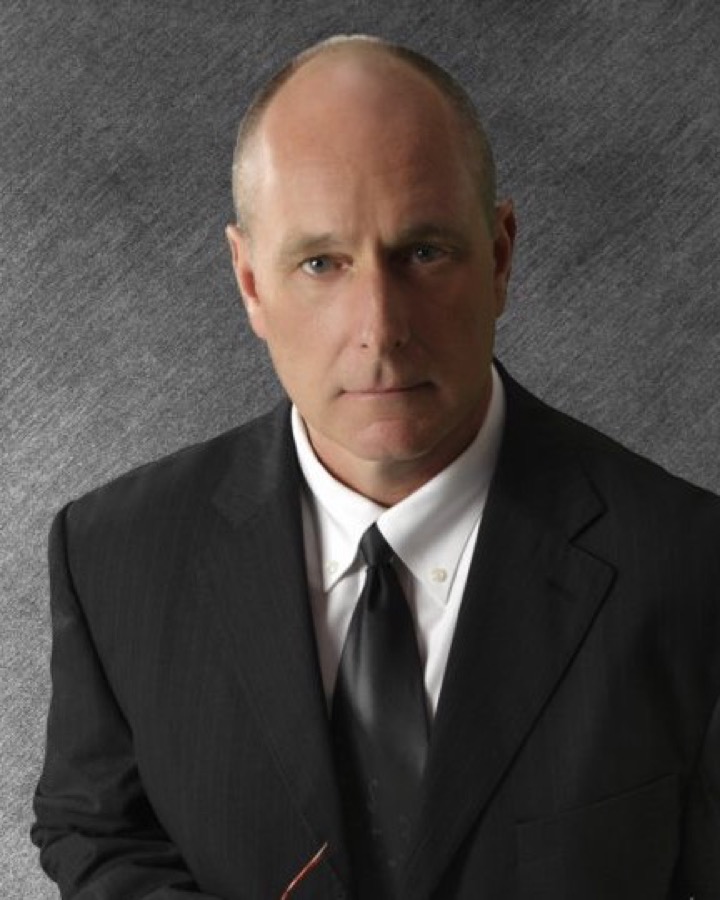 CEO & Owner
Thirty-eight years in four uniforms: street cop, soldier, professor, investigator. More than 220 matters in 42 states and D.C. since 2014, with testimony that has not been excluded at trial in any state or federal court.
Full biography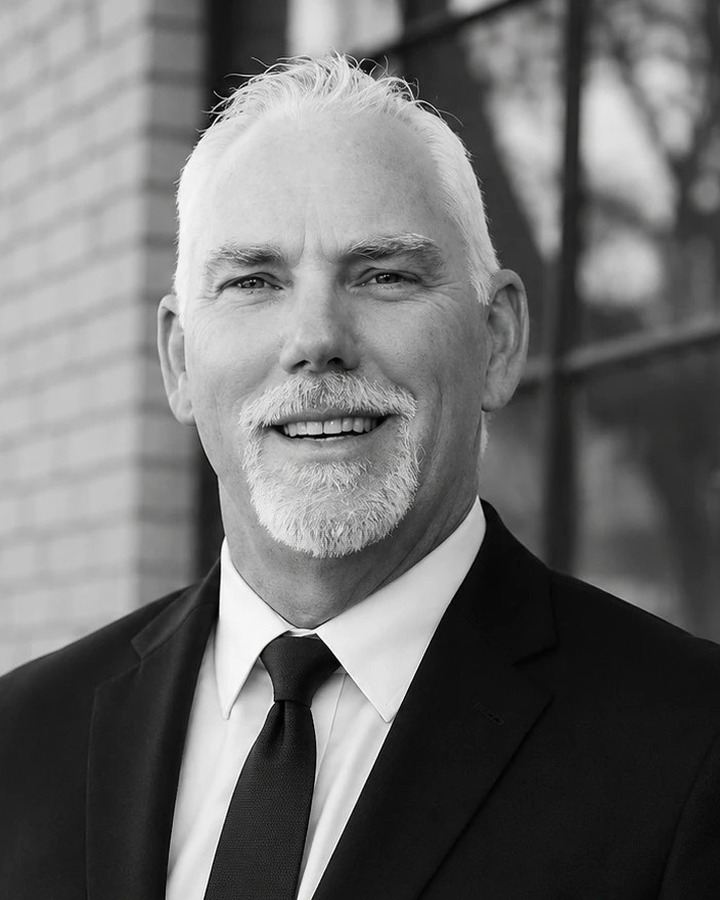 Consultant
More than thirty-five years in public safety: twelve years and three terms as the elected Sheriff of Lewis County, Washington, and six years a commissioner of the state board that sets peace-officer training standards.
Full profile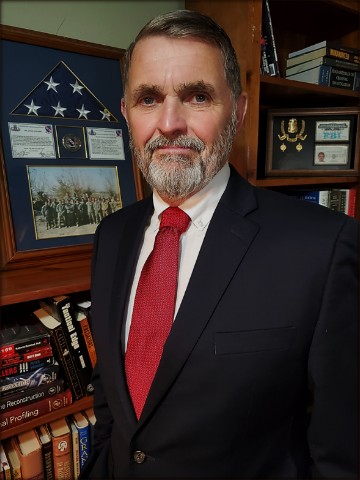 Consultant
Forty years of investigative casework, from patrolman in St. Louis County to the FBI in Chicago, and on to task forces in Afghanistan and Liberia. His work on the Idaho student murders is examined in Broken Plea, the New York Times bestseller by Christopher Whitcomb.
Full profileNever excluded. Professor Gilbertson’s testimony has not been excluded at trial in any state or federal court.
The Hon. Richard A. Jones United States District Judge“Mr. Gilbertson’s qualifications demonstrate extensive experience in policing. His expansive work as a police officer in Georgia, with assignments as a SWAT team officer, juvenile court investigator, school resource officer, stakeout squad officer, senior patrolman, and patrolman; then a career as a tenured college professor and university lecturer teaching criminal justice courses to degree-seeking students at colleges and universities, and as a licensed private investigator conducting felony pretrial investigations for attorneys in Washington State in dozens of criminal cases, makes him unique in the field of police expert witnesses. The Court finds that, based on his experience, Mr. Gilbertson’s testimony can be expected to have a reliable basis in knowledge and experience of police practices.”
Why the numbers are public at all.
An expert’s fee schedule usually surfaces late: after the calls, after the conflict check, sometimes after counsel has already committed to a theory that needs the testimony. Publishing the schedule reverses that. Counsel can price the expert into a case budget before the first email, compare the structure against any other practice, and skip the negotiation theater entirely. The numbers are the numbers, plaintiff or defense.
Publication also does quiet work later in the case. Every expert gets asked at deposition what he is being paid. An expert on a published schedule answers with figures anyone can look up, which is exactly how that exchange should sound. And because the deposition fee is communicated by retaining counsel to opposing counsel, a published schedule makes that conversation short: the figure a party is asked to pay matches the figure in print.
The same logic runs through the whole structure. Flat minimums with stated hourly rates underneath mean counsel always knows what a line item is made of, and what happens to the number when the work runs long.
For budgeting purposes the lines stack predictably across the life of a case. A matter that resolves at summary judgment typically touches only the retention line. A matter that goes the distance adds a deposition, sometimes a rebuttal report, and finally trial testimony with its travel. Because each line is published, counsel can price the whole arc at intake and revise the estimate as the case narrows, rather than discovering the cost of trial the month it arrives.
Every line in one place.
The published schedule has five lines. Each gets its own treatment below; here is the whole structure at a glance.
- Initial case retainer: $9,000 flat, non-refundable, covering discovery review and the written expert report, on an outline approved with counsel
- Rebuttal report: from $5,000, a focused response to an opposing expert’s disclosed opinions
- Deposition: $3,500 flat per expert by Zoom or a similar platform, covering preparation and five hours of examination
- Trial and travel: $2,400 for each 24-hour period absent from home, on the published flight-to-flight clock
- Travel expenses: airfare, lodging and ground transportation pre-paid by retaining counsel, with meals and miscellaneous at $100 per day
- Report timing: sixty days of advance notice, with a 25% upcharge for shorter windows
Two structural facts sit under every line. Engagements are accepted in plaintiff and defense matters where counsel expects attorney fees to meet or exceed $250,000, and nothing at all is charged for a first inquiry or the conflict check that follows it.
Two hourly rates run through the schedule, each tied to a kind of clock. Examination under oath beyond the fifth hour bills at $500 per hour. Absence from home for trial, and driving time, bill at $100 per hour. Everything else is a flat figure, so every line on the schedule is a number counsel can put in a budget, and every overage is arithmetic instead of negotiation.
Retention: $9,000, and what it buys.
The initial case retainer is a $9,000 flat fee, non-refundable, covering discovery review and the written expert report that states the opinions and their basis. That review is the core of the engagement: each expert reads the complete record counsel assembles independently, measuring the conduct in it against national standards and generally accepted police practices within their own discipline. Before writing begins, a bullet-point outline of the report is approved with retaining counsel.
Most reports are completed within the retainer. Where a record is large enough to require more time, additional hours are agreed with retaining counsel before they are worked, not billed as a surprise afterward. The retainer is a floor with a defined scope, not an open meter, and it is not contingent on anything: it prices the reading, the analysis and the writing, whatever the opinions turn out to be.
A rebuttal report is priced separately, from $5,000: a focused response to an opposing expert’s disclosed opinions, on the same record discipline as a primary report. Rebuttal work is narrower by design, aimed at what the opposing expert actually said, which is why it carries its own line instead of a second full retainer.
The deposition line, unpacked.
Deposition testimony is a $3,500 flat fee per expert, taken by Zoom or a similar platform, covering preparation and five hours of examination. Examination beyond five hours is billed at $500 per hour in quarter-hour increments, so a long day is priced in fifteen-minute steps rather than rounded-up hours.
Payment in full is due seven days before the examination, and retaining counsel communicates the fee to opposing counsel. The seven-day rule keeps any dispute about the fee away from the testimony itself. Which side ultimately bears an expert’s deposition fee is a question of rule and jurisdiction that belongs to counsel; the mechanics and the common arrangements are walked through in who pays for the expert deposition.
The preparation hours are real preparation: re-reading the report and the record it rests on before testifying about them. An expert who walks into a deposition cold serves nobody, least of all the attorney who retained him.
Trial testimony, clocked from flight to flight.
Out-of-town trial testimony is billed at $2,400 for each 24-hour period absent from home, which works out to $100 per hour. The clock starts three hours before the scheduled departure flight and ends three hours after the return flight lands. There is no separate line for airport hours or evenings in a hotel: absence from home is the unit, and the bookends are stated in advance, so nothing about travel time is left to argue about at invoice.
Estimated fees and expenses are paid seven days before travel, and refunded in full if the case settles before departure. Counsel who resolves a matter on the eve of trial is not paying for a trip that never happened, and that refund line is published for the same reason the fees are: it belongs in the budget conversation from the start.
Travel expenses are pre-paid by retaining counsel: airfare in American Airlines Premium Economy, lodging within walking distance of the courthouse, and ground transportation. Meals and miscellaneous expenses are $100 per day, and driving time is billed at $100 per hour plus the federal mileage rate. The full mechanics, including how testimony days get scheduled around the court’s calendar, are at trial testimony and travel nationwide.
The sixty-day rule and the case threshold.
Expert reports require sixty days of advance notice, and the clock begins when discovery has been received on physical media, not when the engagement letter is signed. Reports required in less than sixty days incur a 25% upcharge. The upcharge prices compression, not importance, and the sixty-day standard exists so that most reports never need it. For counsel near a disclosure deadline this is the most budget-relevant line on the schedule, and the planning mechanics are covered in report timelines and the sixty-day rule.
Engagements are accepted in plaintiff and defense matters where counsel expects attorney fees to meet or exceed $250,000. That threshold is a fit test, stated up front for the same reason the fees are: a matter too small to carry expert costs serves neither the client nor counsel, and it is better to know that before anyone spends money or calendar on it.
What carries no fee at all: the first inquiry and the conflict check it triggers. Counsel can send case type, posture, jurisdiction, deadlines and a parties list, and get a conflicts answer and a candid fit read without opening a file. Legal conclusions remain counsel’s, no result is promised, and admissibility of reports and testimony is retaining counsel’s responsibility: the schedule prices the work, never an outcome.
When the question becomes a retention.
This page is reference. When a live matter needs the analysis, these are the doors.
Asked alongside this one.
What happens if a deposition runs past five hours of examination?
Is any part of the expert’s fee refundable if the case settles?
Does it cost anything to ask whether the expert can take a case?
What does retention cost?
Bring the matter behind the question.
Attorney inquiries are answered directly. If a case presents a conflict, you will hear it immediately.
Inquiry sent.
You will hear back directly. If the matter is urgent, call (239) 571-1840.
Conflicts are checked before any substantive discussion. Please do not send privileged material with a first inquiry; after retention the record is exchanged on physical media. Gregory consults for attorneys and their staff only, and does not provide legal advice or attorney referrals to individuals.