

Retained by both sides,
on the same standards.
Direct line: (239) 571-1840 · GregoryGilbertson@proton.me
Attorney and law-firm inquiries only
Plaintiff’s counsel, the criminal defense bar, and counsel defending officers and agencies all retain the same expert here, on the same method. Here is why that history matters in front of a jury, and what keeps a both-sides practice clean from one engagement to the next.
Three experts. Over 110 years.
Professor Gregory Gilbertson (Ret.), FBI Special Agent Christopher Holland (Ret.), and Sheriff Robert Snaza consult with attorneys nationwide regarding police practices and procedures, use of force, false arrest, police misconduct, criminal, and self-defense casework.
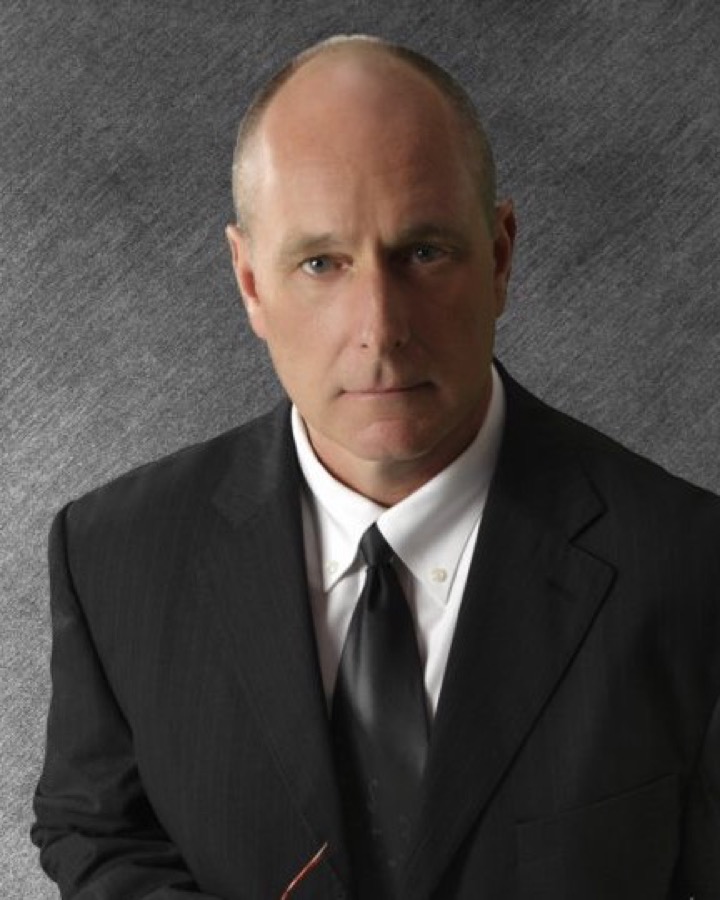 CEO & Owner
Thirty-eight years in four uniforms: street cop, soldier, professor, investigator. More than 220 matters in 42 states and D.C. since 2014, with testimony that has not been excluded at trial in any state or federal court.
Full biography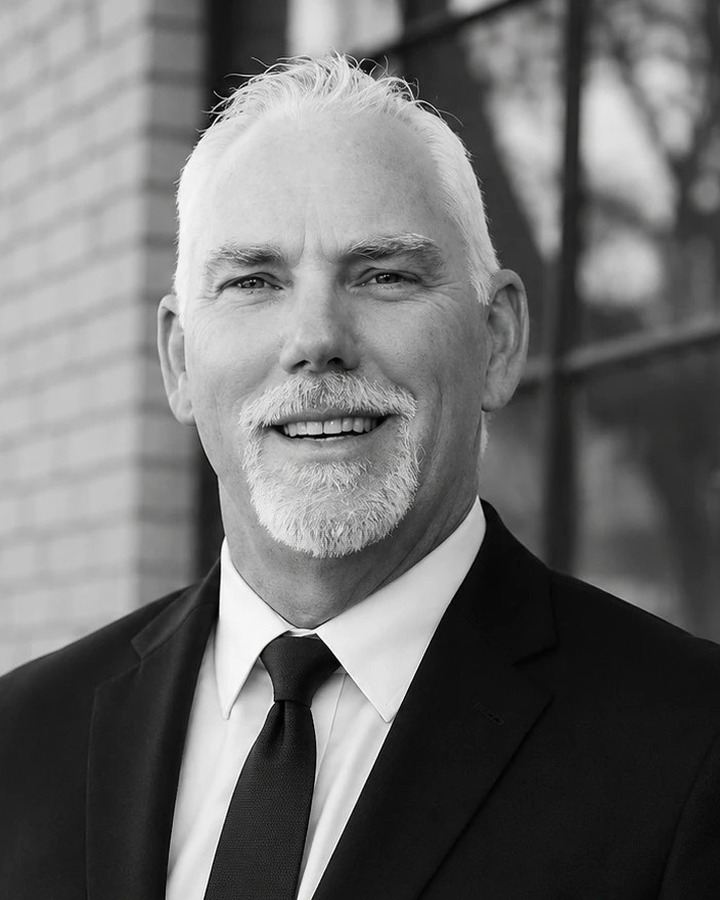 Consultant
More than thirty-five years in public safety: twelve years and three terms as the elected Sheriff of Lewis County, Washington, and six years a commissioner of the state board that sets peace-officer training standards.
Full profile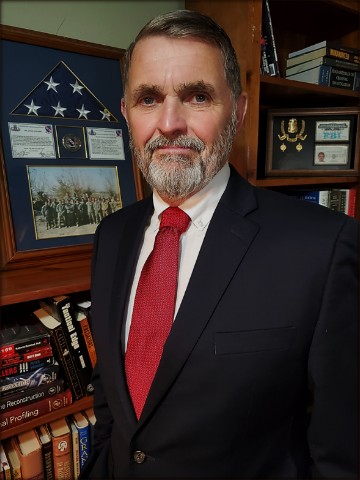 Consultant
Forty years of investigative casework, from patrolman in St. Louis County to the FBI in Chicago, and on to task forces in Afghanistan and Liberia. His work on the Idaho student murders is examined in Broken Plea, the New York Times bestseller by Christopher Whitcomb.
Full profileNever excluded. Professor Gilbertson’s testimony has not been excluded at trial in any state or federal court.
The Hon. Richard A. Jones United States District Judge“Mr. Gilbertson’s qualifications demonstrate extensive experience in policing. His expansive work as a police officer in Georgia, with assignments as a SWAT team officer, juvenile court investigator, school resource officer, stakeout squad officer, senior patrolman, and patrolman; then a career as a tenured college professor and university lecturer teaching criminal justice courses to degree-seeking students at colleges and universities, and as a licensed private investigator conducting felony pretrial investigations for attorneys in Washington State in dozens of criminal cases, makes him unique in the field of police expert witnesses. The Court finds that, based on his experience, Mr. Gilbertson’s testimony can be expected to have a reliable basis in knowledge and experience of police practices.”
Who retains the practice, and for what.
Attorneys searching for an expert witness who works both plaintiff and defense sides of police cases are usually asking a screening question: is this witness a hired gun for one bar or a practices analyst either side can put in front of a jury. The honest answer starts with where the retentions actually come from, because that history is discoverable and opposing counsel will find it.
- Plaintiff’s counsel in civil rights matters: excessive force, false arrest and search, police misconduct, deficient investigations, and failure-to-train theories against agencies.
- The criminal defense bar: self-defense prosecutions, suppression questions, procedure and report review, and court-appointed matters where police practices shape the charge.
- Counsel defending officers and agencies: officers accused of excessive force or misconduct, former officers facing charges arising from their duties, and agencies defending their training, supervision and policy.
The method does not shift with the caption. Opinions rest on the complete record, the video, reports, statements, depositions, training files and agency policy, measured against state and federal statutes, case law, reputable academic research, and national police standards and practices, on the totality of the facts and circumstances. The same record discipline, the same standards, the same analysis, whichever side signs the engagement letter.
That is not a marketing posture. An expert’s opinions are supposed to follow from a method, and a method that produces plaintiff-friendly conclusions for plaintiffs and defense-friendly conclusions for the defense is not a method, it is a billing arrangement. Working both sides is the observable proof that the method runs the practice rather than the client list.
The roster above is not aspirational. The expert practice dates to 2014 and spans more than 220 civil rights and criminal cases across 42 states and the District of Columbia, with retentions from all three directions on the roster. The full case list and testimony record go to retaining counsel on request, so the distribution can be checked rather than taken on trust.
One-sided experts get impeached with that fact.
The cross-examination writes itself. How many times has the witness been retained, and how many of those retentions came from the same side of the caption. An expert who has only ever worked one side hands opposing counsel a ready-made bias argument that costs nothing to run and requires no engagement with the record: whatever the file said, this witness was always going to land where he landed.
Cross-retention history is the counterweight, and it is credibility evidence a jury is entitled to weigh. When the answer is that retentions come from plaintiff’s counsel, from the criminal defense bar, and from counsel defending officers and agencies, the bias cross loses its footing. The witness in the chair has disappointed both sides before, on the record, because the record required it.
The homepage’s working both sides of the aisle section states the practice’s position in a single line: where the evidence shows an officer acted within accepted police practices, the report says so. That sentence lands differently with a jury when the witness has also testified against officers on other records. The same conclusion from a career one-side expert sounds like the brochure; from a both-sides practice it sounds like the file.
The testimony record backs the posture. Professor Gilbertson’s testimony has not been excluded at trial in any state or federal court, and it has been admitted in the state courts of Washington, Oregon, Kansas, Connecticut, Florida and Illinois, and in the U.S. District Courts for the Western District of Washington, the District of Arizona, and the Western District of Louisiana. Cross-retention history and an intact admissibility record are the two credibility facts counsel can verify before the first phone call.
There is a quieter trial benefit as well. An expert who has sat on both sides of these cases knows the other side’s playbook from the inside: the themes a defense cross will run against a plaintiff’s expert, and the pressure points a plaintiff’s cross will look for in a defense report. Preparation with retaining counsel draws on that, within the expert’s lane and without scripting testimony.
Assume the jury will hear the side history. Retention patterns are fair game at deposition, and a one-sided ledger cannot be rehabilitated on redirect.
The discipline shows up in the report, not the resume.
Both-sides practice is not a line on a curriculum vitae; it is a constraint every report has to satisfy. Where the record shows an officer acted within generally accepted police practices, the report says so, whichever side retained the analysis. Where the record shows the opposite, the report says that, with the page, timestamp and policy citations to support it.
The discipline also shapes what a report refuses to do. It does not advocate, it does not grade the lawyering, and it does not stretch an opinion to cover a claim the record cannot carry. Advocacy is counsel’s work. The report’s work is a practices analysis tied to the record so plainly that either side could put it in front of the jury and live with what it says.
For retaining counsel this cuts both ways, and it is worth pricing in before the record ships. A plaintiff’s firm may hear that the force in its marquee case sits inside accepted practices. A city attorney may hear that the training file will not carry the defense the agency wants to run. What if the opinion does not help walks through what happens next; the short version is that counsel learns it early and plainly, in a form that informs strategy instead of ambushing it at disclosure.
The drafting discipline is the same on either side. Opinions are stated with their support, adverse material is addressed rather than skipped, and where scientific, medical, technical or human factors evidence is involved, qualified experts in those disciplines are deferred to, on the record. A report built that way reads the same whether plaintiff or defense commissioned it, which is the point: opposing counsel should find nothing in the document that reveals who paid for it.
Legal conclusions remain counsel’s throughout. The report addresses police practices: what officers are trained to do, what generally accepted practices called for in the circumstances, and how the conduct in the record measures against that. Whether the conduct was lawful, which claims to plead, and what the jury should be asked to do about any of it stays on counsel’s side of the table, on both sides of the aisle.
A useful screening question for any expert, this practice included: ask what the most recent opinion was that disappointed the retaining side. A genuine both-sides practice has a current answer.
The conflict check is what makes both sides possible.
A practice that accepts work from every direction has to be rigorous about the commitments it already holds. Every engagement begins with a conflict check: the parties, the agencies involved, and any related matters, before any substantive discussion of the record. If a case presents a conflict, counsel hears it immediately, before anything privileged moves.
What happens in a conflict check covers the mechanics: what to include with a first inquiry and how quickly the answer comes back. The neighboring question, whether an expert who appeared for one side in an earlier matter can appear for the other side in a later one, is treated in can defense counsel use the same expert; that answer runs through the conflict check as well.
For the first inquiry, the practical instruction is short. Send the case type and posture, the jurisdiction, the key deadlines, and the parties for the conflict check, and send nothing privileged until the check clears and the retention is confirmed. That sequencing is what protects counsel on both ends of the engagement. The same discipline explains what the practice declines: matters where a conflict exists, and inquiries from individuals, because the work is for retaining counsel and their staff only.
The result is a practice that can sit in either chair with clean hands. No side owns the method, no engagement inherits another engagement’s loyalties, and the opinion in every case answers to one authority: the record. That is what both-sides retention means in practice, and it is why the history is worth verifying rather than taking on faith. Counsel on either side of a police case get the same thing when they retain it: an analysis that would read the same if the other side had called first.
When the question becomes a retention.
This page is reference. When a live matter needs the analysis, these are the doors.
Asked alongside this one.
Does the same police practices expert really work for both plaintiffs and the defense?
Why does cross-retention history matter to a jury?
What happens if the opinion favors the other side?
What does retention cost?
Bring the matter behind the question.
Attorney inquiries are answered directly. If a case presents a conflict, you will hear it immediately.
Inquiry sent.
You will hear back directly. If the matter is urgent, call (239) 571-1840.
Conflicts are checked before any substantive discussion. Please do not send privileged material with a first inquiry; after retention the record is exchanged on physical media. Gregory consults for attorneys and their staff only, and does not provide legal advice or attorney referrals to individuals.