

Before the retainer,
a short conversation.
Direct line: (239) 571-1840 · GregoryGilbertson@proton.me
Attorney and law-firm inquiries only
Counsel can talk to a police practices expert before any retainer is signed. The conversation has a defined lane: fit, timing and process sit on one side of the line, privileged material and substantive analysis on the other, and knowing the line makes the first call short and useful.
Three experts. Over 110 years.
Professor Gregory Gilbertson (Ret.), FBI Special Agent Christopher Holland (Ret.), and Sheriff Robert Snaza consult with attorneys nationwide regarding police practices and procedures, use of force, false arrest, police misconduct, criminal, and self-defense casework.
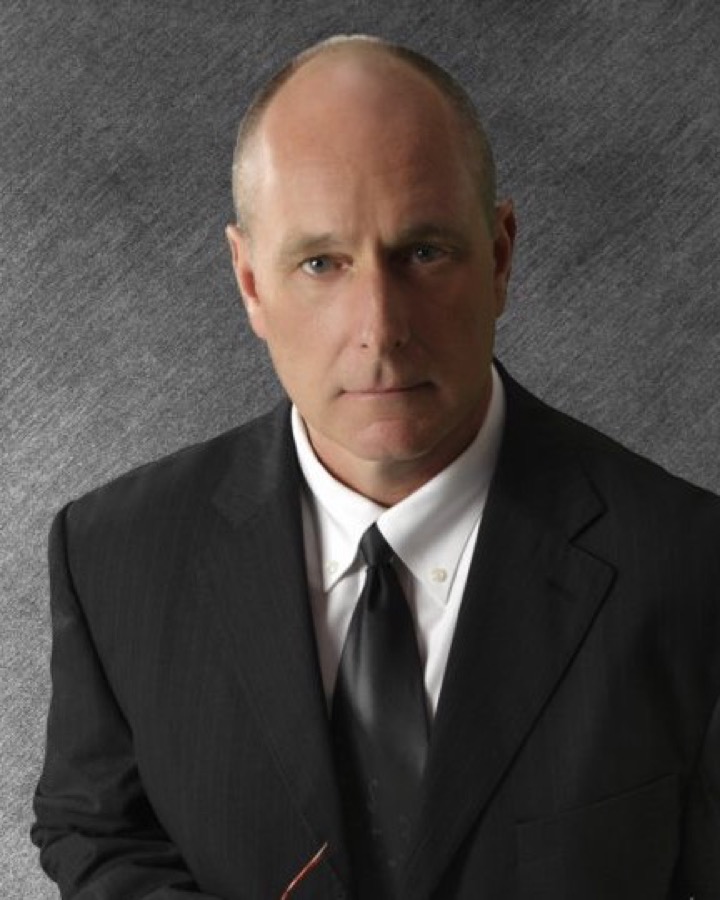 CEO & Owner
Thirty-eight years in four uniforms: street cop, soldier, professor, investigator. More than 220 matters in 42 states and D.C. since 2014, with testimony that has not been excluded at trial in any state or federal court.
Full biography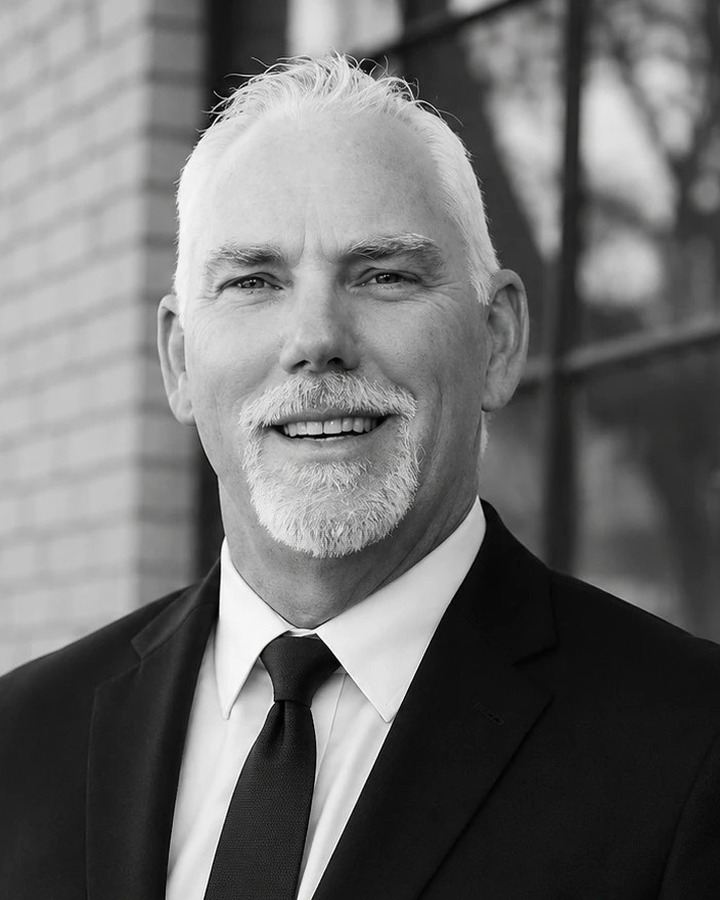 Consultant
More than thirty-five years in public safety: twelve years and three terms as the elected Sheriff of Lewis County, Washington, and six years a commissioner of the state board that sets peace-officer training standards.
Full profile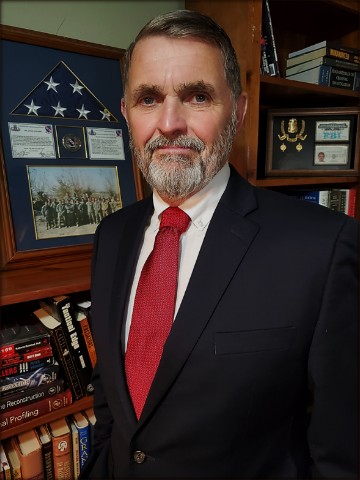 Consultant
Forty years of investigative casework, from patrolman in St. Louis County to the FBI in Chicago, and on to task forces in Afghanistan and Liberia. His work on the Idaho student murders is examined in Broken Plea, the New York Times bestseller by Christopher Whitcomb.
Full profileNever excluded. Professor Gilbertson’s testimony has not been excluded at trial in any state or federal court.
The Hon. Richard A. Jones United States District Judge“Mr. Gilbertson’s qualifications demonstrate extensive experience in policing. His expansive work as a police officer in Georgia, with assignments as a SWAT team officer, juvenile court investigator, school resource officer, stakeout squad officer, senior patrolman, and patrolman; then a career as a tenured college professor and university lecturer teaching criminal justice courses to degree-seeking students at colleges and universities, and as a licensed private investigator conducting felony pretrial investigations for attorneys in Washington State in dozens of criminal cases, makes him unique in the field of police expert witnesses. The Court finds that, based on his experience, Mr. Gilbertson’s testimony can be expected to have a reliable basis in knowledge and experience of police practices.”
What a pre-retention conversation can cover.
A pre-retention conversation exists to answer one question: do this matter and this expert fit. That covers the case in outline and the practicalities of the engagement, and none of it requires disclosing strategy, work product or anything privileged. The list of fair topics is short and concrete.
- Case type: use of force, false arrest, police misconduct, deficient investigation, self-defense or criminal defense support
- Posture: pre-suit, discovery, expert disclosure due, dispositive motions or trial set
- Jurisdiction and court, with the case number
- Key deadlines, starting with expert disclosure and trial
- The general shape of the record: video, reports, statements, depositions, training files, agency policy
- Fit and availability against the sixty-day report window
Fit questions are answered directly. If a matter falls outside the practice areas, or the calendar cannot honor the sixty-day report window, counsel hears that in the first conversation rather than after a retainer is signed. Availability is handled the same way, stated against the disclosure calendar before anyone has spent anything.
The conversation runs in both directions. The expert’s fit questions are the mirror image of counsel’s: what the case type is, where the matter stands, which court it sits in, what the record already holds, and whether the deadline leaves room for a report worth writing.
What it cannot cover, and why.
Two subjects stay out of a pre-retention conversation: privileged material and substantive analysis. Nothing privileged should travel with a first inquiry, no privileged material is exchanged by email, and no opinion is offered on the merits of any matter before retention. A fit conversation is exactly that, and it stays inside its lane.
The first reason is the conflict check. Every engagement begins with one, and substantive discussion before clearance puts the entire engagement at risk. The sequence is therefore fixed: party names arrive with the inquiry, the check runs immediately, and a conflict is disclosed to counsel at once. Only after clearance does the conversation move toward scope, and only after retention does the record itself travel on physical media.
Send the party names with the first inquiry. They are checked immediately, and if a conflict exists counsel hears it at once, before anything substantive has been discussed.
The second reason is the record. An opinion is only worth holding when it rests on the complete file: video, reports, statements, depositions, training records and agency policy, measured on the totality of the facts and circumstances. A first call has none of that in front of it, and an expert who previews conclusions from a two-paragraph summary is not one worth retaining.
What belongs in that first message is itemized at the first inquiry, what to send. The check itself, what is searched and how fast counsel hears back, is walked through at what happens in a conflict check.
How the first call stays short.
The practice publishes what most pre-retention calls exist to ask. The fee schedule is on the site, so budgeting needs no phone call; the figures counsel plans against are set out in police expert witness fees, explained. The engagement path, from conflict check to record to report, is published the same way.
The intake form mirrors the same logic. Its fields ask for four things because a first conversation runs on those four answers:
- Case type, chosen from the practice areas
- Posture, from pre-suit through post-conviction
- Jurisdiction and court
- The next deadline, if one is set
Arrive with those answers and the call is short, specific and useful. What remains after fit is scope: a preliminary case-merit evaluation, a consulting-only retention, or a testifying one. The conflict check clears, the retainer is confirmed in writing, and the record follows on physical media.
And when the honest answer is no fit, that answer comes just as quickly. A practice that publishes its fees, its report window and its engagement path has no reason to stretch a first call into a sales call. The boundary holds from the first conversation on: legal conclusions remain counsel’s, and the expert addresses police practices.
When the question becomes a retention.
This page is reference. When a live matter needs the analysis, these are the doors.
Asked alongside this one.
Can counsel consult an expert witness before retaining him?
Is a pre-retention conversation with an expert privileged?
Does a first conversation create an expert relationship?
Bring the matter behind the question.
Attorney inquiries are answered directly. If a case presents a conflict, you will hear it immediately.
Inquiry sent.
You will hear back directly. If the matter is urgent, call (239) 571-1840.
Conflicts are checked before any substantive discussion. Please do not send privileged material with a first inquiry; after retention the record is exchanged on physical media. Gregory consults for attorneys and their staff only, and does not provide legal advice or attorney referrals to individuals.