

The supplemental report.
What it is, and is not.
Direct line: (239) 571-1840 · GregoryGilbertson@proton.me
Attorney and law-firm inquiries only
A supplemental report updates the expert’s own disclosure when material discovery arrives after the report is served. A rebuttal answers an opposing expert’s disclosed opinions. Different triggers, different documents. This page sets out what a supplement contains, what it has to say about opinions that did not change, and how the timing tracks counsel’s deadlines.
Three experts. Over 110 years.
Professor Gregory Gilbertson (Ret.), FBI Special Agent Christopher Holland (Ret.), and Sheriff Robert Snaza consult with attorneys nationwide regarding police practices and procedures, use of force, false arrest, police misconduct, criminal, and self-defense casework.
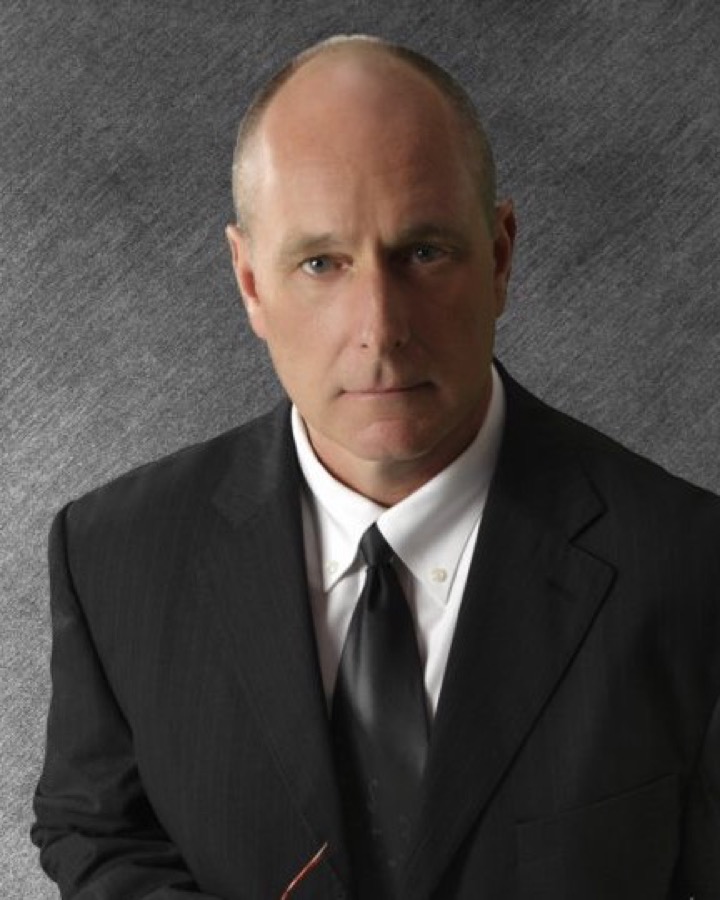 CEO & Owner
Thirty-eight years in four uniforms: street cop, soldier, professor, investigator. More than 220 matters in 42 states and D.C. since 2014, with testimony that has not been excluded at trial in any state or federal court.
Full biography Consultant
More than thirty-five years in public safety: twelve years and three terms as the elected Sheriff of Lewis County, Washington, and six years a commissioner of the state board that sets peace-officer training standards.
Full profile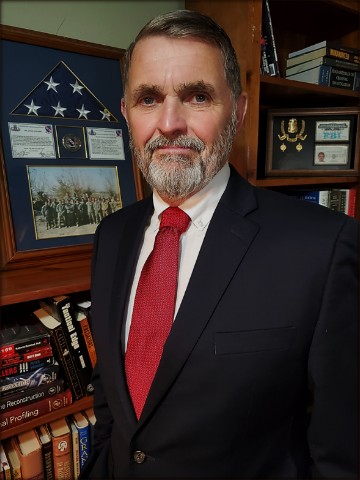 Consultant
Forty years of investigative casework, from patrolman in St. Louis County to the FBI in Chicago, and on to task forces in Afghanistan and Liberia. His work on the Idaho student murders is examined in Broken Plea, the New York Times bestseller by Christopher Whitcomb.
Full profileNever excluded. Professor Gilbertson’s testimony has not been excluded at trial in any state or federal court.
The Hon. Richard A. Jones United States District Judge“Mr. Gilbertson’s qualifications demonstrate extensive experience in policing. His expansive work as a police officer in Georgia, with assignments as a SWAT team officer, juvenile court investigator, school resource officer, stakeout squad officer, senior patrolman, and patrolman; then a career as a tenured college professor and university lecturer teaching criminal justice courses to degree-seeking students at colleges and universities, and as a licensed private investigator conducting felony pretrial investigations for attorneys in Washington State in dozens of criminal cases, makes him unique in the field of police expert witnesses. The Court finds that, based on his experience, Mr. Gilbertson’s testimony can be expected to have a reliable basis in knowledge and experience of police practices.”
A supplement and a rebuttal are not the same document.
A supplemental report is the expert’s own disclosure, brought current. It is written because the record grew: video produced after a motion to compel, an internal affairs file that arrived late, training and disciplinary records finally located, a deposition taken after the report was served. The subject of a supplement is the enlarged record and what it does to opinions already stated.
A rebuttal report is a different animal with a different trigger. It responds to an opposing expert’s disclosed opinions, on the same record discipline as a primary report, and it exists because of what the other side disclosed rather than because of what discovery produced. Rebuttal work is separately scoped and billed from $5,000. Rebuttal reports and opposing expert review covers that document on its own terms.
Two documents, side by side
- A supplement is triggered by new material in the record; a rebuttal is triggered by an opposing expert’s disclosure.
- A supplement revisits opinions the expert already gave; a rebuttal addresses opinions someone else gave.
- A supplement measures the same questions against a bigger file; a rebuttal measures another expert’s method and sourcing.
- A supplement travels with the original report as one disclosure; a rebuttal stands as its own document.
- Both are written to the same standard: complete record, national standards, opinions sourced to what is actually in the file.
The distinction is not academic. Fed. R. Civ. P. 26 carries a duty to supplement disclosures, and how that duty applies, when it is triggered, and whether a given filing is timely are questions counsel owns. The expert writes what the record supports and states plainly which document is being written; the characterization and the argument belong to retaining counsel.
What a disciplined supplement actually states.
A supplement that simply asserts a revised conclusion is worth very little on cross-examination. The value is in the accounting: what came in, what it changed, and what it did not.
- Identifies the new material specifically, by source and by what it is, not as a general reference to later production.
- States when the material was received and that it was reviewed in full before the supplement was written.
- Names the opinions affected, using the original numbering so each one can be tracked from report to supplement.
- Re-sources every affected opinion to the enlarged record, citing the new material and the prior material together.
- States expressly which opinions are unchanged and that they were re-examined against the new material.
- Notes any question the new material raises that belongs to a scientific, medical or technical discipline, and defers it to a qualified expert in that field.
The unchanged opinions carry more weight than counsel sometimes expects. An expert who supplements only the opinions that moved invites the obvious question: were the others reviewed against the new file at all. A supplement that says the remaining opinions were re-examined and stand, and why, closes that line before it opens. The anatomy of an expert report sets out the sourcing conventions a supplement inherits.
A supplement is also not a repair kit. It is not the place to add opinions unrelated to the new material, to strengthen a passage that drew fire, or to quietly retire something that has become inconvenient. Where new material cuts against a prior opinion, the supplement says so and explains what changed. An opinion that moves for a stated reason is defensible; one that moves without one is a cross-examination exhibit.
When a supplement is workable, and when it is not.
Supplements live inside the court’s schedule, and that schedule is counsel’s to manage. Discovery cutoffs, expert disclosure dates, dispositive motion deadlines and the trial setting all decide whether a supplement is useful or merely late. The expert can tell counsel how long the work will take; only counsel can say whether the calendar permits it.
Notice matters for the same reason it matters on a primary report. Expert reports require sixty days of advance notice, and reports required in less than sixty days incur a 25% upcharge; a supplement is scoped work on a defined body of new material and is planned the same way. A supplement’s fee is agreed with retaining counsel when its scope is defined, on the same published-schedule discipline as the primary report. Report timelines and the sixty-day rule sets out how the calendar is built.
Late video is the classic trigger. Body-worn and dash camera footage produced after a motion, third-party surveillance located during depositions, and dispatch audio matched to a CAD timeline can all change what the record shows about sequence, distance and warnings. New material of that kind does not always change an opinion, and when it does not, the supplement says so.
Counsel can make supplements cheap by flagging gaps early. If the first report notes what was missing and what remained outstanding, the later production slots into an analysis that already anticipated it, and the supplement is short. If the gap was never identified, the supplement has to rebuild context before it can address the new file. Either way, the opinions stay on police practices, and legal conclusions remain counsel’s.
When the question becomes a retention.
This page is reference. When a live matter needs the analysis, these are the doors.
Asked alongside this one.
How is a supplemental report different from a rebuttal report?
Does a supplemental report replace the original report?
What most often triggers a supplemental report in a police practices case?
Bring the matter behind the question.
Attorney inquiries are answered directly. If a case presents a conflict, you will hear it immediately.
Inquiry sent.
You will hear back directly. If the matter is urgent, call (239) 571-1840.
Conflicts are checked before any substantive discussion. Please do not send privileged material with a first inquiry; after retention the record is exchanged on physical media. Gregory consults for attorneys and their staff only, and does not provide legal advice or attorney referrals to individuals.