

The expert report,
section by section.
Direct line: (239) 571-1840 · GregoryGilbertson@proton.me
Attorney and law-firm inquiries only
Every police practices report in this practice follows one architecture: engagement and scope, materials reviewed, factual chronology, standards, analysis, opinions, and the basis for each. Here is what every section does, and why the structure never changes.
Three experts. Over 110 years.
Professor Gregory Gilbertson (Ret.), FBI Special Agent Christopher Holland (Ret.), and Sheriff Robert Snaza consult with attorneys nationwide regarding police practices and procedures, use of force, false arrest, police misconduct, criminal, and self-defense casework.
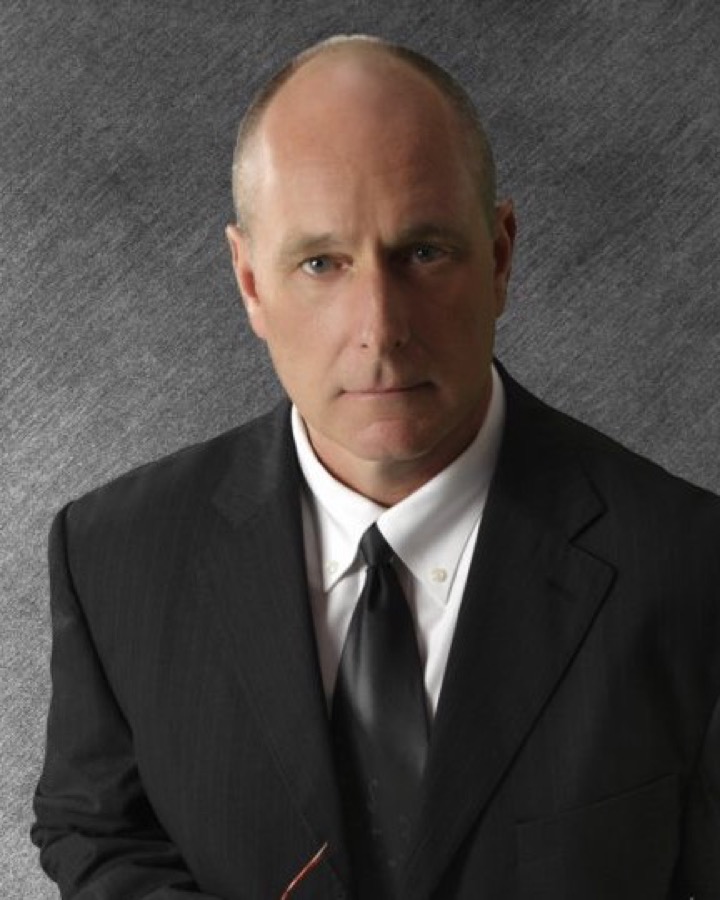 CEO & Owner
Thirty-eight years in four uniforms: street cop, soldier, professor, investigator. More than 220 matters in 42 states and D.C. since 2014, with testimony that has not been excluded at trial in any state or federal court.
Full biography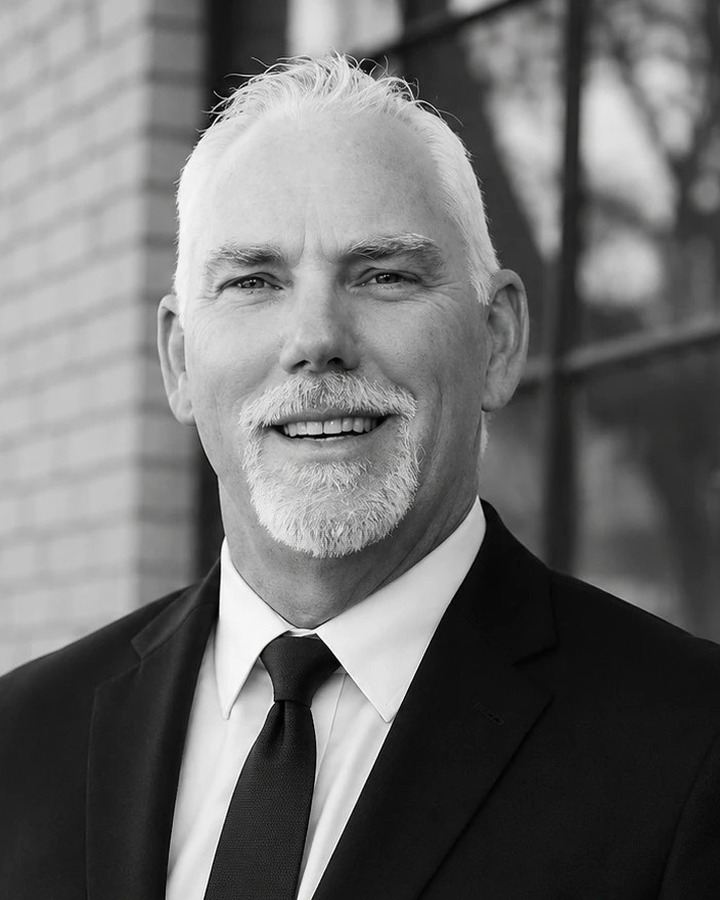 Consultant
More than thirty-five years in public safety: twelve years and three terms as the elected Sheriff of Lewis County, Washington, and six years a commissioner of the state board that sets peace-officer training standards.
Full profile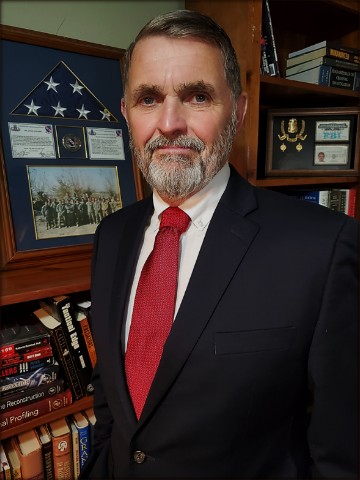 Consultant
Forty years of investigative casework, from patrolman in St. Louis County to the FBI in Chicago, and on to task forces in Afghanistan and Liberia. His work on the Idaho student murders is examined in Broken Plea, the New York Times bestseller by Christopher Whitcomb.
Full profileNever excluded. Professor Gilbertson’s testimony has not been excluded at trial in any state or federal court.
The Hon. Richard A. Jones United States District Judge“Mr. Gilbertson’s qualifications demonstrate extensive experience in policing. His expansive work as a police officer in Georgia, with assignments as a SWAT team officer, juvenile court investigator, school resource officer, stakeout squad officer, senior patrolman, and patrolman; then a career as a tenured college professor and university lecturer teaching criminal justice courses to degree-seeking students at colleges and universities, and as a licensed private investigator conducting felony pretrial investigations for attorneys in Washington State in dozens of criminal cases, makes him unique in the field of police expert witnesses. The Court finds that, based on his experience, Mr. Gilbertson’s testimony can be expected to have a reliable basis in knowledge and experience of police practices.”
One structure, every report.
An expert report is read by four audiences with four different jobs: retaining counsel checking scope and support, opposing counsel hunting for the soft spot, the court weighing reliability, and, if the matter tries, jurors hearing the substance explained. A fixed architecture serves all four at once. Each reader finds what they need where they expect to find it, and nothing load-bearing hides in an appendix.
The structure also mirrors what disclosure demands. A report built this way already contains the complete statement of opinions, the basis and reasons for them, and the facts considered that Rule 26 expert disclosures require, so the served report and the required disclosure are one document rather than two documents to reconcile under deadline.
- Engagement and scope: who retained the expert, the matter, and the questions presented
- Materials reviewed: every item of the record the analysis considered
- Factual chronology: the sequence of events, each assertion sourced to the record
- Standards applied: statutes, case law, national standards, agency policy and training
- Analysis: the documented conduct measured against those standards
- Opinions: each stated to a reasonable degree of professional certainty
- Basis: the record support behind every opinion
The sections below walk that architecture in order. None of it is decorative. Each part exists because some reader, at some stage of the litigation, will lean on it hard.
Engagement, scope and the materials reviewed.
The engagement section states who retained the expert, in what matter, and what questions were presented. It also draws the boundary early: the report addresses police practices, and where scientific, medical, technical or human factors evidence is involved, qualified experts in those disciplines are deferred to, on the record. Stating that boundary in the opening pages costs nothing and pays later, because boundary questions always come at deposition, and the answer is already in writing.
The materials reviewed section lists every item considered: the video, reports, statements, depositions, training files and agency policy that arrived on physical media as the discovery file counsel assembles. The list does double duty. It is the facts-considered backbone of the disclosure, and it is the first place opposing counsel looks for what the expert never saw. A complete record protects it; an item missing from the list invites the question of how the analysis could hold without it.
Scope discipline shows up here as well. Materials outside the questions presented are still listed if they were considered, but the opinions stay inside the engagement. A report that wanders past its scope hands opposing counsel pages of free cross-examination and gives the court a reason to trim it.
A factual chronology, sourced line by line.
The chronology assembles the sequence of events from the record: dispatch and CAD records, video timestamps, written reports, statements and deposition testimony, reconciled into one timeline. It is written from the record rather than from narrative instinct, and each factual assertion carries its source, so counsel can trace any line to an exhibit, a page or a timestamp without asking.
Reconciliation is where the chronology earns its place. Video, paper and memory rarely agree to the minute. The chronology states what each source says, flags where they diverge, and resists the temptation to smooth the record into a story. Divergences are findings, not blemishes; some of the most consequential opinions in a police practices report begin as a gap between a timestamp and a narrative.
The discipline that governs the chronology is the same one that governs the analysis: no hindsight. Events are stated as they were known to the people inside them at the time. In use-of-force matters that discipline is doctrinal, because Graham v. Connor, 490 U.S. 386 (1989) frames the inquiry around the circumstances confronting the officer, not the circumstances a file review reveals later.
The chronology also decides how good the eventual cross-examination can be. When opposing counsel builds a timeline of their own, the report’s version either holds or it does not, and a chronology sourced line by line holds because every entry can be re-derived from the exhibits sitting in front of the witness. A chronology written from narrative memory cannot be defended that way, and experienced examiners know it.
Standards named, conduct measured.
The standards applied.
Opinions about police practices mean nothing without a stated measure, so the report names what conduct is measured against: the state and federal statutes and case law counsel identifies, national standards and generally accepted police practices, the agency’s own written policy, and the training the involved officers actually received.
National standards are named rather than gestured at: IACP model policies, PERF guidance, state POST training curricula, CALEA accreditation frameworks, the sources that inform what generally accepted police practices are. The report treats them as frameworks rather than attributing numbered requirements to particular documents, and it distinguishes what national practice expects from what the agency’s own policy required on the date in question.
The analysis.
The analysis is where the report does its work: the conduct fixed in the chronology, measured against the standards just named, question by question. It moves in one direction, from standard to conduct to comparison, so a reader can always tell which measure is being applied and to what. Policy, practice and training are kept distinct throughout, because what an agency wrote, what it actually does, and what it taught are three different things, and the gaps between them are often where the dispute lives.
The comparison is specific, and it cuts both ways. Where documented conduct met the standard, the report says so; where it did not, the report says that. Analysis that only points one direction reads as advocacy, and the practice is retained by plaintiff’s counsel, the criminal defense bar, and counsel defending officers and agencies on the same method. Where the record is silent, the report identifies the gap rather than papering over it, because an opinion built on an assumed fact collapses the moment the assumption is exposed.
Opinions, basis and traceability.
Opinions are stated to a reasonable degree of professional certainty, numbered, and written in plain declarative sentences. Each opinion is followed by its basis: the record items, the standards and the reasoning that support it. The report never asks a reader to take a conclusion on authority; it shows the path from record to opinion, every time.
Traceability is the whole game. An opinion counsel cannot trace to the record is an opinion opposing counsel will attack, first at deposition, then in a motion aimed at reliability. A sourced opinion can be defended in both, because the answer to where that came from is a page number rather than an assurance. Numbered opinions also give retaining counsel clean handles for briefing: they can cite opinion by opinion instead of paraphrasing a narrative.
The register is deliberate. The report is written to be read by judges and jurors, not only by lawyers: plain language, short paragraphs, and no term of art used without a definition in the text. A report that needs an interpreter loses the audience it exists to inform, and jurors extend little credit to prose they cannot follow.
A report built this way outlives its filing date. Counsel use it to frame deposition outlines, to support the positions they choose to take on dispositive motions, and in mediation and settlement consultation, where a sourced, plain-language statement of what the record shows gives both rooms something concrete to price. The same pages serve every stage because every page was anchored to the record the first time.
Legal conclusions remain counsel’s. The report addresses police practices; whether the conduct was lawful is for the court and the jury.
Supplemental and rebuttal reports.
Reports are not always one document. When new discovery arrives after the report is served, a supplemental report updates the analysis on the new record, stating plainly what changed and what did not. An opinion that survives new discovery intact is stronger for saying so; one that changes is corrected on the record rather than for the first time at deposition. What is a supplemental report covers the mechanics.
A rebuttal report answers a different event: the other side has disclosed an expert. Rebuttals are focused responses to the disclosed opinions, on the same record discipline as a primary report, billed from $5,000. Rebuttal reports and opposing expert review walks the format and what a disciplined response takes apart.
Whichever form the engagement takes, the architecture holds: materials, chronology, standards, analysis, opinions, basis. The structure that organizes a primary report organizes the answer to an opposing expert, which is one reason the practice can produce either without changing method midstream.
When the question becomes a retention.
This page is reference. When a live matter needs the analysis, these are the doors.
Asked alongside this one.
What sections does a police practices expert report contain?
How long does an expert report take to prepare?
What does retention cost?
Bring the matter behind the question.
Attorney inquiries are answered directly. If a case presents a conflict, you will hear it immediately.
Inquiry sent.
You will hear back directly. If the matter is urgent, call (239) 571-1840.
Conflicts are checked before any substantive discussion. Please do not send privileged material with a first inquiry; after retention the record is exchanged on physical media. Gregory consults for attorneys and their staff only, and does not provide legal advice or attorney referrals to individuals.