

A stop, not an arrest.
Until the record says otherwise.
Direct line: (239) 571-1840 · GregoryGilbertson@proton.me
Attorney and law-firm inquiries only
A Terry stop is a brief investigative detention on reasonable suspicion, with a limited frisk for weapons available only on its own justification. Most Terry litigation is not about the doctrine. It is about the articulation in the report, the clock, and what the video actually shows.
Three experts. Over 110 years.
Professor Gregory Gilbertson (Ret.), FBI Special Agent Christopher Holland (Ret.), and Sheriff Robert Snaza consult with attorneys nationwide regarding police practices and procedures, use of force, false arrest, police misconduct, criminal, and self-defense casework.
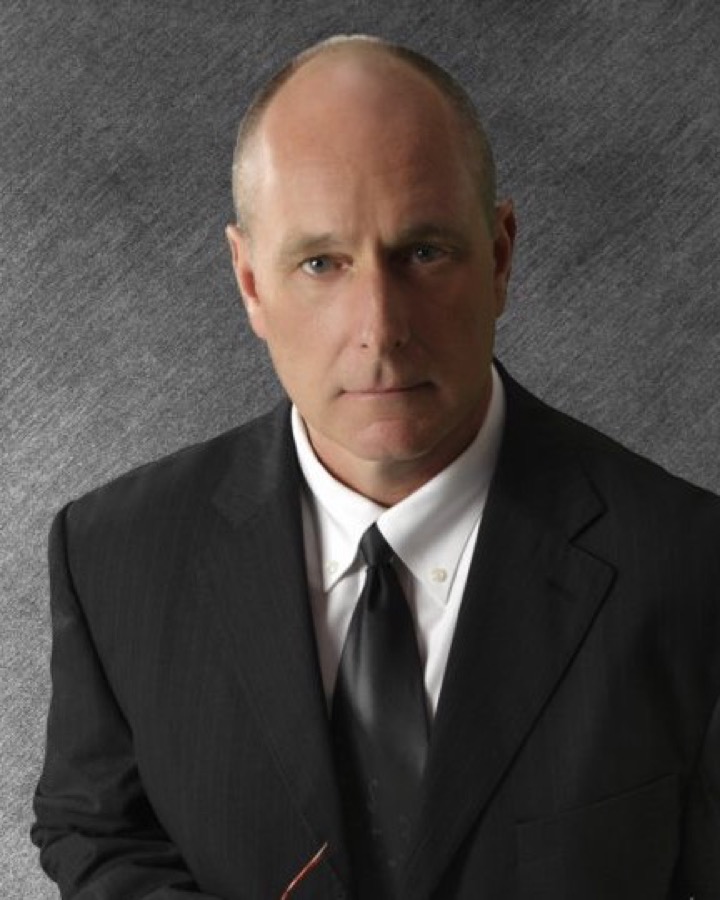 CEO & Owner
Thirty-eight years in four uniforms: street cop, soldier, professor, investigator. More than 220 matters in 42 states and D.C. since 2014, with testimony that has not been excluded at trial in any state or federal court.
Full biography Consultant
More than thirty-five years in public safety: twelve years and three terms as the elected Sheriff of Lewis County, Washington, and six years a commissioner of the state board that sets peace-officer training standards.
Full profile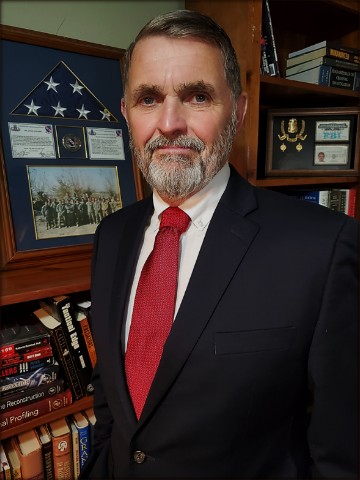 Consultant
Forty years of investigative casework, from patrolman in St. Louis County to the FBI in Chicago, and on to task forces in Afghanistan and Liberia. His work on the Idaho student murders is examined in Broken Plea, the New York Times bestseller by Christopher Whitcomb.
Full profileNever excluded. Professor Gilbertson’s testimony has not been excluded at trial in any state or federal court.
The Hon. Richard A. Jones United States District Judge“Mr. Gilbertson’s qualifications demonstrate extensive experience in policing. His expansive work as a police officer in Georgia, with assignments as a SWAT team officer, juvenile court investigator, school resource officer, stakeout squad officer, senior patrolman, and patrolman; then a career as a tenured college professor and university lecturer teaching criminal justice courses to degree-seeking students at colleges and universities, and as a licensed private investigator conducting felony pretrial investigations for attorneys in Washington State in dozens of criminal cases, makes him unique in the field of police expert witnesses. The Court finds that, based on his experience, Mr. Gilbertson’s testimony can be expected to have a reliable basis in knowledge and experience of police practices.”
A brief detention on reasonable suspicion.
The Terry stop takes its name from Terry v. Ohio, 392 U.S. 1 (1968). It is a brief investigative detention: an officer with reasonable suspicion that a person is involved in criminal activity may stop that person, hold the scene still, and investigate. It is less than an arrest, which requires probable cause, and more than a consensual encounter, which the person is free to walk away from.
The frisk is a separate tool with a separate justification. A lawful stop does not by itself authorize a pat-down. Officers are trained that a frisk requires its own reasonable suspicion that the person is armed and presently dangerous, and that it is a limited outer-clothing pat-down for weapons, not an evidence search. Stop and frisk are two decisions, and a sound report articulates each on its own facts.
The line between suspicion and cause, and what each supports, is mapped in the explainer on reasonable suspicion versus probable cause. This page stays on the stop itself: what officers are trained to articulate, how long brief can run, and the documentation a stop should generate.
What officers are trained to articulate and record.
Training on investigative stops is training in articulation. Officers learn that reasonable suspicion means specific, articulable facts, taken together with rational inferences, and not a hunch, a feeling or a profile. The report should say what was observed, when, in what sequence, and why it pointed to crime: the lookout broadcast that matched, the movement at the sight of police, the time and place in context.
Brief has no fixed number of minutes. The trained standard is diligence: the detention should last as long as it takes to confirm or dispel the suspicion that justified it, pursued without unnecessary delay. A records check that runs while questions are asked is one thing; holding a person for a canine unit or a second officer with no active investigation underway is another. The practices question is always what the officers were doing with the time.
Officers are also trained on the escalation markers that push a detention toward an arrest: handcuffs without articulated safety facts, movement of the person to a second location, placement in a locked patrol car, drawn weapons after the scene is controlled, and detention that continues after the suspicion is dispelled. None of these settles the question by itself, which is why the report’s articulated reason for each step matters as much as the step.
Agency policy and national training curricula, informed by IACP model policies and state POST commissions, frame these limits for working officers: stop on articulable facts, frisk on separate justification, document both, and resolve the stop with diligence. When a stop is litigated, those training materials belong in the record, because they establish what the officers were taught the limits were.
The documentation a stop should generate.
- An incident or field-interview report articulating the suspicion in the officer’s own observations
- CAD entries fixing dispatch, arrival and clearance times
- Body-worn and dash video from first contact forward
- A stated, separate justification for any frisk, and what the pat-down found
- Radio traffic and records-check timestamps showing what ran, and when
- Supervisor review where agency policy requires it
The report against the video, on a clock.
Stop cases turn on two comparisons. The first is articulation against footage: the report’s stated facts, read next to what body-worn and surveillance video actually show, in sequence. A narrative that describes furtive movement while the video shows compliance, or a frisk justified after the fact by what it found, is a practices finding that can be documented frame by frame.
The second is the clock. CAD times, video timestamps and records-check logs fix when the stop began, when the suspicion was or was not being pursued, and how long the person was held at each stage. Building that timeline is its own discipline, covered in building the record chronology, and prolongation questions are usually decided by that record rather than by testimony about it.
The expert’s role in these cases is the practices layer: what officers are trained to articulate and record, how this stop compares to generally accepted practice, and where the documentation and the video diverge. Whether the suspicion was legally sufficient, and whether the detention crossed into an unlawful arrest, are legal conclusions, and legal conclusions remain counsel’s. The casework itself runs through stops, frisks and detention matters.
The chronology is the cross-examination: most stop cases are decided by minutes and timestamps, not adjectives.
When the question becomes a retention.
This page is reference. When a live matter needs the analysis, these are the doors.
Asked alongside this one.
How long can a Terry stop last?
Is a frisk automatic during a Terry stop?
When does a stop become an arrest?
Bring the matter behind the question.
Attorney inquiries are answered directly. If a case presents a conflict, you will hear it immediately.
Inquiry sent.
You will hear back directly. If the matter is urgent, call (239) 571-1840.
Conflicts are checked before any substantive discussion. Please do not send privileged material with a first inquiry; after retention the record is exchanged on physical media. Gregory consults for attorneys and their staff only, and does not provide legal advice or attorney referrals to individuals.