

How Police Reports Fail,
Measured Against the Record
Direct line: (239) 571-1840 · GregoryGilbertson@proton.me
Attorney and law-firm inquiries only
Every police report makes checkable claims: what happened, in what order, at what time, observed by whom. Measured line by line against the video, the dispatch record and the statements, a report either holds or it does not, and the analysis documents which, claim by claim.
Three experts. Over 110 years.
Professor Gregory Gilbertson (Ret.), FBI Special Agent Christopher Holland (Ret.), and Sheriff Robert Snaza consult with attorneys nationwide regarding police practices and procedures, use of force, false arrest, police misconduct, criminal, and self-defense casework.
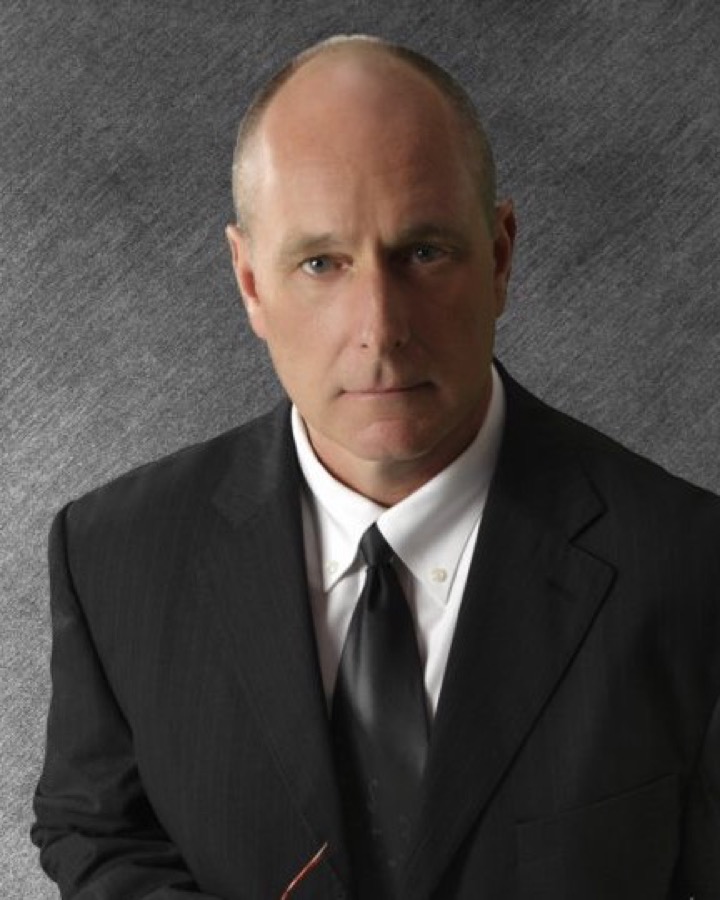 CEO & Owner
Thirty-eight years in four uniforms: street cop, soldier, professor, investigator. More than 220 matters in 42 states and D.C. since 2014, with testimony that has not been excluded at trial in any state or federal court.
Full biography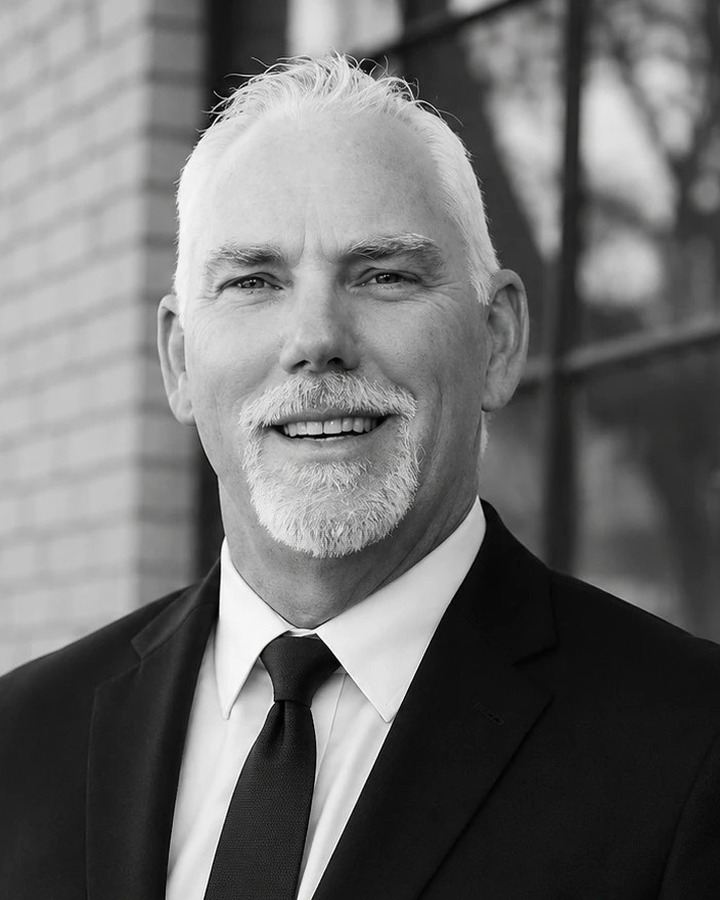 Consultant
More than thirty-five years in public safety: twelve years and three terms as the elected Sheriff of Lewis County, Washington, and six years a commissioner of the state board that sets peace-officer training standards.
Full profile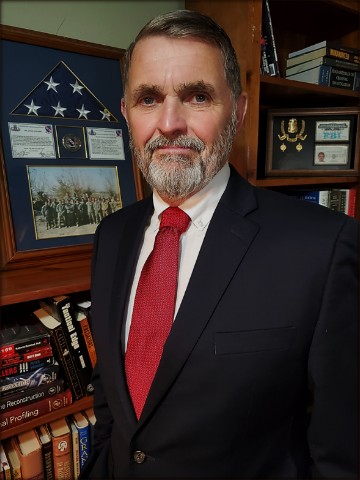 Consultant
Forty years of investigative casework, from patrolman in St. Louis County to the FBI in Chicago, and on to task forces in Afghanistan and Liberia. His work on the Idaho student murders is examined in Broken Plea, the New York Times bestseller by Christopher Whitcomb.
Full profileNever excluded. Professor Gilbertson’s testimony has not been excluded at trial in any state or federal court.
The Hon. Richard A. Jones United States District Judge“Mr. Gilbertson’s qualifications demonstrate extensive experience in policing. His expansive work as a police officer in Georgia, with assignments as a SWAT team officer, juvenile court investigator, school resource officer, stakeout squad officer, senior patrolman, and patrolman; then a career as a tenured college professor and university lecturer teaching criminal justice courses to degree-seeking students at colleges and universities, and as a licensed private investigator conducting felony pretrial investigations for attorneys in Washington State in dozens of criminal cases, makes him unique in the field of police expert witnesses. The Court finds that, based on his experience, Mr. Gilbertson’s testimony can be expected to have a reliable basis in knowledge and experience of police practices.”
What report-writing training actually requires.
The standard is taught before the first report is ever filed. Academy instruction, field training and agency policy converge on the same requirements: a report is complete, accurate, contemporaneous, written from the officer’s own observations, with every statement attributed to its source. None of that is aspirational language. It is the profession’s stated baseline, trained in the academy, graded in field training, and restated in the agency’s own report-writing policy.
- Complete: every material fact, including the facts that cut against the officer’s account
- Accurate: times, sequence and words as they occurred, not as summarized from memory days later
- Contemporaneous: written promptly, with any delay in writing itself documented
- First person: what this officer saw, heard and did, not a merged squad narrative
- Attributed: statements credited to the person who made them, with hearsay marked as hearsay
The standard is also enforced in ways the training file will show. Field training officers grade recruit reports daily and document the grading. Sergeants review and sign reports, and the review is itself a supervisory duty with a paper trail. In-service training revisits report writing after critical incidents. When a deficient report reaches litigation, the question is rarely whether the officer was taught the standard; the training records almost always show that the officer was.
The reason for the standard is institutional, not litigious. Prosecutors charge from reports. Supervisors review force through them. Courts meet the incident through them, sometimes years later, when memory has faded and the paper is most of what remains. A report written to the standard protects the record, and it protects the officer who wrote it.
Five patterns that recur across agencies.
Report failures are not random. Across agencies, regions and case types, the same five patterns account for most of what the analysis ends up documenting.
Omission of material facts
The most common failure is absence: force used but never mentioned, an injury visible in the booking photograph but absent from the narrative, a witness who appears on the video but in no report, the twenty minutes between arrival and arrest that no document accounts for. Completeness is the trained requirement, so the omission itself is the finding, stated without any guess at why it happened.
Boilerplate threat language
Certain phrases travel from report to report without change: the same clenched fists, the same bladed stance, the same furtive reach toward the waistband, in the same words, across unrelated incidents and sometimes across different officers. Specific incidents produce specific descriptions. When threat language is identical across a set of reports, the repetition is documented and each instance is placed beside the video of its own incident.
Narrative against the video
A report asserts that commands were given, resistance was offered, a sequence unfolded. The video carries its own clock. Where the footage shows a different order, a different interval or different words, the divergence is laid out timestamp by timestamp, with the frames identified so counsel can put them on a screen.
Timing rewrites
Times are the easiest thing to shade and the easiest to check. Reports compress the interval between arrival and force, or stretch the interval between warning and action. Computer-aided dispatch entries, radio traffic and the video clocks anchor the real sequence, and a rewrite becomes visible the moment the documents are laid side by side.
Hardening supplements
A supplement filed after the video was reviewed, after a complaint was made or after an internal inquiry opened will often add threat facts the original never contained. The interval between the original report and the supplement, and what happened inside that interval, is itself a documented fact. The guide to internal affairs review standards covers how those inquiries generate the paper this pattern lives in.
The patterns compound. A narrative that conflicts with the video is often also missing the facts that would explain the conflict, and the supplement that arrives after review often carries the boilerplate. The analysis does not stop at the first defect; it works the full set of reports against the full record, because the pattern across documents is usually more probative than any single line.
Divergence is documented, not characterized.
The analysis is built side by side against the record chronology, claim by claim: the report asserts one thing at a stated time; the video, the dispatch entry or the sworn statement shows another. Each claim gets its own line, its own evidence and its own timestamps. The construction method is described in building the record chronology, and the chronology is built before the report is judged against it.
The comparison runs at the level of the word and the second, because that is where reports are defended and where they come apart. Which command is claimed, and what the audio actually carries. Which hand is described, and what the frame actually shows. What time the report gives, and what the dispatch record logged. Counsel deposing an officer needs the exact assertion and the exact counter-evidence, not a general impression that the report reads badly.
What the analysis never supplies is motive. It does not say an officer lied, conspired or intended to deceive. It says what the report asserts, what the record shows, and where the two part company. Characterization of the divergence belongs to retaining counsel and to the trier of fact, and an opinion that stays on that side of the line is the one that survives cross-examination.
Divergence, once established, can matter beyond the single case. Findings that bear on an officer’s credibility feed the disclosure obligations built on Brady v. Maryland, 373 U.S. 83 (1963), and Giglio v. United States, 405 U.S. 150 (1972). The Library guide to Brady and Giglio in police files covers how those files are assembled, disclosed and fought over.
The deliverable is a claim-by-claim table counsel can depose from: each report assertion, the record evidence bearing on it, and the gap between them.
When the report holds, the analysis says so.
A report that matches the video is evidence in the officer’s favor, and the analysis states that on the record. Corroboration is a finding, not a disappointment. Where the narrative tracks the footage, the times reconcile and the witness statements line up, the report of the analysis says so in plain terms, because that is what the record shows.
That symmetry is what makes the method usable by both sides. Counsel defending officers and agencies retain the same analysis to show that the documentation met the standard the profession trains. The method does not change with the client, and neither do the standards it is measured against. An expert who has documented report failures for plaintiffs is harder to dismiss when the same method corroborates a defendant officer.
In deposition and at trial, the claim-by-claim structure travels well. Each disputed assertion becomes a question with an exhibit behind it, and each corroborated assertion is conceded on the record before the disputes begin. That order of operations matters: an analysis that concedes what the record supports earns the standing to press what the record contradicts.
Working a report question.
A report analysis is only as strong as the record assembled underneath it. Supplements matter as much as originals, filing times matter as much as contents, and the video must arrive with its native timestamps intact rather than as edited excerpts. The materials that matter most:
- Every version of the primary report, with drafts where they exist
- All supplements, with the date and time each was filed
- Use-of-force and arrest reports from every involved officer
- Video from every camera, body-worn, dash and surveillance, with native timestamps
- Computer-aided dispatch records, dispatch audio and radio traffic
- Witness statements and deposition transcripts
- Training records on report writing for the involved officers
Professor Gilbertson has consulted in more than 220 civil rights and criminal cases across 42 states and the District of Columbia, for plaintiff’s counsel, the criminal defense bar, and counsel defending officers and agencies. Whether a documented failure was innocent, negligent or deliberate is not an opinion the analysis offers. Legal conclusions remain counsel’s; the expert addresses police practices and the documentation standard the profession itself trains.
When the question becomes a retention.
This page is reference. When a live matter needs the analysis, these are the doors.
Asked alongside this one.
What makes a police report deficient under the profession’s own standard?
How is a conflict between a report and body-camera video documented?
Does the analysis conclude that an officer lied in a report?
Bring the matter behind the question.
Attorney inquiries are answered directly. If a case presents a conflict, you will hear it immediately.
Inquiry sent.
You will hear back directly. If the matter is urgent, call (239) 571-1840.
Conflicts are checked before any substantive discussion. Please do not send privileged material with a first inquiry; after retention the record is exchanged on physical media. Gregory consults for attorneys and their staff only, and does not provide legal advice or attorney referrals to individuals.