

Thirteen items,
one complete record.
Direct line: (239) 571-1840 · GregoryGilbertson@proton.me
Attorney and law-firm inquiries only
Work on a police practices analysis begins when discovery arrives on physical media. This is the file retaining counsel assembles: what each of the thirteen published items is, why the analysis needs it, and what its absence costs.
Three experts. Over 110 years.
Professor Gregory Gilbertson (Ret.), FBI Special Agent Christopher Holland (Ret.), and Sheriff Robert Snaza consult with attorneys nationwide regarding police practices and procedures, use of force, false arrest, police misconduct, criminal, and self-defense casework.
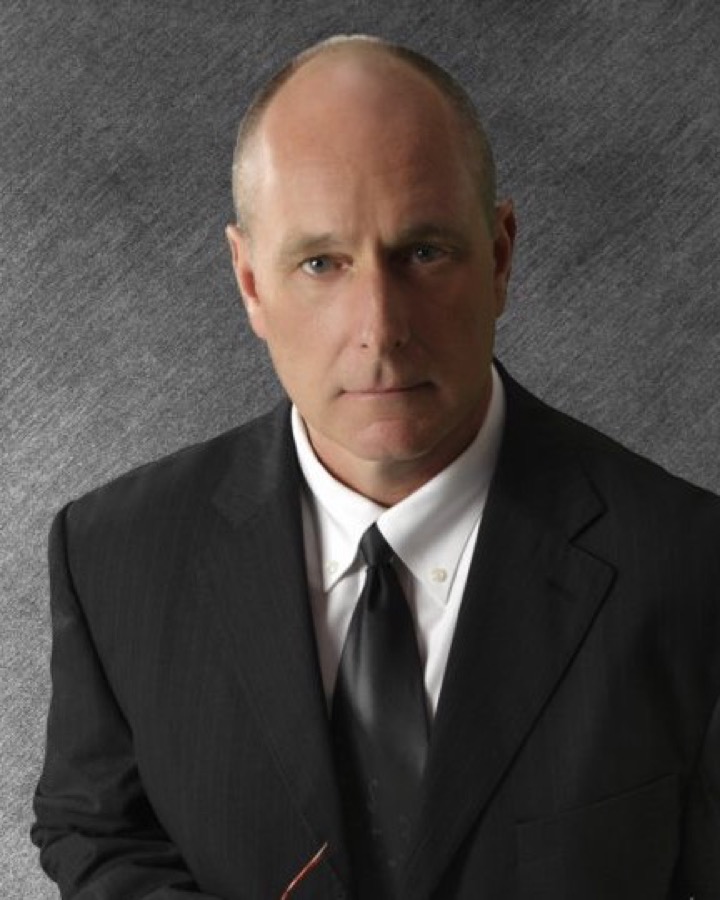 CEO & Owner
Thirty-eight years in four uniforms: street cop, soldier, professor, investigator. More than 220 matters in 42 states and D.C. since 2014, with testimony that has not been excluded at trial in any state or federal court.
Full biography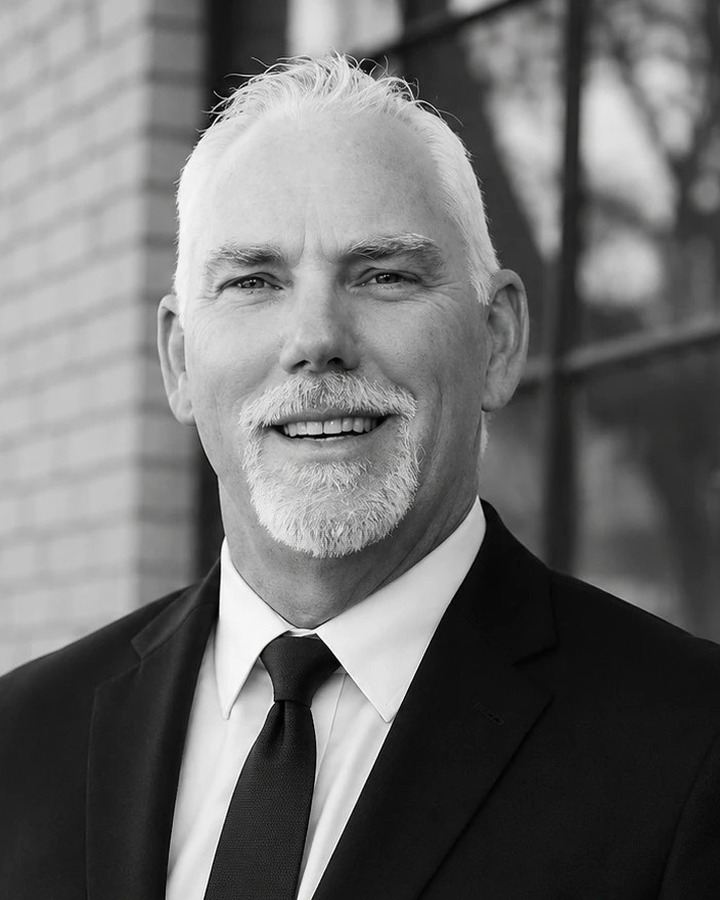 Consultant
More than thirty-five years in public safety: twelve years and three terms as the elected Sheriff of Lewis County, Washington, and six years a commissioner of the state board that sets peace-officer training standards.
Full profile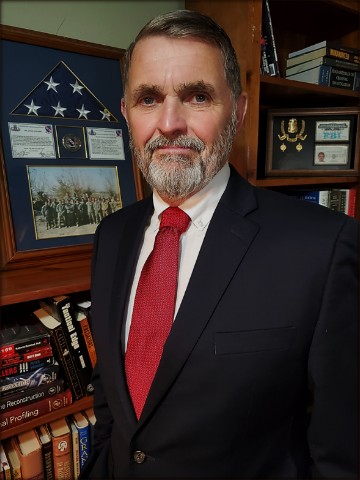 Consultant
Forty years of investigative casework, from patrolman in St. Louis County to the FBI in Chicago, and on to task forces in Afghanistan and Liberia. His work on the Idaho student murders is examined in Broken Plea, the New York Times bestseller by Christopher Whitcomb.
Full profileNever excluded. Professor Gilbertson’s testimony has not been excluded at trial in any state or federal court.
The Hon. Richard A. Jones United States District Judge“Mr. Gilbertson’s qualifications demonstrate extensive experience in policing. His expansive work as a police officer in Georgia, with assignments as a SWAT team officer, juvenile court investigator, school resource officer, stakeout squad officer, senior patrolman, and patrolman; then a career as a tenured college professor and university lecturer teaching criminal justice courses to degree-seeking students at colleges and universities, and as a licensed private investigator conducting felony pretrial investigations for attorneys in Washington State in dozens of criminal cases, makes him unique in the field of police expert witnesses. The Court finds that, based on his experience, Mr. Gilbertson’s testimony can be expected to have a reliable basis in knowledge and experience of police practices.”
A curated record beats a document dump.
Every opinion in a police practices engagement rests on the complete record: video, reports, statements, depositions, training files and agency policy, measured against state and federal statutes, case law, reputable academic research and national police standards, on the totality of the facts and circumstances. The record is the raw material of the analysis. What counsel sends is what the opinions will stand on, at disclosure, at deposition and at trial.
Complete does not mean indiscriminate. Counsel’s staff curate the file before it ships: they exclude unnecessary or irrelevant material and include the relevant record. A curated file reaches the substance faster, keeps the review moving, and produces a materials-reviewed list that reads cleanly when opposing counsel walks through it at deposition.
A document dump does the opposite. It spends review hours on duplicates and dead ends, buries the exhibits that matter, and blurs the line between what was considered and what merely arrived in a box. Whether the analysis truly needs everything is a fair question with a short answer: the opinions are only as strong as the record beneath them. The longer answer, including what missing items do to an opinion, lives at does the expert need the complete record.
The investigative core: items one through five.
The first five items carry the investigation itself: what the incident produced, what the investigators wrote, and what the people who were there said under oath. Most of the review hours are spent here.
Autopsy reports and photos, reviewed as part of the record.
In a death case, the autopsy file fixes the physical facts the chronology has to respect: what the examiners documented, when, and in what condition the evidence reached them. It is reviewed as part of the record; the medical and scientific questions it raises are deferred to qualified experts in those disciplines, on the record, and the report says so explicitly. Without this item, the analysis of a fatal encounter leans on secondhand summaries of the physical evidence, and opposing counsel will ask why.
Forensic evidence documents and reports.
Laboratory submissions, evidence logs and examiner findings establish what physical evidence exists, how it was collected and how it was handled. The analysis reads these documents for consistency: whether the physical evidence, the written reports and the officer accounts describe the same event. Scientific interpretation is deferred to qualified experts, on the record. Absent this item, consistency questions between the physical evidence and the paperwork simply go unasked, which is precisely where deficient investigations hide.
Police and internal affairs investigation reports.
The agency’s own account of the incident, and its own review of the conduct afterward. These reports show what the investigating officers documented at the time, what questions internal affairs asked, which questions it did not, and what the agency concluded about its own people. The analysis measures that work against generally accepted investigative practices. Without the reports there is no way to compare what officers did with what their agency later said about it, and supervision and discipline questions lose their paper trail.
Independent agency investigation reports.
Where an outside agency reviewed the incident, its report gives the analysis a second account to reconcile against the department’s own. Agreement is informative; divergence is more so. The points where an independent review and an internal review part company usually mark the questions a jury will eventually hear. Missing this item leaves a single-source record, and a single-source record hides exactly the discrepancies a review of the investigation is retained to find.
Officer and civilian witness statements and deposition transcripts.
The recorded and sworn accounts of the people who were there, and the transcripts showing how those accounts held up under examination. The analysis reconciles statements against the video, the reports and each other, and it tracks how versions evolve between a first interview and a deposition taken a year later. Without this item the chronology is built from paperwork alone, and the shifts between accounts, often the most probative material in the file, never surface.
Policy, training and the law: items six through ten.
Relevant agency policies and procedures.
Policy is the yardstick the agency set for itself. The analysis measures conduct against the policies in force on the date of the incident: use of force, pursuit, reporting, supervision, whichever provisions the case implicates. Policy also anchors the comparison to national standards, because what an agency wrote can itself fall short of generally accepted practice. Without the manual, opinions about whether officers followed their own rules have nothing to attach to, and the gap between policy and practice cannot be examined.
Body-worn, dash and surveillance camera video.
Video is usually the closest thing the record holds to a neutral witness. It fixes sequence, timing and positioning, and it disciplines every other account in the file, including the ones written before anyone knew video existed. The analysis views it against the reports and statements, anchored to what was known at the time rather than to hindsight. When footage exists and is not produced, the materials-reviewed list announces the gap to everyone who reads it.
Involved-officer training and disciplinary records.
What the officer was taught, when, by whom, and how the agency responded to prior conduct. Training records connect conduct in the field to the instruction the agency actually delivered, which is the spine of failure-to-train analysis; disciplinary history bears on supervision and notice. What training records reveal walks the item in depth. Its absence costs the analysis the link between what happened and what the agency trained and tolerated.
Relevant state and federal case law.
Counsel supplies the controlling law of the jurisdiction, and the analysis applies police practices standards inside that frame. In use-of-force matters, Graham v. Connor, 490 U.S. 386 (1989) supplies the governing questions: the severity of the crime, the immediacy of the threat, active resistance and attempted flight, judged on the totality of the facts and circumstances. Legal conclusions remain counsel’s; the expert addresses police practices. This item keeps both lanes aligned to the same authorities, so the report speaks to the standard the court will actually apply.
Relevant state and federal jury instructions.
Instructions show how the issues will be phrased for the factfinder. Reviewing them keeps the report’s opinions aligned with the questions the jury will actually answer, in the vocabulary the courtroom will use, rather than in the abstract language of policy manuals. Omit them and the report risks arguing past the verdict form: technically sound, practically beside the point.
Context and the catch-all: items eleven through thirteen.
Crime scene photos.
Distances, lighting, sight lines, and the positions of vehicles, objects and evidence markers. Scene photographs ground the spatial claims that run through every statement: where people stood, what an officer could see from where, how far apart the parties were when decisions were made. The analysis tests those claims against the documented scene. Without photographs, spatial assertions float free of the physical world, and cross-examination about them becomes guesswork instead of measurement.
Client or victim criminal history.
History matters twice. It bears on what the officers knew or could have known at the time of the encounter, and it maps the impeachment terrain retaining counsel will have to manage at trial. The analysis weighs it the way the governing standard does: facts unknown to the officers at the scene cannot justify their decisions after the fact, and facts they did know are part of the totality. Sending it early avoids surprises later, on either side of the caption.
Other discovery as requested.
The catch-all that keeps the file open. Dispatch and CAD records, use-of-force reports, additional photographs: whatever the specific case makes relevant once review begins. As the analysis proceeds, targeted requests follow, and they are easier to frame and faster to fulfill when the first twelve items arrived complete. A thorough first production makes the thirteenth item short.
How the record travels.
After retention, the full record travels on physical media: a computer flash drive or external hard drive, sent by mail or courier. Dropbox and similar online sharing services are not used, and privileged material is never exchanged by email. Nothing privileged should accompany a first inquiry either; the conflict check comes before any substantive material moves.
The rule is not a quirk. One drive means one boundary around the engagement: a single defined production, a materials list that matches it, and a clean answer to the deposition question of what the expert received and when. Assembling a drive also forces the curation a shared folder never requires; nobody accidentally syncs a privileged memo onto physical media.
Timing follows the same logic. Work begins once discovery has been received on physical media, and expert reports require sixty days of advance notice, so the date the drive ships is a litigation date, not a clerical one. Once it arrives, review starts by building the record chronology, the timeline every later opinion sits on.
Reports required in less than sixty days incur a 25% upcharge. The drive date, not the retention date, is what starts the work.
When the question becomes a retention.
This page is reference. When a live matter needs the analysis, these are the doors.
Asked alongside this one.
What discovery does a police practices expert need in a police case?
How is the discovery file sent to the expert?
Should counsel send the entire case file or a curated record?
What does retention cost?
Bring the matter behind the question.
Attorney inquiries are answered directly. If a case presents a conflict, you will hear it immediately.
Inquiry sent.
You will hear back directly. If the matter is urgent, call (239) 571-1840.
Conflicts are checked before any substantive discussion. Please do not send privileged material with a first inquiry; after retention the record is exchanged on physical media. Gregory consults for attorneys and their staff only, and does not provide legal advice or attorney referrals to individuals.