

The Totality of the Circumstances,
Read in Sequence
Direct line: (239) 571-1840 · GregoryGilbertson@proton.me
Attorney and law-firm inquiries only
Courts weigh use of force on the totality of the circumstances. In practice that phrase decides how a case gets analyzed: the whole record, in order, from the first dispatch keystroke to the final frame of video, rather than a single still image argued in both directions.
Three experts. Over 110 years.
Professor Gregory Gilbertson (Ret.), FBI Special Agent Christopher Holland (Ret.), and Sheriff Robert Snaza consult with attorneys nationwide regarding police practices and procedures, use of force, false arrest, police misconduct, criminal, and self-defense casework.
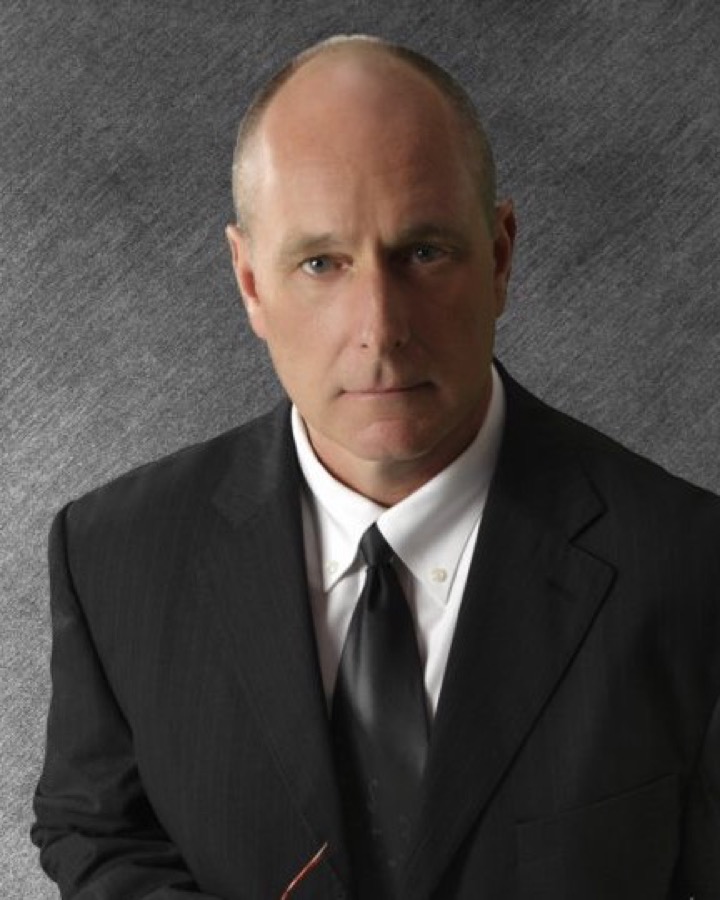 CEO & Owner
Thirty-eight years in four uniforms: street cop, soldier, professor, investigator. More than 220 matters in 42 states and D.C. since 2014, with testimony that has not been excluded at trial in any state or federal court.
Full biography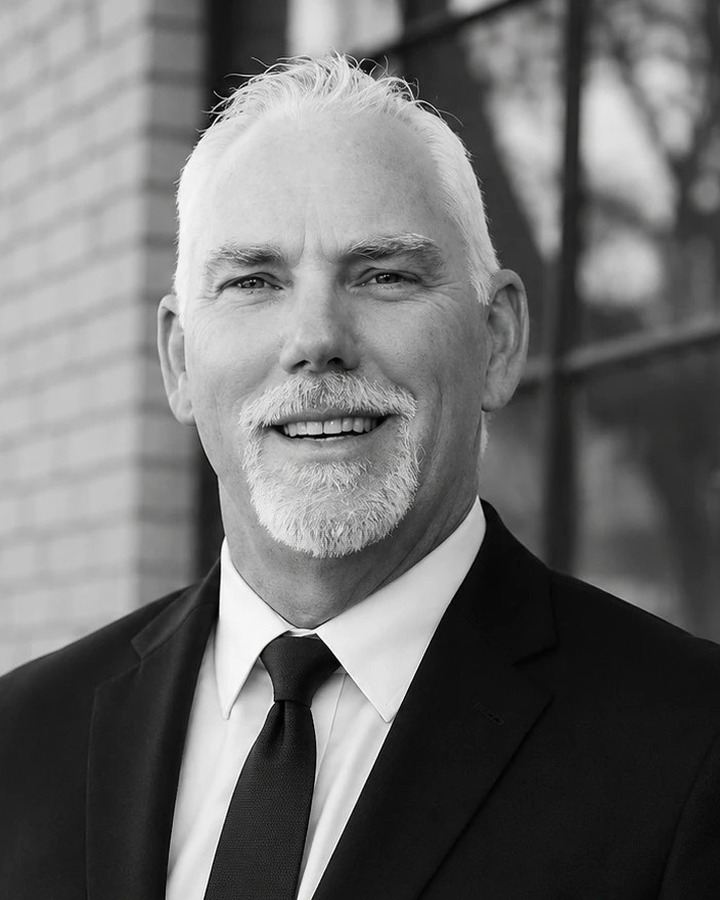 Consultant
More than thirty-five years in public safety: twelve years and three terms as the elected Sheriff of Lewis County, Washington, and six years a commissioner of the state board that sets peace-officer training standards.
Full profile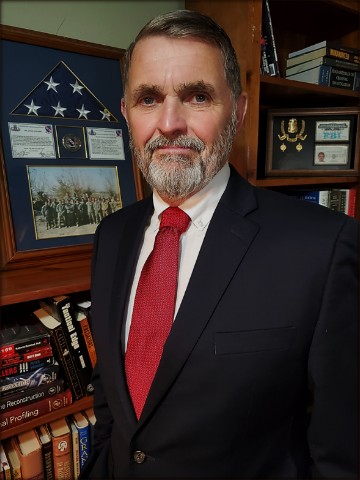 Consultant
Forty years of investigative casework, from patrolman in St. Louis County to the FBI in Chicago, and on to task forces in Afghanistan and Liberia. His work on the Idaho student murders is examined in Broken Plea, the New York Times bestseller by Christopher Whitcomb.
Full profileNever excluded. Professor Gilbertson’s testimony has not been excluded at trial in any state or federal court.
The Hon. Richard A. Jones United States District Judge“Mr. Gilbertson’s qualifications demonstrate extensive experience in policing. His expansive work as a police officer in Georgia, with assignments as a SWAT team officer, juvenile court investigator, school resource officer, stakeout squad officer, senior patrolman, and patrolman; then a career as a tenured college professor and university lecturer teaching criminal justice courses to degree-seeking students at colleges and universities, and as a licensed private investigator conducting felony pretrial investigations for attorneys in Washington State in dozens of criminal cases, makes him unique in the field of police expert witnesses. The Court finds that, based on his experience, Mr. Gilbertson’s testimony can be expected to have a reliable basis in knowledge and experience of police practices.”
The whole record, in sequence.
Graham v. Connor, 490 U.S. 386 (1989) supplies the three enumerated factors that structure a use-of-force analysis, but the touchstone it announces is broader: reasonableness is judged on the totality of the circumstances. The factors organize the inquiry; they do not confine it. Anything a reasonable officer on the scene would have weighed belongs in the picture, and anything learned only afterward does not. The factor-by-factor framework the totality feeds is covered in Graham v. Connor explained for litigators.
In practice, totality means the whole record, in sequence: from the first keystroke in the dispatch record to the final frame of video, in the order the officers experienced it. A force decision extracted from that sequence and judged as an isolated moment is not being judged on the totality of anything, no matter how carefully the isolated moment is described.
Totality is sometimes described as if it made the standard soft, a phrase that lets anything in and decides nothing. It does the opposite. A standard that requires the whole picture forbids the convenient subset: the plaintiff’s worst single frame, and the defense’s final two seconds. Both are partial records. A totality analysis treats them identically, as incomplete, and replaces both with the full sequence.
What goes into the totality.
The totality is not a mood. It is a list of knowable facts, each with a document behind it, and most disputes about what really happened are settled by which documents were gathered. A disciplined analysis accounts for at least the following, in time order:
- What the officers were told before arriving: the 911 call, the dispatch broadcast, and the CAD narrative, which frame the threat picture before the first direct observation
- What the scene presented on arrival: lighting, terrain, distances, cover, and who was present besides the subject
- Subject behavior over time: compliance, noncompliance, resistance, and flight as a sequence with a start and an end, not a single label
- Numbers and roles: how many officers were present, when each arrived, and what each was doing
- Available alternatives: time, distance, cover, communication, and the options the officers’ own training placed on the table
- Supervision: whether a supervisor was on scene, en route, or directing the encounter by radio
- Training and policy: what the agency taught and required for exactly the picture the officers faced
Every one of those items is discoverable. The dispatch audio, the CAD export, the body-worn and surveillance video, the written reports, the witness statements, the training files, and the policy manual are the raw material of the analysis. That is why the completeness of the record is not a luxury in a totality analysis; it is the analysis. The published list of what to gather is described in the discovery file counsel assembles.
Distances deserve special attention. They change second by second, they drive threat assessment, and fixing them in time, from synchronized video read in sequence beside scene measurements, reports, and statements, is central to the analysis.
Two clocks: the event and the record.
A totality analysis runs on two clocks. The first is the event clock: the encounter as it unfolded for the officers, judged without hindsight, on the information actually held as each second passed. The second is the record clock: the file assembled afterward in discovery, out of materials created before, during, and after the event, in no particular order and by many different hands.
The expert reads the second clock to establish the first. Laying the record end to end, in strict time order, produces a chronology of what the officers knew and when they knew it, and the no-hindsight rule is then applied to that chronology. Materials created later, depositions above all, are used for what they establish about the moment, never as a channel for facts no one on the scene could have known.
Building that chronology is craft, not clerical work. Sources carry different clocks, and they disagree: camera time, CAD time, and the times written into reports rarely align to the second. The analysis synchronizes them against fixed common events, so that every entry in the timeline carries a source and a defensible timestamp. Where two sources cannot be squared, the disagreement is stated as a finding rather than silently resolved in either side’s favor.
The two clocks discipline both sides. Hindsight cannot inflate what the officers knew, and after-the-fact justification cannot inflate it either. The chronology holds everyone to the same timeline.
Freeze frames, and how they mislead.
The most common failure in force litigation is the cherry-picked still: a single frame offered as the whole story. Both sides do it, and both sides pay for it when the full sequence arrives. One frame can make a person mid-fall look like a person lunging; another can make an officer’s retreat look like an advance. A still image answers where, and sometimes what. It almost never answers when, in what order, or in response to what.
The same failure has a text version. A deposition line quoted without the question that produced it, a report sentence detached from the paragraph that qualifies it, a radio transmission played without the transmissions around it: each is a freeze frame in words. The remedy is identical in every medium, restoring the item to its place in the sequence and reading it there.
The antidote is method: every source placed on a single timeline, video synchronized against dispatch audio and CAD stamps, and each disputed moment read in its full sequence. That method is described in building the record chronology. It is the difference between an opinion about an incident and an opinion about a photograph.
Reading the record in the direction it happened.
The working discipline is to read forward, never backward. The analysis starts at the earliest record entry, usually the 911 call or the first dispatch keystroke, and moves toward the use of force in strict order, asking three questions at each decision point: what was known, what options did training prescribe for exactly that picture, and what was actually done. The answers accumulate, and by the time the analysis reaches the moment of force, the totality is already on the table.
- Start at the first record entry, not at the use of force
- At each decision point, fix what the officers knew from the documents, not from memory alone
- Match each point against the training and policy in force on that date
- Flag every fact that entered the record only after the event, and keep it out of the reasonableness picture
- Carry alternatives forward: options that existed at one point and disappeared at another are findings, not background
Read this way, de-escalation stops being a slogan and becomes measurable: time that was or was not taken, distance that was or was not kept, cover that was or was not used, help that was or was not requested. What the national standards actually require on that score is treated separately in de-escalation standards and what they require.
What totality means for the engagement.
For retaining counsel, the practical consequence is simple: the expert needs the whole record, not the highlights. An opinion built on a partial file inherits the partiality, and opposing counsel will find the gap at deposition. The review therefore does not begin until the record counsel has assembled arrives, and gaps identified during review become document requests, not assumptions. Early preservation matters most for the perishable items: dispatch audio, CAD exports, and every second of video from every camera.
The opinion that results addresses police practices on the totality of the facts and circumstances: what the officers knew, what training and policy prescribed, and whether the documented conduct followed generally accepted practices. Whether the force was reasonable in law remains a question for the court and the trier of fact, and legal conclusions remain counsel’s. The record decides which side the analysis favors, and the analysis is built the same way for both.
When the question becomes a retention.
This page is reference. When a live matter needs the analysis, these are the doors.
Asked alongside this one.
What does the totality of the circumstances include in a force case?
How can an analysis use materials created after the incident without hindsight?
Why are freeze frames a problem if the video is accurate?
Bring the matter behind the question.
Attorney inquiries are answered directly. If a case presents a conflict, you will hear it immediately.
Inquiry sent.
You will hear back directly. If the matter is urgent, call (239) 571-1840.
Conflicts are checked before any substantive discussion. Please do not send privileged material with a first inquiry; after retention the record is exchanged on physical media. Gregory consults for attorneys and their staff only, and does not provide legal advice or attorney referrals to individuals.