

Daubert, Rule 702, and
police practices testimony.
Direct line: (239) 571-1840 · GregoryGilbertson@proton.me
Attorney and law-firm inquiries only
Opposing counsel does not have to disprove an expert’s opinions to beat them; a successful motion to exclude means the jury never hears them. This page explains the Rule 702 gate at practitioner level and how experience-based police practices testimony is built to pass through it.
Three experts. Over 110 years.
Professor Gregory Gilbertson (Ret.), FBI Special Agent Christopher Holland (Ret.), and Sheriff Robert Snaza consult with attorneys nationwide regarding police practices and procedures, use of force, false arrest, police misconduct, criminal, and self-defense casework.
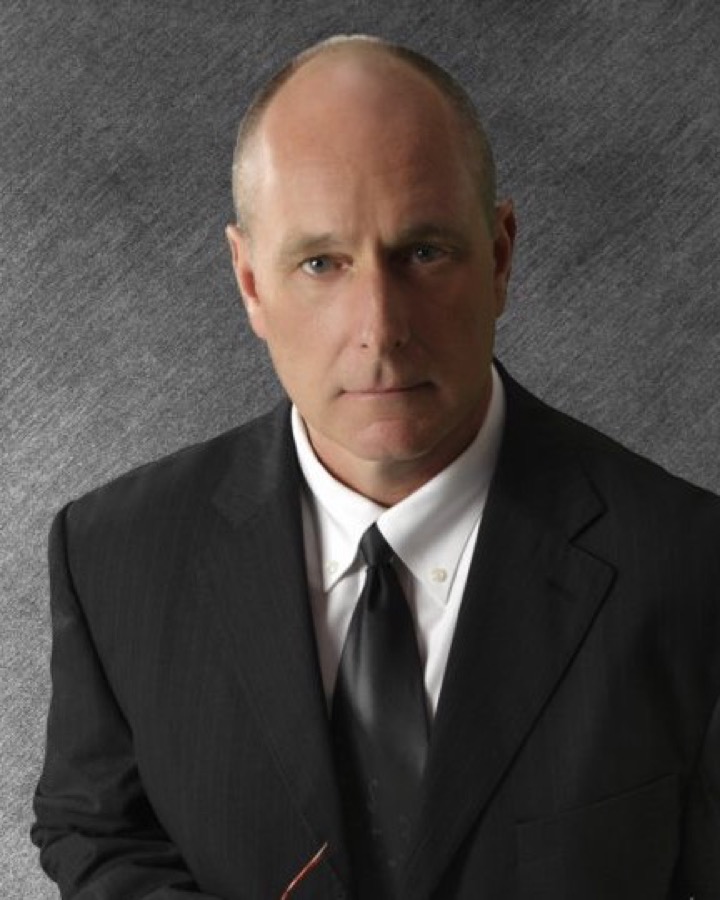 CEO & Owner
Thirty-eight years in four uniforms: street cop, soldier, professor, investigator. More than 220 matters in 42 states and D.C. since 2014, with testimony that has not been excluded at trial in any state or federal court.
Full biography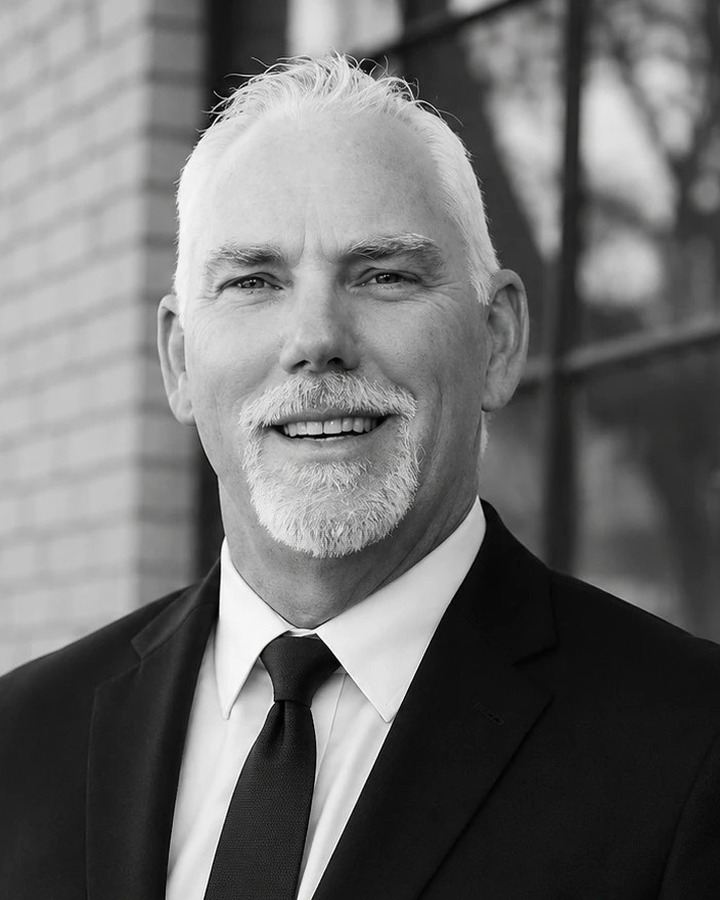 Consultant
More than thirty-five years in public safety: twelve years and three terms as the elected Sheriff of Lewis County, Washington, and six years a commissioner of the state board that sets peace-officer training standards.
Full profile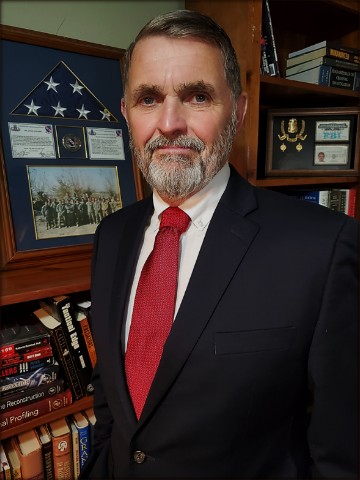 Consultant
Forty years of investigative casework, from patrolman in St. Louis County to the FBI in Chicago, and on to task forces in Afghanistan and Liberia. His work on the Idaho student murders is examined in Broken Plea, the New York Times bestseller by Christopher Whitcomb.
Full profileNever excluded. Professor Gilbertson’s testimony has not been excluded at trial in any state or federal court.
The Hon. Richard A. Jones United States District Judge“Mr. Gilbertson’s qualifications demonstrate extensive experience in policing. His expansive work as a police officer in Georgia, with assignments as a SWAT team officer, juvenile court investigator, school resource officer, stakeout squad officer, senior patrolman, and patrolman; then a career as a tenured college professor and university lecturer teaching criminal justice courses to degree-seeking students at colleges and universities, and as a licensed private investigator conducting felony pretrial investigations for attorneys in Washington State in dozens of criminal cases, makes him unique in the field of police expert witnesses. The Court finds that, based on his experience, Mr. Gilbertson’s testimony can be expected to have a reliable basis in knowledge and experience of police practices.”
What Rule 702 actually asks.
Fed. R. Evid. 702 puts four questions to every proffered expert: whether the witness is qualified by knowledge, skill, experience, training or education; whether the testimony will help the trier of fact; whether it rests on sufficient facts or data; and whether it is the product of reliable principles and methods, reliably applied to the facts of the case. Daubert v. Merrell Dow Pharmaceuticals, Inc., 509 U.S. 579 (1993) assigned trial judges the gatekeeping role: before an opinion reaches the jury, the court satisfies itself that the opinion is more than credentialed assertion.
Practitioners usually compress the inquiry into three words: qualification, reliability, fit. Qualification asks whether this witness, on this subject, knows something an ordinary juror does not. Reliability asks whether the method that produced the opinion can be examined against something outside the expert’s own say-so. Fit asks whether the opinion bears on a disputed issue in the case rather than floating above it.
Fit deserves more attention than it usually gets in police cases. An opinion grounded in generally accepted police practices helps the jury evaluate conduct it has no professional frame for: how officers are trained to approach a stop, what agency policy required, what national standards treat as accepted practice. An opinion that announces which party should win, or that conduct was unconstitutional, is not police practices testimony; it is a legal conclusion wearing an expert caption, and it draws the motion. Scope discipline is fit insurance.
Rule 702 challenges are decided on written motions more often than live hearings, which makes the expert’s report the main exhibit. A report built line by line from the record is the strongest Daubert posture an expert can hand counsel.
Kumho Tire and the experience-based expert.
Daubert itself concerned scientific evidence, which left open how far the gatekeeping obligation reached. In Kumho Tire Co. v. Carmichael, 526 U.S. 137 (1999), the Supreme Court closed the question: the gate applies to all expert testimony, including technical and other specialized knowledge, and including opinions that rest on professional experience rather than laboratory method.
Kumho Tire cuts both ways for an experience-based witness. It confirms that a police practices expert does not need error rates or peer-reviewed testing to be admitted, because the reliability inquiry is flexible and the Daubert factors are illustrations rather than a checklist. It also strips away the easy answer: experience alone is not a method. Decades in the field qualify a witness to hold opinions; they do not, by themselves, make any particular opinion reliable. The witness must be able to show how the experience connects to the conclusion, step by step, in a way the court can inspect.
That is the actual battleground in most police practices Daubert motions. The challenge rarely claims the witness knows nothing about policing. It claims the witness skipped from resume to opinion without a method in between.
How a police practices opinion earns reliability.
The method that survives inspection is not mysterious. It starts with the complete record: video, reports, witness statements, deposition transcripts, training files and agency policy, reviewed in full rather than curated for comfort. The record is then measured against identifiable, external standards: controlling case law such as Graham v. Connor, 490 U.S. 386 (1989) on use-of-force questions, the agency’s own written policy in force on the date of the incident, and the national standards, model policies and training curricula, from bodies such as the IACP, PERF and state POST commissions, that inform what generally accepted police practices are.
Three disciplines keep the method inside the gate. The analysis is anchored to what was known at the time, because Graham forbids hindsight. It is applied the same way in every case, whichever side retains the expert, so opposing counsel cannot show the method bending toward the client. And it stays inside the witness’s discipline: where the record raises medical, scientific, technical or human factors questions, qualified experts in those disciplines are deferred to, on the record.
- Every opinion is cited to the record it rests on: the page, the timestamp, the policy provision.
- Standards are identified by name, so the court can verify they exist outside the report.
- The same standards apply whether the retention comes from plaintiff’s counsel or the defense.
- Contrary evidence is addressed rather than omitted; an opinion that ignores half the record invites the motion.
- Conclusions stay inside police practices; legal conclusions remain counsel’s.
How the challenge usually arrives.
A Daubert challenge is usually assembled in deposition before it is ever filed as a motion. Opposing counsel walks the expert through each opinion, asking the reliability questions in plain clothes: what was reviewed, what standard applies, where that standard is written, how this record produced that conclusion, what evidence would change it. Answers that begin with the record and end with an identifiable standard close doors. Answers that begin and end with professional experience open them.
The motion then presents the weakest deposition answers as if they were the whole method. That is why preparation for the examination is part of the engagement rather than an extra, and why the report is written so that every opinion can be traced without the witness in the room.
Counsel retaining an expert can pressure-test the file before the other side does. Three requests surface most problems while there is still time to fix them.
- Ask for the method in one paragraph: record in, standards applied, opinions out. A method that cannot be stated plainly cannot be defended plainly.
- Ask which named standards support each principal opinion, and read them; a standard asserted without a source is the motion’s favorite exhibit.
- Ask what in the record cuts against each opinion and how the report handles it; the answer previews the cross-examination before it is taken.
One court’s answer, on the record.
Counsel weighing Daubert exposure should ask a concrete question: has a court already examined this witness’s qualifications and method, and what did it say. For this practice the answer is on the record. Ruling on a motion to exclude Professor Gilbertson’s testimony in federal civil rights litigation in the U.S. District Court for the Western District of Washington, the court reviewed his qualifications and experience and allowed the testimony to proceed. The court’s ruling in Alvarez v. King County is reproduced in the judge’s own words under judicial recognition on the homepage.
The broader record extends beyond one ruling. Professor Gilbertson’s testimony has not been excluded at trial in any state or federal court, across an expert practice running since 2014 and more than 220 civil rights and criminal cases in 42 states and the District of Columbia. What that sentence claims, and what it deliberately does not, is treated in what never excluded at trial means.
For the qualification prong, the full CV and the testimony record go to retaining counsel on request, so the foundation exhibits for an admissibility fight are assembled before any challenge arrives.
What no expert can promise, and what counsel controls.
No expert can promise admissibility, and counsel should be wary of one who does. Retaining counsel is responsible for the admissibility of reports and testimony: the motion practice, the briefing and the evidentiary record for any hearing are legal work. What the expert controls is narrower and decisive: the method, the scope discipline and a report sourced to the record line by line.
The practice supports that division of labor as a listed engagement form. Rule 702 and Daubert preparation sits within scope alongside reports, depositions and trial testimony: reviewing the disclosed opinions against the anticipated challenge, assembling the record citations that answer it, and preparing for the deposition where the challenge is usually built. How those examinations actually run is covered in how expert depositions run.
Two planning notes follow from the gate. Expert reports require sixty days of advance notice, and a rushed report is the most common self-inflicted Daubert wound, so the sixty-day rule protects the opinion as much as the calendar. And because the report is the main exhibit in most challenges, the disclosure obligations of Fed. R. Civ. P. 26(a)(2)(B) are worth reading alongside this page; they are explained in Rule 26 expert disclosures.
The division of labor holds at the hearing itself. Where a court decides a Rule 702 motion on the briefs, the briefing is counsel’s. Where the court wants the witness examined, the witness answers on method, exactly as at deposition. An expert whose method does not change with the retaining party answers those questions the same way in every courtroom, and that consistency is the quiet advantage the gate rewards.
When the question becomes a retention.
This page is reference. When a live matter needs the analysis, these are the doors.
Asked alongside this one.
Can experience-based police practices testimony survive a Daubert challenge?
Who is responsible for the admissibility of an expert report and testimony?
What makes a police practices opinion vulnerable under Rule 702?
What does retention cost?
Bring the matter behind the question.
Attorney inquiries are answered directly. If a case presents a conflict, you will hear it immediately.
Inquiry sent.
You will hear back directly. If the matter is urgent, call (239) 571-1840.
Conflicts are checked before any substantive discussion. Please do not send privileged material with a first inquiry; after retention the record is exchanged on physical media. Gregory consults for attorneys and their staff only, and does not provide legal advice or attorney referrals to individuals.