

The expert deposition,
start to finish.
Direct line: (239) 571-1840 · GregoryGilbertson@proton.me
Attorney and law-firm inquiries only
Expert depositions in this practice run on a published schedule: taken by Zoom or a similar platform, prepared against the record, paid seven days ahead. Here is how the process runs, whether counsel is defending the deposition or taking it.
Three experts. Over 110 years.
Professor Gregory Gilbertson (Ret.), FBI Special Agent Christopher Holland (Ret.), and Sheriff Robert Snaza consult with attorneys nationwide regarding police practices and procedures, use of force, false arrest, police misconduct, criminal, and self-defense casework.
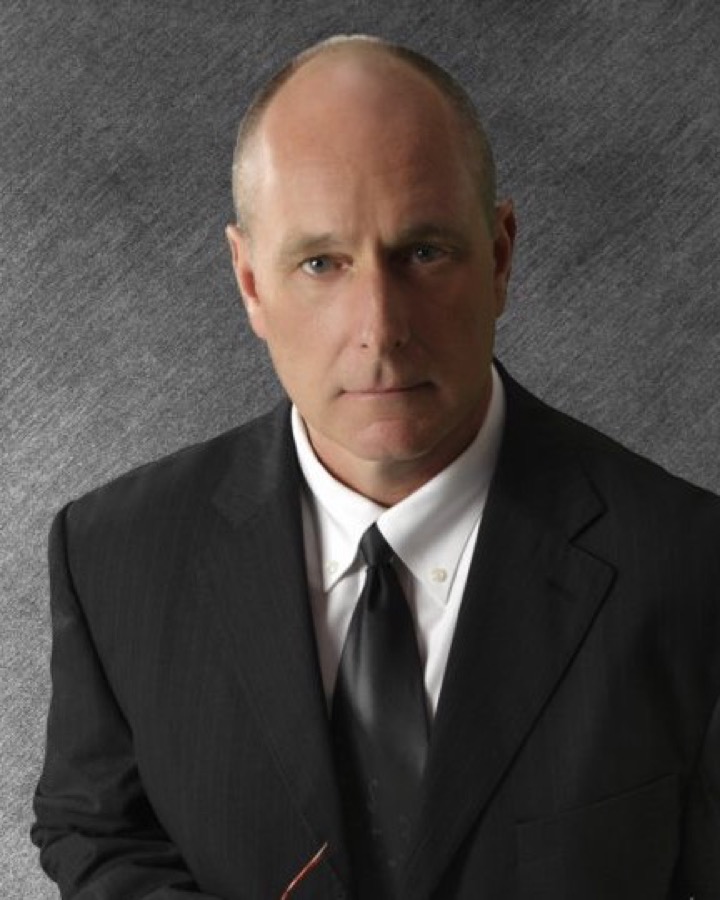 CEO & Owner
Thirty-eight years in four uniforms: street cop, soldier, professor, investigator. More than 220 matters in 42 states and D.C. since 2014, with testimony that has not been excluded at trial in any state or federal court.
Full biography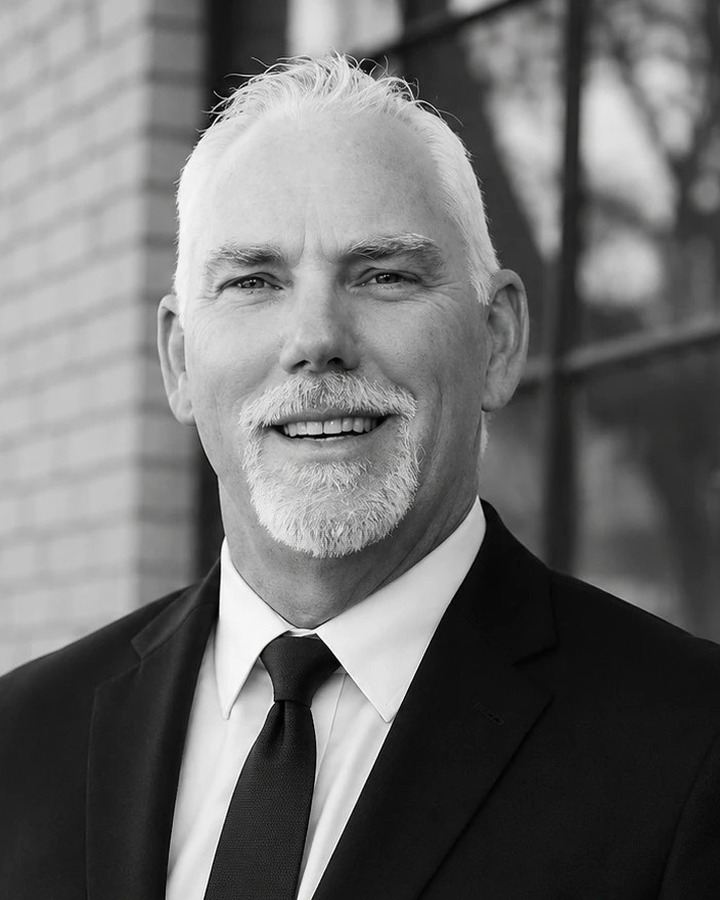 Consultant
More than thirty-five years in public safety: twelve years and three terms as the elected Sheriff of Lewis County, Washington, and six years a commissioner of the state board that sets peace-officer training standards.
Full profile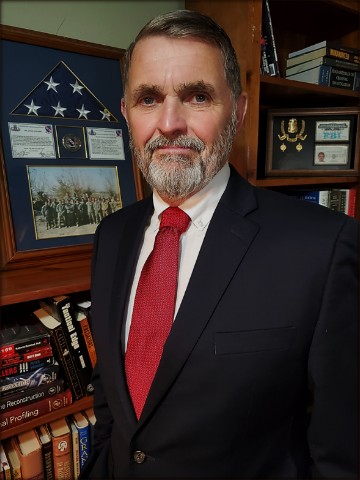 Consultant
Forty years of investigative casework, from patrolman in St. Louis County to the FBI in Chicago, and on to task forces in Afghanistan and Liberia. His work on the Idaho student murders is examined in Broken Plea, the New York Times bestseller by Christopher Whitcomb.
Full profileNever excluded. Professor Gilbertson’s testimony has not been excluded at trial in any state or federal court.
The Hon. Richard A. Jones United States District Judge“Mr. Gilbertson’s qualifications demonstrate extensive experience in policing. His expansive work as a police officer in Georgia, with assignments as a SWAT team officer, juvenile court investigator, school resource officer, stakeout squad officer, senior patrolman, and patrolman; then a career as a tenured college professor and university lecturer teaching criminal justice courses to degree-seeking students at colleges and universities, and as a licensed private investigator conducting felony pretrial investigations for attorneys in Washington State in dozens of criminal cases, makes him unique in the field of police expert witnesses. The Court finds that, based on his experience, Mr. Gilbertson’s testimony can be expected to have a reliable basis in knowledge and experience of police practices.”
The published mechanics.
The deposition fee is a $3,500 flat fee per expert, taken by Zoom or a similar platform, covering preparation and five hours of examination. Examination beyond five hours is billed at $500 per hour in quarter-hour increments. The figures are published, so noticing the deposition never opens a fee negotiation, and neither side spends a motion arguing about rates.
The structure serves both sides of the table. Deposing counsel knows the full cost before the notice goes out. Defending counsel budgets preparation without an open meter. Quarter-hour increments mean an examination that runs long is billed by the clock actually used, not rounded up to the next full hour, which keeps the overage honest in both directions.
Five hours of examination is enough for a thorough run at a police practices report, and most examinations fit inside it. When one does not, the increment billing continues on the record and nobody has to stop the deposition to renegotiate terms. The five-hour figure also gives deposing counsel a natural structure for the day: qualifications and record in the morning, opinions and hypotheticals after the break, with the clock visible to everyone.
Counsel planning a budget can treat the minimum as the whole number in the ordinary case: preparation and examination are both inside it, and a remote examination adds no travel costs for either side. The published figure is the planning figure. When a matter needs several experts deposed, that predictability compounds; every expert deposition in the case can be costed before the first notice is served.
Payment, timing and who communicates what.
Payment in full is due seven days before the examination, and retaining counsel communicates the fee to opposing counsel. That second clause matters: the expert does not bill the other side, chase the other side, or field the other side’s fee objections. The parties handle allocation between themselves, the way the rules of their forum provide.
The seven-day rule exists so the examination day is about testimony, not accounting. Fee disputes on the morning of a deposition are a familiar piece of litigation friction; prepayment removes the leverage and the drama in one move. If a deposition is canceled or moved, counsel and the practice adjust on the schedule rather than in the middle of it. Seven days is also enough runway to fix a payment problem while rescheduling is still cheap.
Retaining counsel carries the communication burden by design. Opposing counsel hears the fee from the lawyer noticing or defending the deposition, not from the expert, which keeps the expert out of fee conversations entirely. At examination, questions about compensation get short, complete answers, because the schedule is published and the disclosure already stated it; there is nothing to reveal that was not already public.
Which party ultimately bears the cost of deposing a testifying expert is a procedural question with its own answer, and it is one of the first questions newer litigators ask. Who pays for the expert deposition covers the allocation and the practical exceptions.
What the preparation covers.
Preparation is record work. The three hours re-ground the testimony in the report, the record and the opinions and their basis: the chronology checked against the video, each opinion checked against the materials that support it, the exhibits most likely to be marked reviewed again in their original form rather than from memory. The report is the spine of that review: every section of it was built to be defended, and preparation is where that construction pays.
The report frames everything. Testimony stays inside the disclosed opinions, so preparation is not the invention of new positions; it is the rehearsal of sourced ones. An expert who wrote a traceable report prepares by rereading it, which is one of the quiet reasons the report is written that way in the first place. The architecture that makes preparation short is covered in anatomy of a police practices expert report.
Preparation also maps the boundaries. The questions an examination will push toward are predictable, and the answers that keep opinions inside the discipline and inside the record are settled before anyone is on camera, not improvised under oath.
What preparation is not: it is not scripting, and it is not the manufacture of new opinions on the eve of testimony. Nothing said at deposition should be appearing for the first time. If the record has grown since the report was served, the supplemental report is the vehicle for updated analysis, served on paper where it can be read, not introduced live under examination.
What opposing counsel probes.
Examination follows a predictable arc. Qualifications first: education, experience, the history of the practice, what the expert has done and has not done. Then the record: which materials were received, which were reviewed, whether anything was requested and never produced. Then the opinions: the basis for each, the standards applied, and every hypothetical variation counsel can build on the facts.
The record questions deserve respect rather than defensiveness. Which items were received, when the drive arrived, what was requested and never produced: these have exact answers in this practice because the record travels on physical media as one defined production. The materials-reviewed list in the report matches the drive, and the drive has a date. Vague answers about what an expert reviewed are how ordinary depositions go sideways; a defined production makes them unnecessary.
The most productive line for opposing counsel is usually the boundary of the discipline: invitations to opine on medicine, law, or science dressed as follow-up questions. The answer is structural. Where scientific, medical, technical or human factors evidence is involved, qualified experts in those disciplines are deferred to, on the record, and the report said so before the deposition began. An expert who respects that boundary consistently is hard to move, because the concession being hunted, an opinion outside the discipline, never becomes available.
Legal conclusions get the same treatment. Whether force was excessive as a matter of law, whether an arrest was lawful: those questions belong to the court and the jury, and legal conclusions remain counsel’s. The expert addresses police practices: what generally accepted practice required, what the record shows the officers did, and how the two compare. Declining the invitation is not evasion; it is the discipline that keeps the admissible opinions admissible.
Register matters as much as substance. Deposition answers are given the way the report is written: plain declarative sentences, terms of art defined, no reach beyond what the record supports. The transcript is the product of the day, and it will be read at trial by someone hunting for daylight between the testimony and the report. Answers built from the report leave little daylight to find.
Answers stay anchored to the totality of the facts and circumstances and to what was known at the time. A hypothetical that quietly swaps in hindsight gets answered on its own terms, with the swap named. The admissibility fight, if one comes, arrives later and on a different record; Daubert and Rule 702 for police practices testimony covers that stage.
Remote as the practice standard.
Depositions are taken by Zoom or a similar platform as the default, not the exception. Remote examination sets faster: no flights to coordinate, no conference rooms to book across time zones, no travel days blocking three calendars at once. A date that works for both counsel can usually be found inside the discovery window rather than bolted onto the end of it.
Cost follows the same line. Neither side pays travel for a remote deposition, so the $3,500 flat fee is the planning number, and the only variable is examination time beyond the fifth hour, billed in quarter-hour increments. For a nationwide practice based in Naples, Florida, remote by default is what keeps a deposition in a distant district from becoming a travel event that one side has to fund.
Scheduling mechanics stay simple on purpose. Counsel propose dates, the practice confirms availability, and the seven-day payment date falls out of the calendar automatically. Time zones are a footnote rather than an obstacle, and a continuance moves a video call, not a set of plane tickets. Expert scheduling, a chronic source of discovery-calendar slippage, stops being the item that moves the case schedule.
Trial is the deliberate exception. When a matter reaches the courtroom, testimony is given in person, nationwide, on the published trial and travel schedule. Trial testimony and travel nationwide sets out those mechanics, including how travel time is clocked and what is prepaid.
Remote deposition, in-person trial: the two halves of the published schedule are built so distance never decides whether counsel can use the testimony.
When the question becomes a retention.
This page is reference. When a live matter needs the analysis, these are the doors.
Asked alongside this one.
How long does a police expert witness deposition last?
Are expert depositions taken in person or by Zoom?
Can a deposition reach beyond the expert’s disclosed opinions?
What does retention cost?
Bring the matter behind the question.
Attorney inquiries are answered directly. If a case presents a conflict, you will hear it immediately.
Inquiry sent.
You will hear back directly. If the matter is urgent, call (239) 571-1840.
Conflicts are checked before any substantive discussion. Please do not send privileged material with a first inquiry; after retention the record is exchanged on physical media. Gregory consults for attorneys and their staff only, and does not provide legal advice or attorney referrals to individuals.