

Send the whole record.
The opinion depends on it.
Direct line: (239) 571-1840 · GregoryGilbertson@proton.me
Attorney and law-firm inquiries only
Yes, the complete record. Opinions rest on video, reports, statements, depositions, training files and agency policy, taken together. A summary or a curated slice produces an opinion built on someone’s selection, and cross-examination is built to find exactly that gap. Here is what complete means in practice.
Three experts. Over 110 years.
Professor Gregory Gilbertson (Ret.), FBI Special Agent Christopher Holland (Ret.), and Sheriff Robert Snaza consult with attorneys nationwide regarding police practices and procedures, use of force, false arrest, police misconduct, criminal, and self-defense casework.
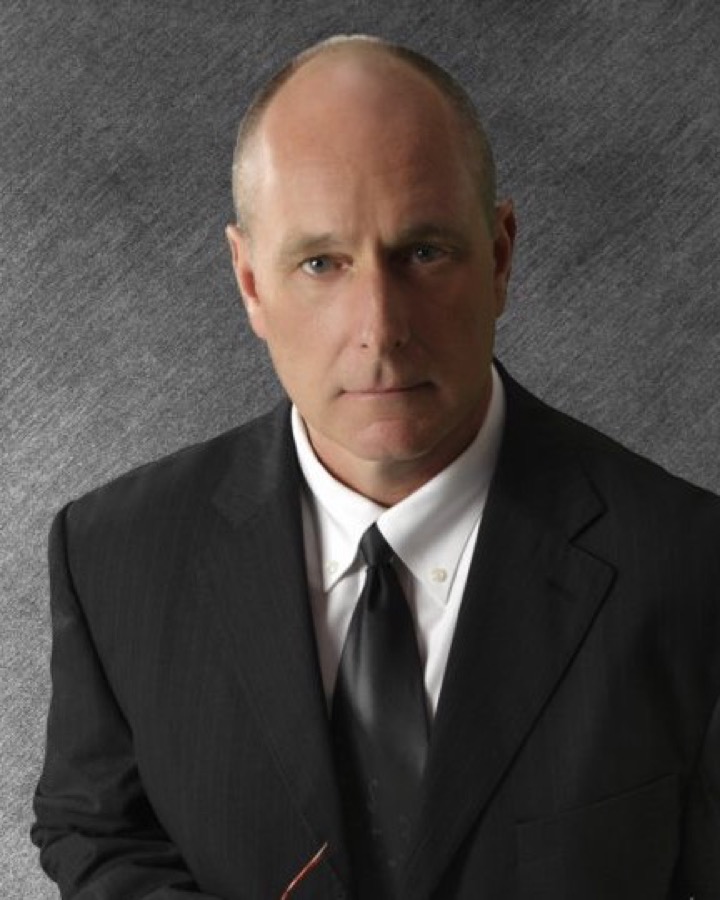 CEO & Owner
Thirty-eight years in four uniforms: street cop, soldier, professor, investigator. More than 220 matters in 42 states and D.C. since 2014, with testimony that has not been excluded at trial in any state or federal court.
Full biography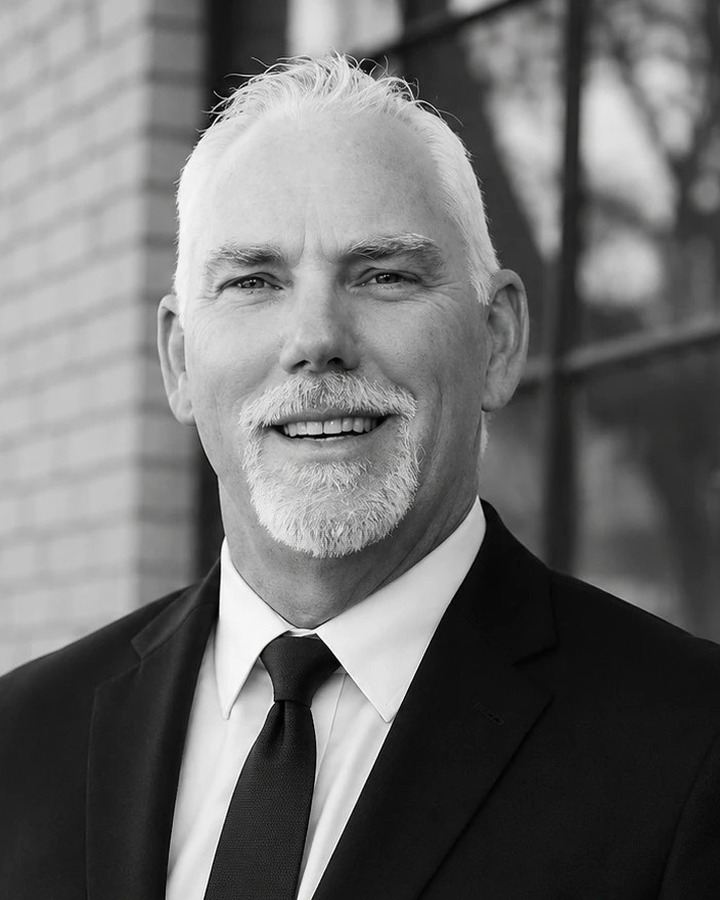 Consultant
More than thirty-five years in public safety: twelve years and three terms as the elected Sheriff of Lewis County, Washington, and six years a commissioner of the state board that sets peace-officer training standards.
Full profile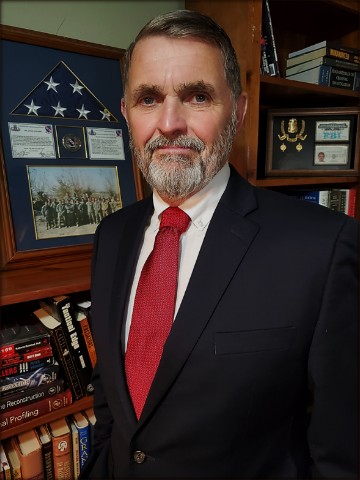 Consultant
Forty years of investigative casework, from patrolman in St. Louis County to the FBI in Chicago, and on to task forces in Afghanistan and Liberia. His work on the Idaho student murders is examined in Broken Plea, the New York Times bestseller by Christopher Whitcomb.
Full profileNever excluded. Professor Gilbertson’s testimony has not been excluded at trial in any state or federal court.
The Hon. Richard A. Jones United States District Judge“Mr. Gilbertson’s qualifications demonstrate extensive experience in policing. His expansive work as a police officer in Georgia, with assignments as a SWAT team officer, juvenile court investigator, school resource officer, stakeout squad officer, senior patrolman, and patrolman; then a career as a tenured college professor and university lecturer teaching criminal justice courses to degree-seeking students at colleges and universities, and as a licensed private investigator conducting felony pretrial investigations for attorneys in Washington State in dozens of criminal cases, makes him unique in the field of police expert witnesses. The Court finds that, based on his experience, Mr. Gilbertson’s testimony can be expected to have a reliable basis in knowledge and experience of police practices.”
Why a summary cannot carry an opinion.
A practices opinion is measured against state and federal statutes, case law, reputable academic research, and national police standards and practices, on the totality of the facts and circumstances. Totality is the load-bearing word. An expert working from a memorandum that summarizes the incident is not analyzing the incident; he is analyzing counsel’s account of it, and the opinion inherits every choice the summary made, including the ones nobody noticed making.
The exposure is mechanical, not theoretical. Under Fed. R. Civ. P. 26(a)(2)(B), the report discloses the facts and data the expert considered, so a thin file shows on the face of the disclosure. The first hour of an expert deposition is usually an inventory: what did you review, what did you not review, who decided what went in the box. An expert who received the complete record answers in a sentence. An expert who worked from a slice spends the deposition defending the selection instead of the opinion.
Completeness also has a sequencing payoff. A full record lets the analysis assemble the incident in order, source by source, before any opinion is formed, and it lets the report state what was considered without an asterisk. How that timeline gets built is covered in building the record chronology.
The discovery file counsel assembles.
Complete does not mean everything the litigation has ever generated. The published discovery list runs thirteen items, and counsel’s staff curate it: unnecessary and irrelevant files are excluded, and the relevant record is delivered once, on physical media, a computer flash drive or external hard drive sent by mail or courier. Dropbox and similar online sharing services are not used, and nothing privileged moves by email. The item-by-item version is in the discovery file counsel assembles.
- The investigations: police and internal affairs investigation reports, plus any independent agency investigation of the incident.
- The people: officer and civilian witness statements, and deposition transcripts.
- The video: body-worn, dash and surveillance camera footage.
- The institution: relevant agency policies and procedures, and involved-officer training and disciplinary records.
- The scene: crime scene photos, with autopsy reports and forensic evidence reports where the case includes them, reviewed as part of the record and with medical and scientific questions deferred to qualified experts.
- The law: relevant state and federal case law and jury instructions, client or victim criminal history, and other discovery as requested.
Work begins once discovery has been received on physical media, and expert reports require sixty days of advance notice. One delivery is not ceremony. A record that arrives in drips gets analyzed against a moving target, and the gaps surface at the deposition instead of at the desk.
Send the bad facts too.
The strongest argument for the complete record is the document counsel is tempted to leave out. An expert surprised at deposition by a record counsel withheld is worse than an early hard conversation: the opinion is impeached through its own inputs, on the transcript, at the worst possible time. Opposing counsel already has the document. Withholding it from the expert only determines who reads it last, because it will arrive at the deposition as an exhibit, chosen and timed by the party it helps.
Sent early, bad facts become analysis instead of ambush. Sometimes they change the opinion, and counsel needs that answer before disclosure, not after; what happens when the opinion does not help is its own question, with its own uses. Sometimes they do not change the opinion, and the report can address them on the record before the other side frames them. Either way, the analysis stays anchored to the totality of the facts and circumstances. The expert addresses police practices; legal conclusions, including what to plead and what to disclose, remain counsel’s.
When the question becomes a retention.
This page is reference. When a live matter needs the analysis, these are the doors.
Asked alongside this one.
What records should counsel send a police practices expert?
Should counsel send documents that hurt the case?
Can the expert start before discovery is complete?
Bring the matter behind the question.
Attorney inquiries are answered directly. If a case presents a conflict, you will hear it immediately.
Inquiry sent.
You will hear back directly. If the matter is urgent, call (239) 571-1840.
Conflicts are checked before any substantive discussion. Please do not send privileged material with a first inquiry; after retention the record is exchanged on physical media. Gregory consults for attorneys and their staff only, and does not provide legal advice or attorney referrals to individuals.