

From Continuum to Decision
How Force Options Are Taught
Direct line: (239) 571-1840 · GregoryGilbertson@proton.me
Attorney and law-firm inquiries only
The force continuum was a teaching ladder: options arranged against levels of resistance. Modern national training reframes force as a decision: assess, select, and keep reassessing as the scene changes. The analysis of any force event runs on that vocabulary.
Three experts. Over 110 years.
Professor Gregory Gilbertson (Ret.), FBI Special Agent Christopher Holland (Ret.), and Sheriff Robert Snaza consult with attorneys nationwide regarding police practices and procedures, use of force, false arrest, police misconduct, criminal, and self-defense casework.
 CEO & Owner
Thirty-eight years in four uniforms: street cop, soldier, professor, investigator. More than 220 matters in 42 states and D.C. since 2014, with testimony that has not been excluded at trial in any state or federal court.
Full biography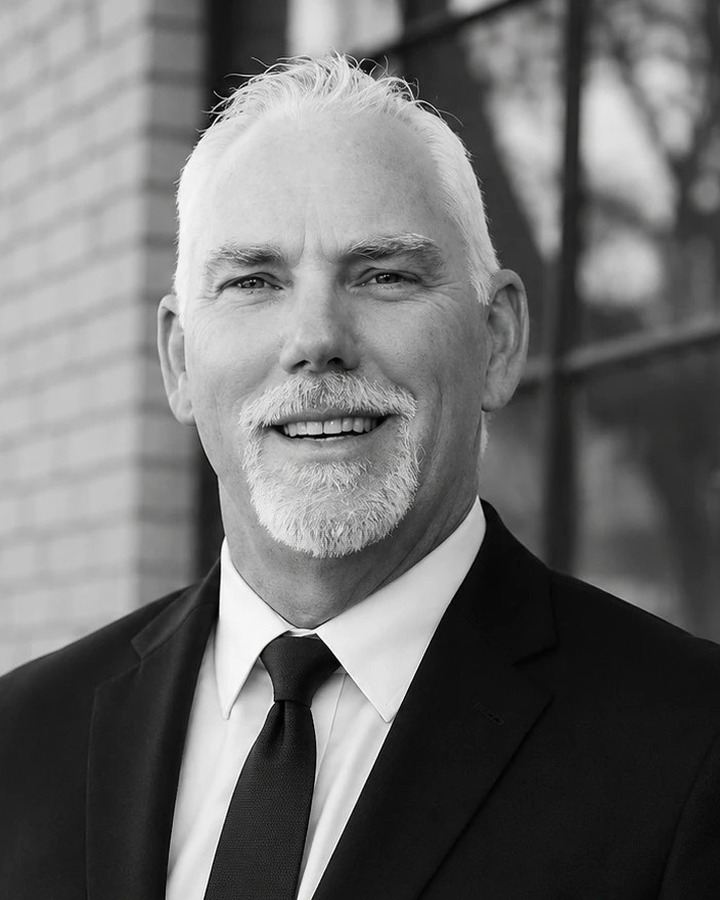 Consultant
More than thirty-five years in public safety: twelve years and three terms as the elected Sheriff of Lewis County, Washington, and six years a commissioner of the state board that sets peace-officer training standards.
Full profile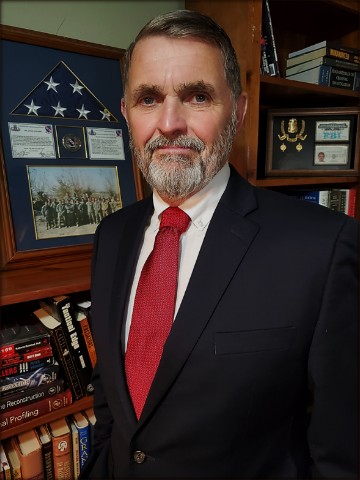 Consultant
Forty years of investigative casework, from patrolman in St. Louis County to the FBI in Chicago, and on to task forces in Afghanistan and Liberia. His work on the Idaho student murders is examined in Broken Plea, the New York Times bestseller by Christopher Whitcomb.
Full profileNever excluded. Professor Gilbertson’s testimony has not been excluded at trial in any state or federal court.
The Hon. Richard A. Jones United States District Judge“Mr. Gilbertson’s qualifications demonstrate extensive experience in policing. His expansive work as a police officer in Georgia, with assignments as a SWAT team officer, juvenile court investigator, school resource officer, stakeout squad officer, senior patrolman, and patrolman; then a career as a tenured college professor and university lecturer teaching criminal justice courses to degree-seeking students at colleges and universities, and as a licensed private investigator conducting felony pretrial investigations for attorneys in Washington State in dozens of criminal cases, makes him unique in the field of police expert witnesses. The Court finds that, based on his experience, Mr. Gilbertson’s testimony can be expected to have a reliable basis in knowledge and experience of police practices.”
The continuum, as it was taught.
For a long stretch of American police training, force instruction was organized as a continuum: a ladder or stair-step graphic that arranged force options in ascending order and matched them to escalating levels of subject resistance. Passive resistance sat low on the chart, active resistance higher, assaultive behavior higher still, with deadly force at the top.
The model earned its place for a reason. It taught recruits that force comes in degrees, that the degree should track resistance, and that options short of deadly force exist and matter. As a first classroom frame, the ladder made proportionality visual and memorable.
Its weaknesses appeared in the field and in litigation. Read rigidly, a ladder implies a stepwise duty to try each rung, which no national standard teaches. Read loosely, it implies an entitlement: that a given resistance level authorizes a given force level regardless of context. Both readings detach the option from the scene, and the scene is what the constitutional and practices analysis actually measures.
The vocabulary still matters in discovery because agency documents span generations. A department’s current policy may be decision-based while its lesson plans, its report templates or its veteran officers’ training histories still speak in continuum terms. The analysis reads each document in the vocabulary of its era, then asks the only question that survives translation: did the selection process being taught match the one national practice expected.
From ladder to decision model.
National training moved toward decision-based models: frameworks that organize force around a repeating cycle of assessment rather than a chart of equivalences. The officer gathers information, assesses threat and risk, considers authority and agency policy, selects an option, acts, and then reassesses, because the selection is only as good as the moment it was made in.
Bodies that shape national practice, IACP model policies, PERF guidance, the DOJ COPS Office, NIJ research and state POST curricula among them, converge on the same core vocabulary: proportionality, necessity, and continuous reassessment, with de-escalation woven through rather than bolted on. Many agency policies now state force expectations in those terms; some retain a continuum graphic as a teaching aid inside a decision-based policy. The analysis reads the agency’s actual policy and training, whichever form they take, against generally accepted police practices.
The practical difference for litigation is the question each model asks. A continuum asks where the subject’s resistance sat on a chart. A decision model asks what the officer knew, what options were available, what was selected, at what intensity, for how long, and what changed as the event unfolded. The second set of questions is the one the record can actually answer.
Transition itself is evidence. When an agency rewrote its force policy from continuum language to decision language, the training file should show the workforce was brought along: revised lesson plans, in-service delivery, updated report forms. A policy that changed on paper while the training stayed in the old vocabulary is a layer gap, and it is treated as one in the organizational analysis.
The option categories, at practices level.
Whatever the model, national training organizes the tools themselves into familiar categories. The analysis treats them as options with doctrine attached: each carries its own policy rules on warnings, targeting, duration and aftercare.
- Officer presence and verbal direction
- Control holds and other hands-on techniques
- Chemical agents such as OC spray
- Electronic control weapons and their cycle limits
- Impact weapons and target-area doctrine
- Canine deployment and announcement requirements
- Less-lethal projectiles and standoff distances
- Deadly force
Effects language stays at the policy level, deliberately. Policies and curricula speak in operational terms: the warning before deployment where feasible, limits on repeated applications and their duration, restrictions tied to a subject’s position or condition as the policy defines them, spacing and distance rules, and the duty to summon or render medical aid after force. What a given tool does to a particular human body is a question for qualified experts in other disciplines, and a police-practices report says so on the record rather than borrowing their ground.
Two categories recur with doctrine of their own. Electronic control weapons carry policy limits on cycles and cumulative exposure, with evaluation expected between applications; the weapon’s own download data fixes counts and durations independent of any narrative. Canine deployment carries announcement expectations, handler-control doctrine and release timing, with deployment logs and after-action reports as the parallel record.
Deadly force sits apart, governed by its own constitutional and policy standards, including the rules on the threats that justify it and the warnings that precede it where feasible. Tennessee v. Garner, 471 U.S. 1 (1985), frames the deadly-force side constitutionally; agency policy and training frame it operationally. The practices analysis stays on the operational side and leaves the legal side with counsel.
Option, intensity, duration, moment.
The analytic question in a force case is never which option was correct in the abstract. It is whether the option selected, at the intensity used, for the duration used, matched the threat picture the record shows at that moment. An option can be defensible and its duration indefensible. A first application can be within policy and the third one outside it. The unit of analysis is the decision, not the tool.
The constitutional frame comes from Graham v. Connor, 490 U.S. 386 (1989): objective reasonableness on the totality of the facts and circumstances known to the officer at the time, without hindsight. The practices frame asks how the officer’s own agency and national training taught that decision to be made. The two run in parallel, and Graham v. Connor explained for litigators walks through the constitutional side in detail. Legal conclusions under Graham remain counsel’s; the practices opinion addresses what training and standards expected.
Timing evidence carries most of the weight. Video frame counts, dispatch and radio time stamps, and the sequence of commands and applications fix intensity and duration in a way narrative reports cannot. The analysis reconciles those sources before it characterizes any decision.
The question is symmetrical, and so is the practice. Retained by plaintiff’s counsel, the analysis may document an option that ran past its justification. Retained for the defense of an officer, the same method may document selection, intensity and duration that tracked the threat picture throughout. The method does not change with the client, which is what makes the report durable in deposition.
Proportionality runs in both directions.
National training’s most consequential teaching is that assessment does not end when force begins. As resistance changes, the justification changes with it, and the option, its intensity and its continuation are expected to track that change. Force that was proportionate at its first second can lose its basis mid-event, and training expects the officer to see it and adjust.
That is the vocabulary of de-escalation applied inside a force event: reduce intensity as compliance begins, interrupt repeated applications to evaluate, transition to control and restraint when resistance ends, and move to aid when the threat is over. De-escalation standards covers the pre-force side of the same doctrine: time, distance, cover and communication before an option is selected at all.
Reassessment doctrine also reaches supervision. Use-of-force reporting and administrative review exist to test decisions against policy after the fact: whether the report captured the sequence, whether review caught what the video shows, and whether correction followed. A force event’s afterlife in the agency’s paperwork is often as probative as the event itself.
Read together, the two doctrines give counsel the working questions for any force record: what did the officer know at selection, what was selected and at what level, how long did it run, what changed, and what did the officer do about the change. Where the record supports it, the report answers each question with a citation to the produced materials, and states the practices conclusion plainly.
The continuum is not the standard of care, and its absence from a policy is not a defect. The measure is the agency’s own policy and training read against national practice, on the record of the event.
When the question becomes a retention.
This page is reference. When a live matter needs the analysis, these are the doors.
Asked alongside this one.
Is the use of force continuum still the standard in policing?
What replaced the force continuum in modern police training?
How does an expert evaluate which force option an officer chose?
Bring the matter behind the question.
Attorney inquiries are answered directly. If a case presents a conflict, you will hear it immediately.
Inquiry sent.
You will hear back directly. If the matter is urgent, call (239) 571-1840.
Conflicts are checked before any substantive discussion. Please do not send privileged material with a first inquiry; after retention the record is exchanged on physical media. Gregory consults for attorneys and their staff only, and does not provide legal advice or attorney referrals to individuals.