

Generally Accepted Police Practices,
Defined and Applied
Direct line: (239) 571-1840 · GregoryGilbertson@proton.me
Attorney and law-firm inquiries only
Expert reports in police cases lean on one phrase more than any other: generally accepted police practices. This guide defines the yardstick, explains where it comes from and why courts hear testimony about it, and shows how an expert applies it to a record without crossing into legal conclusions.
Three experts. Over 110 years.
Professor Gregory Gilbertson (Ret.), FBI Special Agent Christopher Holland (Ret.), and Sheriff Robert Snaza consult with attorneys nationwide regarding police practices and procedures, use of force, false arrest, police misconduct, criminal, and self-defense casework.
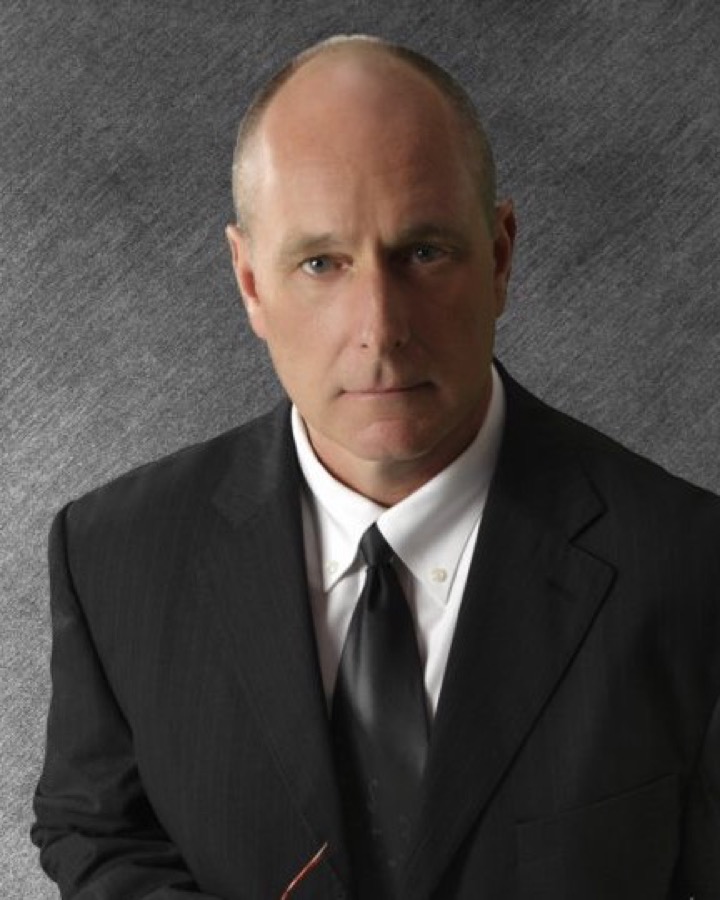 CEO & Owner
Thirty-eight years in four uniforms: street cop, soldier, professor, investigator. More than 220 matters in 42 states and D.C. since 2014, with testimony that has not been excluded at trial in any state or federal court.
Full biography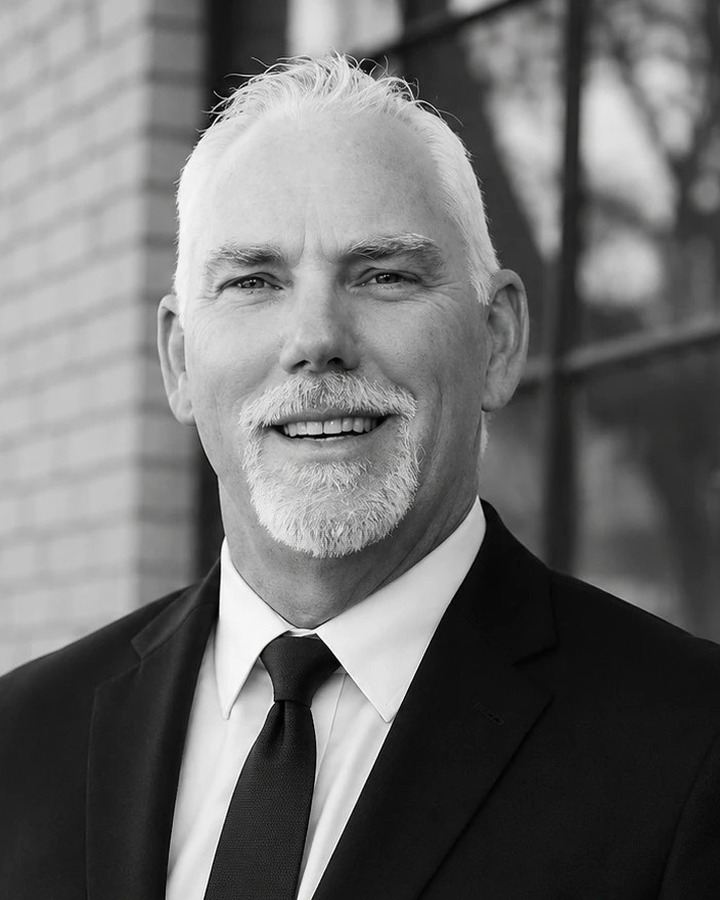 Consultant
More than thirty-five years in public safety: twelve years and three terms as the elected Sheriff of Lewis County, Washington, and six years a commissioner of the state board that sets peace-officer training standards.
Full profile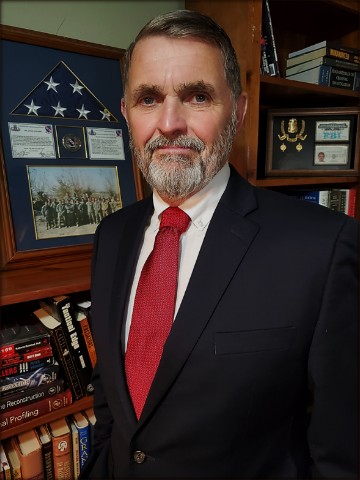 Consultant
Forty years of investigative casework, from patrolman in St. Louis County to the FBI in Chicago, and on to task forces in Afghanistan and Liberia. His work on the Idaho student murders is examined in Broken Plea, the New York Times bestseller by Christopher Whitcomb.
Full profileNever excluded. Professor Gilbertson’s testimony has not been excluded at trial in any state or federal court.
The Hon. Richard A. Jones United States District Judge“Mr. Gilbertson’s qualifications demonstrate extensive experience in policing. His expansive work as a police officer in Georgia, with assignments as a SWAT team officer, juvenile court investigator, school resource officer, stakeout squad officer, senior patrolman, and patrolman; then a career as a tenured college professor and university lecturer teaching criminal justice courses to degree-seeking students at colleges and universities, and as a licensed private investigator conducting felony pretrial investigations for attorneys in Washington State in dozens of criminal cases, makes him unique in the field of police expert witnesses. The Court finds that, based on his experience, Mr. Gilbertson’s testimony can be expected to have a reliable basis in knowledge and experience of police practices.”
A defined body of standards, not an opinion poll.
Generally accepted police practices are not one expert’s preferences dressed up in professional language. The phrase refers to a describable body of material: national standards, model policies, training curricula, and published research that together record how policing is actually taught and how officers are expected to perform. It is the difference between what one officer did on one night and what the profession says officers in that situation are trained to do.
The sources are knowable by name: IACP model policies, PERF guidance, CALEA accreditation standards, state POST curricula, and the instruction delivered in police academies, field training programs, and in-service training. The agency’s own policy manual sits alongside them as the local expression of the same body of practice, and the involved officer’s training file shows which parts of it were actually delivered to the person whose conduct is at issue.
Just as important is what the yardstick is not. It is not perfection with the benefit of hindsight; the standards themselves are written for officers acting on incomplete information under time pressure. It is not the habit of any single agency, which may run above or below the national material. And it is not personal opinion: if a claimed standard cannot be located in the national material, agency policy, or the training record, it does not belong in an expert report.
The phrase appears in expert reports precisely because it is checkable. Every claimed standard can be traced to a named source, and every claimed departure to a page of the record.
Why courts hear practices testimony.
Jurors arrive believing they already know what police work looks like, because television has been showing it to them their whole lives. What they have not seen is the standards side of the profession: how officers are actually trained to assess threats, position themselves, give commands, manage time and distance, and choose among force options. That body of standards is specialized knowledge, which is exactly what expert testimony exists to supply under Fed. R. Evid. 702.
The rule contemplates experts qualified by experience and training as well as by laboratory science. Policing is a field learned in academies, field training programs, and years of supervised practice, and its standards live in curricula, policy manuals, and the profession’s published research. An expert who has taught those standards and then applied them case after case can tell the trier of fact what the profession prescribes. Professor Gilbertson taught those standards as a tenured criminal justice professor before applying them in casework, which is the order the work should run in.
Practices testimony gives the trier of fact a yardstick it does not otherwise have. Without it, the jury measures the officer’s conduct against instinct and fiction. With it, the jury can measure the documented conduct against what the profession itself prescribes. The testimony does not tell jurors what happened; the record does that. It tells them what the profession expected, so the comparison is theirs to make. Admissibility, as with every expert opinion, remains retaining counsel’s responsibility.
How the yardstick is applied to a record.
The application is a three-step discipline. Each step leaves a trail that can be checked by opposing counsel, by the court, and by any other expert reading the same record, which is the point: a practices opinion should be reproducible from its sources.
- Identify: the specific practices the incident implicates, drawn from the record rather than from a theory of the case
- Locate: the accepted standard for each practice, in the national material, the agency’s policy, and the officer’s own documented training
- Measure: the documented conduct against the standard, item by item, with a record citation for every finding
A crisis-encounter record shows how the steps run. Identify: the record raises de-escalation, the use of time, distance, and cover, and the handling of a person in crisis announced as such by the call itself. Locate: national crisis-intervention curricula and the agency’s own crisis-response policy state what officers are trained to do in exactly that picture, and the training files show what these officers were actually taught. Measure: the video and the CAD timeline show what was done, minute by minute, against those prescriptions.
The opinion cites the record and the standard, never a hunch. Where the training file shows what the officer was actually taught, that instruction becomes part of the yardstick, which is why what training records reveal is its own subject in this library. The relationship among written policy, actual practice, and delivered training is treated in policy, practice, and training: the three layers.
The constitutional floor and the professional standard.
Constitutional doctrine and professional standards are related but not identical. Graham v. Connor, 490 U.S. 386 (1989) sets the constitutional frame for force, and the profession’s standards typically demand more than the constitutional minimum. Conduct can therefore satisfy one measure and fail the other, in either direction, and an analysis that blurs the two produces an opinion that is vulnerable at deposition and unhelpful to the court.
The divergence is concrete. National standards speak to warnings, de-escalation, tactical positioning, and the choices that precede force, subjects on which the constitutional analysis may be narrower. An officer can act within the constitutional frame while departing from the profession’s standards, and an officer can follow every professional standard in a case where the constitutional question is still hard fought. Each finding is stated on its own ledger.
The report therefore keeps two ledgers and says which is which: what the record shows about compliance with generally accepted police practices, and what questions of constitutional reasonableness remain for the court. The practices ledger is the expert’s. Legal conclusions remain counsel’s, and the report says so on its face. A factor-level walkthrough of the constitutional frame is in Graham v. Connor explained for litigators.
Neither ledger substitutes for the other. Counsel decide what the constitutional frame does with a practices finding; the report keeps the finding usable by keeping it separate.
How the yardstick holds up under cross-examination.
Cross-examination of a practices expert almost always runs at the same target: the suggestion that the standards are just the witness’s personal view. The grounded answer is structural. The standard has a name and a source; the conduct has a record citation; the comparison between them is stated in the report. An opinion assembled that way can be tested line by line, which is precisely what makes it useful to the side that retained it.
- Is the standard written down anywhere? It is, and the report names where
- Must agencies follow national model policies? The report describes what the profession teaches and what this agency adopted
- Is the expert second-guessing split-second decisions? The analysis is anchored to what was known at the time, without hindsight
- Is this a legal conclusion? It is not, and the report says so
The same structure protects the opinion at the gatekeeping stage. Courts ask whether testimony rests on reliable specialized knowledge, and a practices opinion that traces every finding to named standards and record pages answers that question the same way at a hearing as it does at trial. Professor Gilbertson’s testimony has not been excluded at trial in any state or federal court, and retaining counsel remains responsible for admissibility in every engagement.
What the yardstick is worth in litigation.
For plaintiff’s counsel, the practices yardstick converts a jury’s suspicion into something measurable: a named standard, a documented departure, a record citation. For defense counsel, it works exactly the same way in reverse. Where the record shows the officers did what the profession trains officers to do, the analysis says so, and that finding carries weight because the same yardstick has been applied against officers when the record required it.
Professor Gilbertson has applied this standard since 2014 for plaintiff’s counsel, the criminal defense bar, and counsel defending officers and agencies, in more than 220 civil rights and criminal cases across 42 states and the District of Columbia. Every engagement begins with a conflict check, and every opinion is built from the complete record, measured against national standards and the agency’s own policy and training, on the totality of the facts and circumstances.
When the question becomes a retention.
This page is reference. When a live matter needs the analysis, these are the doors.
Asked alongside this one.
Where do generally accepted police practices come from?
Can conduct be constitutional and still violate accepted police practices?
Is a practices opinion just the expert’s personal view of good policing?
Bring the matter behind the question.
Attorney inquiries are answered directly. If a case presents a conflict, you will hear it immediately.
Inquiry sent.
You will hear back directly. If the matter is urgent, call (239) 571-1840.
Conflicts are checked before any substantive discussion. Please do not send privileged material with a first inquiry; after retention the record is exchanged on physical media. Gregory consults for attorneys and their staff only, and does not provide legal advice or attorney referrals to individuals.