

Graham v. Connor,
Explained for Litigators
Direct line: (239) 571-1840 · GregoryGilbertson@proton.me
Attorney and law-firm inquiries only
Nearly every police force case runs through Graham v. Connor, 490 U.S. 386 (1989). This guide walks through the three enumerated factors, the no-hindsight rule, and how a police practices expert applies each of them to the record that retaining counsel assembles.
Three experts. Over 110 years.
Professor Gregory Gilbertson (Ret.), FBI Special Agent Christopher Holland (Ret.), and Sheriff Robert Snaza consult with attorneys nationwide regarding police practices and procedures, use of force, false arrest, police misconduct, criminal, and self-defense casework.
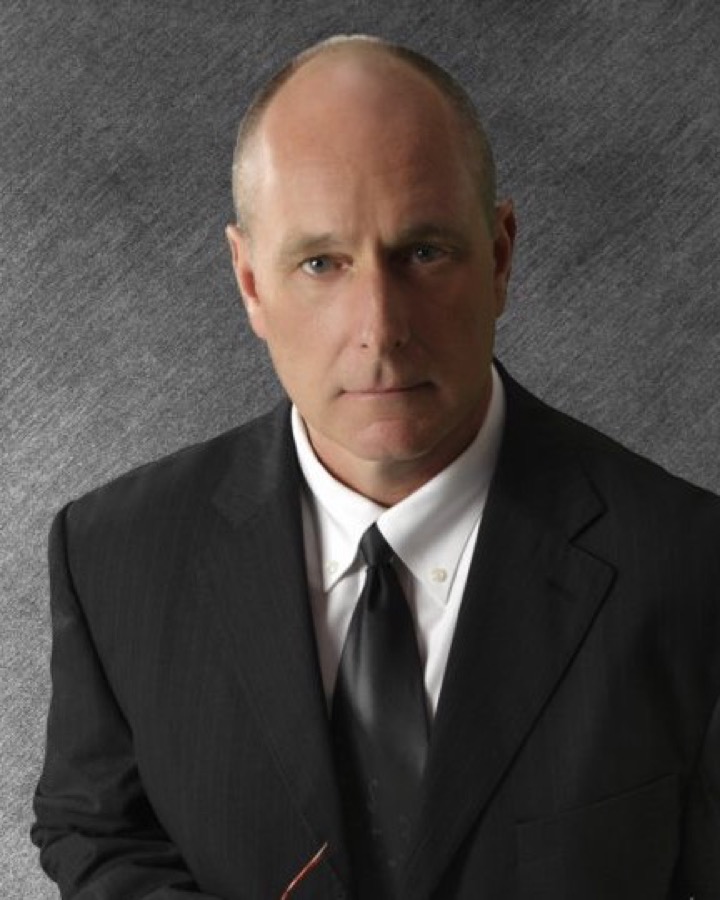 CEO & Owner
Thirty-eight years in four uniforms: street cop, soldier, professor, investigator. More than 220 matters in 42 states and D.C. since 2014, with testimony that has not been excluded at trial in any state or federal court.
Full biography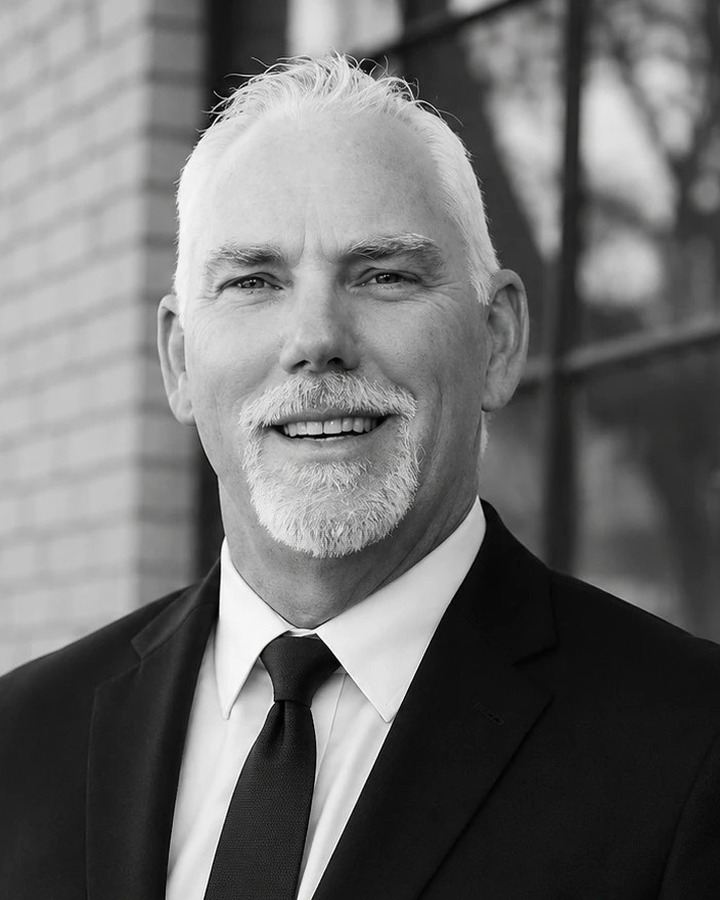 Consultant
More than thirty-five years in public safety: twelve years and three terms as the elected Sheriff of Lewis County, Washington, and six years a commissioner of the state board that sets peace-officer training standards.
Full profile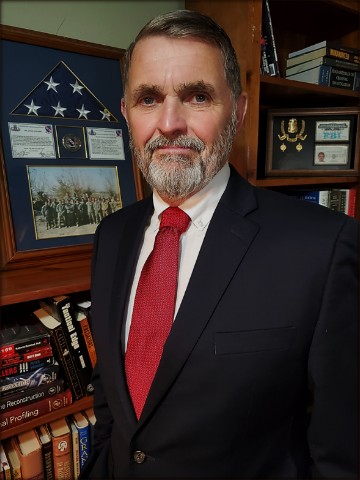 Consultant
Forty years of investigative casework, from patrolman in St. Louis County to the FBI in Chicago, and on to task forces in Afghanistan and Liberia. His work on the Idaho student murders is examined in Broken Plea, the New York Times bestseller by Christopher Whitcomb.
Full profileNever excluded. Professor Gilbertson’s testimony has not been excluded at trial in any state or federal court.
The Hon. Richard A. Jones United States District Judge“Mr. Gilbertson’s qualifications demonstrate extensive experience in policing. His expansive work as a police officer in Georgia, with assignments as a SWAT team officer, juvenile court investigator, school resource officer, stakeout squad officer, senior patrolman, and patrolman; then a career as a tenured college professor and university lecturer teaching criminal justice courses to degree-seeking students at colleges and universities, and as a licensed private investigator conducting felony pretrial investigations for attorneys in Washington State in dozens of criminal cases, makes him unique in the field of police expert witnesses. The Court finds that, based on his experience, Mr. Gilbertson’s testimony can be expected to have a reliable basis in knowledge and experience of police practices.”
Objective reasonableness under the Fourth Amendment.
Graham holds that claims of excessive force arising from an arrest, an investigatory stop, or any other seizure of a free person are judged under the Fourth Amendment and its objective reasonableness standard. The officer’s underlying intent or motivation, good or bad, is not the question. The question is whether the force used was objectively reasonable in light of the facts and circumstances confronting the officer at the moment force was used.
The Court gave the inquiry structure with three enumerated factors: the severity of the crime at issue, whether the suspect poses an immediate threat to the safety of officers or others, and whether the suspect is actively resisting arrest or attempting to evade arrest by flight. Those three questions organize nearly every use-of-force dispute, but they were never meant to close the list. The touchstone is the totality of the circumstances, and any fact a reasonable officer on the scene would have weighed belongs in the analysis.
For litigators, the practical import is that Graham converts a moral argument into an evidentiary one. The question is never whether the outcome was tragic, and never what the officer felt. It is what a reasonable officer, knowing only what this officer knew, could do at that moment. Every element of that question can be litigated from the record, and should be, which is why the earliest decisions about what to request and what to preserve matter as much as any argument made later.
The three factors, read against a record.
Each factor is a question the record can answer. The factors do real work only when they are tied to specific evidence: what the dispatcher broadcast, what the officers saw and heard, what the video shows in sequence, and what the reports and depositions establish about timing. Argued without documents, the factors are rhetoric. Argued with them, they are proof.
Severity of the crime at issue.
The first factor asks what offense the officer reasonably believed was in progress or had just occurred at the time force was used. A welfare check, a traffic infraction, and an armed robbery call justify very different postures, and the severity picture can change mid-encounter as new information arrives. The record question is what the officer actually knew about the offense in the moment, not what charges were filed afterward and not what the completed investigation later established.
Immediate threat to officers or others.
The second factor tends to dominate the analysis, and immediacy is its operative word. A generalized risk, a criminal record, or an earlier act of violence is not the same thing as a present threat at the moment force is used. Distances, weapons, hands, movements, warnings given or not given, and the positions of officers and bystanders all bear on immediacy, and every one of those details is a record fact that can be fixed in time.
Active resistance or attempted flight.
The third factor separates active resistance from passive noncompliance, and separates both from simple delay in responding to commands. It also asks when resistance or flight began, when it ended, and what the officer knew about it as it happened. Video timing matters here more than anywhere else, because resistance is a sequence, and a single frame cannot establish a sequence.
Read this way, the factors become a discovery plan. Severity points at the dispatch record and the offense information the officer received. Immediacy points at the video, the scene measurements, and the placement of every person present. Resistance points at the frame-by-frame sequence and the reports written afterward. Counsel who assemble those materials early give any expert, on either side, something real to analyze.
What the no-hindsight rule does and does not do.
Graham directs that reasonableness be judged from the perspective of a reasonable officer on the scene, allowing for split-second judgments made under fast-moving and uncertain conditions. The rule answers a timing question: force is evaluated on the information the officer had when force was used, not on what anyone learned afterward. The perspective is an objective one, built from training and experience, not from the involved officer’s after-the-fact account of his or her own state of mind.
The rule sets the clock, not the verdict. It does not erase the minutes before force. The information the officer received from dispatch, the tactical choices that shaped the encounter, and the alternatives that training placed on the table are all part of what a reasonable officer carries into the moment. National training treats the approach, the positioning, and the decision to slow down or press forward as part of the event, which means a no-hindsight analysis is still a whole-record analysis. What the rule forbids is grading the officer against facts that were not knowable at the time.
The no-hindsight rule disciplines both sides. Facts discovered later stay out of the reasonableness picture whether they would have helped the plaintiff or the defense.
How a practices expert applies Graham.
The analysis runs factor by factor, against the record, on two axes: what the officer knew and when, and what the officer’s own agency policy and training prescribed for exactly that situation. Dispatch audio and the CAD narrative establish the pre-arrival picture. Video, reports, statements, and depositions establish the encounter itself, in sequence, with each disputed moment fixed in time.
The documented conduct is then measured against generally accepted police practices: the national standards, model policies, and training curricula that describe how officers are taught to assess severity, threat, resistance, and flight. Where deadly force against a fleeing person is at issue, Tennessee v. Garner, 471 U.S. 1 (1985) supplies its own frame, covered in the companion guide to the Garner deadly force standard.
- Severity: fixed by the dispatch record, the broadcast the officer heard, and the officer’s own statements
- Immediate threat: fixed by video timing, distances, weapons, movements, and the placement of officers and bystanders
- Resistance or flight: fixed frame by frame and cross-checked against the written reports and later testimony
- Training and policy: fixed by the training file and the policy manual in force on the date of the incident
The resulting opinion addresses police practices: whether the documented conduct followed or departed from what officers are trained and expected to do. Whether the force was constitutionally reasonable is a legal conclusion. Legal conclusions remain counsel’s, and the ultimate reasonableness question belongs to the court and the trier of fact. That division of labor keeps the opinion inside the expert’s lane, and retaining counsel remains responsible for the admissibility of reports and testimony.
Where Graham disputes actually land.
A handful of battlegrounds recur across Graham litigation, and each is at bottom a record fight. Whether the encounter is judged as one continuous event or as segments. Whether each separate application of force, a takedown, a baton strike, a Taser application, carries its own justification at its own moment. Whether force continued after resistance ended, particularly once a person was controlled, handcuffed, or held down. And whether the threat picture the officer described matches the threat picture the video shows.
A common version: the record shows three Taser applications, and the parties fight about the third, because the first two came during active resistance and the third came after the person stopped moving. Severity and flight have not changed, but immediacy has, and the third application must be justified at its own moment.
Each of those disputes is resolved the same way: by fixing the sequence. When did the threat begin, when did it end, what did the officer know at each point, and what did training prescribe at each point. A practices analysis that answers those questions from the record, and shows its sources, gives counsel a foundation that can be tested line by line, on either side of the caption.
Using Graham well, on either side.
Graham gets misused in mirror-image ways. Plaintiffs argue backward from the injury, treating a bad outcome as proof of unreasonable force. Defendants stretch the no-hindsight rule into a shield against the whole record, as though nothing before the final two seconds counts. A disciplined practices analysis resists both temptations, because it commits to the record before it commits to any conclusion.
Professor Gilbertson is retained in Graham matters by plaintiff’s counsel and by counsel defending officers and agencies, and the analysis does not change with the caption. The same factors, the same standards, and the same training file are read the same way, on the totality of the facts and circumstances. Where the record shows conduct within accepted practices, the report says so. Where it shows departures, the report says that instead.
Counsel evaluating a potential Graham case can move the analysis forward fastest by preserving the dispatch audio, the CAD export, and every second of available video early, before retention decisions are made. Those materials decide more Graham disputes than any brief.
When the question becomes a retention.
This page is reference. When a live matter needs the analysis, these are the doors.
Asked alongside this one.
Are the Graham factors a checklist?
Does a police practices expert opine that force was objectively reasonable?
Which Graham factor matters most in litigation?
Bring the matter behind the question.
Attorney inquiries are answered directly. If a case presents a conflict, you will hear it immediately.
Inquiry sent.
You will hear back directly. If the matter is urgent, call (239) 571-1840.
Conflicts are checked before any substantive discussion. Please do not send privileged material with a first inquiry; after retention the record is exchanged on physical media. Gregory consults for attorneys and their staff only, and does not provide legal advice or attorney referrals to individuals.