

Policy, Training, Practice
The Case Lives in the Gaps
Direct line: (239) 571-1840 · GregoryGilbertson@proton.me
Attorney and law-firm inquiries only
Every agency speaks three times about any subject: in the policy it wrote, in the training it delivered, and in the practice it tolerates. The organizational case is rarely found inside one layer. It is found in the daylight between them.
Three experts. Over 110 years.
Professor Gregory Gilbertson (Ret.), FBI Special Agent Christopher Holland (Ret.), and Sheriff Robert Snaza consult with attorneys nationwide regarding police practices and procedures, use of force, false arrest, police misconduct, criminal, and self-defense casework.
 CEO & Owner
Thirty-eight years in four uniforms: street cop, soldier, professor, investigator. More than 220 matters in 42 states and D.C. since 2014, with testimony that has not been excluded at trial in any state or federal court.
Full biography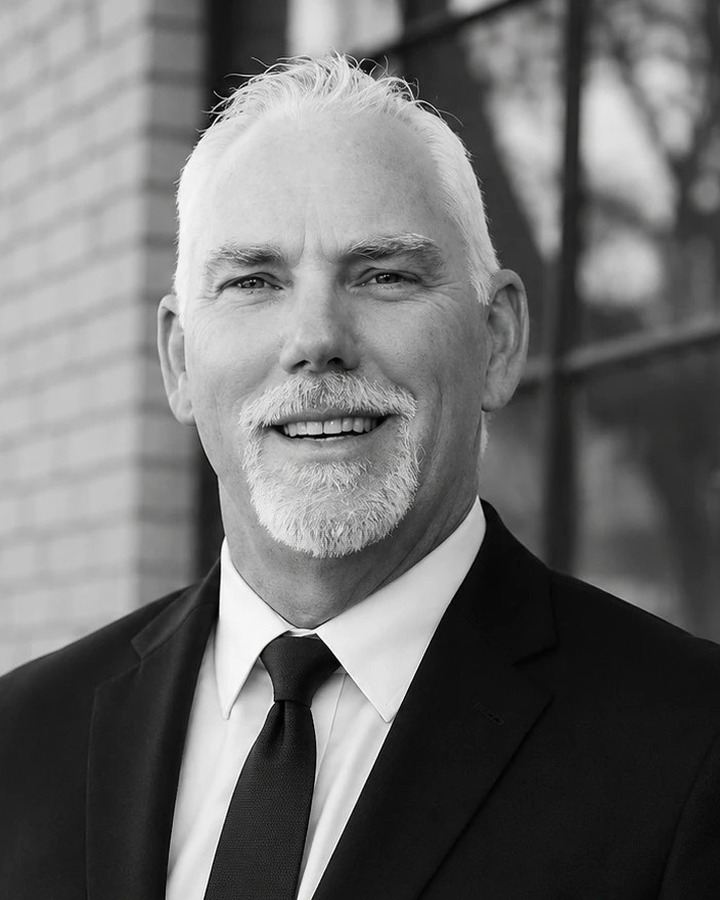 Consultant
More than thirty-five years in public safety: twelve years and three terms as the elected Sheriff of Lewis County, Washington, and six years a commissioner of the state board that sets peace-officer training standards.
Full profile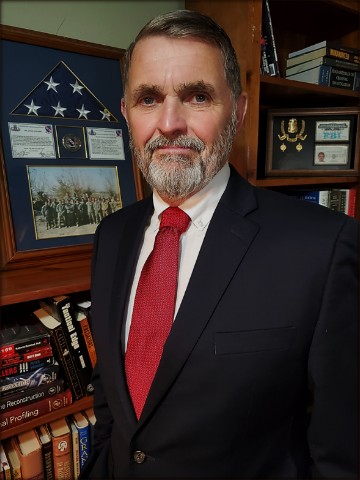 Consultant
Forty years of investigative casework, from patrolman in St. Louis County to the FBI in Chicago, and on to task forces in Afghanistan and Liberia. His work on the Idaho student murders is examined in Broken Plea, the New York Times bestseller by Christopher Whitcomb.
Full profileNever excluded. Professor Gilbertson’s testimony has not been excluded at trial in any state or federal court.
The Hon. Richard A. Jones United States District Judge“Mr. Gilbertson’s qualifications demonstrate extensive experience in policing. His expansive work as a police officer in Georgia, with assignments as a SWAT team officer, juvenile court investigator, school resource officer, stakeout squad officer, senior patrolman, and patrolman; then a career as a tenured college professor and university lecturer teaching criminal justice courses to degree-seeking students at colleges and universities, and as a licensed private investigator conducting felony pretrial investigations for attorneys in Washington State in dozens of criminal cases, makes him unique in the field of police expert witnesses. The Court finds that, based on his experience, Mr. Gilbertson’s testimony can be expected to have a reliable basis in knowledge and experience of police practices.”
Three layers, one organizational record.
A police agency takes a position on a subject three different ways. It speaks in writing, through the policy manual, general orders and directives. It speaks through instruction, in what its academy, field training officers and in-service calendar actually taught officers to do. And it speaks through conduct, in what officers actually do on the street and what supervisors and command staff do about it afterward.
The three-layer analysis reads those statements against each other. The written policy is measured against national standards. The training file is measured against the written policy. Practice, as the incident record and the agency’s documented history reveal it, is measured against both. Alignment across the layers is the unremarkable, healthy finding. The matters that reach retaining counsel usually involve daylight somewhere.
This page explains the analytic frame itself, because it is the frame behind most organizational police-practices work: failure-to-train analysis, supervision and discipline review, and municipal pattern, practice and custom support. The service pages describe that casework; the frame is identical in every engagement, and it is applied the same way whether counsel represents the plaintiff, the officer or the agency.
The frame also disciplines discovery. Counsel who requests the policy manual alone learns what the agency says. Counsel who requests the manual, the training file and the review history learns what the agency is. The three layers arrive as three different document sets, from three different custodians, and the requests are worth sequencing early.
The written policy, measured against national standards.
Layer one asks whether the policy itself was adequate at the time of the incident. The reference points are national: IACP model policies, PERF guidance, CALEA accreditation standards, state POST requirements, and the curricula that collectively define generally accepted police practices. The policy is read for what it authorizes, what it forbids, what it defines, and what it leaves to officer discretion.
Adequacy review is not a hunt for magic language. A policy can fail by omission, leaving a foreseeable situation unaddressed. It can fail by vagueness, stating a value without an operating rule. It can fail by obsolescence, preserving a standard the field has abandoned. And it can fail structurally, burying the operative rule where no working officer would find it. Each failure mode is documented against the national reference points, not against the reviewer’s taste.
- What the policy authorizes, forbids and defines, in operational terms
- Whether the situations the agency foreseeably faces are addressed at all
- Whether the written standard matches contemporary national practice
- The revision history: what changed, when, and what prompted the change
- Whether the rule is concrete enough to be trained and supervised
Revision history deserves particular attention. Policies are usually amended after something happened. The sequence of versions, read in order, is often the clearest available record of what the agency knew and when it chose to act on it.
Layer one alone rarely decides anything. An adequate policy is the beginning of the inquiry, not the end, because the next two layers test whether the words governed anything. That is why the analysis never stops at the manual, in either direction: a strong manual does not close the question, and a weak one does not answer it.
What officers were actually trained to do.
Layer two moves from the manual to the training file. The documents are concrete: academy transcripts, field training records, in-service rosters and hour histories, lesson plans, instructor outlines, and the qualification records that show a skill was demonstrated rather than merely described. What police training records reveal inventories those files one by one, with discovery guidance for each.
The comparison at this layer is training against policy. A current, well-written policy may sit untaught: acknowledged by signature in the personnel file and never delivered in a classroom or a scenario. Training may also teach a different rule than the written one, so officers rehearse a version of the policy that exists nowhere on paper. Both directions of divergence matter, and both leave records.
Timing matters as much as content. Training delivered once at the academy, years before the incident, answers a different question than training refreshed on a regular in-service cycle. The training file fixes those dates, and the analysis states plainly what was taught, when, by whom, and from what curriculum.
Field training deserves its own line of attention. The field training program is where classroom rules become street habits, one evaluated phase at a time, and its records show which behaviors were reinforced when the recruit and the evaluator both knew the ratings counted. Where street practice later diverged from policy, the field training file is often where the divergence first became visible.
Signatures are not training. A policy acknowledgment proves distribution, not instruction; the lesson plan and the roster prove instruction. The distinction is easy to blur and easy to test, and the training file is where it is tested.
What the agency actually does in practice.
Layer three is conduct. The incident record shows what the involved officers did in the matter at hand: reports, video, statements and depositions, read on the totality of the facts and circumstances. The agency’s documented history shows what it did about similar conduct before and since: complaint files, use-of-force reports and their administrative review, internal affairs dispositions, early-warning system entries, and the supervisory record of correction or silence.
Practice is what an agency demonstrates it will tolerate, correct or repeat. A written rule enforced nowhere is not the agency’s practice; the conduct is. That is why layer three reaches beyond the incident to the pattern: whether review mechanisms flagged prior similar conduct, what happened to those flags, and whether discipline, retraining or policy change followed.
Early-warning systems, where the agency maintains them, are read with particular care. The system exists to surface patterns to supervisors, and its entries and follow-through show whether the surfacing worked. An alert that fired with no documented response is a layer-three fact. So is the absence of any system in an agency whose size and history called for one, measured against national practice.
For counsel assembling that record, a Monell record checklist itemizes the documents that make the pattern showing possible, from complaint histories to early-warning data. The pattern question is organizational, not individual: it asks what the agency’s ordinary operation was, not whether one officer erred once.
The daylight between layers is the finding.
The layers rarely fail all at once, and the recurring patterns are specific. A sound policy with no training behind it. Training that quietly contradicts the written rule. A defensible policy and real training, with a street practice that ignores both while supervision looks away. Each pattern is itself a finding, because each shows the organization’s actual position on the conduct at issue, whatever the manual says.
This frame is the analytic engine behind failure-to-train work, and behind pattern, practice and custom support in the sense of Monell v. Department of Social Services, 436 U.S. 658 (1978). The expert’s role stays on the practices side of that line: documenting each layer from the agency’s own records, measuring the gaps against national standards, and saying so on the record. Whether a documented gap carries legal consequence under the failure-to-train and municipal liability frameworks is for the court, and legal conclusions remain counsel’s throughout.
In deposition practice, the frame gives counsel a stable architecture: witnesses are examined on what the policy said, what the training file shows, and what the review history did, one layer at a time. The expert report supplies the documentary map for that examination, with each finding tied to a produced record rather than to characterization.
The frame also cuts both ways. Where the layers align, the same analysis documents that alignment: policy that met national standards, training that delivered it, and practice that followed it. Professor Gilbertson is retained on both sides of these cases, and the layers are read the same way in each posture. Supervision and discipline casework built on this frame is described at supervision and discipline.
A perfect policy does not cure an empty training file, and diligent training does not cure a rule that authorizes the wrong thing. The layers are read together, or the organizational story is missed.
When the question becomes a retention.
This page is reference. When a live matter needs the analysis, these are the doors.
Asked alongside this one.
What is the difference between police policy, practice and training?
Why does a gap between written policy and actual practice matter?
Can a well-written policy alone defeat a failure-to-train theory?
Bring the matter behind the question.
Attorney inquiries are answered directly. If a case presents a conflict, you will hear it immediately.
Inquiry sent.
You will hear back directly. If the matter is urgent, call (239) 571-1840.
Conflicts are checked before any substantive discussion. Please do not send privileged material with a first inquiry; after retention the record is exchanged on physical media. Gregory consults for attorneys and their staff only, and does not provide legal advice or attorney referrals to individuals.