

What a Garrity statement is,
and how it is read.
Direct line: (239) 571-1840 · GregoryGilbertson@proton.me
Attorney and law-firm inquiries only
Internal affairs files are built largely on statements officers were ordered to give. This page defines the Garrity statement in practitioner terms, explains why compelled interviews shape what an IA file contains, and holds the boundary: how that material may be used in any proceeding is a question for counsel, not the expert.
Three experts. Over 110 years.
Professor Gregory Gilbertson (Ret.), FBI Special Agent Christopher Holland (Ret.), and Sheriff Robert Snaza consult with attorneys nationwide regarding police practices and procedures, use of force, false arrest, police misconduct, criminal, and self-defense casework.
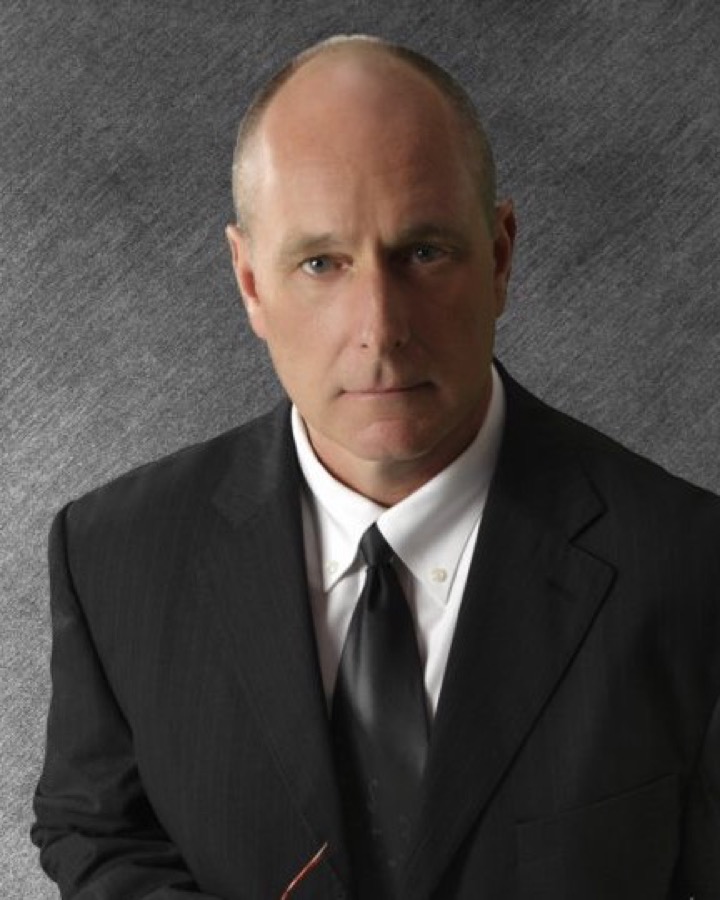 CEO & Owner
Thirty-eight years in four uniforms: street cop, soldier, professor, investigator. More than 220 matters in 42 states and D.C. since 2014, with testimony that has not been excluded at trial in any state or federal court.
Full biography Consultant
More than thirty-five years in public safety: twelve years and three terms as the elected Sheriff of Lewis County, Washington, and six years a commissioner of the state board that sets peace-officer training standards.
Full profile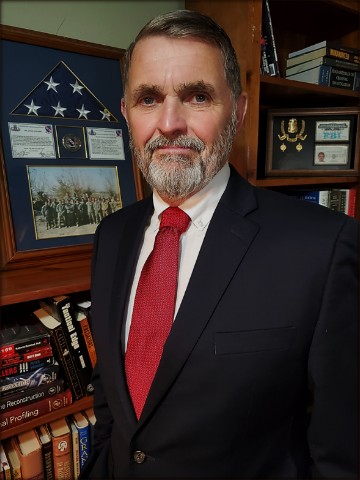 Consultant
Forty years of investigative casework, from patrolman in St. Louis County to the FBI in Chicago, and on to task forces in Afghanistan and Liberia. His work on the Idaho student murders is examined in Broken Plea, the New York Times bestseller by Christopher Whitcomb.
Full profileNever excluded. Professor Gilbertson’s testimony has not been excluded at trial in any state or federal court.
The Hon. Richard A. Jones United States District Judge“Mr. Gilbertson’s qualifications demonstrate extensive experience in policing. His expansive work as a police officer in Georgia, with assignments as a SWAT team officer, juvenile court investigator, school resource officer, stakeout squad officer, senior patrolman, and patrolman; then a career as a tenured college professor and university lecturer teaching criminal justice courses to degree-seeking students at colleges and universities, and as a licensed private investigator conducting felony pretrial investigations for attorneys in Washington State in dozens of criminal cases, makes him unique in the field of police expert witnesses. The Court finds that, based on his experience, Mr. Gilbertson’s testimony can be expected to have a reliable basis in knowledge and experience of police practices.”
A compelled statement, with protection attached.
In Garrity v. New Jersey, 385 U.S. 493 (1967), the Supreme Court held that when a public employee is ordered to answer questions on threat of losing the job, the compelled answers cannot be used against that employee in a criminal prosecution. In police agencies the ruling produced the Garrity statement: an officer’s account given in an administrative investigation because refusing to give it would itself be a disciplinable offense. The advisement that precedes the interview, commonly called a Garrity warning, tells the officer that answering is required, that refusal risks discipline, and that the compelled answers carry protection against criminal use.
The practical consequence is a fork in how officer statements come to exist. A voluntary statement, the kind any witness might give, is one thing; a compelled administrative statement is another, and agencies that follow accepted practice keep the two tracks separate, with the administrative investigation walled off from any parallel criminal one. The paper the two tracks generate can look identical, a typed narrative, a recorded interview, a signed form, while having been produced under entirely different rules. Reading an internal affairs file without knowing which track produced each document is how files get misread.
Accepted practice, informed by national standards and model policies, treats compulsion as something to document rather than imply: the order to answer is put in writing, the advisement is recorded on a form the officer signs, the questions stay tied to the officer’s duties, and the file notes any parallel criminal referral so the tracks stay distinct. When those steps appear in the record, reading it is straightforward. When they do not, provenance itself becomes a finding.
Why provenance shapes what the file means.
Internal affairs investigations run on compelled statements, and the analysis notes which statements are Garrity-protected whenever it reads an IA file, because provenance explains both what exists and how it was obtained. An officer’s detailed account may exist only because it was ordered. A gap may exist because a criminal track was open and the administrative interview was deferred. Neither fact is visible unless the reader tracks the warnings, the orders and the timing.
- Which statements were compelled and which were volunteered, and under what written advisement
- When each interview was taken, relative to the incident, to other interviews and to any criminal referral
- Whether ordered reports and interview transcripts square with the video and the contemporaneous paperwork
- What the investigator actually relied on in reaching the findings and the disposition
- Whether the file documents the order to answer, or leaves compulsion to be inferred
That reading connects to the rest of the misconduct record. Sustained findings built on compelled interviews are still findings, and they can surface later as disclosure material in police files. How the interviews themselves should have been conducted is a standards question, treated in internal affairs review standards, and the officer reports that feed them are examined in how police reports fail.
Garrity language in the report is descriptive, not argumentative: which statements were compelled, under what advisement, and how the investigation used them. Protected describes provenance. It is not an opinion about admissibility.
Use is a legal question. The file is a record.
How Garrity material may be used in any proceeding, civil, criminal or administrative, is a legal question, and it stays with counsel. The expert does not opine on whether a compelled statement is admissible, on whether protection was triggered or waived, or on what follows from either answer. Legal conclusions remain counsel’s; the expert addresses police practices.
What the expert supplies is the file read correctly: which documents are compelled statements, how the investigation used them, and whether the handling matches accepted practice for administrative investigations. The report flags provenance so counsel can make the legal calls with the record fully mapped, and it applies the same discipline whether the retention comes from plaintiff’s counsel, the criminal defense bar, or counsel defending the officer whose statement is at issue.
Counsel deciding whether an internal affairs file deserves expert review can start with what the file was built from. If the answer is compelled statements, the reading matters as much as the contents.
When the question becomes a retention.
This page is reference. When a live matter needs the analysis, these are the doors.
Asked alongside this one.
What is a Garrity warning?
Why does it matter which internal affairs statements were compelled?
Does the expert offer opinions on whether Garrity material is admissible?
Bring the matter behind the question.
Attorney inquiries are answered directly. If a case presents a conflict, you will hear it immediately.
Inquiry sent.
You will hear back directly. If the matter is urgent, call (239) 571-1840.
Conflicts are checked before any substantive discussion. Please do not send privileged material with a first inquiry; after retention the record is exchanged on physical media. Gregory consults for attorneys and their staff only, and does not provide legal advice or attorney referrals to individuals.