

What a Monell claim is,
and what proves one.
Direct line: (239) 571-1840 · GregoryGilbertson@proton.me
Attorney and law-firm inquiries only
A Monell claim asks a different question than a claim against an officer: not whether one person acted unreasonably, but whether the entity’s own policy, custom or indifference caused the violation. This page states the rule in plain terms and describes the record that decides it.
Three experts. Over 110 years.
Professor Gregory Gilbertson (Ret.), FBI Special Agent Christopher Holland (Ret.), and Sheriff Robert Snaza consult with attorneys nationwide regarding police practices and procedures, use of force, false arrest, police misconduct, criminal, and self-defense casework.
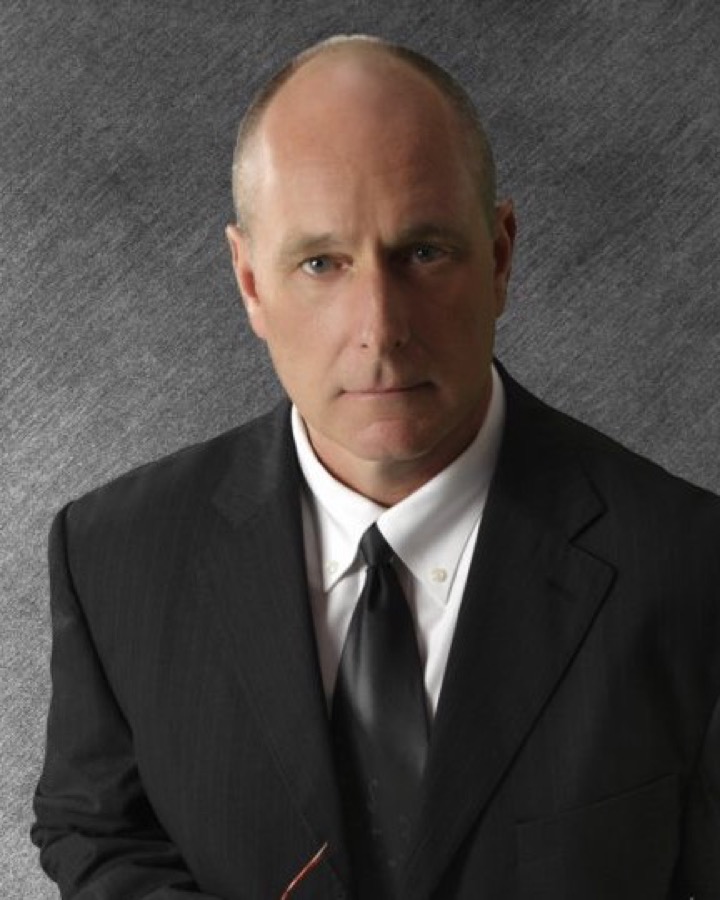 CEO & Owner
Thirty-eight years in four uniforms: street cop, soldier, professor, investigator. More than 220 matters in 42 states and D.C. since 2014, with testimony that has not been excluded at trial in any state or federal court.
Full biography Consultant
More than thirty-five years in public safety: twelve years and three terms as the elected Sheriff of Lewis County, Washington, and six years a commissioner of the state board that sets peace-officer training standards.
Full profile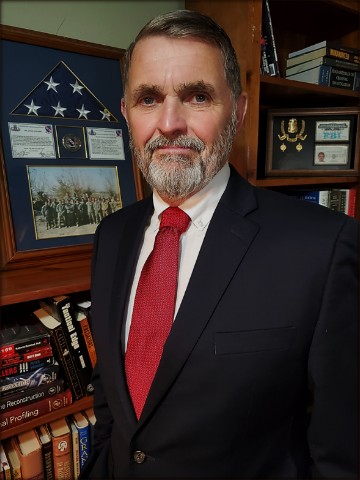 Consultant
Forty years of investigative casework, from patrolman in St. Louis County to the FBI in Chicago, and on to task forces in Afghanistan and Liberia. His work on the Idaho student murders is examined in Broken Plea, the New York Times bestseller by Christopher Whitcomb.
Full profileNever excluded. Professor Gilbertson’s testimony has not been excluded at trial in any state or federal court.
The Hon. Richard A. Jones United States District Judge“Mr. Gilbertson’s qualifications demonstrate extensive experience in policing. His expansive work as a police officer in Georgia, with assignments as a SWAT team officer, juvenile court investigator, school resource officer, stakeout squad officer, senior patrolman, and patrolman; then a career as a tenured college professor and university lecturer teaching criminal justice courses to degree-seeking students at colleges and universities, and as a licensed private investigator conducting felony pretrial investigations for attorneys in Washington State in dozens of criminal cases, makes him unique in the field of police expert witnesses. The Court finds that, based on his experience, Mr. Gilbertson’s testimony can be expected to have a reliable basis in knowledge and experience of police practices.”
The rule, in one paragraph.
Under Monell v. Department of Social Services, 436 U.S. 658 (1978), a municipality can be sued under 42 U.S.C. § 1983, but not on the theory that it employs a wrongdoer. Respondeat superior does not apply. Liability attaches only where the entity’s own policy, custom or practice caused the constitutional violation: an official policy, a practice so settled that it carries the force of policy, a decision by a final policymaker, or deliberate indifference to an obvious need, most familiarly a need to train.
City of Canton v. Harris, 489 U.S. 378 (1989) supplies the training branch: a failure to train can support municipal liability where the shortfall amounts to deliberate indifference to the rights of the people officers encounter. That is a demanding standard, and it is the reason a Monell theory almost never rests on the incident alone.
Two consequences follow, and they set the shape of the whole case. The individual claim and the municipal claim run on different proof: one officer’s conduct on one night, against an organization’s conduct over years. And the elements are legal ones whose framing varies by circuit. What counts as a policymaker, what pattern establishes a custom, and what notice makes indifference deliberate are questions for counsel and the court.
The recognized routes to entity liability.
- An official written policy that itself directs or permits the violation
- A custom or practice so persistent that it operates as policy in fact
- A decision or ratification by an official with final policymaking authority
- Deliberate indifference in training, where the need was obvious and unmet
- Deliberate indifference in supervision, discipline, hiring or retention
Why these are document cases.
A Monell claim is proved out of the file cabinet. Where an individual claim can turn on four minutes of video, the municipal claim turns on years of paper: policies across their revisions, academy and in-service curricula, rosters and lesson plans, complaint intake records, internal investigations and their outcomes, discipline histories, early-warning data, and prior incidents that resemble this one.
The theory lives in the relationship among those documents rather than in any one of them. A policy that reads well but was never taught. A complaint process that logs everything and sustains nothing. A supervisory review that approves force it should have questioned. Each is a statement about how the organization actually operated, and each is built from records that existed before the lawsuit did.
None of that record is an opinion until it is organized. The value of the file is the order it is finally put in.
Because the proof is documentary, the request list matters more here than in nearly any other kind of case, and the discovery schedule should account for the volume. The Monell record checklist sets out the categories item by item, and it is worth assembling before the disclosure deadline rather than in response to it.
Volume is also the reason these matters are scoped early. The record arrives on physical media after retention, and a municipal file can be an order of magnitude larger than the incident file. Counsel who identify the pattern categories at the outset get a usable analysis; counsel who send everything and ask what is in it spend the retainer on sorting.
What a police practices expert contributes.
A police practices expert does not opine that a municipality is liable. The contribution is narrower and, in a document case, load-bearing: the organizational record is read, ordered and measured against national standards, so that counsel can argue the elements from facts rather than adjectives.
In practice that means reading the directive that governed on the incident date against IACP model policy and generally accepted practices; reading the training records to see whether the directive was taught, by whom, how often and to what standard; reading complaint and discipline files for what the agency did when it learned of similar conduct; and reading prior incidents for whether the pattern was visible before this one. The layers are separated deliberately, as policy, practice and training describes.
What the analysis produces.
- A dated chronology of what the agency wrote, taught and reviewed
- A comparison of agency policy against national model policy and standards
- An accounting of training actually delivered, not merely adopted
- The complaint and discipline history, and what the agency did with it
- Every place written policy and actual practice diverge, cited to the record
The boundary holds in both directions, and it is stated in the report. Whether a pattern rises to a custom, whether an official is a final policymaker, and whether indifference was deliberate are legal determinations that remain counsel’s and the court’s. The report says what the standards required and what the records show. Casework of this kind runs through Monell pattern and practice support.
When the question becomes a retention.
This page is reference. When a live matter needs the analysis, these are the doors.
Asked alongside this one.
How many prior incidents does a Monell pattern take?
How is a Monell claim different from a failure-to-train claim?
Can the same analysis support the defense of a Monell claim?
Bring the matter behind the question.
Attorney inquiries are answered directly. If a case presents a conflict, you will hear it immediately.
Inquiry sent.
You will hear back directly. If the matter is urgent, call (239) 571-1840.
Conflicts are checked before any substantive discussion. Please do not send privileged material with a first inquiry; after retention the record is exchanged on physical media. Gregory consults for attorneys and their staff only, and does not provide legal advice or attorney referrals to individuals.