

The practices read,
before positions harden.
Direct line: (239) 571-1840 · GregoryGilbertson@proton.me
Attorney and law-firm inquiries only
Mediation and settlement consultation is a listed engagement form: a record-grounded read of the police practices issues in the case, delivered while it can still shape valuation and mediation preparation. Here is what it produces, what it deliberately is not, and when it earns its fee.
Three experts. Over 110 years.
Professor Gregory Gilbertson (Ret.), FBI Special Agent Christopher Holland (Ret.), and Sheriff Robert Snaza consult with attorneys nationwide regarding police practices and procedures, use of force, false arrest, police misconduct, criminal, and self-defense casework.
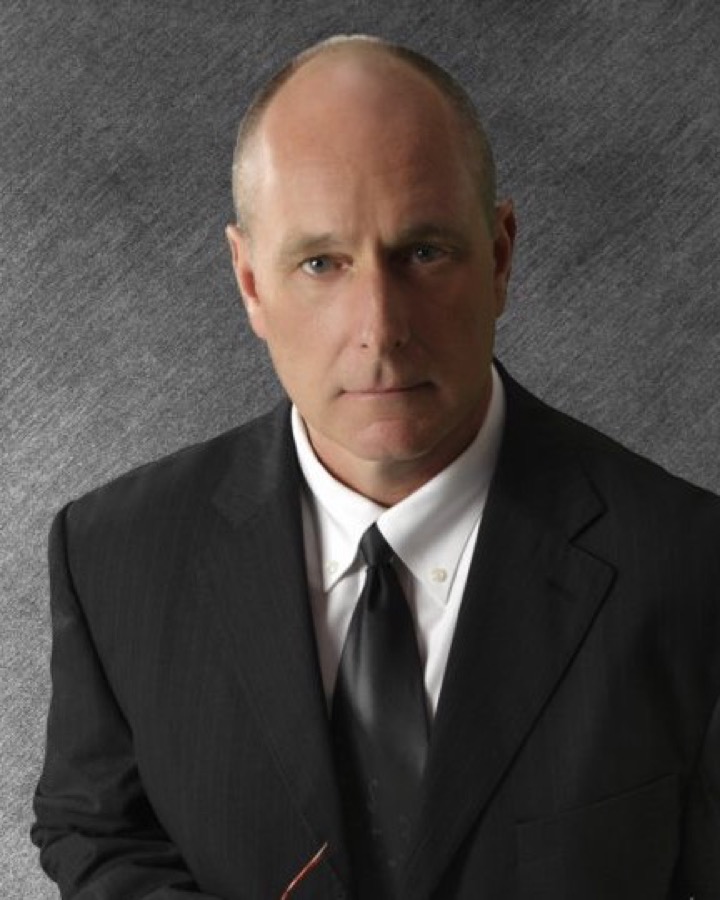 CEO & Owner
Thirty-eight years in four uniforms: street cop, soldier, professor, investigator. More than 220 matters in 42 states and D.C. since 2014, with testimony that has not been excluded at trial in any state or federal court.
Full biography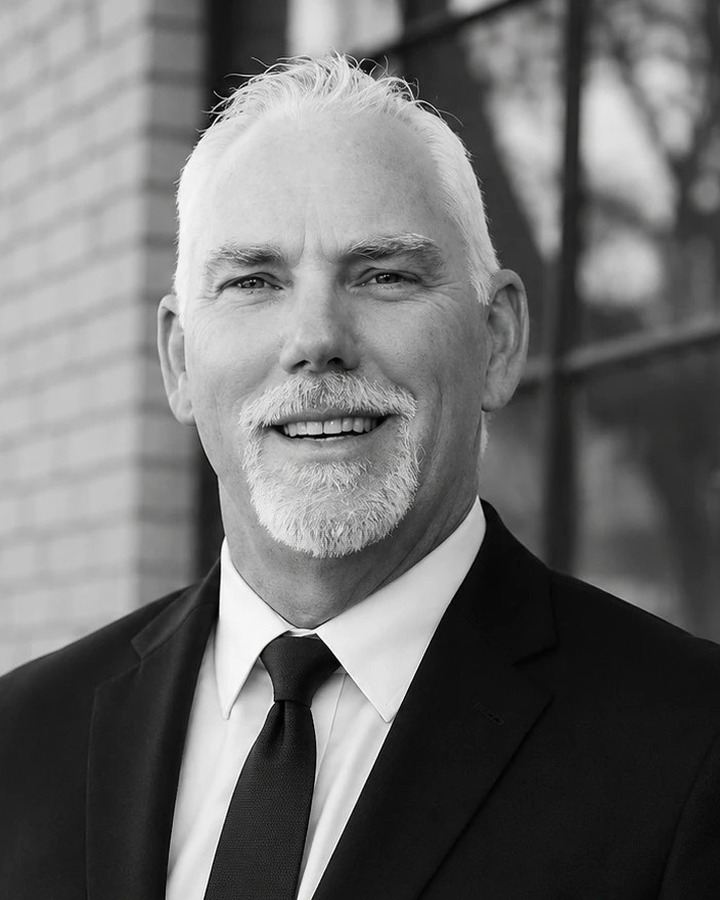 Consultant
More than thirty-five years in public safety: twelve years and three terms as the elected Sheriff of Lewis County, Washington, and six years a commissioner of the state board that sets peace-officer training standards.
Full profile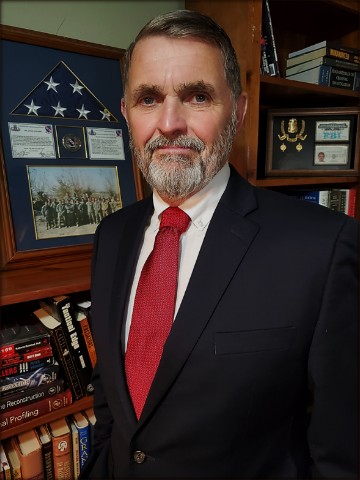 Consultant
Forty years of investigative casework, from patrolman in St. Louis County to the FBI in Chicago, and on to task forces in Afghanistan and Liberia. His work on the Idaho student murders is examined in Broken Plea, the New York Times bestseller by Christopher Whitcomb.
Full profileNever excluded. Professor Gilbertson’s testimony has not been excluded at trial in any state or federal court.
The Hon. Richard A. Jones United States District Judge“Mr. Gilbertson’s qualifications demonstrate extensive experience in policing. His expansive work as a police officer in Georgia, with assignments as a SWAT team officer, juvenile court investigator, school resource officer, stakeout squad officer, senior patrolman, and patrolman; then a career as a tenured college professor and university lecturer teaching criminal justice courses to degree-seeking students at colleges and universities, and as a licensed private investigator conducting felony pretrial investigations for attorneys in Washington State in dozens of criminal cases, makes him unique in the field of police expert witnesses. The Court finds that, based on his experience, Mr. Gilbertson’s testimony can be expected to have a reliable basis in knowledge and experience of police practices.”
A listed engagement form, not an afterthought.
Mediation and settlement consultation sits on the practice’s list of engagement forms alongside written reports, deposition work and trial testimony, and it deserves to be scoped like the others rather than improvised off the side of a testifying retention. The work is a police practices read of the record, organized for the decisions counsel faces at mediation rather than for a disclosure deadline.
Most police cases resolve without a verdict, which means the practices analysis often does its most consequential work in a conference room rather than a courtroom. The questions are the ones a report would answer, posed earlier and used differently: what the record shows the officers did, what generally accepted police practices called for in those circumstances, and where the two align or diverge. An excessive force claim, a false arrest theory, a deficient investigation: each has a practices spine, and the spine is what gets priced at mediation whether anyone has examined it or not.
The engagement runs on the same rails as every other form. Conflict check first, retention on the published schedule, and the record travels on physical media. What changes is the deliverable and its audience: counsel preparing a negotiation, not a court file. Because the questions are the same ones a testifying report would face, nothing in the read has to be walked back later if the case refuses to settle.
Both sides bring this engagement, for symmetrical reasons. Plaintiff’s counsel wants the practices case tested before a demand commits to a number and a theory. Counsel defending officers and agencies wants the exposure read: which practices allegations the record actually sustains, and which will not survive an honest look at the video and the policy file. The read is built the same way for either chair, which is what makes it useful in a room whose whole purpose is reconciling two versions of the same file.
Strengths and soft spots, stated plainly.
What the consultation produces is a candid map of the practices case while positions are still soft. On the strength side: the opinions the record genuinely supports, the video moments and policy provisions that will carry weight, and the practices themes a jury would eventually hear if the case went the distance. Those are the assets counsel can negotiate on with confidence.
- Practices theories that read strong in the complaint but thin in the record, identified before the other side prices them.
- Gaps a mediator or opposing counsel will find first: missing training files, unresolved timeline conflicts, video that cuts both ways.
- Points where the officer’s conduct sits inside generally accepted police practices, stated plainly so counsel does not negotiate on a theory the record cannot carry.
- Practices questions that remain genuinely open on the current record, flagged as open rather than argued away.
Soft spot is not a euphemism for bad case. It means a specific, checkable weakness: a use-of-force report the video does not fully corroborate, a policy provision that reads differently than the complaint assumed, a witness statement that moves the timeline. Named early, most soft spots are manageable, through targeted discovery, through claim selection, or through the number. Unnamed, they surface for the first time in the other side’s mediation statement.
Three boundaries keep the work honest, and counsel should hold any expert to all three. It is not a valuation opinion: what the case is worth is counsel’s judgment, informed by many inputs of which the practices read is one. It is not a legal opinion: legal conclusions remain counsel’s, at mediation as everywhere else, and the expert addresses police practices. And it carries no prediction of outcomes: no forecast of what a jury, a judge, a mediator or the other side will do.
The value of those refusals is practical, not ceremonial. A read that stays inside its lane can be handed to co-counsel, tested against the file, and relied on in the room, because nothing in it depends on the expert pretending to be an appraiser or a lawyer. The moment an expert starts valuing cases, the practices analysis stops being evidence-shaped and starts being advocacy.
In form, the consultation is scoped to what counsel needs: a working session with counsel, a memorandum, or both, agreed at retention. What matters is not the format but the timing and the grounding. Early enough to steer preparation, and tied to the record page by page, so that every observation can be checked against the file rather than taken on authority.
The deliverable in one line: the practices case as it actually stands, heard from your own expert before the other side offers their version of it.
Why a consulting posture usually fits mediation work.
Mediation support is usually scoped as a consulting engagement rather than a testifying one, for practical reasons. The work product exists for counsel’s preparation, not for disclosure. The candor that makes the read valuable comes easier when the analysis is not being drafted for the other side to parse. And many mediations arrive before a testifying disclosure is due, or in cases that will never need one.
Consulting vs testifying experts treats the distinction in full, including how the two postures differ in discovery exposure and how a consulting engagement can convert to a testifying one when a case refuses to resolve. How a particular engagement is designated, and what that designation means under the discovery rules of the forum, is a legal question that remains counsel’s.
The conversion path is worth planning at the scoping stage. If mediation fails, counsel holding a consulting read already knows the shape of what a testifying report would say, which removes the worst kind of surprise from the decision to litigate on. What conversion adds is the formal report and the calendar that comes with it; the sixty-day report timeline is the clock to plan against, and a mediation date and a disclosure deadline can be nearer each other than they look.
The handling rules do not relax because the posture is consulting. Nothing privileged travels with a first inquiry, the conflict check precedes any substantive discussion, and after retention the record moves on physical media, a computer flash drive or external hard drive by mail or courier. Discipline about the file is part of what counsel is buying, whatever the posture.
Earliest is most useful.
The consultation earns its fee in proportion to how early it lands. The useful window opens when the core record exists, the reports, the available video, the key statements, and mediation dates are set or in sight. That is when a practices read can still move strategy: which claims counsel emphasizes, what gets demanded in the remaining discovery, where the case is weaker or stronger than the filing assumed.
What the early read needs is the working core of the file: incident and investigative reports, the available body-worn and surveillance camera video, witness statements, the agency policies counsel holds, and any training or disciplinary records already produced. Where a category is missing, the read names it and says what it would change. If the engagement later converts to a testifying report, that working core grows into the full file described in the discovery file counsel assembles.
The analysis draws on the same complete-record discipline as every other engagement form. A read based on half the file is labeled as exactly that, and the missing half is named, so counsel can decide whether to obtain it or discount for its absence. The same early-read logic applies before a complaint exists at all; case merit evaluation before filing covers that even earlier engagement, and the two often run into each other on the same docket.
A read delivered the week before mediation is not worthless, but it mostly confirms or unsettles decisions counsel has already made. A read delivered while discovery is still open changes what counsel asks for, and that is usually worth more than any single opinion in the document.
And when the read is not what counsel hoped, that is the consultation working as designed. What if the opinion does not help walks through that conversation. Hearing the soft spots from your own expert before mediation is a line item; hearing them from a verdict is a judgment. No outcome is promised either way, and the read never pretends otherwise.
When the question becomes a retention.
This page is reference. When a live matter needs the analysis, these are the doors.
Asked alongside this one.
What does an expert contribute at mediation in a police case?
Should mediation support be a consulting or a testifying engagement?
When is the right time to bring an expert into settlement strategy?
What does retention cost?
Bring the matter behind the question.
Attorney inquiries are answered directly. If a case presents a conflict, you will hear it immediately.
Inquiry sent.
You will hear back directly. If the matter is urgent, call (239) 571-1840.
Conflicts are checked before any substantive discussion. Please do not send privileged material with a first inquiry; after retention the record is exchanged on physical media. Gregory consults for attorneys and their staff only, and does not provide legal advice or attorney referrals to individuals.