

Consulting or testifying:
two retentions, one discipline.
Direct line: (239) 571-1840 · GregoryGilbertson@proton.me
Attorney and law-firm inquiries only
Counsel retains a police practices expert in one of two postures: disclosed and subject to deposition, or consulting quietly behind the strategy. The work is identical; the discovery exposure is not. This page states the distinction plainly and maps where each retention fits.
Three experts. Over 110 years.
Professor Gregory Gilbertson (Ret.), FBI Special Agent Christopher Holland (Ret.), and Sheriff Robert Snaza consult with attorneys nationwide regarding police practices and procedures, use of force, false arrest, police misconduct, criminal, and self-defense casework.
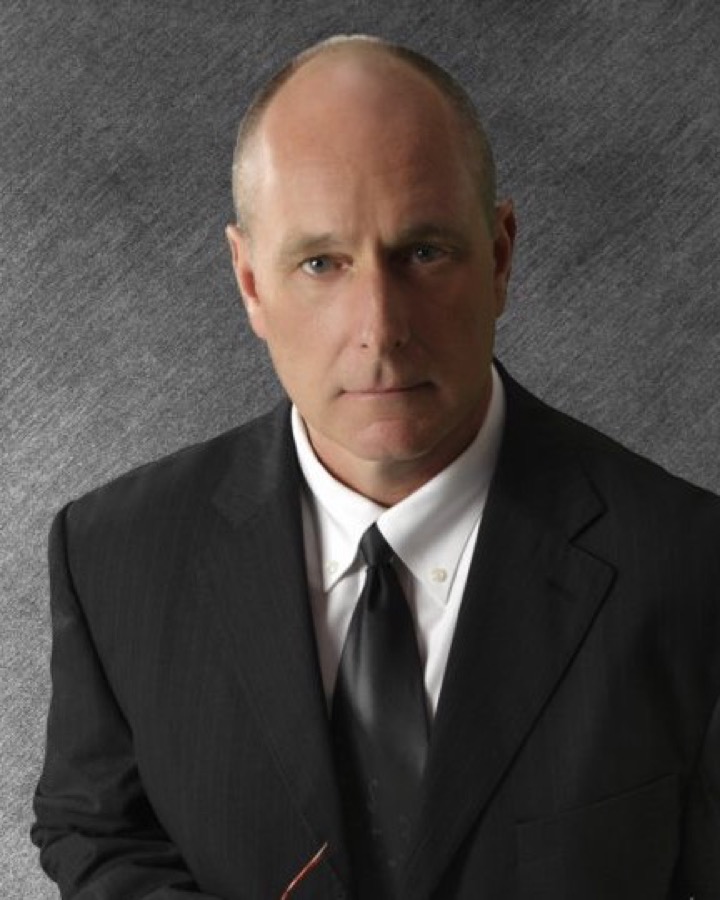 CEO & Owner
Thirty-eight years in four uniforms: street cop, soldier, professor, investigator. More than 220 matters in 42 states and D.C. since 2014, with testimony that has not been excluded at trial in any state or federal court.
Full biography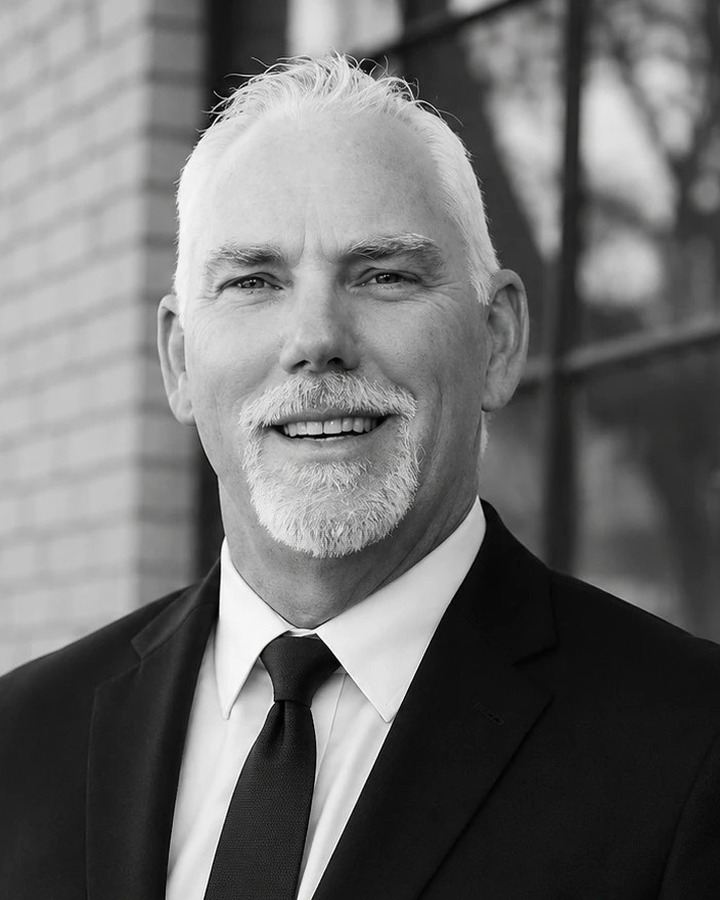 Consultant
More than thirty-five years in public safety: twelve years and three terms as the elected Sheriff of Lewis County, Washington, and six years a commissioner of the state board that sets peace-officer training standards.
Full profile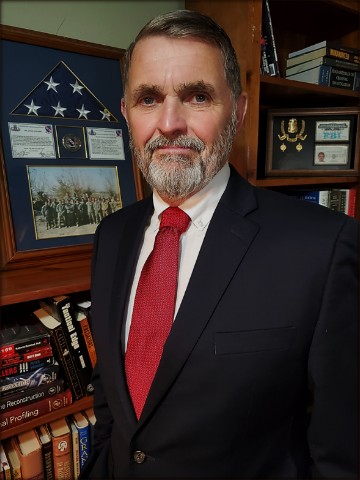 Consultant
Forty years of investigative casework, from patrolman in St. Louis County to the FBI in Chicago, and on to task forces in Afghanistan and Liberia. His work on the Idaho student murders is examined in Broken Plea, the New York Times bestseller by Christopher Whitcomb.
Full profileNever excluded. Professor Gilbertson’s testimony has not been excluded at trial in any state or federal court.
The Hon. Richard A. Jones United States District Judge“Mr. Gilbertson’s qualifications demonstrate extensive experience in policing. His expansive work as a police officer in Georgia, with assignments as a SWAT team officer, juvenile court investigator, school resource officer, stakeout squad officer, senior patrolman, and patrolman; then a career as a tenured college professor and university lecturer teaching criminal justice courses to degree-seeking students at colleges and universities, and as a licensed private investigator conducting felony pretrial investigations for attorneys in Washington State in dozens of criminal cases, makes him unique in the field of police expert witnesses. The Court finds that, based on his experience, Mr. Gilbertson’s testimony can be expected to have a reliable basis in knowledge and experience of police practices.”
Disclosed and deposed, or behind the strategy.
A testifying expert is disclosed to the other side, serves a written report, and sits for deposition; the opinions, their bases and the materials considered become part of the case the other side gets to examine. A consulting-only expert is retained to advise counsel and is not designated to testify; the work feeds counsel’s strategy with substantially different discovery exposure. Fed. R. Civ. P. 26(b)(4) draws this line in federal practice, and state rules draw their own versions of it.
Two points keep the distinction honest. First, the designation is counsel’s call, made on counsel’s schedule; the expert does not choose a posture, and nothing about the retention locks one in at the start. Second, the exact contours of what is discoverable in either posture are procedural law that varies by jurisdiction and by order. Mapping those contours is counsel’s work, and this page states the practical distinction, not legal advice.
The practice treats every engagement, consulting or testifying, as if the file will someday be read aloud in a courtroom. That habit is what makes later designation possible.
What each posture looks like in practice.
The testifying track is visible in every case-management order: the expert is named, a report is served under the disclosure rules, the deposition is taken on the published terms, and the case may end with trial testimony. Each step is public in the sense that matters: the other side sees the work and gets to test it. The value of the posture is exactly that exposure; an opinion that has survived disclosure and cross-examination carries weight a memo never will.
The consulting track produces work counsel uses without serving it: a record-sourced analysis of the police practices questions, delivered to counsel and shaped to the decision at hand, whether that is filing, a discovery plan, a mediation position or the choice of testifying expert. The analysis applies the same standards a disclosed report would cite, because a candid answer counsel can rely on requires the same rigor whether or not it is ever served.
Neither posture outranks the other. They answer different questions: the testifying retention answers what the fact-finder should hear; the consulting retention answers what counsel needs to know. Strong cases often use both in sequence.
Vocabulary varies: consulting-only experts are also called non-testifying or shadow experts, and some orders say retained but not disclosed. The Rule 26(b)(4) line underneath is the same: designated to testify, or not.
The work does not change with the designation.
The designation changes the audience for the work, not the work. In either posture the analysis starts with the complete record on physical media, measures it against national standards, agency policy, statutes and case law, and stays anchored to what was known at the time, on the totality of the facts and circumstances. The same conflict check opens every engagement. The same published fee schedule applies: the minimum retainer, the hourly structure and the timing rules do not vary with the posture; the schedule itself is walked through in police expert witness fees explained.
Consistency is not a courtesy; it is what makes conversion safe. If the consulting analysis were looser than the testifying analysis, counsel could never designate mid-case without rebuilding the file. Because the record protocol, the standards and the documentation discipline are identical, the analysis holds whichever posture it ends up serving. And where the evidence shows officers acted within accepted police practices, the analysis says so in either posture; an assessment that flatters the retention theory is worthless in both.
The record protocol does not bend either. In both postures the full record travels on physical media, a computer flash drive or external hard drive by mail or courier, after the conflict check and scope are set, and nothing privileged moves with a first inquiry. A consulting posture is not an informal posture.
Where a consulting-only retention earns its keep.
Consulting-only fits the stages where counsel needs judgment more than a signature. Four situations account for most of the work.
- Early merit evaluation: a preliminary read of the available record before filing, treated in case merit evaluation before filing.
- Record triage before the theory locks: identifying what should exist and has not yet been requested while discovery is still open.
- Quiet review of an opposing disclosure: a working analysis of the opposing expert’s opinions without serving anything.
- Mediation and settlement support: a candid read of the police practices evidence for the negotiation, covered in mediation and settlement consultation.
Criminal matters have their own version of the quiet posture: report and procedure review for the defense, where the analysis tests the police file before counsel decides what to do with it. The engagement can stay analytical or grow into suppression-hearing and trial testimony as the case demands.
Starting consulting and designating later.
Starting in a consulting posture and designating the same expert later is common, and it is usually the most efficient path to a strong disclosure, because the record review is already done when the designation decision arrives. The conversion still has to be planned. Once designated, the expert serves a report that complies with Fed. R. Civ. P. 26(a)(2)(B), and the disclosure obligations attached to a testifying expert reach materials a purely consulting engagement might have handled differently.
The practical rule is to raise the possibility at retention. When counsel flags that designation may follow, the file is built for it from the first hour: notes kept record-sourced, standards identified as they are applied, drafts and communications handled with the eventual disclosure rules in mind. What those rules require of a served report is set out in Rule 26 expert disclosures explained.
Designation timing also interacts with the rebuttal calendar: an expert consulting quietly on an opposing disclosure can be designated to answer it on the record, but only while the rebuttal window is open, so counsel planning both moves should calendar them together. Conversion in the other direction, withdrawing a designated expert, is a procedural question with case-specific consequences; whether and when to attempt it is counsel’s judgment, not the expert’s.
How counsel usually decides.
Posture usually follows the calendar. Before filing, consulting is the default: the question is merit, and nothing yet needs a signature. In discovery, either fits: consulting while the record is assembled, with designation held for the disclosure deadline. Once disclosure is due, the posture question answers itself; what remains is whether the file was built for the report that now has to be served.
- Evaluating merit before filing: consulting-only, so the answer stays a strategy input rather than a served document.
- Early discovery, record still assembling: consulting, with possible designation raised at retention.
- Disclosure deadline approaching: testifying designation, with the sixty-day report rule driving the retention date.
- Opposing expert disclosed: a quiet review in consulting posture, or a disclosed answer, treated in rebuttal reports and opposing expert review.
- Mediation scheduled: consulting support, with the analysis framed for the negotiation rather than for service.
Stage answers are defaults, not rules. A case with an early dispositive-motion fight may need a disclosed expert sooner than the calendar suggests; a case headed for early mediation may never need one at all. The constant is that the retention exists before the decision point, because a posture cannot be chosen well once the record review it depends on can no longer be scheduled.
The published sixty-day report rule ties the decision to the calendar. Expert reports require sixty days of advance notice, and reports required in less time incur a 25% upcharge; a designation decision left too late buys the upcharge and, more expensively, compresses the analysis. Counsel who suspect a designation is coming are better served converting early than converting late.
Either way, the boundaries hold. The expert addresses police practices; legal conclusions, designation strategy and privilege calls remain counsel’s. Every engagement, in either posture, begins with a conflict check and a defined scope, and if a case presents a conflict, counsel hears it immediately.
When the question becomes a retention.
This page is reference. When a live matter needs the analysis, these are the doors.
Asked alongside this one.
Is the fee schedule different for a consulting-only expert?
Can a consulting expert later become the testifying expert in the same case?
Does a consulting-only engagement still begin with a conflict check?
What does retention cost?
Bring the matter behind the question.
Attorney inquiries are answered directly. If a case presents a conflict, you will hear it immediately.
Inquiry sent.
You will hear back directly. If the matter is urgent, call (239) 571-1840.
Conflicts are checked before any substantive discussion. Please do not send privileged material with a first inquiry; after retention the record is exchanged on physical media. Gregory consults for attorneys and their staff only, and does not provide legal advice or attorney referrals to individuals.