

Investigation terms,
as the file shows them.
Direct line: (239) 571-1840 · GregoryGilbertson@proton.me
Attorney and law-firm inquiries only
Twelve terms from the investigative file, defined by what investigators are expected to do and to document. These describe generally accepted practice rather than the law of any one jurisdiction; whether a documented failure carries legal consequence remains counsel’s argument and the court’s ruling.
Three experts. Over 110 years.
Professor Gregory Gilbertson (Ret.), FBI Special Agent Christopher Holland (Ret.), and Sheriff Robert Snaza consult with attorneys nationwide regarding police practices and procedures, use of force, false arrest, police misconduct, criminal, and self-defense casework.
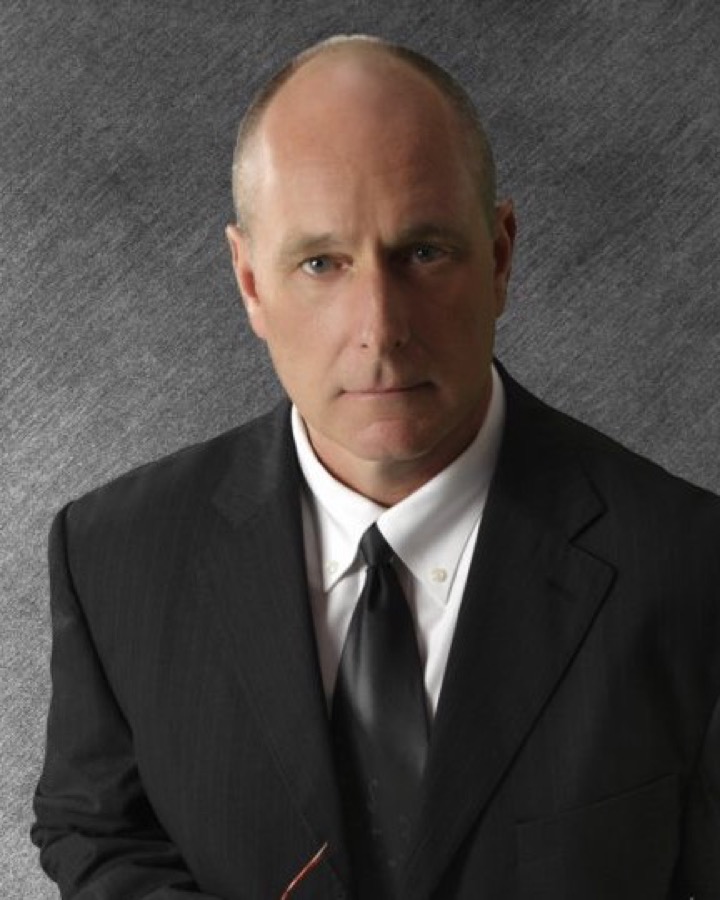 CEO & Owner
Thirty-eight years in four uniforms: street cop, soldier, professor, investigator. More than 220 matters in 42 states and D.C. since 2014, with testimony that has not been excluded at trial in any state or federal court.
Full biography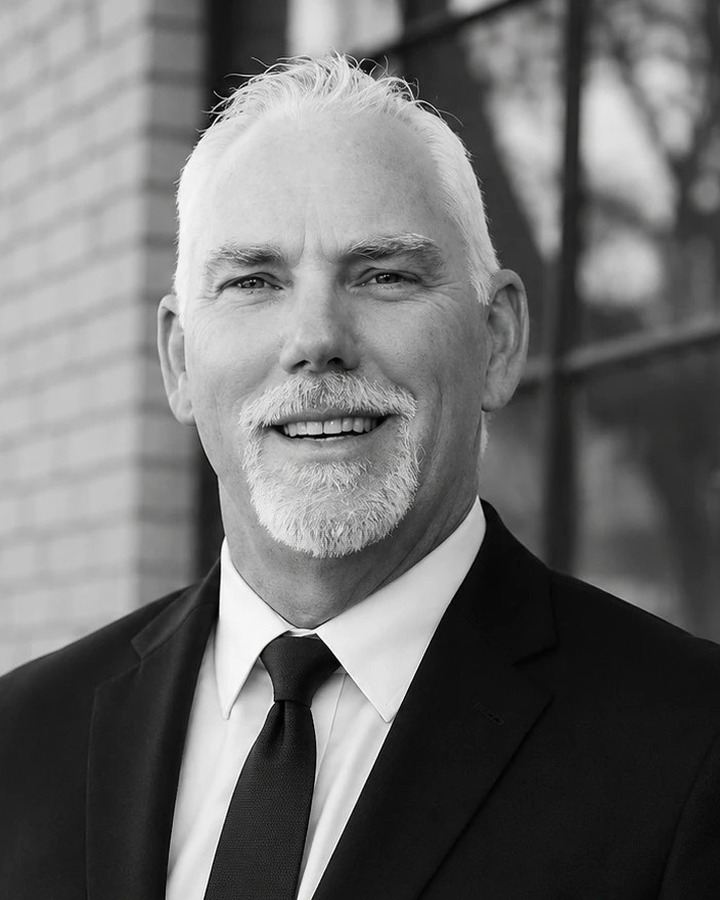 Consultant
More than thirty-five years in public safety: twelve years and three terms as the elected Sheriff of Lewis County, Washington, and six years a commissioner of the state board that sets peace-officer training standards.
Full profile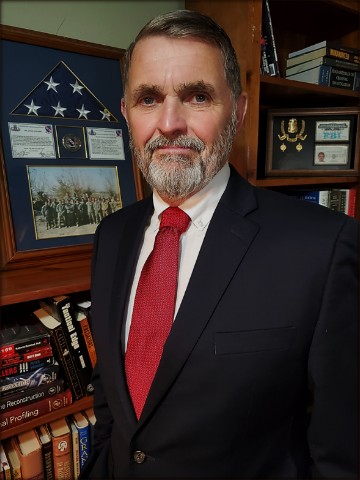 Consultant
Forty years of investigative casework, from patrolman in St. Louis County to the FBI in Chicago, and on to task forces in Afghanistan and Liberia. His work on the Idaho student murders is examined in Broken Plea, the New York Times bestseller by Christopher Whitcomb.
Full profileNever excluded. Professor Gilbertson’s testimony has not been excluded at trial in any state or federal court.
The Hon. Richard A. Jones United States District Judge“Mr. Gilbertson’s qualifications demonstrate extensive experience in policing. His expansive work as a police officer in Georgia, with assignments as a SWAT team officer, juvenile court investigator, school resource officer, stakeout squad officer, senior patrolman, and patrolman; then a career as a tenured college professor and university lecturer teaching criminal justice courses to degree-seeking students at colleges and universities, and as a licensed private investigator conducting felony pretrial investigations for attorneys in Washington State in dozens of criminal cases, makes him unique in the field of police expert witnesses. The Court finds that, based on his experience, Mr. Gilbertson’s testimony can be expected to have a reliable basis in knowledge and experience of police practices.”
What the first hours are supposed to produce.
Investigative deficiency is almost never a single dramatic error. It is an accumulation of things not done and, more often, not written down. The terms below are the units that accumulation is measured in, and each has a paper form a litigator can request. For the documentation standard itself, see crime scene documentation standards.
Control of a scene so that what is in it stays where it was and stays what it was: a defined perimeter, a single controlled point of entry, a log of everyone who crossed it, and the exclusion of personnel with no investigative role. Its record is the entry log and the earliest photographs. Where a laboratory or scene analysis question follows from the physical evidence, it belongs to qualified experts in those disciplines; crime scene analysis is the discipline of FBI Special Agent Christopher Holland (Ret.).
See: Scene documentation →The systematic effort to find people who saw or heard something: doors knocked, businesses asked for video, residents and vehicles noted, all recorded whether or not anyone answered. A canvass has evidentiary value only when its negatives are documented, because a canvass never conducted and a canvass that produced nothing look identical in a report that says nothing about either. Late canvasses and absent canvass records are among the most common documented gaps.
See: related casework →The running record of what was collected, by whom, when, from where, and where it went next. It is the backbone of chain of custody, and in litigation it is read against the photographs, the property room records and the laboratory submissions. Gaps matter in a specific way: an unexplained interval, an item logged well after the fact, a collector who appears in no other document in the file.
See: Chain of custody →An account taken from a person with knowledge, in whatever form the agency uses: recorded interview, written narrative signed by the witness, or a summary drafted by the officer. The form matters as much as the content. A recorded statement can be checked against itself; a summary is already an interpretation. The analysis compares statements with each other, with the reports describing them, and with timeline anchors such as dispatch records and video.
See: Reports that fail →How an investigation narrows too early.
The narrowing that occurs when an early theory of the case begins to filter what is collected and what is credited. It is visible in a file rather than in a mind: leads closed without work, inconsistent evidence left out of the summary, interviews that stop asking questions once the preferred answer arrives. Identifying it requires no opinion about anyone’s state of mind, only a comparison between what the file contains and what accepted practice calls for.
See: Tunnel vision →A person the record identifies as a plausible source of the offense other than the accused. The investigative question is not whether the alternative is guilty. It is whether that lead was worked and documented to the same standard as the lead that was pursued: the interviews conducted, the records requested, the alibi checked, the exclusion supported by something in the file rather than by an unexplained conclusion.
See: related casework →Independent support for a claimed fact from a source that does not depend on the first one. An informant’s account confirmed by a second account from the same informant is not corroboration; the same account confirmed by video, records or physical evidence is. The question gets asked item by item, because a case built on uncorroborated repetition reads sturdier in a summary report than in the documents beneath it.
See: RS vs PC →How an identification procedure was assembled and administered: the selection of fillers, the instructions given to the witness, whether the administrator knew the suspect’s position in the array, whether a confidence statement was taken at the moment of identification, and whether the procedure was recorded. Model policies and national standards address each of those points, and the file usually shows which were followed. Admissibility of the resulting identification is for counsel and the court.
See: related casework →Terms for reading the file afterward.
Information tending to negate guilt or reduce culpability, together with impeachment material bearing on a witness’s credibility, the disclosure obligations traced to Brady v. Maryland, 373 U.S. 83 (1963) and Giglio v. United States, 405 U.S. 150 (1972). The police practices question sits upstream of the legal one: whether the material was documented, indexed and forwarded to the prosecutor at all, or whether it stayed in a working file that never left the agency.
See: Brady and Giglio →A structured read of the entire investigative file against generally accepted practice: what was collected, what was documented, what was left undone, and what the narrative reports assert that the underlying records do not support. It produces a chronology and an itemized gap list rather than a verdict on anyone’s honesty, and it is ordinarily the first work product in a deficient investigation engagement.
See: Record chronology →An unsolved matter reopened after the original investigative activity stopped. Review focuses on what the original file preserved: evidence still in the property room and its custody record, statements never taken, leads closed administratively, and records or capabilities that did not exist when the case was last worked. The recurring finding is documentary rather than dramatic, that the file never captured what was actually done.
See: related casework →Post-conviction examination of the police practices in the original investigation: identification procedures, interview and statement handling, the treatment of alternative suspects, the routing of exculpatory material, and the completeness of the file the defense received. The opinion measures practices against the standards in force at the time, without hindsight, and it does not address innocence, which belongs to the court.
See: related casework →Timeline questions travel with all of these. Dispatch records, body-worn camera and surveillance video are read together in video and timeline reconciliation, which anchors when each documented step actually happened.
When the question becomes a retention.
This page is reference. When a live matter needs the analysis, these are the doors.
Asked alongside this one.
What does a deficient investigation expert actually examine?
Can an expert opine that the wrong person was convicted?
Bring the matter behind the question.
Attorney inquiries are answered directly. If a case presents a conflict, you will hear it immediately.
Inquiry sent.
You will hear back directly. If the matter is urgent, call (239) 571-1840.
Conflicts are checked before any substantive discussion. Please do not send privileged material with a first inquiry; after retention the record is exchanged on physical media. Gregory consults for attorneys and their staff only, and does not provide legal advice or attorney referrals to individuals.