

Police training and certification,
what the file must show.
Direct line: (239) 571-1840 · GregoryGilbertson@proton.me
Attorney and law-firm inquiries only
Training vocabulary is state-specific: the same phrase can describe a two-hour block at one agency and a full course at another. These entries define the terms a training file uses and name the document that proves each one. Legal conclusions remain counsel’s; the analysis addresses police practices.
Three experts. Over 110 years.
Professor Gregory Gilbertson (Ret.), FBI Special Agent Christopher Holland (Ret.), and Sheriff Robert Snaza consult with attorneys nationwide regarding police practices and procedures, use of force, false arrest, police misconduct, criminal, and self-defense casework.
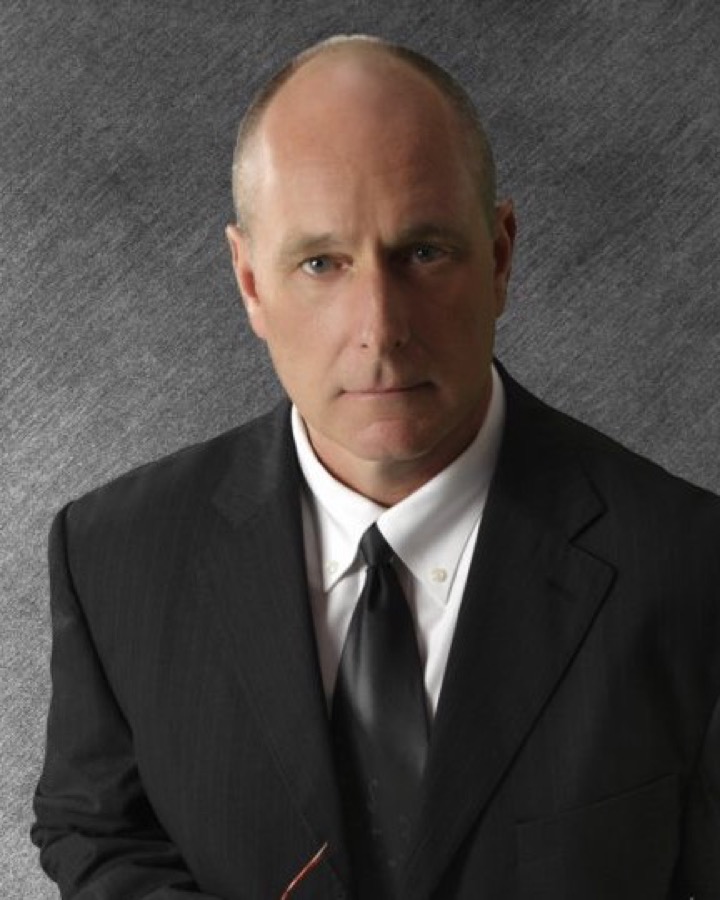 CEO & Owner
Thirty-eight years in four uniforms: street cop, soldier, professor, investigator. More than 220 matters in 42 states and D.C. since 2014, with testimony that has not been excluded at trial in any state or federal court.
Full biography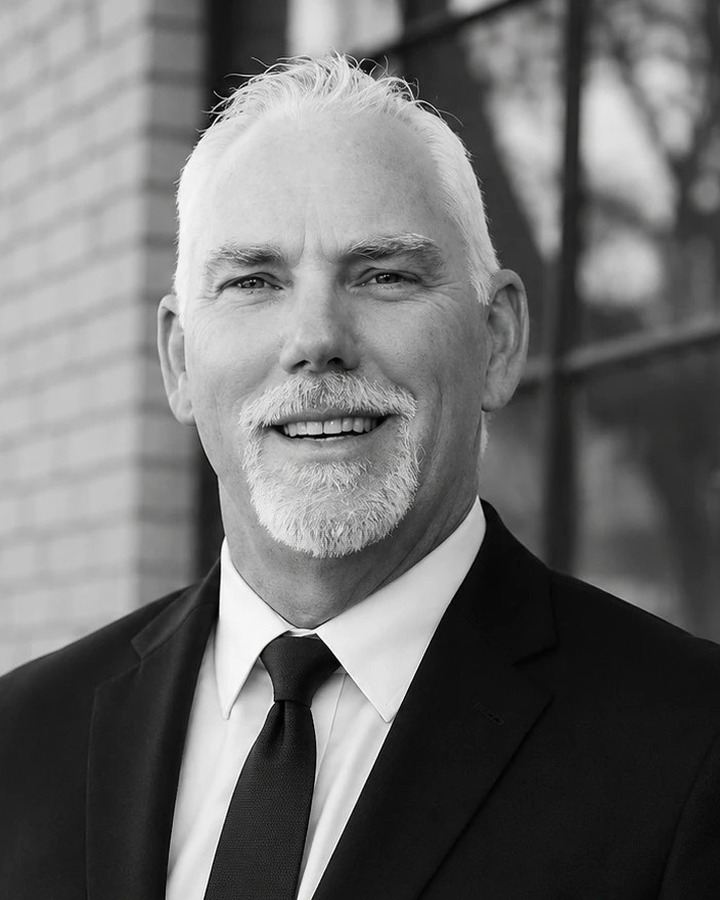 Consultant
More than thirty-five years in public safety: twelve years and three terms as the elected Sheriff of Lewis County, Washington, and six years a commissioner of the state board that sets peace-officer training standards.
Full profile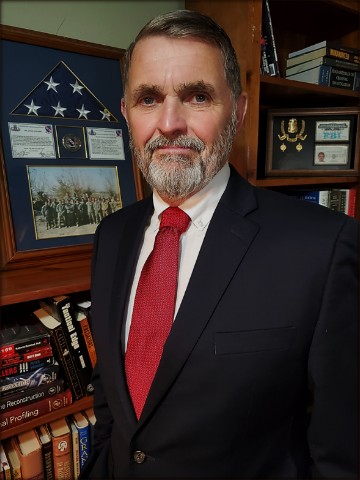 Consultant
Forty years of investigative casework, from patrolman in St. Louis County to the FBI in Chicago, and on to task forces in Afghanistan and Liberia. His work on the Idaho student murders is examined in Broken Plea, the New York Times bestseller by Christopher Whitcomb.
Full profileNever excluded. Professor Gilbertson’s testimony has not been excluded at trial in any state or federal court.
The Hon. Richard A. Jones United States District Judge“Mr. Gilbertson’s qualifications demonstrate extensive experience in policing. His expansive work as a police officer in Georgia, with assignments as a SWAT team officer, juvenile court investigator, school resource officer, stakeout squad officer, senior patrolman, and patrolman; then a career as a tenured college professor and university lecturer teaching criminal justice courses to degree-seeking students at colleges and universities, and as a licensed private investigator conducting felony pretrial investigations for attorneys in Washington State in dozens of criminal cases, makes him unique in the field of police expert witnesses. The Court finds that, based on his experience, Mr. Gilbertson’s testimony can be expected to have a reliable basis in knowledge and experience of police practices.”
Who certifies an officer, and who can undo it.
Certification is a state function, and the vocabulary changes at every state line. What a certification record does and does not prove is covered in POST certification explained; the separate, voluntary accreditation layer is described in CALEA accreditation explained.
The state body, Peace Officer Standards and Training, that sets minimum standards for hiring, basic training and continued certification of officers, and that can suspend or revoke a certification. Names, authority and retention practices vary by state: some hold a complete training history for every officer, others rely on the employing agency to keep it. Counsel generally needs both files, because the state record and the agency record do not always agree.
See: POST certification →The credential an officer holds to teach a discipline, issued after an instructor course and maintained through periodic updates. It matters because it identifies who taught the involved officer and whether that person was current on the curriculum being delivered. Instructor rosters, course completion records and the instructor’s own file are ordinary requests, and they are what connect a written lesson plan to the classroom it was actually delivered in.
See: related casework →State action revoking an officer’s certification and ending the ability to serve as a sworn officer in that state. The grounds are set by statute and commonly include criminal conviction, dishonesty and serious misconduct, and the process is separate from agency discipline. Where a career shows an unexplained departure from one state and a hire in the next, the certification record is where that question gets answered.
See: related casework →A national index, supported by IADLEST, that lets a hiring agency check whether an applicant has had a certification revoked in another state. Coverage depends on what individual states report, so a clean result is not proof of a clean history. In hiring and retention analysis the question is narrower: whether the agency ran the checks available to it, and what it did with what came back.
See: related casework →How an officer is actually trained.
Training arrives in layers, and an analysis follows the layer where the gap sits rather than the agency’s summary of its program. The practices question stays narrow: what was taught, when, by whom, and whether it matched the situation the officer met.
The basic course an officer completes before independent patrol, delivered at a state or agency academy under a state-approved curriculum with hours and topics set by the state. The academy record shows what was taught, when, by whom, and whether the officer passed each block. It establishes the floor of the case: what every officer in that state is presumed to know about force, arrest and search.
See: Training records →The structured field period following the academy, in which a probationary officer works under a field training officer who documents performance in daily observation reports against standardized categories. Those reports are among the most useful records in any training file, because they capture early performance in plain language: the problems noted, the remediation directed, and whether the trainee was signed off despite them.
See: Training records →Recurring training delivered after certification, from state-mandated annual topics to agency updates issued after a policy change or a critical incident. This is the layer where written policy and actual practice most often separate, because a policy can be revised on paper with no training delivered behind it. The records to request are the training calendar, the course rosters, and the sign-in sheets for the involved officers.
See: related casework →Training delivered through role-played encounters and decision exercises rather than lecture, built to develop assessment, communication and decision-making under stress. It is generally accepted as necessary for force, crisis and arrest skills, because the judgment at issue cannot be tested on paper. The litigation questions are whether the agency delivered it, how often, and whether any scenario resembled the situation the officer faced.
See: related casework →Crisis intervention training, delivered to prepare officers to recognize behavioral crisis, slow an encounter down, and coordinate with available mental health resources. Agencies deliver it to widely varying depth, from a short awareness block for everyone to a full course for a designated response team. The record shows who was trained, to what depth, and whether a trained officer was available and requested during the encounter at issue.
See: CIT training →The documents that prove it happened.
Training claims live or die on documents held by more custodians than one request usually reaches, and the deliberate indifference framework counsel works within traces to City of Canton v. Harris, 489 U.S. 378 (1989). The production itself is walked through in what training records reveal.
The instructor’s written plan for a block of instruction: objectives, content, the standards it cites, the practical exercises and the testing. It is the document that establishes what was taught, as distinct from what policy said or what a course title suggests. Lesson plans, handouts, slides and test materials are ordinary discovery in a training matter, and their absence is a finding in its own right.
See: related casework →The abilities that decay without repetition: defensive tactics, emergency vehicle operation, weapons proficiency and de-escalation communication. Many states set refresher intervals in these areas for that reason. The record question is a question of dates, because what an officer was taught in a basic academy block a decade earlier carries different weight than what that officer last practiced before the incident.
See: Policy vs practice →Additional training directed after a performance failure, a complaint or a policy violation, sometimes in place of formal discipline. It is a supervision record as much as a training record, because it documents that the agency identified a problem and chose a response to it. The analysis looks for completion and follow-through: whether the training was delivered, documented, and whether the conduct that prompted it recurred.
See: related casework →When the question becomes a retention.
This page is reference. When a live matter needs the analysis, these are the doors.
Asked alongside this one.
Does a certificate of completion prove an officer was trained?
Can the expert say an agency was deliberately indifferent to training?
Bring the matter behind the question.
Attorney inquiries are answered directly. If a case presents a conflict, you will hear it immediately.
Inquiry sent.
You will hear back directly. If the matter is urgent, call (239) 571-1840.
Conflicts are checked before any substantive discussion. Please do not send privileged material with a first inquiry; after retention the record is exchanged on physical media. Gregory consults for attorneys and their staff only, and does not provide legal advice or attorney referrals to individuals.