

Use-of-force terms,
defined for litigators.
Direct line: (239) 571-1840 · GregoryGilbertson@proton.me
Attorney and law-firm inquiries only
Force vocabulary is not uniform across agencies, and deposition answers turn on which definition the witness is using. These entries state what each term means in police practices, where it comes from, and what the record usually shows about it. Legal conclusions remain counsel’s; the definitions address practices.
Three experts. Over 110 years.
Professor Gregory Gilbertson (Ret.), FBI Special Agent Christopher Holland (Ret.), and Sheriff Robert Snaza consult with attorneys nationwide regarding police practices and procedures, use of force, false arrest, police misconduct, criminal, and self-defense casework.
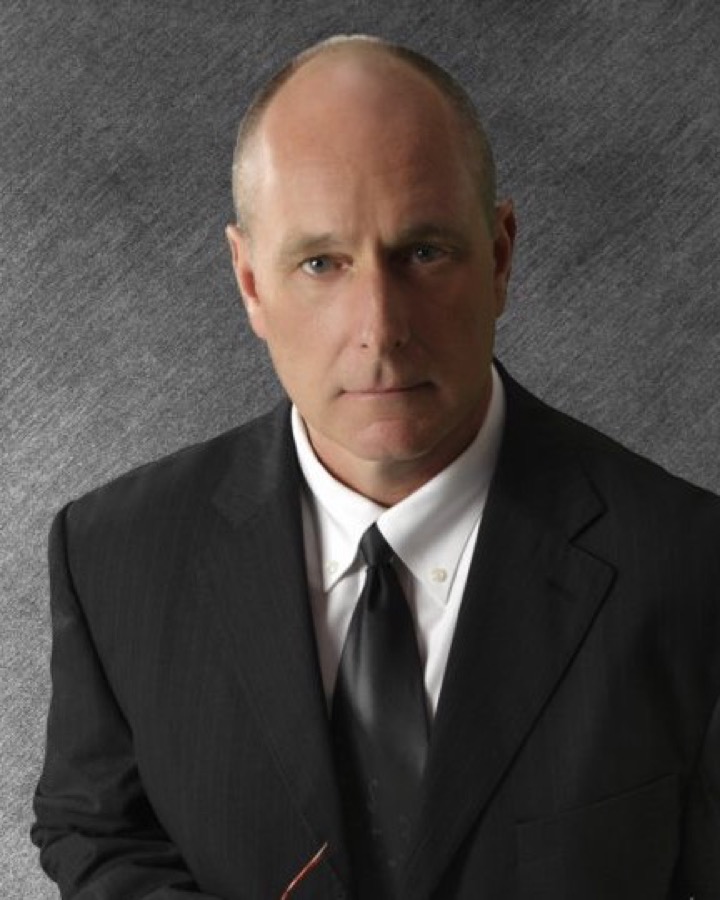 CEO & Owner
Thirty-eight years in four uniforms: street cop, soldier, professor, investigator. More than 220 matters in 42 states and D.C. since 2014, with testimony that has not been excluded at trial in any state or federal court.
Full biography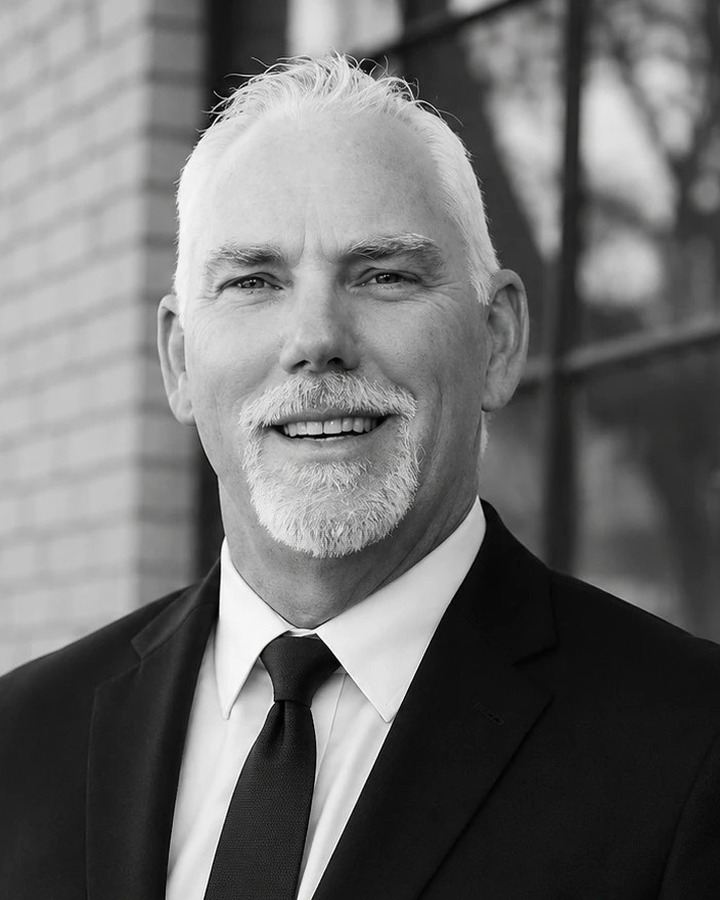 Consultant
More than thirty-five years in public safety: twelve years and three terms as the elected Sheriff of Lewis County, Washington, and six years a commissioner of the state board that sets peace-officer training standards.
Full profile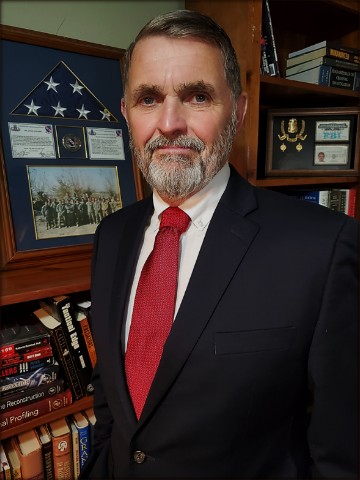 Consultant
Forty years of investigative casework, from patrolman in St. Louis County to the FBI in Chicago, and on to task forces in Afghanistan and Liberia. His work on the Idaho student murders is examined in Broken Plea, the New York Times bestseller by Christopher Whitcomb.
Full profileNever excluded. Professor Gilbertson’s testimony has not been excluded at trial in any state or federal court.
The Hon. Richard A. Jones United States District Judge“Mr. Gilbertson’s qualifications demonstrate extensive experience in policing. His expansive work as a police officer in Georgia, with assignments as a SWAT team officer, juvenile court investigator, school resource officer, stakeout squad officer, senior patrolman, and patrolman; then a career as a tenured college professor and university lecturer teaching criminal justice courses to degree-seeking students at colleges and universities, and as a licensed private investigator conducting felony pretrial investigations for attorneys in Washington State in dozens of criminal cases, makes him unique in the field of police expert witnesses. The Court finds that, based on his experience, Mr. Gilbertson’s testimony can be expected to have a reliable basis in knowledge and experience of police practices.”
The standard and its moving parts.
Every entry below is a police practices term, not a legal test. Where a term carries a case anchor, the anchor is noted so counsel can see which vocabulary belongs to policy and training and which belongs to constitutional analysis. The framework itself is unpacked in the Graham framework explained.
The framework that governs police use of force. Graham v. Connor, 490 U.S. 386 (1989) measures force from the perspective of a reasonable officer facing the same circumstances, weighing the severity of the crime, the immediacy of the threat, and active resistance or attempted flight, on the totality of the facts and circumstances known at the time. Hindsight has no place in it. In practice the analysis rebuilds what the officer knew second by second and measures the response against national standards, agency policy and the officer’s own training.
See: Graham v. Connor →The practices principle that the level of force should correspond to the threat presented and to the seriousness of the offense at issue, and that force should stop when the threat stops. Most agency policy pairs it with necessity: whether a lesser option was available, feasible and trained. In a report, proportionality is examined option by option rather than as a single verdict on the incident, because officers face a series of decisions, not one.
See: Totality of circumstances →The continuing obligation to evaluate whether force remains necessary as conditions change. Force within policy at the first second of a struggle may fall outside it once the subject is controlled, handcuffed or no longer resisting. On video, reassessment is visible as pauses, commands and changes in technique, and its absence is visible too. The analysis marks the moment resistance ends and compares it with the moment force ends.
See: related casework →How agencies describe levels of force.
Two agencies can teach the same tactic under different vocabulary, which is why the model an officer was trained on matters more than the model opposing counsel quotes. The competing structures are compared in force options and decision models.
The lowest level of authority in nearly every agency model: the uniform, the marked vehicle, positioning and demeanor, before anything is touched. It appears in force policy because presence and verbal direction resolve most encounters, and because tactics that give away the advantages of distance, cover and time often precede force. Reports frequently omit this phase, so the arrival sequence usually has to be read from dispatch records and video.
See: De-escalation →A linear model that ranks levels of subject resistance against corresponding officer responses, step by step. Many agencies have moved away from stair-step language toward assessment-based models, and some never adopted it at all. That divergence matters in deposition, where an officer trained on one model is questioned in the vocabulary of another. The reliable source is the written policy and the lesson plans in force on the date of the incident.
See: Force options →Non-linear models that describe force as a repeating loop: observe the subject and the environment, assess threat and risk, decide, act, then reassess and begin again. They are built for encounters that change faster than a ladder of steps can describe. They also generate a testable record, because each pass through the loop carries an articulation that can be compared with what the video shows at that point.
See: Accepted practices →Passive resistance is non-compliance without physical opposition: going limp, refusing to move, ignoring commands. Active resistance involves physical effort against the officer’s control, from pulling away and bracing through assaultive conduct, which most policies place in a separate and higher category. The distinction drives which options policy authorizes, and it is among the most disputed characterizations in any force report, because the officer whose force it justifies is the one who wrote it.
See: related casework →Instruments and thresholds.
Each instrument below carries policy conditions that the label alone does not convey, and several carry cautions specific to crisis encounters covered in mental-health and crisis encounters.
Force delivered by tools designed to gain control with a lower probability of death or serious injury than a firearm. The term is not a promise of safety, which is why policy and training language moved away from calling anything non-lethal. Each instrument carries documented limits: distance, target areas, warnings, the number of applications, and the circumstances in which policy directs caution. Those limits, not the label, are what the analysis measures.
See: related casework →The policy term for a conducted-energy device such as a Taser, deployed by probes at distance or in a contact mode against the body. Policy commonly addresses warnings, the number and duration of cycles, prohibited target areas, and restrictions near flammable substances or elevated positions. The device stores its own activation data, and comparing those records with video and dispatch times is often how the number and length of cycles gets settled.
See: related casework →Oleoresin capsicum spray and related irritants, carried as an intermediate option. The practices questions are the distance of the application, whether a warning was given and compliance was possible, the number of bursts, whether uninvolved people were exposed, and whether decontamination and aid followed within the time policy directs. Effects on a particular person are for qualified medical experts; the analysis stays on what policy and training required of the officer.
See: related casework →A baton, straight or expandable, and by extension the launched less-lethal projectiles some agencies field. Training designates approved target areas, and designates others, notably the head, neck and spine, as areas struck only where deadly force would be justified. The written record therefore has to answer three questions: where the strikes landed, how many there were, and what the officer articulated before each one.
See: related casework →Force that creates a substantial risk of causing death or serious physical injury, which in most policies includes any discharge of a firearm at a person and certain neck restraints. Tennessee v. Garner, 471 U.S. 1 (1985) addressed force used against a fleeing subject, and Graham supplies the reasonableness framework applied to the rest. Agency policy often adds requirements the case law does not: warnings where feasible, restrictions on shooting at or from vehicles, and reporting duties.
See: Tennessee v. Garner →When the question becomes a retention.
This page is reference. When a live matter needs the analysis, these are the doors.
Asked alongside this one.
Do these force terms mean the same thing at every agency?
Does the expert decide whether the force was reasonable?
Bring the matter behind the question.
Attorney inquiries are answered directly. If a case presents a conflict, you will hear it immediately.
Inquiry sent.
You will hear back directly. If the matter is urgent, call (239) 571-1840.
Conflicts are checked before any substantive discussion. Please do not send privileged material with a first inquiry; after retention the record is exchanged on physical media. Gregory consults for attorneys and their staff only, and does not provide legal advice or attorney referrals to individuals.