

Police records and reports,
what each one shows.
Direct line: (239) 571-1840 · GregoryGilbertson@proton.me
Attorney and law-firm inquiries only
A police case is won or lost on records that carry different names in every agency. These entries state what each record is, which custodian holds it, and what it tends to prove or fail to prove once the file is assembled. Legal conclusions remain counsel’s; the analysis addresses police practices.
Three experts. Over 110 years.
Professor Gregory Gilbertson (Ret.), FBI Special Agent Christopher Holland (Ret.), and Sheriff Robert Snaza consult with attorneys nationwide regarding police practices and procedures, use of force, false arrest, police misconduct, criminal, and self-defense casework.
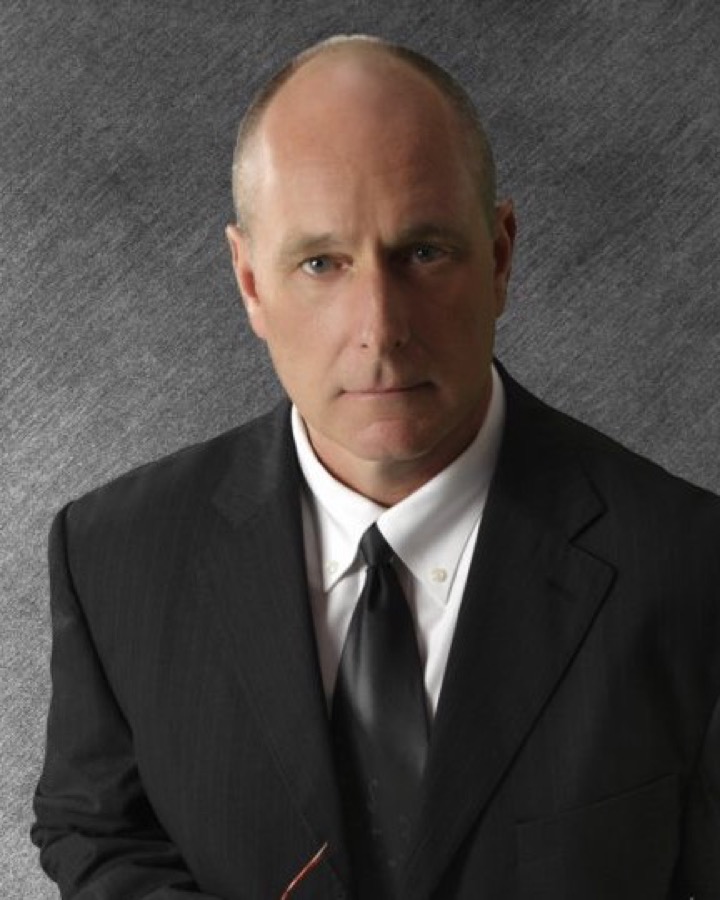 CEO & Owner
Thirty-eight years in four uniforms: street cop, soldier, professor, investigator. More than 220 matters in 42 states and D.C. since 2014, with testimony that has not been excluded at trial in any state or federal court.
Full biography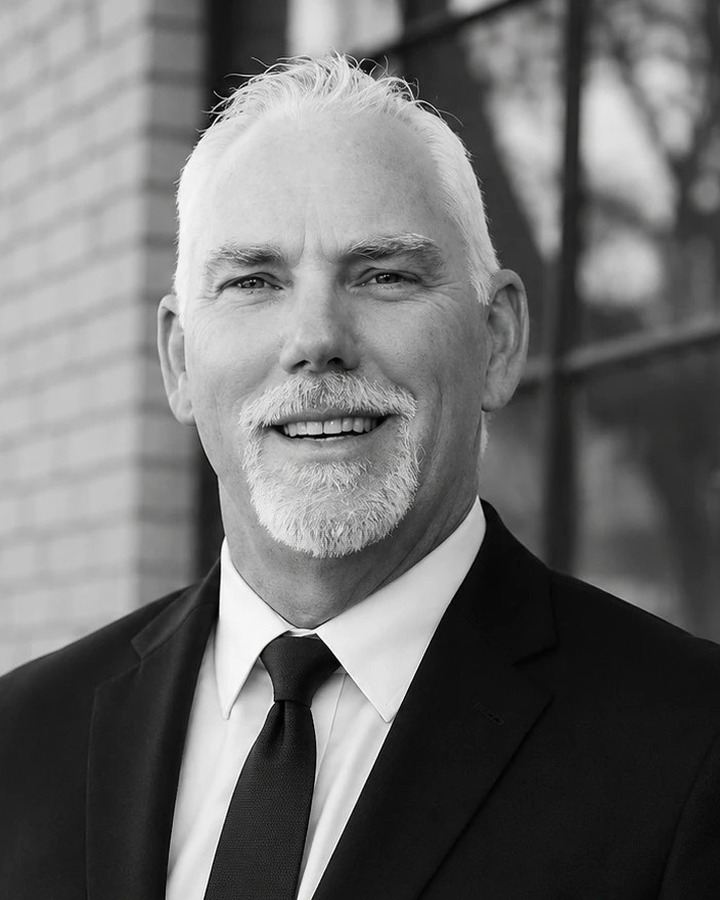 Consultant
More than thirty-five years in public safety: twelve years and three terms as the elected Sheriff of Lewis County, Washington, and six years a commissioner of the state board that sets peace-officer training standards.
Full profile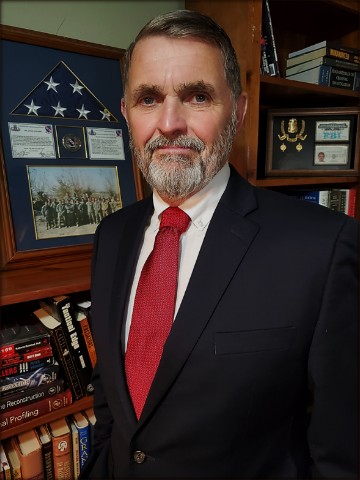 Consultant
Forty years of investigative casework, from patrolman in St. Louis County to the FBI in Chicago, and on to task forces in Afghanistan and Liberia. His work on the Idaho student murders is examined in Broken Plea, the New York Times bestseller by Christopher Whitcomb.
Full profileNever excluded. Professor Gilbertson’s testimony has not been excluded at trial in any state or federal court.
The Hon. Richard A. Jones United States District Judge“Mr. Gilbertson’s qualifications demonstrate extensive experience in policing. His expansive work as a police officer in Georgia, with assignments as a SWAT team officer, juvenile court investigator, school resource officer, stakeout squad officer, senior patrolman, and patrolman; then a career as a tenured college professor and university lecturer teaching criminal justice courses to degree-seeking students at colleges and universities, and as a licensed private investigator conducting felony pretrial investigations for attorneys in Washington State in dozens of criminal cases, makes him unique in the field of police expert witnesses. The Court finds that, based on his experience, Mr. Gilbertson’s testimony can be expected to have a reliable basis in knowledge and experience of police practices.”
Records the systems generate.
These four are created without an author’s judgment, which is why they anchor everything written afterward. Aligning them is the first step described in building the record chronology.
The dispatch system’s own log of an incident: when the call came in, how it was classified, which units were assigned, and the timestamped status changes as officers were dispatched, arrived and cleared. It is machine-generated and carries almost no narrative, which is why it anchors the timeline that reports and testimony are measured against. Counsel should request the full incident detail rather than the summary printout, along with the recorded call audio.
See: Record chronology →Officer-carried video governed by an activation policy, usually with a pre-event buffer that captures silent video before the record button is pressed, and with internal timestamps that may not match real time. It supplies the only continuous account of an encounter, but only within the frame: what the camera did not capture still has to be established from other sources. Activation and deactivation times are themselves evidence of what policy required.
See: related casework →Vehicle-mounted video, often triggered automatically by emergency equipment, with a wider and steadier field of view than a chest-mounted camera and an audio channel from the officer’s wireless microphone. It documents driving, positioning and the approach, including the moments before an officer’s own camera was activated. Every unit in a multi-car response holds a separate recording, and a request written for one unit rarely produces the rest.
See: related casework →The recorded voice channel: dispatch broadcasts, officer transmissions, requests for additional units, and the suspect descriptions actually put out over the air. It shows what the responding officers knew and when they knew it, which is the central question in both force and arrest analysis. Recorded audio often differs from the paraphrase that reaches the report, and that difference is the reason to request the audio itself.
See: Record chronology →Records officers create.
Written reports are accounts, not recordings, and the analysis measures them against the recordings rather than the other way round. The failure patterns are catalogued in how police reports fail.
The officer’s narrative account of the event, written after it. Agencies train a structure: what was observed, what was said, what was done, and the articulation supporting each decision. The recurring problems are conclusory language that recites a standard instead of the facts behind it, omission of the officer’s own tactical choices, and passive constructions that describe force without naming who applied it.
See: Reports that fail →A later report adding to the original: additional witnesses, evidence submissions, follow-up interviews, or a second officer’s account of the same event. Supplements are dated, and the dates matter, because a supplement written after a complaint was filed or after video was reviewed reads differently than one written on the same shift. A complete production includes every supplement, not only the initial narrative.
See: Supplemental reports →The separate administrative form most agencies require whenever force is used, capturing the force type, the resistance level assigned to the subject, reported injuries, supervisory notification and the review that followed. It is written in the agency’s own policy vocabulary, which makes it the cleanest place to see how the officer and the reviewing supervisor classified the event at the time. A missing form is itself a practices finding.
See: Force review boards →The documented sequence of who handled an item of evidence, when, and for what purpose, from collection through storage to examination and return. It is maintained through property forms, evidence logs and transfer entries. A gap does not establish that anything was altered; it establishes that the record cannot show nothing was. The practices analysis stays on the documentation and the agency’s property procedures, and leaves laboratory questions to qualified experts.
See: Chain of custody →Records the agency keeps about the officer.
This group is produced late, in pieces, and often from more than one custodian. What a thorough administrative investigation should contain is set out in internal affairs review standards.
The administrative investigation of a complaint: intake documents, the assigned investigator’s working file, interviews of officers and civilians, recordings, and the findings memorandum. It shows both what was alleged and how the agency examined it. The quality of that examination is itself a subject of analysis: whether the complainant and independent witnesses were interviewed, whether available video was reviewed, and whether the questions asked matched the allegation made.
See: Internal affairs →The finding entered at the close of an administrative investigation, drawn from a fixed set of terms. Sustained means the allegation was supported. Not sustained means the evidence was insufficient either way. Exonerated means the conduct occurred and was found within policy. Unfounded means the alleged act did not occur. The words are not interchangeable, and an exonerated finding records the agency’s own policy conclusion rather than an outside review of it.
See: related casework →A statement an officer gives under compulsion in an administrative investigation, where a refusal to answer carries discipline. Garrity v. New Jersey, 385 U.S. 493 (1967) addresses the use of such compelled statements in a criminal prosecution, and agencies keep administrative and criminal investigations separated for that reason. The practical questions for counsel are which investigation a statement came from, who had access to it, and how the separation was documented.
See: Garrity statements →The employment record: assignments, evaluations, commendations, complaint and discipline history, and training documentation, frequently split across custodians so that one request reaches only part of it. Prior complaints and discipline feed supervision, retention and pattern analysis, and material bearing on an officer’s credibility may be subject to disclosure under Giglio v. United States, 405 U.S. 150 (1972). See credibility disclosure in police files.
See: Training records →When the question becomes a retention.
This page is reference. When a live matter needs the analysis, these are the doors.
Asked alongside this one.
Which records anchor a use-of-force timeline?
Does the analysis address whether a video was altered or enhanced?
Bring the matter behind the question.
Attorney inquiries are answered directly. If a case presents a conflict, you will hear it immediately.
Inquiry sent.
You will hear back directly. If the matter is urgent, call (239) 571-1840.
Conflicts are checked before any substantive discussion. Please do not send privileged material with a first inquiry; after retention the record is exchanged on physical media. Gregory consults for attorneys and their staff only, and does not provide legal advice or attorney referrals to individuals.