

Expert litigation terms,
defined for counsel.
Direct line: (239) 571-1840 · GregoryGilbertson@proton.me
Attorney and law-firm inquiries only
Twelve terms that decide how a police practices expert enters a case, what the expert may write, and where the opinion stops. These are working definitions for the engagement, not legal advice; the procedural questions behind them stay with counsel and the court.
Three experts. Over 110 years.
Professor Gregory Gilbertson (Ret.), FBI Special Agent Christopher Holland (Ret.), and Sheriff Robert Snaza consult with attorneys nationwide regarding police practices and procedures, use of force, false arrest, police misconduct, criminal, and self-defense casework.
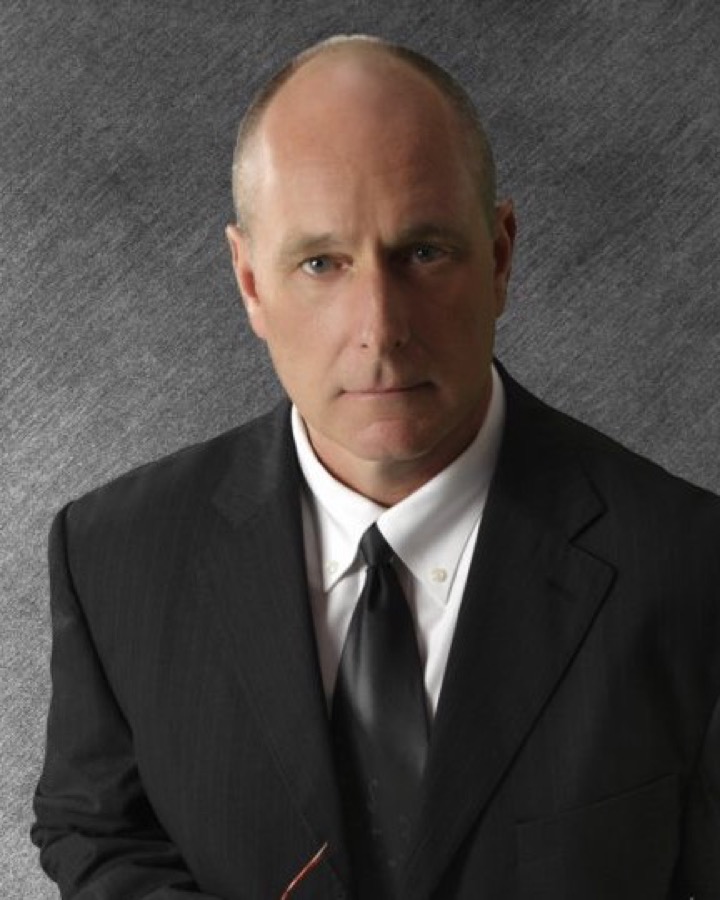 CEO & Owner
Thirty-eight years in four uniforms: street cop, soldier, professor, investigator. More than 220 matters in 42 states and D.C. since 2014, with testimony that has not been excluded at trial in any state or federal court.
Full biography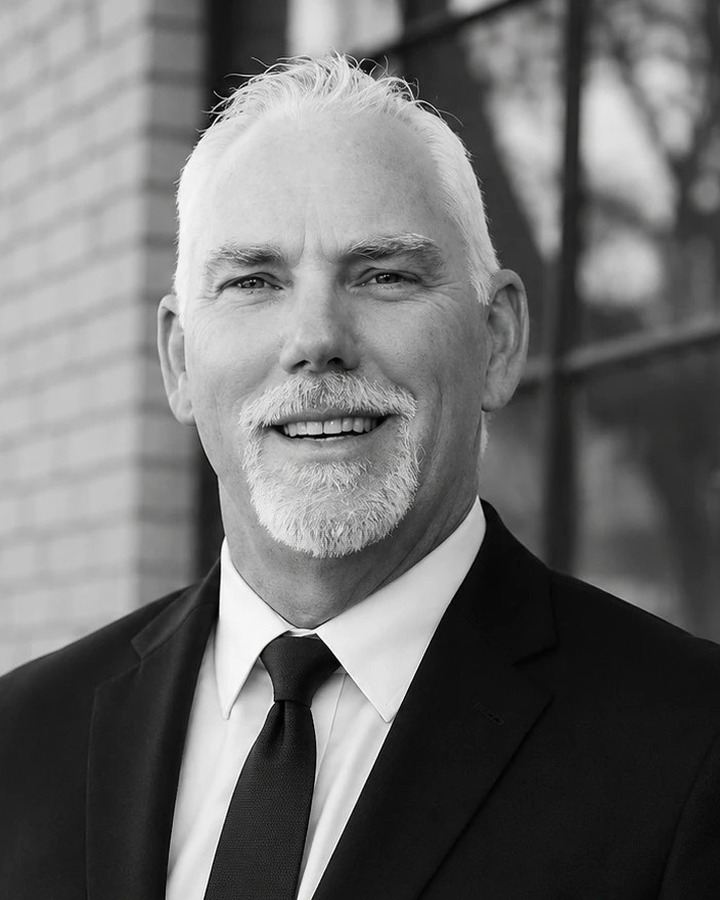 Consultant
More than thirty-five years in public safety: twelve years and three terms as the elected Sheriff of Lewis County, Washington, and six years a commissioner of the state board that sets peace-officer training standards.
Full profile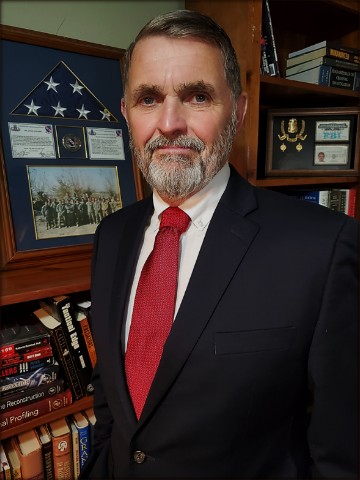 Consultant
Forty years of investigative casework, from patrolman in St. Louis County to the FBI in Chicago, and on to task forces in Afghanistan and Liberia. His work on the Idaho student murders is examined in Broken Plea, the New York Times bestseller by Christopher Whitcomb.
Full profileNever excluded. Professor Gilbertson’s testimony has not been excluded at trial in any state or federal court.
The Hon. Richard A. Jones United States District Judge“Mr. Gilbertson’s qualifications demonstrate extensive experience in policing. His expansive work as a police officer in Georgia, with assignments as a SWAT team officer, juvenile court investigator, school resource officer, stakeout squad officer, senior patrolman, and patrolman; then a career as a tenured college professor and university lecturer teaching criminal justice courses to degree-seeking students at colleges and universities, and as a licensed private investigator conducting felony pretrial investigations for attorneys in Washington State in dozens of criminal cases, makes him unique in the field of police expert witnesses. The Court finds that, based on his experience, Mr. Gilbertson’s testimony can be expected to have a reliable basis in knowledge and experience of police practices.”
Who is who in an expert engagement.
Most of this vocabulary is borrowed from the rules of procedure, and the borrowing is where confusion starts: a term can mean one thing in a scheduling order and something narrower in a deposition. The entries below describe how each term actually operates once a police practices expert is in the case. For the scope of the work itself, see what a police practices expert does.
The attorney or firm that engages the expert and sets the scope of the work. The retention runs to counsel and counsel’s staff, never to an individual party: the expert is not an attorney, gives no legal advice and makes no attorney referrals. Retaining counsel frames the questions, assembles and ships the record, controls disclosure, and remains responsible for the admissibility of the report and the testimony.
See: related casework →An expert designated to give opinions that are disclosed to the opposing parties, subject to deposition and examination at trial. Designation changes how the file is handled: the facts and data considered, the compensation, and the assumptions counsel supplied are all fair territory on cross. Fed. R. Civ. P. 26(b)(4) shields draft reports and most attorney-expert communications, with stated exceptions, but the working assumption is that the finished analysis must stand on its own.
See: Consulting vs testifying →An expert retained to advise counsel without being disclosed as a witness. Consulting-only engagements support merit evaluation, discovery planning, questions for the depositions of officers and opposing experts, and settlement or mediation strategy. The work generally stays behind the disclosure line unless the expert is later designated. Counsel who may want that option should scope the engagement for it at retention, because the decision changes how the file is built.
See: Consulting vs testifying →The protection that shields materials prepared by or for counsel in anticipation of litigation from ordinary discovery. Its most cited application in expert practice is Fed. R. Civ. P. 26(b)(4), which protects draft expert reports and most communications between counsel and a testifying expert, subject to exceptions for compensation, for facts or data counsel supplied, and for assumptions counsel asked the expert to adopt. How the doctrine applies in a given matter is counsel’s call.
See: Rule 26 disclosures →What the expert actually produces.
The formal identification of an expert to the other parties on the schedule the court sets, ordinarily accompanied for a retained expert by a written report under Fed. R. Civ. P. 26(a)(2)(B). Disclosure dates, not trial dates, are the deadlines that govern expert work, and they run backward through drafting, record review and shipping time. Expert reports require sixty days of advance notice, and reports required in less than sixty days incur a 25% upcharge. Work begins once discovery has been received on physical media.
See: Rule 26 disclosures →The signed written report of a retained testifying expert: the opinions, the basis and reasons for them, the facts and data considered, exhibits, qualifications and publications, prior testimony, and compensation, in the form Fed. R. Civ. P. 26(a)(2)(B) describes. In police practices work the substance is the measurement, the complete record set against agency policy, state and federal law, and national standards on the totality of the facts and circumstances.
See: Report anatomy →A focused response to an opposing expert’s disclosed opinions, addressed to the method and the record rather than to the person. A rebuttal shows what the opposing expert reviewed and did not review, where a stated standard is misattributed or absent from the record, and where an opinion outruns its foundation. It is a separate engagement, from $5,000, on the same record discipline as a primary report.
See: Rebuttal reports →A report that corrects or completes a prior disclosure when new material arrives: late-produced video, a policy revision, a deposition taken after the report was signed. It is not an occasion to rewrite an opinion that met resistance. The disciplined form states what is new in the record, what it changes, what it leaves untouched, and why the original analysis stands or moves.
See: Supplemental reports →Admissibility, examination and the limit on opinion.
The federal rule governing expert testimony: the witness must be qualified, the testimony must help the trier of fact, it must rest on sufficient facts or data and on reliable principles and methods, and those must be reliably applied to the facts of the case. Police practices testimony is experience-based, and Kumho Tire Co. v. Carmichael, 526 U.S. 137 (1999) extends the reliability inquiry past scientific testimony to technical and other specialized knowledge.
See: Daubert and Rule 702 →A motion asking the court to limit or exclude expert testimony under Fed. R. Evid. 702 and the reliability standard of Daubert v. Merrell Dow Pharmaceuticals, Inc., 509 U.S. 579 (1993). The label travels to state court, but state courts set their own admissibility tests, some tracking the federal rule and others retaining a general acceptance standard, so the test that governs is the one the forum applies. In police practices matters the recurring attacks are that the opinion states a legal conclusion, that the standard invoked is not generally accepted, or that the expert reviewed too little of the record. Each is answered on the paper.
See: Daubert and Rule 702 →Examination of an expert’s qualifications before the testimony is received, conducted by opposing counsel and sometimes by the court. It is short, it is about foundation rather than opinion, and it comes before any ruling on whether the witness may testify as an expert. Preparation for it is documentary: a current curriculum vitae, an accurate list of prior testimony, and a clean account of the experience supporting each opinion offered.
See: Depositions →The question the trier of fact must decide, such as whether a defendant is liable or guilty. A police practices expert measures conduct against generally accepted practices, agency policy and national standards; the expert does not tell the jury who should win. Reports state in writing that the opinions address police practices and that legal conclusions remain counsel’s and the court’s, which is also the cleanest answer to a motion arguing the expert invaded the jury’s function.
See: Legal conclusions →Terms that travel with these: the standards vocabulary in the use-of-force lexicon, and the hearing work described under suppression support.
When the question becomes a retention.
This page is reference. When a live matter needs the analysis, these are the doors.
Asked alongside this one.
What is the difference between a consulting expert and a testifying expert?
Can a police practices expert testify to the ultimate issue?
Bring the matter behind the question.
Attorney inquiries are answered directly. If a case presents a conflict, you will hear it immediately.
Inquiry sent.
You will hear back directly. If the matter is urgent, call (239) 571-1840.
Conflicts are checked before any substantive discussion. Please do not send privileged material with a first inquiry; after retention the record is exchanged on physical media. Gregory consults for attorneys and their staff only, and does not provide legal advice or attorney referrals to individuals.