

The stop as it is trained,
and as the record shows it.
Direct line: (239) 571-1840 · GregoryGilbertson@proton.me
Attorney and law-firm inquiries only
Traffic stops are routine, and they are heavily trained, which means the trained sequence is knowable and the departures are visible. This guide walks the ordinary stop step by step, the points where it escalates, and the records that show what actually happened at the window.
Three experts. Over 110 years.
Professor Gregory Gilbertson (Ret.), FBI Special Agent Christopher Holland (Ret.), and Sheriff Robert Snaza consult with attorneys nationwide regarding police practices and procedures, use of force, false arrest, police misconduct, criminal, and self-defense casework.
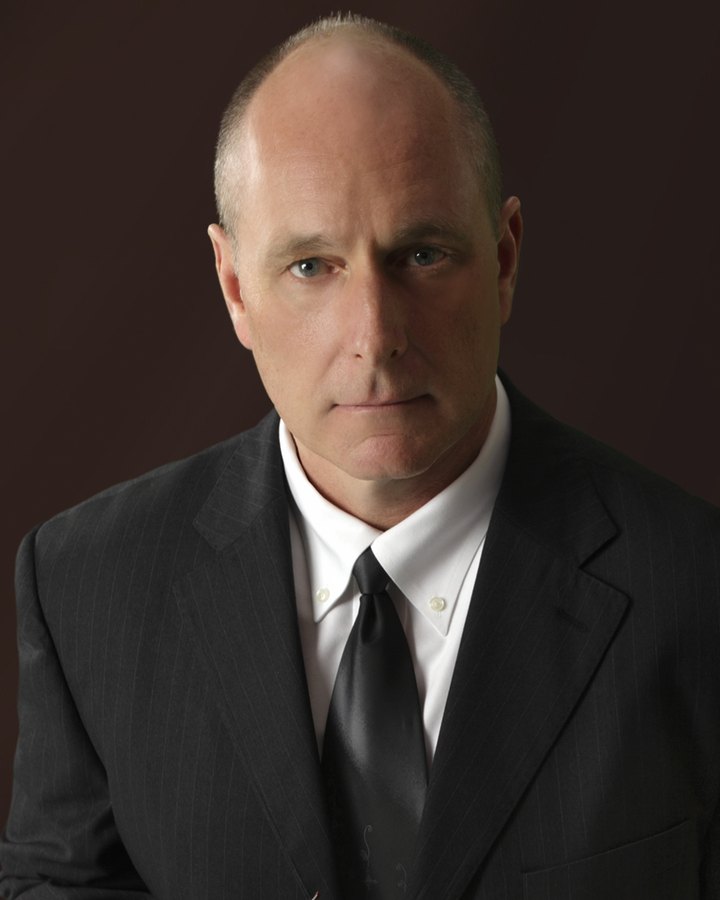 CEO & Owner
Thirty-eight years in four uniforms: street cop, soldier, professor, investigator. More than 220 matters in 42 states and D.C. since 2014.
Full biography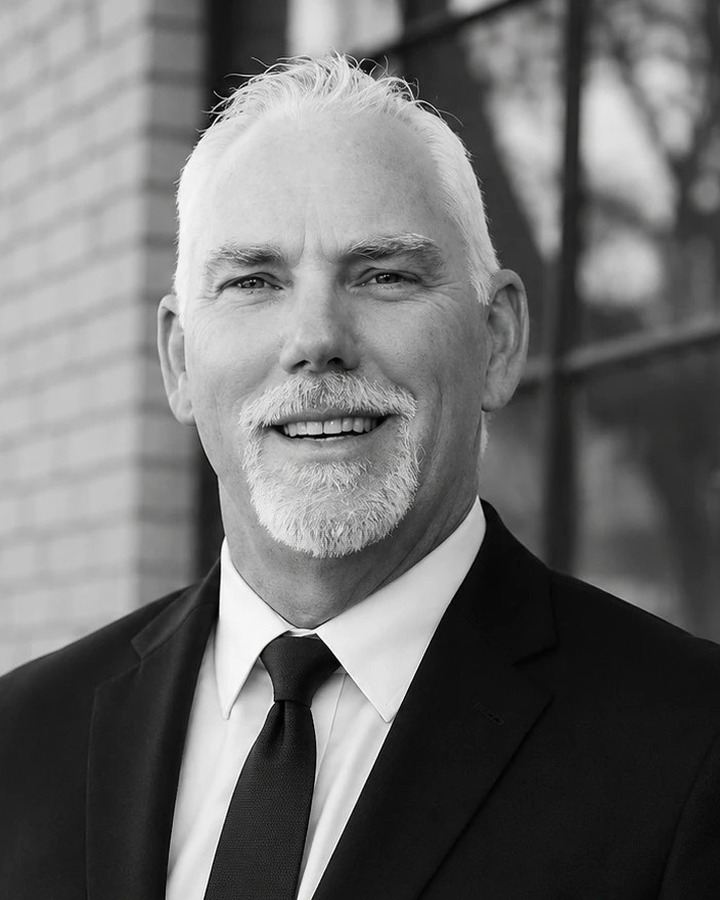 Consultant
More than thirty-five years in public safety: Sheriff of Lewis County, Washington, since his election in 2015, and six years as a commissioner of the state board that sets peace-officer training standards.
Full profile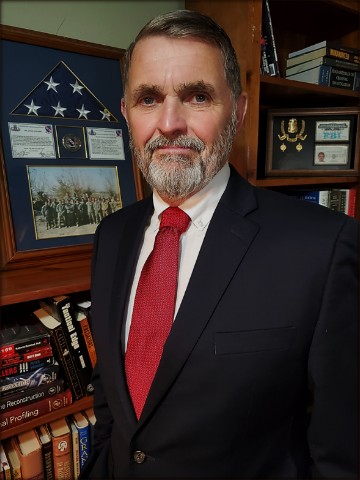 Consultant
Forty years of investigative casework, from patrolman in St. Louis County to the FBI in Chicago, and on to task forces in Afghanistan and Liberia. His work on the Idaho student murders is examined in Broken Plea, the New York Times bestseller by Christopher Whitcomb.
Full profileThe Hon. Richard A. Jones United States District Judge“Mr. Gilbertson’s qualifications demonstrate extensive experience in policing. His expansive work as a police officer in Georgia, with assignments as a SWAT team officer, juvenile court investigator, school resource officer, stakeout squad officer, senior patrolman, and patrolman; then a career as a tenured college professor and university lecturer teaching criminal justice courses to degree-seeking students at colleges and universities, and as a licensed private investigator conducting felony pretrial investigations for attorneys in Washington State in dozens of criminal cases, makes him unique in the field of police expert witnesses. The Court finds that, based on his experience, Mr. Gilbertson’s testimony can be expected to have a reliable basis in knowledge and experience of police practices.”
The stop, in the order it is trained.
A traffic stop is a procedure before it is an event. Academy blocks, field training and in-service refreshers teach it as an ordered sequence, and each step has a stated purpose officers are taught to articulate. That is what makes a stop reviewable: the trained procedure is written down in curricula and agency policy, so the conduct on the video can be laid directly next to it.
Choosing the ground.
Officers are trained not to simply take the stop wherever the violation happened. The decision involves lighting, shoulder width, traffic volume, sight distance for approaching vehicles, and how far it is reasonable to follow before signaling. Where a stop was initiated and where it came to rest are two separate facts, and the distance between them sits in the video and the dispatch record.
Positioning and the initial broadcast.
The patrol vehicle is positioned to create a protected work area and to preserve a view of the occupants. Officers are trained to call the stop in, with location, plate and occupant count, before leaving the car. That broadcast is trained as a safety step, and it is also, later, the earliest timestamped statement of what the officer believed before any contact occurred.
The approach.
The approach is taught with specific attention to angles, the trunk, the occupants’ hands and what is visible through the rear glass, on either the driver or passenger side depending on conditions and agency practice. An officer who approaches in a manner that departs from training is not necessarily doing anything wrong, but the departure is a fact, and where force follows it belongs in the sequence.
None of this is exotic material. It is the ordinary content of academy blocks, field training checklists and in-service refreshers, which is exactly why departures are demonstrable rather than arguable. The curriculum and the agency’s own stop policy state the expectation, and the recording states what happened.
First contact, documents and occupant control.
Contact procedure is commonly trained as a fixed sequence: identify the agency, state the reason for the stop, then request the documents. Officers are taught that the stated reason anchors everything that follows, which is why the reason given at the window is later compared to the reason recorded in the citation, the reason written in the report, and the reason broadcast before contact. Divergence among them is a practices finding on its own.
Occupant control is the part of the procedure most often disputed. Officers are trained to manage where hands are, to control movement into and out of the vehicle, and to give directions that are clear, lawful and one at a time. Passengers occupy their own category in training: they are present, they are not the subject of the violation, and the instruction on how they are addressed, identified and directed is distinct from the instruction on the driver.
- The stated reason for the stop, given at the window and recorded in the paperwork
- Requests for license, registration and proof of insurance, and how compliance was handled
- Directions about hands, movement and remaining in the vehicle, and their sequence
- Passenger contact: what was asked, what was directed, and on what stated basis
- Any order to exit, who gave it, when, and what the officer articulated at the time
- The records check: when it was initiated, and when the return came back
Orders to exit are trained as a discrete decision with a safety rationale and a documentation expectation of their own. What the analysis reads is whether the order was given, when it was given relative to the rest of the stop, what the officer articulated about it at the time rather than afterward, and what happened in the seconds that followed it.
The clearest evidence in most stop cases is not what was said. It is the interval between the records check returning and the person being released, which the dispatch log and the video fix together.
Where an ordinary stop stops being ordinary.
Three escalation questions recur, and each is a practices question before it becomes a legal one. The first is duration. An ordinary stop carries a finite set of tasks: the documents, the records check, the decision to cite or warn, and the paperwork that closes it. The record question is which of those tasks was still open while the person waited on the shoulder, and the dispatch log shows when each one finished, and the dispatch log shows when each one finished.
The second is the decision to search, where the practices question is what the officer articulated as the basis before searching, not what was found afterward. The third is force, which is analyzed the way any force decision is: what the officer knew at the moment an option was selected, how hard it was applied, how long it ran, and not how the stop eventually turned out. The models officers are trained on are set out in force options and decision models.
All three are answered from the same materials and on the same clock: the video, the dispatch log and the radio traffic. They are rarely answered by the report alone, which is written afterward and summarizes the very intervals the case turns on.
What a brief investigative detention is, and what a frisk requires on its own footing, is set out in what a Terry stop is. The thresholds themselves, and the clock they are measured on, are set out in reasonable suspicion versus probable cause.
The felony stop is a different procedure.
A high-risk stop, still called a felony stop in much of the training material, is not an ordinary stop performed with more urgency. It is a separate taught procedure with its own trigger, its own geometry and its own division of labor. Officers are trained to stop farther back, to use the vehicles and their doors for cover, to control the scene from behind that cover, and to bring occupants back toward the officers one at a time rather than approaching the vehicle at all.
- The trigger: what officers knew that justified a high-risk procedure rather than an ordinary stop
- Assignments: contact officer, cover officers, arrest team, and who was running the commands
- Commands: one voice, in sequence, loud enough to carry over engines and passing traffic
- Distance and cover: where officers stood, what they stood behind, and what they could see
- Extraction: occupants directed out one at a time, searched, secured and separated
- The transition: when the high-risk posture ended, and what was articulated at that point
The recurring finding in these cases is a mismatch between the procedure used and the information that justified it, in either direction: a high-risk procedure run on an ordinary stop’s facts, or an ordinary approach made on information that trained officers to do otherwise. A second recurring finding is command discipline, because several officers directing the same occupant at once is a documented training failure with an obvious record, and that record is the video.
A high-risk stop is measured on the information the officers held when they chose the procedure, not on what the vehicle turned out to contain. The trigger is a record fact, and it is usually fixed in the radio traffic.
What the record proves about a stop.
Stops leave an unusually complete record, which is why they are litigated on documents. Body-worn camera (BWC) and in-car video capture the sequence. Computer-aided dispatch (CAD) entries fix when the stop was called in, when the check was run, when the return came back and when the unit cleared. The citation or report states the reason and the disposition, and the records-check log shows what was actually queried.
The analysis lays the trained procedure next to that record, step by step, and states where the two match and where they diverge. The comparison is made item by item with a citation for each: the training standard and the policy language on one side, the video timestamp or the log entry on the other. Where a stop was conducted the way officers are trained to conduct one, the report records it, and that finding carries the same weight as the opposite one.
Vocabulary matters in these cases, because a stop, a detention, a frisk and an arrest are four different things and the words get used loosely in reports and in depositions. The terms are defined in the lexicon of stops, arrests and searches. Whether a stop was lawful, whether it outlasted its justification, and whether it became an arrest in fact are questions counsel argues and the court decides. The analysis stops at the trained procedure and the documented conduct.
When the question becomes a retention.
This page is reference. When a live matter needs the analysis, these are the doors.
Asked alongside this one.
Does a passenger have to identify during a traffic stop?
How is a high-risk or felony stop different?
Which records show what happened during a traffic stop?
Bring the matter behind the question.
Attorney inquiries are answered directly. If a case presents a conflict, you will hear it immediately.
Inquiry sent.
You will hear back directly. If the matter is urgent, call (239) 571-1840.
Conflicts are checked before any substantive discussion. Please do not send privileged material with a first inquiry; after retention the record is exchanged on physical media. Gregory consults for attorneys and their staff only, and does not provide legal advice or attorney referrals to individuals.