

Vetting a Police Practices Expert Witness, Document by Document
Direct line: (239) 571-1840 · GregoryGilbertson@proton.me
Attorney and law-firm inquiries only
Vetting a police practices expert witness is a records exercise. Each question counsel should ask has a document that answers it, from the complete case list and the testimony history to the rulings on motions to exclude, a report already served and a written fee schedule.
Three experts. Over 110 years.
Professor Gregory Gilbertson (Ret.), FBI Special Agent Christopher Holland (Ret.), and Sheriff Robert Snaza consult with attorneys nationwide regarding police practices and procedures, use of force, false arrest, police misconduct, criminal, and self-defense casework.
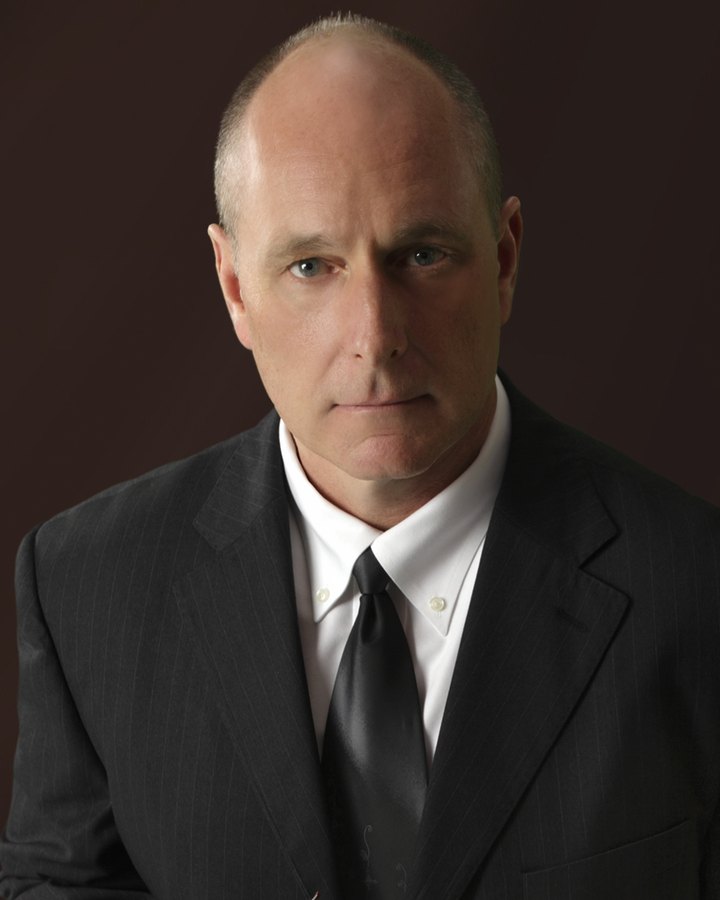 CEO & Owner
Thirty-eight years in four uniforms: street cop, soldier, professor, investigator. More than 220 matters in 42 states and D.C. since 2014.
Full biography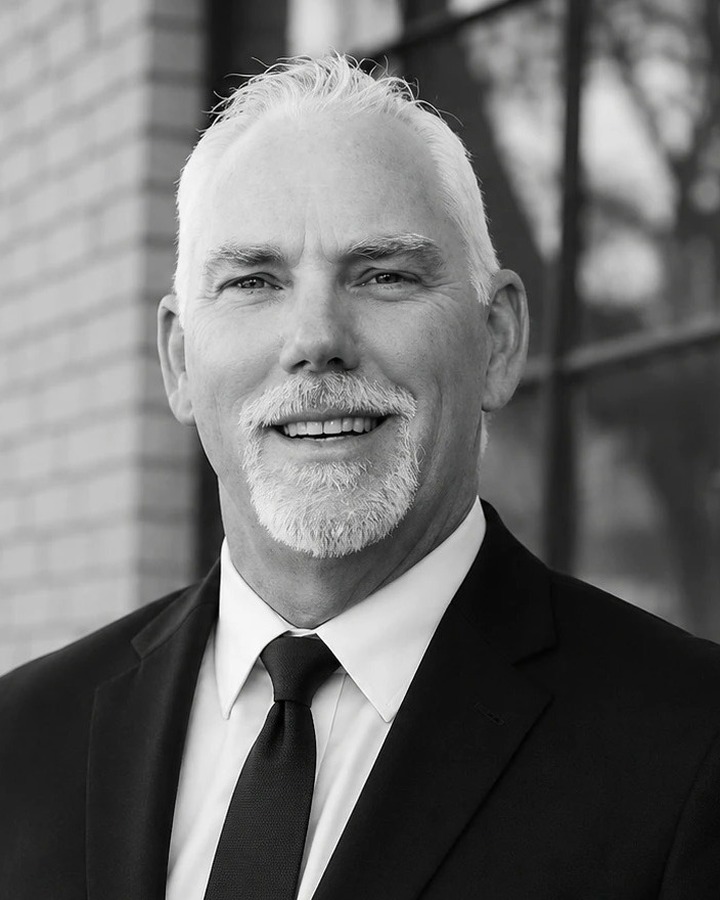 Consultant
More than thirty-five years in public safety: Sheriff of Lewis County, Washington, since his election in 2015, and six years as a commissioner of the state board that sets peace-officer training standards.
Full profile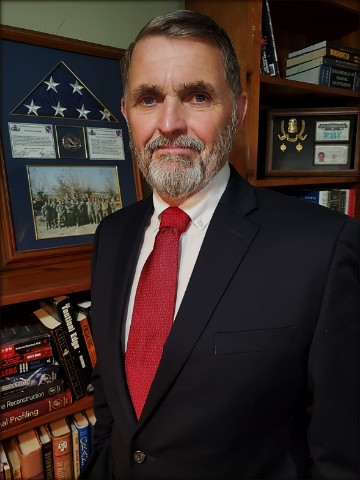 Consultant
Forty years of investigative casework, from patrolman in St. Louis County to the FBI in Chicago, and on to task forces in Afghanistan and Liberia. His work on the Idaho student murders is examined in Broken Plea, the New York Times bestseller by Christopher Whitcomb.
Full profileThe Hon. Richard A. Jones United States District Judge“Mr. Gilbertson’s qualifications demonstrate extensive experience in policing. His expansive work as a police officer in Georgia, with assignments as a SWAT team officer, juvenile court investigator, school resource officer, stakeout squad officer, senior patrolman, and patrolman; then a career as a tenured college professor and university lecturer teaching criminal justice courses to degree-seeking students at colleges and universities, and as a licensed private investigator conducting felony pretrial investigations for attorneys in Washington State in dozens of criminal cases, makes him unique in the field of police expert witnesses. The Court finds that, based on his experience, Mr. Gilbertson’s testimony can be expected to have a reliable basis in knowledge and experience of police practices.”
Every vetting question has a document behind it.
A police practices expert's qualifications, history and methods are all on paper somewhere, and vetting means asking for the paper. A CV states credentials. A complete case list shows what the expert has actually done. A testimony history shows where the opinions have been examined, rulings on motions to exclude show how courts received them, and a report the expert has already served shows how the expert writes. None of it requires counsel to trust a description.
The questions below can be put to any expert in this field, and each is followed by how this practice addresses it. The short form of the list is one answer in the FAQ on the For Counsel page; this page takes the questions one at a time.
Ask for the complete case list, not a selection.
A selection of favorable matters shows only part of an expert's work. The complete list of matters, with the side that retained the expert and the court, shows the actual spread: plaintiff and defense, civil and criminal, state and federal, and the fact patterns the expert has worked. It also shows whether the expert's experience matches the case counsel is bringing.
The published record on this site is a selection, and it says so: the page for the case history lists matters resolved in the client's favor, each with its citation as filed, and states that it is not the complete record. The complete table of cases is provided to retaining counsel on request. The footprint it represents, more than 220 matters across 42 states and the District of Columbia since 2014, is broken down in how many matters, and where.
Ask where the opinions have been examined.
In federal civil litigation, unless otherwise stipulated or ordered by the court, a retained testifying expert's written report must include a list of all other cases in which the witness testified as an expert at trial or by deposition during the previous four years, and a list of all publications the witness authored in the previous ten years, under Fed. R. Civ. P. 26(a)(2)(B). Counsel can ask for both before retention rather than meeting them for the first time in the disclosure, and the rest of what the rule requires is covered in Rule 26 disclosures.
Testimony history also shows the expert under examination. Transcripts of earlier depositions and trial testimony, where counsel can obtain them, show how the expert holds a position under cross-examination and whether the opinions stay inside the discipline. Here, the state and federal courts that have admitted the testimony are named in the same Library note on the practice's footprint.
Ask for every ruling on a motion to exclude.
An expert's exclusion history is the nearest thing to a record of how courts receive the work. The useful question is not only whether testimony was ever excluded but on what ground: an opinion phrased as a legal conclusion, an opinion outside the expert's discipline and a method a court found unreliable each point to a different risk, and the ruling usually says which.
Here, the court's ruling in Alvarez v. King County is quoted on the homepage, and the reliability standard courts apply under Fed. R. Evid. 702 and Daubert v. Merrell Dow Pharmaceuticals, Inc., 509 U.S. 579 (1993), is covered in Daubert and Rule 702.
Ask what the expert did before testifying about it.
Police practices opinions rest on knowledge of police work, and courts weigh where that knowledge came from. Counsel should know whether the expert served as a sworn officer, for how long and in what assignments, whether the expert trained or supervised officers, and whether the expert's knowledge of standards comes from teaching and study, from command, from investigation or from all of them. Each is a legitimate foundation, and a jury hears each one differently.
Here, the answer is thirty-eight years of criminal justice experience, as a police officer in Georgia, a tenured criminal justice professor, a licensed private investigator in Washington State from 2002 to 2022, and an international police trainer and advisor in Iraq and Afghanistan, set out in full on the page for Professor Gilbertson. Where a matter calls for a second discipline, Sheriff Robert Snaza and FBI Special Agent Christopher Holland (Ret.) are retained case by case, each reviewing the record independently within his own discipline.
Ask whether the expert has worked this fact pattern.
General experience is not the same as experience with the fact pattern in front of counsel. A shooting, a death after a restraint, a pursuit, a disputed arrest and a deficient homicide investigation each draw on different policies, different training and different records, and the case list shows whether the expert has worked the one at issue.
Here, the practice areas are published with their scope, and the page on what the discipline covers routes each fact pattern to the analysis it needs.
Ask who has retained the expert, and on which side.
An expert who has only ever been retained by one side can be cross-examined on that fact before a single opinion is reached, and the complete case list answers the question. Here, retention comes from plaintiff's counsel in civil rights matters, from the criminal defense bar and from counsel defending officers and agencies, on the same standards either way. Why that history carries weight with a jury is set out in retained by both sides.
Ask to read a report the expert has already served.
A report shows how an expert thinks. Whether opinions are stated practice by practice, whether each is tied to a document in the record, whether the report defers what lies outside the discipline and whether it avoids legal conclusions can all be checked in a report the expert has already served, where counsel can obtain one from a public filing or from the expert.
Here, the Library sets out how the report is structured, from the materials considered to the opinions and their bases, and the report is written to the line set out in legal conclusions and the expert: legal conclusions remain counsel's, and the expert addresses police practices.
Ask how the opinions are built, before they are built.
An expert's method can be stated before any record is reviewed, and counsel should hear it. Whether the analysis reads the complete record or a summary, and what the expert defers to other disciplines, are questions with plain answers.
Here, opinions rest on the complete record: video, reports, statements, depositions, training files and agency policy, measured against state and federal statutes, case law, reputable academic research and national police standards and practices, on the totality of the facts and circumstances. Use-of-force questions are analyzed under Graham v. Connor, 490 U.S. 386 (1989), anchored to what was known at the time, and where scientific, medical, technical or human factors evidence is involved, qualified experts in those disciplines are deferred to on the record. Where those standards come from is set out in the guide to generally accepted police practices.
Ask for the fees, the timeline and the record-handling rules in writing.
Fees, timelines and logistics belong in vetting because they decide whether the engagement can run on the case's calendar. Before any record moves, counsel should have the fee for the report and whether it is separate from the retainer, the deposition fee and when it is due, the trial and travel terms, the notice the expert needs to write a report, and how the record will be exchanged.
Here, each is published. Retention is a non-refundable $9,000 flat fee covering discovery review and the written expert report; depositions are a $3,500 flat fee per expert; reports require sixty days of advance notice; and after retention the record travels on physical media, never through online sharing services. The complete schedule is at For Counsel, and the Library walks through it line by line under fees explained.
Ask how the first conversation will be handled.
The first contact with an expert should be short and should protect the case. A careful expert runs a conflict check before any substantive discussion and asks that nothing privileged be sent with a first inquiry. What a conversation before retention can and cannot cover is set out in talking to an expert before retention, and what a conflict check screens is covered in what happens in a conflict check.
Here, inquiries are accepted from attorneys, law firms and their staff only. Professor Gilbertson is not an attorney and gives no legal advice and no attorney referrals to individuals, and every engagement opens with a conflict check.
Vetting, asked before the first call.
Should counsel be wary of an expert who promises the testimony will be admitted?
How much casework should a police practices expert have?
Can counsel vet an expert without disclosing the case?
Should counsel ask whether the expert has worked for or against the same agency?
Should counsel see the expert's CV before the first call?
Start with the conflict check.
Attorney inquiries are answered directly. If a case presents a conflict, you will hear it immediately.
Inquiry sent.
You will hear back directly. If the matter is urgent, call (239) 571-1840.
Conflicts are checked before any substantive discussion. Please do not send privileged material with a first inquiry; after retention the record is exchanged on physical media. Gregory consults for attorneys and their staff only, and does not provide legal advice or attorney referrals to individuals.