

Deposing a Police Officer: The Topics the Record Supports
Direct line: (239) 571-1840 · GregoryGilbertson@proton.me
Attorney and law-firm inquiries only
An officer's deposition is where the police practices record is tied to the witness: the training the officer received, the policy in force that day, what the officer knew at each decision, how the report was written and reviewed, and what the agency did afterward. Each topic has a document behind it, and each answer can be measured against that document.
Three experts. Over 110 years.
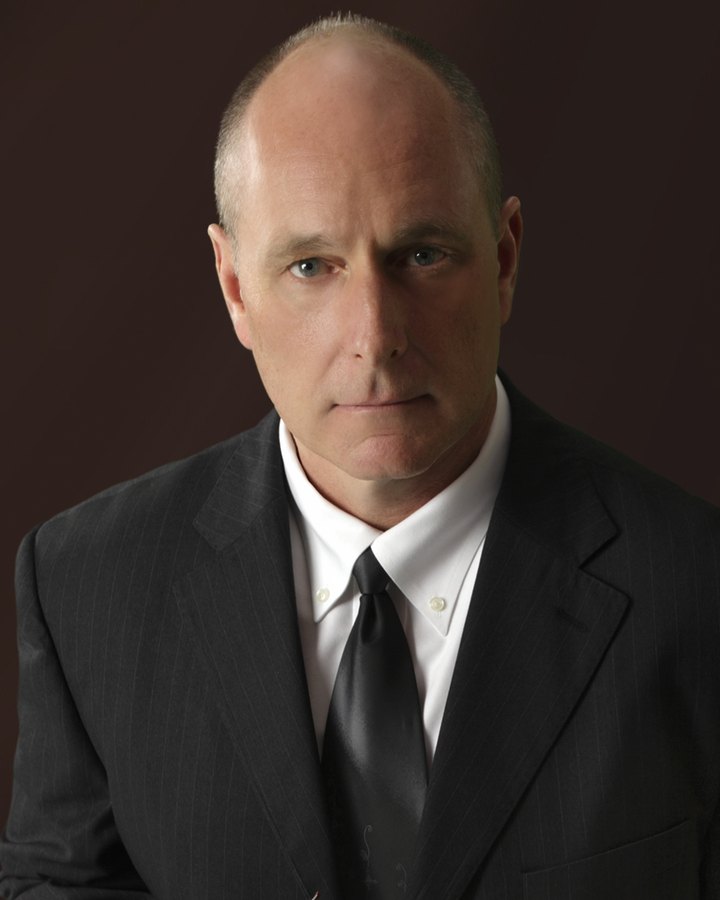
Professor Gregory Gilbertson (Ret.), FBI Special Agent Christopher Holland (Ret.), and Sheriff Robert Snaza consult with attorneys nationwide regarding police practices and procedures, use of force, false arrest, police misconduct, criminal, and self-defense casework.
 CEO & Owner
Thirty-eight years in four uniforms: street cop, soldier, professor, investigator. More than 220 matters in 42 states and D.C. since 2014.
Full biography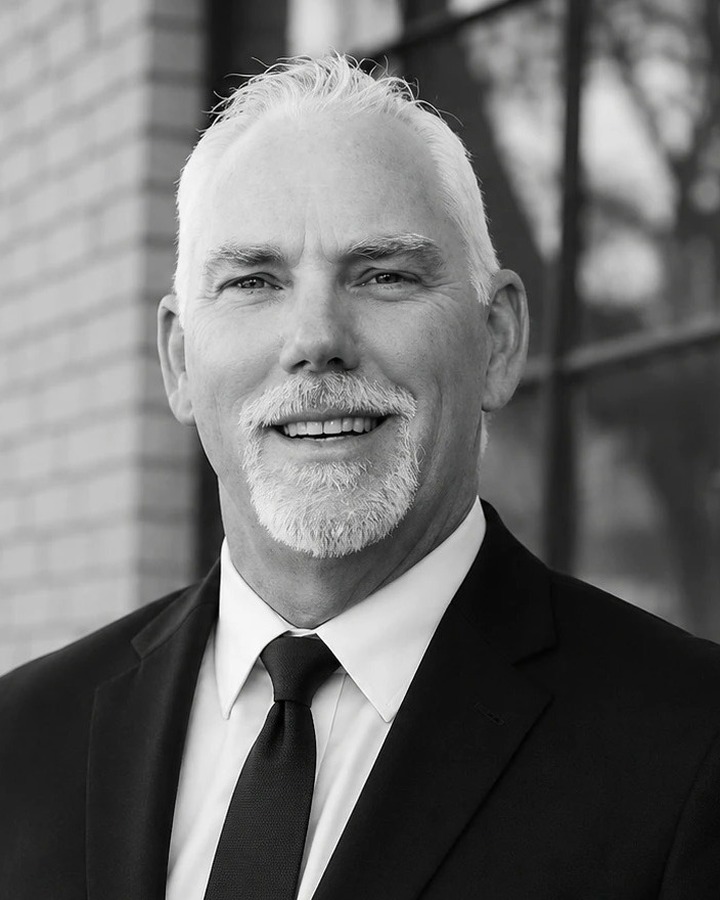 Consultant
More than thirty-five years in public safety: Sheriff of Lewis County, Washington, since his election in 2015, and six years as a commissioner of the state board that sets peace-officer training standards.
Full profile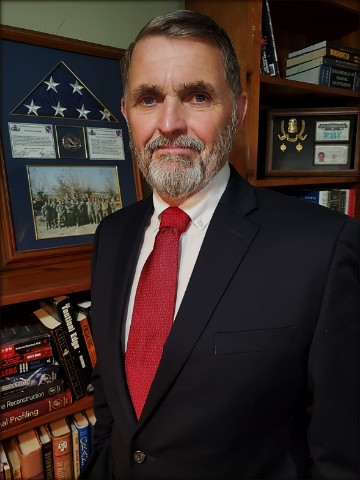 Consultant
Forty years of investigative casework, from patrolman in St. Louis County to the FBI in Chicago, and on to task forces in Afghanistan and Liberia. His work on the Idaho student murders is examined in Broken Plea, the New York Times bestseller by Christopher Whitcomb.
Full profileThe Hon. Richard A. Jones United States District Judge“Mr. Gilbertson’s qualifications demonstrate extensive experience in policing. His expansive work as a police officer in Georgia, with assignments as a SWAT team officer, juvenile court investigator, school resource officer, stakeout squad officer, senior patrolman, and patrolman; then a career as a tenured college professor and university lecturer teaching criminal justice courses to degree-seeking students at colleges and universities, and as a licensed private investigator conducting felony pretrial investigations for attorneys in Washington State in dozens of criminal cases, makes him unique in the field of police expert witnesses. The Court finds that, based on his experience, Mr. Gilbertson’s testimony can be expected to have a reliable basis in knowledge and experience of police practices.”
The topics follow the record, from training to the review.
A police practices opinion is built on the complete record, and the officers' depositions are part of that record. The officer is the one witness who can give the officer's own account of what was taught, what was known, why each decision was made and how the report came to read the way it does, and each part of that account can be measured against a document.
The topics below describe what each covers and which records sit behind it. How to examine the witness is counsel's craft, and legal conclusions remain counsel's; the expert addresses police practices.
What the officer was taught, and when.
The training record sets the baseline every later answer is measured against: the academy curriculum, the field training program and its evaluations, in-service training on the force option or tactic at issue, and the dates of each. The records sit with different custodians, and the officer's testimony connects them: which classes the officer remembers, which lesson plans governed, and whether the training matched what the officer did.
The records themselves are mapped in what training records reveal, and the field training file, phase by phase, in field training records. An officer who cannot recall training the file shows was delivered, or who describes training the file does not show, raises a question the records are then read to answer.
The policy in force that day, and the officer's acknowledgment of it.
Policy testimony is only as good as the version it concerns. The general order or policy that governed on the date of the incident, the officer's signed acknowledgment of it, and any training bulletin that announced a revision are the documents the officer's understanding is set against.
How a manual is requested and read, including the difference between mandatory and discretionary language, is covered under reading a police policy manual. Where the officer's account of a policy differs from its text, the difference is measured against what the training record shows the agency communicated, and the relationship between written policy, training and practice is set out in policy, practice and training.
What the officer knew before arriving.
Every decision is measured against what the officer knew at the time, so that knowledge has to be fixed step by step: what dispatch relayed, what the officer heard on the radio, what the officer saw on approach, and what the officer knew about the person before contact. Much of it can be fixed independently of the officer's memory from the dispatch log and its radio audio, as covered under CAD reports.
The analysis admits no hindsight: what came to light only after the event stays out of it, and what the officer did know cannot be left out of the account. The deposition records the officer's account of where the line between the two falls, and the analysis tests that account against the whole record, as described in totality of the circumstances.
Each decision in sequence, with the reason the officer gives for it.
The practices analysis measures decisions one at a time: the approach, the positioning, commands and warnings, each use of force, and each decision to stop or continue. The officer's testimony records the reason given for each decision, in the officer's own words, and each decision and its stated reason are measured against the policy and the training.
Where recordings exist, the sequence can be set against them moment by moment; how the footage is compared with the rest of the file is covered in body-worn camera policy. How force options are organized in training, and the vocabulary an officer is likely to use for them, is set out in force options and decision models.
The officer's words have defined meanings in the policy.
Force terms carry the definitions the agency's own policy and training materials give them.
Where the officer's use of a term departs from the agency's definition, the departure is part of the record, and the analysis measures the conduct against the definition the agency adopted. The terms most often at issue are collected in the use-of-force lexicon.
What the officer did once the force ended.
The minutes after force are a topic of their own. When the officer called for medical aid and what the officer did until it arrived, how the scene was held, whom the officer notified, and whether the officer answered a supervisor's immediate questions at the scene are each governed by policy, and the record shows most of them independently of the officer's recollection. What policy required about aid in that interval is covered at failure to intervene and render aid.
How the report was written, and what the officer reviewed first.
The report is the officer's own written account, and how it was produced is a practices question. When it was written, whether the officer watched body-worn camera footage before writing it, whether anyone reviewed or corrected a draft, and whether supplemental reports followed are each governed by agency policy, and the officer can say what happened. What a complete report contains is the subject of use-of-force reporting standards, and the ways reports fall short in how police reports fail.
Statements outside the report follow rules of their own. Whether the officer gave a voluntary statement to investigators, a compelled administrative statement, or both, and in what order, affects what the file contains and how it can be used; the sequence is described in officer statements after a use of force, and the compelled-statement framework in what a Garrity statement is. How a compelled statement may be used is a legal question for counsel.
The officers who reviewed the incident are witnesses too.
The involved officer is often not the only police witness with knowledge of the practices at issue. The first-line supervisor who responded can say what the supervisory review covered and what it did not; the training officer or academy staff can say what the curriculum taught; and the agency's witnesses on policy and training can say what the agency required and how it enforced it.
Each review has its own record: the supervisor's review, set out in supervisor use-of-force reviews, the administrative review board, covered in force review boards, and any internal affairs investigation, whose standards are described in internal affairs review standards.
Prior complaints, discipline and early intervention entries.
An officer's history with the agency is a topic of its own: prior complaints and their dispositions, discipline, commendations, early intervention alerts and the supervisory responses to them. Whether that history is admissible, and for what purpose, is a legal question for counsel. What it shows about the agency's supervision is a practices question, set out in early warning systems and supervision.
Where the depositions sit against the expert's report.
Where officer depositions come before the expert's report, the testimony becomes part of the record the opinions rest on. A written report requires sixty days of advance notice, so counsel planning officer depositions close to an expert disclosure deadline should build that notice into the schedule, as explained in report timelines and the sixty-day rule.
A consulting-only retention can come earlier. Delivered to counsel and not served, a consulting review of the record can inform the discovery plan, including which records should exist before the depositions and which practices questions the record leaves open, as described in consulting and testifying experts. The published fee schedule is at For Counsel.
Officer depositions, asked before the record is sent.
Which records sit behind the topics of an officer's deposition?
What can a consulting-only retention supply before the officer depositions?
What if the officer testifies that the policy was never explained?
Can testimony taken after the expert's report change the opinions?
Does body-worn camera footage show what the officer knew or why a decision was made?
What if the officer's policy acknowledgment form is missing?
How does the analysis use an officer's testimony about fear or perception?
Send the record before the depositions.
Attorney inquiries are answered directly. If a case presents a conflict, you will hear it immediately.
Inquiry sent.
You will hear back directly. If the matter is urgent, call (239) 571-1840.
Conflicts are checked before any substantive discussion. Please do not send privileged material with a first inquiry; after retention the record is exchanged on physical media. Gregory consults for attorneys and their staff only, and does not provide legal advice or attorney referrals to individuals.