

Sheriff's Office Cases, From the Deputy to the Sheriff
Direct line: (239) 571-1840 · GregoryGilbertson@proton.me
Attorney and law-firm inquiries only
In a case against a sheriff's office, the police practices analysis measures the deputies' conduct against the office's own general orders, the training the office delivered and generally accepted police practice, in an organization that can differ sharply from a city police department: county-wide patrol, deputies working far from backup, civil process, specialty and regional units, and a sheriff who sets the office's directives. The analysis follows the record from the deputy's decision to the command that shaped it.
Three experts. Over 110 years.
Professor Gregory Gilbertson (Ret.), FBI Special Agent Christopher Holland (Ret.), and Sheriff Robert Snaza consult with attorneys nationwide regarding police practices and procedures, use of force, false arrest, police misconduct, criminal, and self-defense casework.
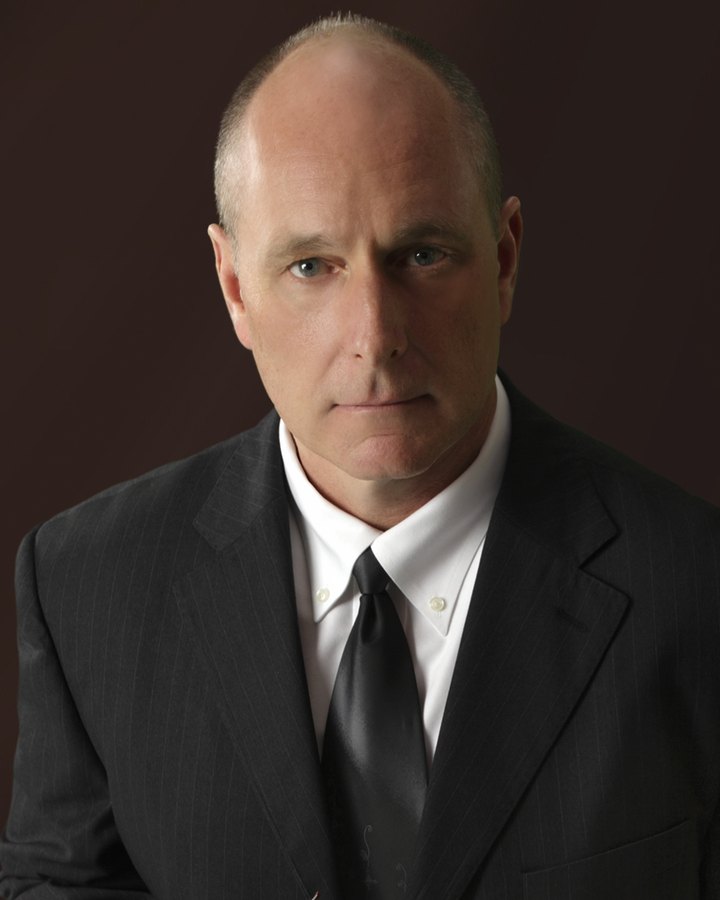 CEO & Owner
Thirty-eight years in four uniforms: street cop, soldier, professor, investigator. More than 220 matters in 42 states and D.C. since 2014.
Full biography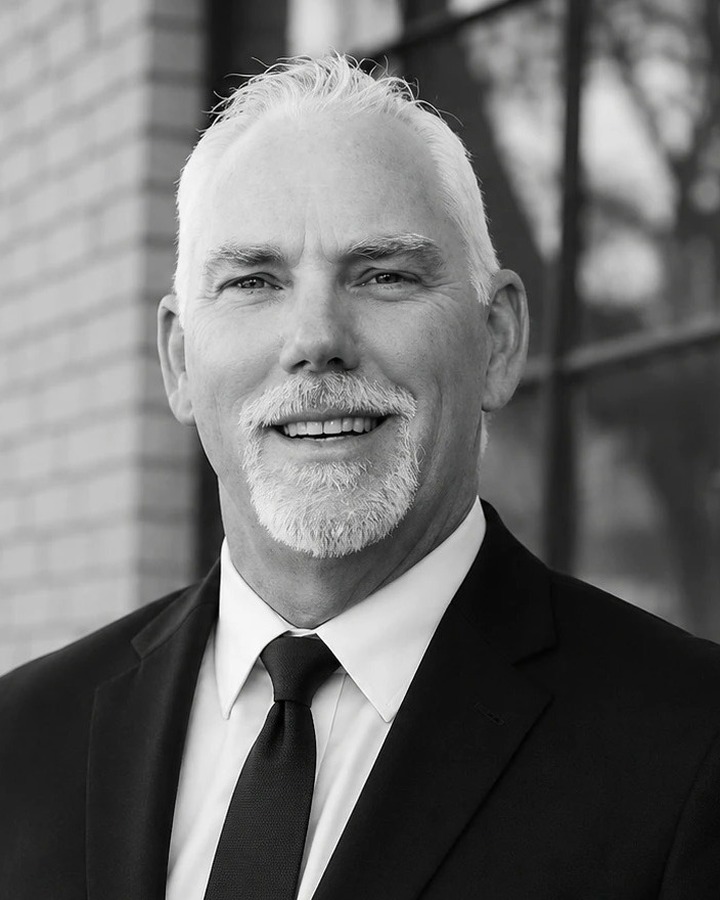 Consultant
More than thirty-five years in public safety: Sheriff of Lewis County, Washington, since his election in 2015, and six years as a commissioner of the state board that sets peace-officer training standards.
Full profile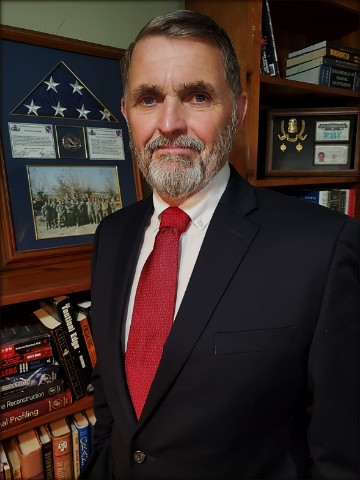 Consultant
Forty years of investigative casework, from patrolman in St. Louis County to the FBI in Chicago, and on to task forces in Afghanistan and Liberia. His work on the Idaho student murders is examined in Broken Plea, the New York Times bestseller by Christopher Whitcomb.
Full profileThe Hon. Richard A. Jones United States District Judge“Mr. Gilbertson’s qualifications demonstrate extensive experience in policing. His expansive work as a police officer in Georgia, with assignments as a SWAT team officer, juvenile court investigator, school resource officer, stakeout squad officer, senior patrolman, and patrolman; then a career as a tenured college professor and university lecturer teaching criminal justice courses to degree-seeking students at colleges and universities, and as a licensed private investigator conducting felony pretrial investigations for attorneys in Washington State in dozens of criminal cases, makes him unique in the field of police expert witnesses. The Court finds that, based on his experience, Mr. Gilbertson’s testimony can be expected to have a reliable basis in knowledge and experience of police practices.”
The sheriff's directives are the first measure of a deputy's conduct.
A sheriff's office is generally organized around its sheriff, who typically issues the office's general orders or policy manual. Where the sheriff is elected, as the office is in many states, the sheriff answers to the county's voters rather than to a city manager or a police commission. A deputy's conduct is measured against those directives, the training the office delivered on them, and generally accepted police practice, on the totality of the facts and circumstances.
Functions vary from office to office. Depending on state law and county arrangements, a sheriff's office may patrol unincorporated areas, provide police services to cities under contract, serve civil process, secure courthouses and run specialty and regional units, and each function can carry its own directives and its own records. The first task in a case against a sheriff's office is to establish which function the deputy was performing and which orders governed it.
Whether a sheriff acts for the county or for the state in a given function, and what that means for liability, is a legal question for counsel. Legal conclusions remain counsel's; the expert addresses police practices.
The orders in force that day, and the training built on them.
The general orders are read as they stood when the deputy acted, as the guide to reading a police policy manual sets out.
State standards sit underneath the office's own. In nearly every state, deputies, like other peace officers, hold a certification issued by a state commission, and the certification record is read alongside the office's field training and in-service records. What those records show, and what they cannot, is covered in the guide to POST certification and in what training records reveal.
Written policy, delivered training and the office's actual practice can diverge, and the divergence is often the finding. How the three are separated and compared is described in the guide to policy, practice and training. Where an office holds accreditation, the accreditation file adds standards the office committed itself to in writing, as explained under CALEA accreditation.
Backup distance and solo patrol belong to the circumstances of a county case.
A deputy patrolling a large rural district may work alone, with backup many minutes away, and that fact belongs to the circumstances the deputy's decisions are measured in. It does not lower the standard. It changes what the deputy could expect: how long before help arrived, what the radio could reach, and what the office's own directives said about waiting for backup, calling for it or going in alone.
The record shows the distance. Dispatch and radio logs, the times other units were assigned and reported arriving, and the office's staffing for that shift are read for what backup was actually available, and the analysis states it from those records rather than assuming it. How a dispatch record is read is covered under CAD reports.
Reserve deputies raise a related question. Where an office uses reserve or auxiliary deputies, their training, their authority and the supervision they worked under are set by the office's reserve program and by state law, and the record has to show what the reserve on duty was trained and authorized to do.
When other agencies arrive, the record has to show who was in command.
County incidents can draw officers from more than one agency: city police, the state patrol, a neighboring county's deputies. Where a sheriff's office operates under a mutual aid agreement, that agreement and the office's own directives on command at multi-agency scenes may set out who was in charge, and the radio record can show who actually gave the orders.
The analysis reads the command record for whether the scene had a clear commander, whether assignments were given and acknowledged, and whether anyone was positioned to stop a practice that was going wrong.
Civil process puts deputies at the door on a court's order.
Serving civil process is a sheriff's function in many states, and it produces encounters such as an eviction under a writ, the service of a protective order or a civil standby while property changes hands. The court's order defines what the deputy was there to do, and the office's civil process procedures define how it was to be done, including any check they required on the address and the people there before the deputy arrived.
When force follows, the analysis reads both. What the order said, what the office's civil process procedures required by way of planning, backup and communication, and what the deputies knew before they knocked are set against what the record shows they did. What the order legally permitted is a question that stays with counsel.
Courtroom and courthouse incidents are measured against court security procedures.
Where a sheriff's office provides security for the courts, deputies work under court security procedures and, at times, directions from the bench. A use of force in a courtroom or a courthouse corridor is measured against those procedures, the training behind them and generally accepted practice, and the record can include courthouse video, the court's own record of what happened and the office's incident reports.
A deputy on a specialty unit can answer to two sets of directives.
Specialty units can carry directives of their own. Where a tactical team, a canine unit, a marine unit, a street crimes unit or a narcotics unit operates under a unit policy and unit training on top of the office's general orders, a deputy assigned to it is measured against both.
Tactical operations and warrant service are covered at SWAT and high-risk operations, with operational planning set out in high-risk warrant service plans, and canine deployments are covered at tasers, canine and less-lethal. Regional units add a layer. Where a multi-agency task force runs under a written agreement, that agreement may set who supervises its members, and it belongs in the record.
Supervision in a sheriff's office runs from the sergeant to the sheriff.
A deputy's conduct can point past the deputy. Where the record suggests that supervision, discipline or training allowed a practice to continue, the analysis follows the chain of command the office's own records document, from the sergeant's review through the ranks above it to the sheriff. What those supervisory systems are expected to catch is covered at supervision and discipline and in early warning systems and supervision.
Where the claim is against the office itself, the organizational analysis is set out at failure to train and Monell, and the evidence a pattern or practice theory runs on is at Monell pattern and practice.
A new sheriff can mean new orders, and the date decides which applied.
Because a sheriff can take office after an election and reissue or rewrite the office's directives, the date of the incident decides which sheriff's orders governed it. The analysis establishes which version of each general order was in force that day, what training accompanied any change, and whether deputies had been told of it.
A transition can also explain a gap. Where a new administration rewrote a policy but had not yet trained on it, or trained on a draft before issuing it, the record shows a difference between the written order and what deputies had been taught, and the report states that difference as what it is.
The analysis in a sheriff's office case is Professor Gilbertson's.
The analysis this page describes is Professor Gilbertson's, and all three experts are introduced on the team page. Consultants are retained case by case, and each reviews the record independently within his own discipline.
The team includes Sheriff Robert Snaza, whose career runs from patrol officer and deputy through sergeant and undersheriff to elected sheriff of a Washington county, with six years on the state commission that sets peace-officer training standards. His background is on his page.
Either side of a sheriff's office case, on the same standards.
Plaintiff's counsel and counsel defending a county, a sheriff or deputies can each retain the analysis, and the measure is the same whichever party sends the file. Every engagement begins with a conflict check, and an inquiry naming the office, the sheriff, the deputies and the county clears it fastest.
Retention is a non-refundable $9,000 flat fee covering discovery review and the written expert report. The schedule and terms are at For Counsel.
Sheriff's offices in the practice file.
Sheriff's offices appear in the practice's table of cases. 16 matters there name a sheriff or a sheriff's office, 7 in federal court and 9 in state court, most of them civil claims against counties, sheriffs and deputies and some of them criminal cases. The results published for them are listed below under the same rule as the case history.
Olivia Selto as Personal Representative of the Estate of Kevin Peterson Jr. v. County of Clark, Sheriff Chuck Atkins, Sheriff’s Detective Robert Anderson, Sheriff’s Deputy Jonathan Feller, John and Jane Does 1-10, No. 3:22-cv-5384, Wrongful Death.
Robert Hanks and Stephanie Hanks vs. Clark County and Clark County Sheriff’s Office Deputy Lanny Kipp, Deputy Shaun Kays, Deputy Sean Boyles, Deputy Shane Celemenhagen, Deputy Donald Sullivan, and Deputy Samir Vejo, No. 3:22-cv-5359.
Sheriff's office cases, asked before the record is sent.
Is a deputy measured against a different standard than a city police officer?
What if the sheriff's office was policing a city under contract?
Are reserve deputies measured against the same training as full-time deputies?
Does the analysis address the sheriff's own decisions?
What records does a sheriff's office hold that a city department may not?
Send a sheriff's office record.
Attorney inquiries are answered directly. If a case presents a conflict, you will hear it immediately.
Inquiry sent.
You will hear back directly. If the matter is urgent, call (239) 571-1840.
Conflicts are checked before any substantive discussion. Please do not send privileged material with a first inquiry; after retention the record is exchanged on physical media. Gregory consults for attorneys and their staff only, and does not provide legal advice or attorney referrals to individuals.