

Federal Law Enforcement Cases: Whose Policy, Whose Training
Direct line: (239) 571-1840 · GregoryGilbertson@proton.me
Attorney and law-firm inquiries only
When the officer is a federal agent, or a task force officer working under federal deputation, the police practices analysis begins with two questions: who wrote the policy that governed the conduct, and who trained the officer to follow it. The measure is then the one applied to any officer, the directives in force, the training delivered and generally accepted police practice, on the totality of the facts and circumstances. The legal route a claim takes against a federal agent or the United States stays with counsel.
Three experts. Over 110 years.
Professor Gregory Gilbertson (Ret.), FBI Special Agent Christopher Holland (Ret.), and Sheriff Robert Snaza consult with attorneys nationwide regarding police practices and procedures, use of force, false arrest, police misconduct, criminal, and self-defense casework.
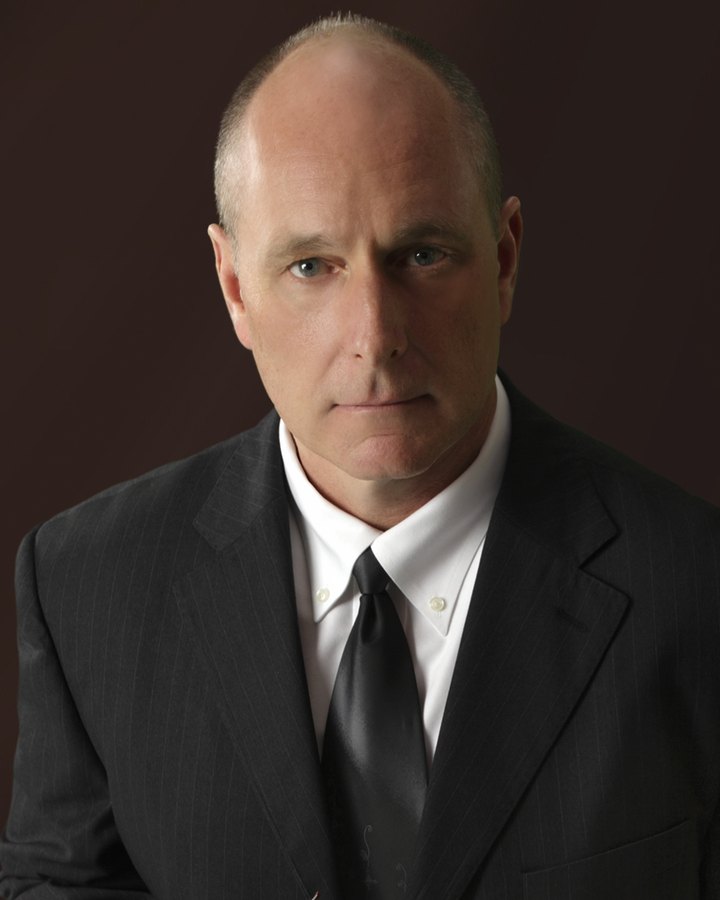 CEO & Owner
Thirty-eight years in four uniforms: street cop, soldier, professor, investigator. More than 220 matters in 42 states and D.C. since 2014.
Full biography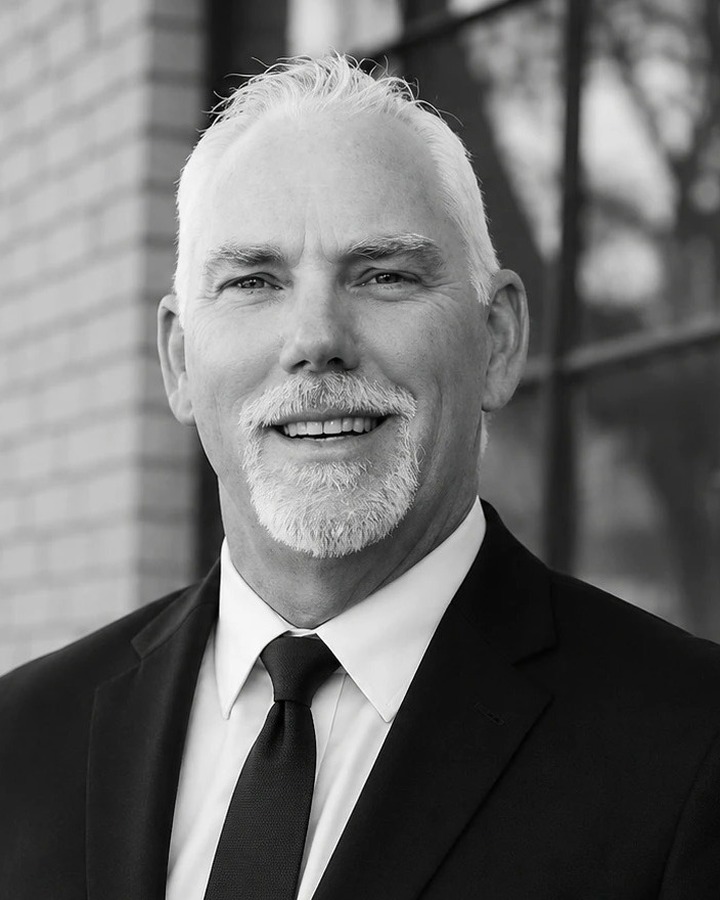 Consultant
More than thirty-five years in public safety: Sheriff of Lewis County, Washington, since his election in 2015, and six years as a commissioner of the state board that sets peace-officer training standards.
Full profile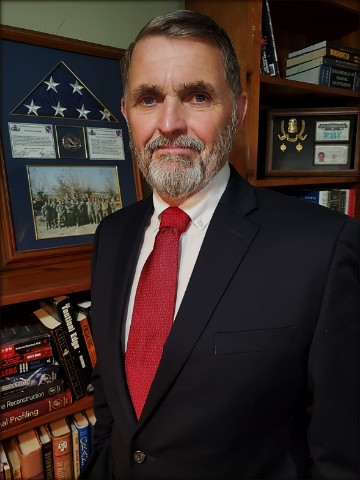 Consultant
Forty years of investigative casework, from patrolman in St. Louis County to the FBI in Chicago, and on to task forces in Afghanistan and Liberia. His work on the Idaho student murders is examined in Broken Plea, the New York Times bestseller by Christopher Whitcomb.
Full profileThe Hon. Richard A. Jones United States District Judge“Mr. Gilbertson’s qualifications demonstrate extensive experience in policing. His expansive work as a police officer in Georgia, with assignments as a SWAT team officer, juvenile court investigator, school resource officer, stakeout squad officer, senior patrolman, and patrolman; then a career as a tenured college professor and university lecturer teaching criminal justice courses to degree-seeking students at colleges and universities, and as a licensed private investigator conducting felony pretrial investigations for attorneys in Washington State in dozens of criminal cases, makes him unique in the field of police expert witnesses. The Court finds that, based on his experience, Mr. Gilbertson’s testimony can be expected to have a reliable basis in knowledge and experience of police practices.”
The first questions in a federal case are who wrote the policy and who trained the agent.
A federal agent's conduct is measured the way any officer's is: against the agency's own directives, the training delivered on them, and generally accepted police practice, on the totality of the facts and circumstances. What changes in a federal case is where the directives and the training come from. The directives can come from a federal department as well as from the component the agent served, so the first task is to establish which of them were in force on the date of the incident, and what training on them the agent had actually received.
Graham v. Connor, 490 U.S. 386 (1989), holds that a claim that law enforcement officers used excessive force in the course of an arrest, an investigatory stop or another seizure of a free citizen should be analyzed under the Fourth Amendment's reasonableness standard, and that the reasonableness of the force must be judged from the perspective of a reasonable officer on the scene rather than with hindsight. The Department of Justice's own use-of-force policy ties the force its officers may use to the standards Graham sets out, so the analysis reads that policy and the Graham factors side by side. How the factors are read one at a time is set out in Graham v. Connor explained.
For a federal agent, as for any officer, national standards, model policies and training curricula inform what generally accepted police practices are. Where the agent's academy holds FLETA accreditation, the accreditation file belongs in the training record, and how written policy, delivered training and actual practice are told apart is described in policy, practice and training.
A federal agent's directives can come from the department, the component and the operation.
The Federal Bureau of Investigation, the Drug Enforcement Administration, the Bureau of Alcohol, Tobacco, Firearms and Explosives and the U.S. Marshals Service are part of the Department of Justice, and a case against one of their agents can involve more than one layer of written direction. The Department's use-of-force policy is written for the whole Department, its law enforcement components keep their own use-of-force training programs, and an operation can add written instructions of its own. Each layer is read as it stood on the date of the incident, and where the layers differ, the report states the difference.
The same reading applies to an agent of a Department of Homeland Security component. Which directives governed the agent that day, at every level that issued them, and what training the agent received on them are questions the record answers, not assumptions the analysis brings to it.
In Indian country the question takes another shape. Police services there can be provided directly by the Office of Justice Services within Indian Affairs at the Department of the Interior, or by a tribe through a self-determination contract or compact, and the FBI works with tribal police and the Office of Justice Services on major crimes within its jurisdiction there. Which entity employed the officer, under what arrangement, and which directives and training went with it are read from the documents that created the arrangement.
For a task force officer, which directives governed is a question the paperwork answers.
When a state or local officer serves on a federal task force under federal deputation, two agencies' directives and two agencies' training can be in play: the home agency's and the federal agency's. Which set measured the officer at the moment that matters is not something this page states as a rule. The record answers it, and the analysis treats it as a question.
The documents that answer it are specific. The deputation paperwork shows what federal authority the officer held, and from when. The task force agreement between the agencies can say whose policies the officer followed and who supervised the officer. The operations plan can show who commanded the operation and what it told the officers to do. And a policy can define its own reach: a federal agency's policy may say in its own text when it applies to a task force officer acting under that agency's authority.
The analysis reads every set of directives those documents point to, along with the training each agency delivered to the officer, and states where they agree and where they differ. Where the documents are silent or point in different directions, the report says so rather than choosing between them. Whether the officer acted as a federal or a state actor at a given moment, and what follows from that, are legal questions for counsel.
Federal warrant service is read from the plan, the briefing and the entry.
A federal use of force can arise in a planned operation: the service of an arrest or search warrant, or the apprehension of a fugitive. The analysis reads a federal operation the way it reads any planned operation, starting well before the door: the intelligence the team had, the threat assessment, the operations plan and briefing, the assignments, and whether the entry and any force matched the plan and the directives behind it. Tactical deployments and high-risk warrant service are covered at SWAT and high-risk operations, and the planning file at high-risk warrant service plans.
As a police officer in Georgia, Professor Gilbertson served as a SWAT team member, and he reads the tactical record with that experience. Recordings, where they exist, are read against any camera policy that applied to the agents on that date: whether cameras were required for that operation, whether they were worn and activated, and what the access and retention records show, as set out under body-worn camera policy.
A federal case file can add documents a city file may not hold.
Counsel assembles the record from the published list at the discovery file counsel assembles, and a federal agent excessive force case can add documents of its own: the agency's incident and use-of-force reporting and any internal review of the force, the operations plan and briefing materials, the warrant and its supporting affidavit, each agent's training and qualification records, recordings and their access logs where cameras were used, radio and dispatch records, and, for a task force officer, the deputation paperwork and the task force agreement. Where an office of inspector general investigated, its file belongs in the record too. At the Department of Justice, that office investigates alleged violations of criminal and civil laws by Department employees.
Each agent's decisions are read on what that agent knew at the time, against the directives in force and the training delivered, and the agency's own conclusion about the force is read as one document in the record, not as the measure applied to it. Where a directive in the file is redacted or was not produced, the report identifies the gap and states what the opinion rests on without it. How those records are requested and produced is counsel's work.
A claim over a federal agent's conduct can travel two legal routes, and both are counsel's to weigh.
42 U.S.C. § 1983 reaches a person acting under color of the law, custom or usage of a State, a Territory or the District of Columbia, and how practices testimony fits a claim under it is set out in what a Section 1983 claim is. When the officer was a federal agent acting under federal authority, the route is a different question.
Bivens v. Six Unknown Named Agents of Federal Bureau of Narcotics, 403 U.S. 388 (1971), held that a violation of the Fourth Amendment by a federal agent acting under color of his authority gives rise to a cause of action for damages. The complaint there alleged a warrantless arrest and search by narcotics agents and unreasonable force in making the arrest. In Egbert v. Boule, 596 U.S. 482 (2022), the Court observed that it had declined repeatedly over more than four decades to imply similar claims for other alleged constitutional violations, and it held that a court of appeals erred in allowing a Fourth Amendment excessive-force claim to proceed under Bivens against a Border Patrol agent, for two independent reasons: Congress was better placed to create remedies in the border-security setting, and the Government had already provided alternative remedies. The Court said the inquiry often comes down to whether there is any reason to think Congress might be better suited than a court to create a damages remedy.
The second route runs against the United States. Under 28 U.S.C. § 1346(b), part of the Federal Tort Claims Act, and subject to the Act's other provisions, including the exceptions in 28 U.S.C. § 2680, the federal district courts have exclusive jurisdiction over civil actions for money damages against the United States for personal injury or death caused by the negligent or wrongful act or omission of a federal employee acting within the scope of the employee's office or employment, in circumstances where the United States, if a private person, would be liable under the law of the place where the act or omission occurred. Section 2680(h) excepts claims arising out of assault, battery, false imprisonment, false arrest and other listed torts, but its law enforcement proviso applies the Act to claims arising on or after its enactment out of assault, battery, false imprisonment and false arrest, among others, where the acts or omissions were those of an investigative or law enforcement officer of the United States, defined there as an officer empowered by law to execute searches, to seize evidence or to make arrests for violations of federal law. Millbrook v. United States, 569 U.S. 50 (2013), held that the waiver the proviso effects reaches a law enforcement officer's acts or omissions within the scope of employment whether or not the officer was executing a search, seizing evidence, making an arrest or otherwise engaged in investigative or law enforcement activity. Section 2680(a) separately excepts claims based on the exercise or performance of, or the failure to exercise or perform, a discretionary function or duty, whether or not the discretion involved was abused.
The route changes the defendant and the legal standard the facts are fitted to: a claim for damages against the agents themselves, where one is recognized, or a claim against the United States measured by the law of the place where the act or omission occurred. It does not change the practices record, which is read the same way for either. Which route is open, whether an exception applies, whether an agent acted within the scope of employment and what the proviso reaches in a given case are legal questions. Legal conclusions remain counsel's; the expert addresses police practices.
Where the police practices opinion in a federal case stops.
The opinion addresses police practices: what each agent or officer knew, what the directives and training required, and what the record shows was done, measured against generally accepted police practice. It does not say whether a Bivens claim lies, whether an exception to the Federal Tort Claims Act applies, whether an agent acted within the scope of employment, or whether a task force officer acted as a federal or a state actor. Why an opinion stays on its side of that line is explained under legal conclusions and the expert.
Federal directives are read as documents in the record, the same way a city department's manual is read, and the analysis claims no knowledge of an agency's internal practice beyond what the record shows. Medical findings, forensic video analysis, human factors and other scientific or technical questions go, on the record, to qualified experts in those disciplines.
Professor Gilbertson reads the federal record, and consultants are retained case by case.
The analysis this page describes is Professor Gilbertson's. His career includes service as an international police trainer and advisor in Iraq and Afghanistan, and his expert practice has run since 2014, with more than 220 civil rights and criminal cases across 42 states and the District of Columbia; the full biography is at Professor Gilbertson. In the practice's table of cases, 4 civil matters name the United States or a federal agency as a defendant, and the complete table is provided to retaining counsel on request.
All three experts are introduced on the team page. Consultants are retained case by case, and each reviews the record independently within his own discipline. The team includes FBI Special Agent Christopher Holland (Ret.), whose discipline is crime scene analysis, wrongful convictions and investigative casework; his background is on his page.
Counsel on either side of a federal case can retain the same analysis.
Plaintiff's counsel and counsel defending agents, task force officers or their agencies can each retain the analysis, and the measure is the same whichever party sends the file. Where the record shows conduct within the directives, the training and generally accepted practice, the report says so. Every engagement begins with a conflict check, and an inquiry that names each agency involved, federal, state, local or tribal, along with the agents and officers, gives the check what it needs; what the check screens is set out in what happens in a conflict check.
Retention is a non-refundable $9,000 flat fee covering discovery review and the written expert report, with a bullet-point outline of the report approved with retaining counsel before writing begins. Expert reports require sixty days of advance notice, and the full schedule is at For Counsel.
Federal agency cases, asked before the record is sent.
What does a federal law enforcement expert witness review in an FBI use of force case?
Is an excessive force claim against a federal agent brought under Section 1983?
How is a task force officer's use of force measured?
Is a federal agent held to the agency's policy or to national standards?
Does the analysis change when the claim is brought under the Federal Tort Claims Act?
Which records does the analysis need in a federal agent use of force case?
Send a federal agency record.
Attorney inquiries are answered directly. If a case presents a conflict, you will hear it immediately.
Inquiry sent.
You will hear back directly. If the matter is urgent, call (239) 571-1840.
Conflicts are checked before any substantive discussion. Please do not send privileged material with a first inquiry; after retention the record is exchanged on physical media. Gregory consults for attorneys and their staff only, and does not provide legal advice or attorney referrals to individuals.